
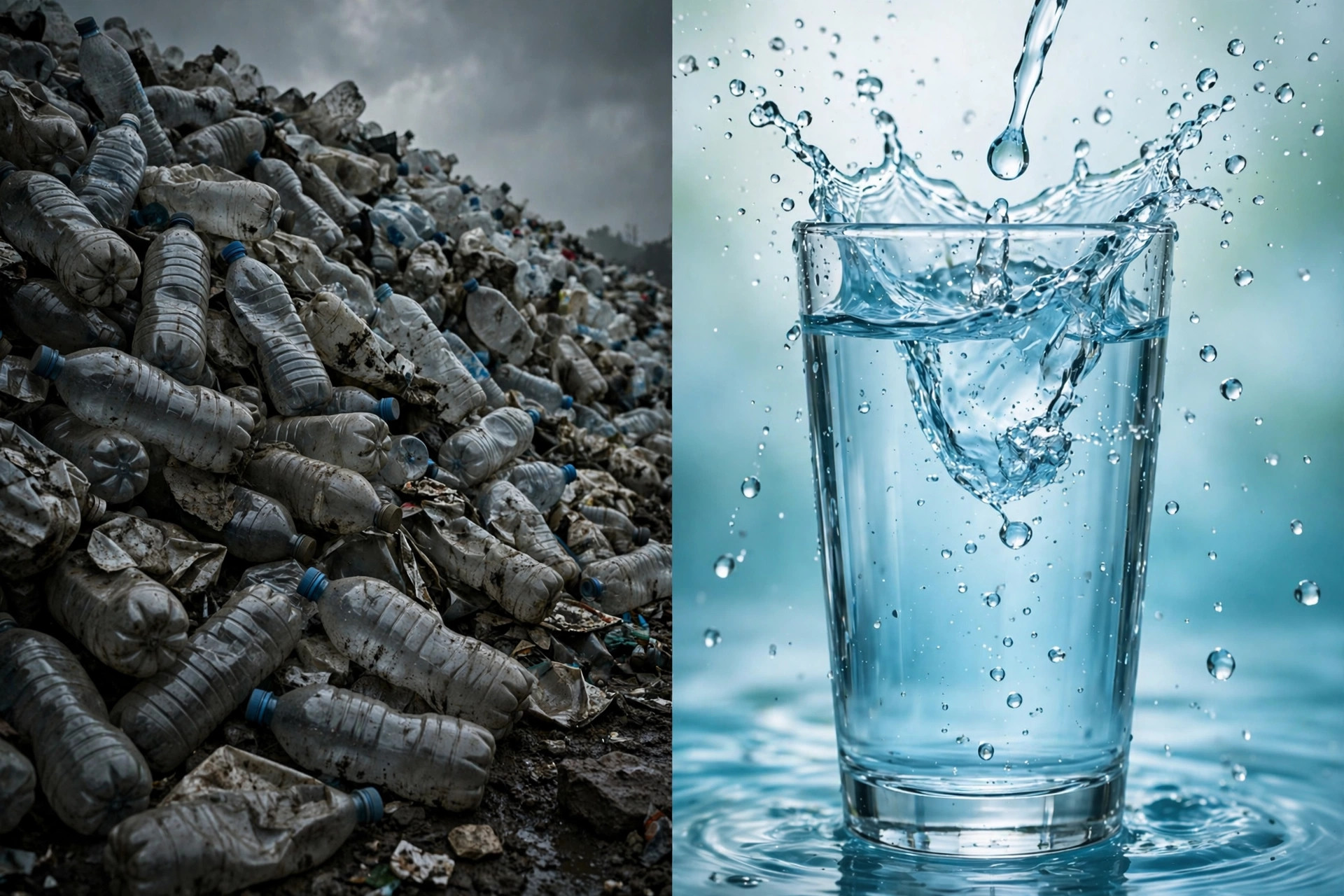
Bottled water sells a promise — purity in plastic. The reality, measured by independent researchers, is less reassuring. Here’s what the studies actually found, and the simpler fix.
63%
of 112 bottled waters tested contained PFAS
240,000
plastic particles per liter found in bottled water
2,000x
what bottled water costs vs. tap
29%
US plastic bottle recycling rate
PFAS Are in Bottled Water Too
- An October 2024 University of Birmingham study tested 112 bottled waters from 87 brands across 15 countries — PFAS showed up in 63%, and PFOA/PFOS in over 99% of samples tested.
- Glass vs. plastic bottles made no significant difference — the contamination is in the source water, not just the packaging.
- Consumer Reports’ 2020 testing found the same pattern, with carbonated brands testing highest.
- The regulatory wrinkle: the EPA’s 2024 rule limits PFOA and PFOS to 4 parts per trillion in tap water, but bottled water is regulated by the FDA as a food product — testing and public-disclosure requirements are lighter.
Then There’s the Plastic Itself
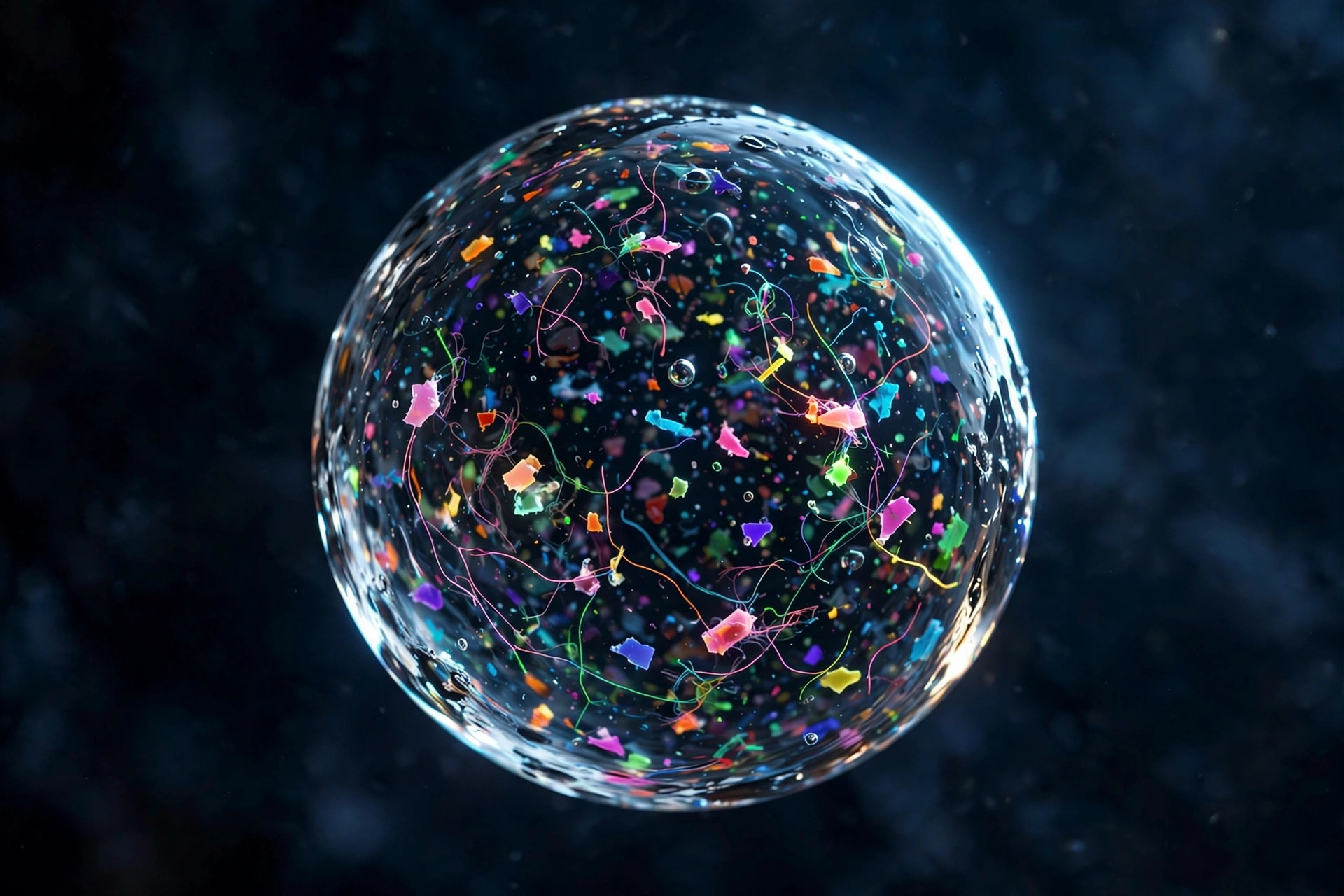
- A January 2024 Columbia/Rutgers study in PNAS used new laser microscopy on three major bottled water brands and found roughly 240,000 plastic particles per liter — 90% of them nanoplastics, small enough to enter human cells. Seven plastic types, shed continuously from the bottle, the cap, and even the purification filters. Every squeeze releases more.
- Researchers have found microplastics in human blood, lungs, stool, and placenta.
The honest caveat: the health science is still catching up — these are strong correlations, not proven causation yet, and all 240,000 particles together weigh about 10 nanograms. Anyone who says it’s definitely killing you is overselling; anyone who says it’s definitely harmless is underselling.
The Environmental Bill
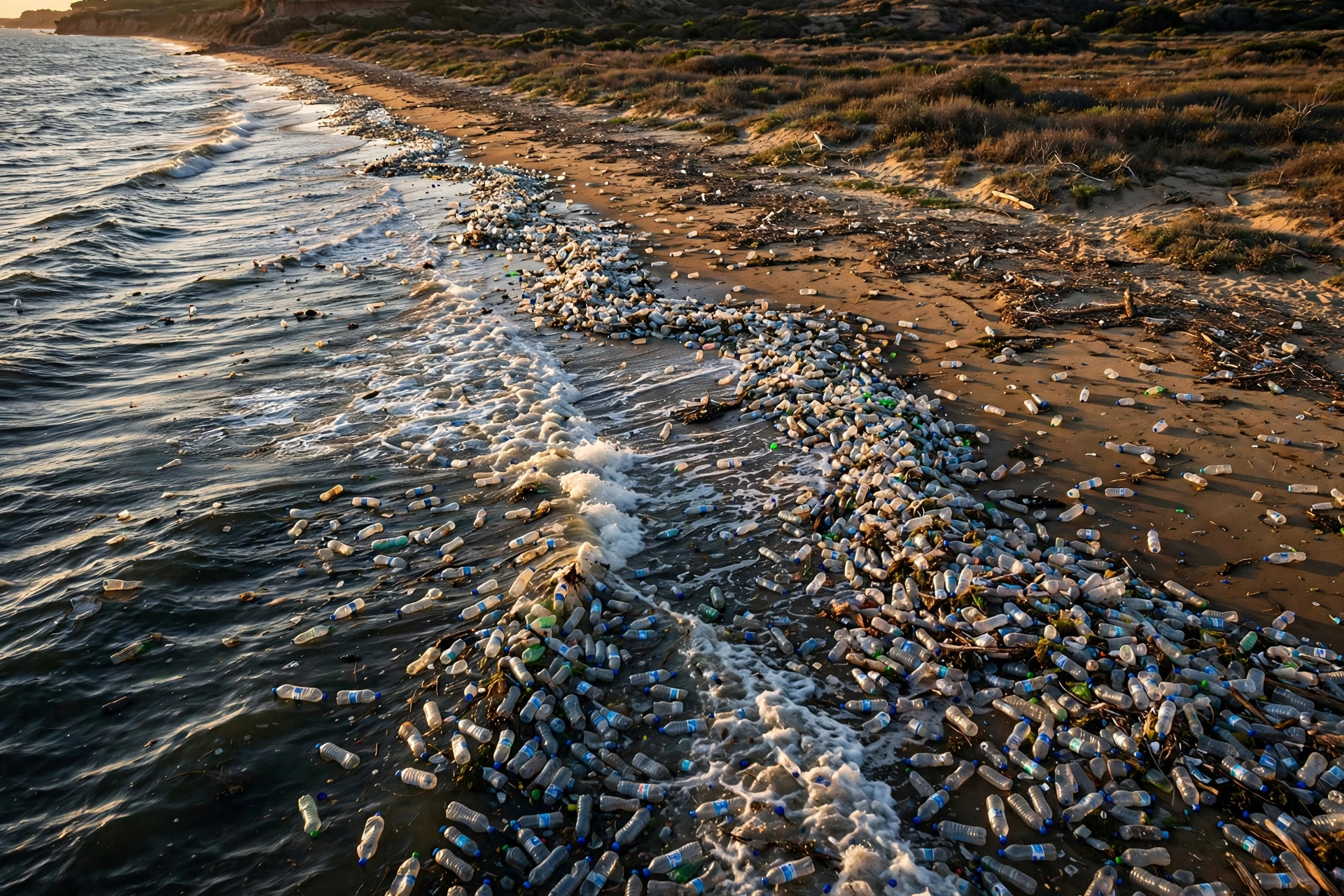
- About 60 million plastic bottles get thrown away every day in the US, and the recycling rate sits around 29%.
- Much bottled water is just filtered municipal tap — you’re paying for packaging.
- Roughly 2,000x the cost of tap water.
The Delivery Jug Trap
- Cost: the per-gallon cost runs far above filtered tap — plus jug deposits, cooler rental fees, monthly minimums, and delivery and fuel surcharges.
- Hassle: hauling 42-pound jugs, finding storage for full and empty jugs, scheduling around delivery windows.
- Hygiene: jugs are reused — washing standards vary by bottler, and cooler reservoirs can grow biofilm or mold if not cleaned regularly.
- Same quality caveats: jug water can carry PFAS and microplastics too; “spring” on the label doesn’t make the source immune.
- Footprint: diesel delivery trucks running routes to haul water that mostly came from a municipal tap.
The Fix: Filter Your Tap
- Filtered tap beats bottled on purity, cost, and environmental impact all at once.
- A certified reverse osmosis system removes PFAS, nanoplastics, and dissolved solids; even simple carbon filtration cut PFAS 50–90% in the Birmingham study.
- Carry it in glass or stainless steel. Done.
What’s In Your Water? Well Water Testing Guide
Sources: University of Birmingham PFAS-in-water study (Oct 2024); Columbia/Rutgers nanoplastics study (PNAS, Jan 2024); EPA April 2024 PFAS drinking-water rule (4 ppt MCLs); Consumer Reports bottled-water PFAS testing (2020).