Category: Friday Fact

  • Friday Fact: The Great Pumpkin Boat Race

    Friday Fact: The Great Pumpkin Boat Race

    Every autumn, people scoop out giant pumpkins, hop inside, and race them across lakes. They call these pumpkin regattas.

    It sounds crazy, but giant gourds actually make great boats. A 1,000-pound pumpkin might look heavy, but its inside is mostly air and water. Once you scrape out the seeds and pulp, you leave behind a thick, lightweight hull.

    When you slide that giant shell into the lake, it pushes away a huge volume of water. As long as the pumpkin weighs less than the water it displaces, it stays afloat. That is basic buoyancy at work. Gravity pulls down, water pushes up, and off you paddle.

    Nature built those thick gourd walls to move fluids efficiently. Your home plumbing needs that same smart design.

    Takeaway: Before freezing temperatures hit this season, disconnect your outdoor garden hoses and drain your spigots. Trapped water expands when it turns to ice, and split pipes are a lot less fun than pumpkin boats.

    Inspired by the Water Quality Association’s Friday Fact

  • Friday Fact: The Dam That Had to Be Refrigerated

    Friday Fact: The Dam That Had to Be Refrigerated

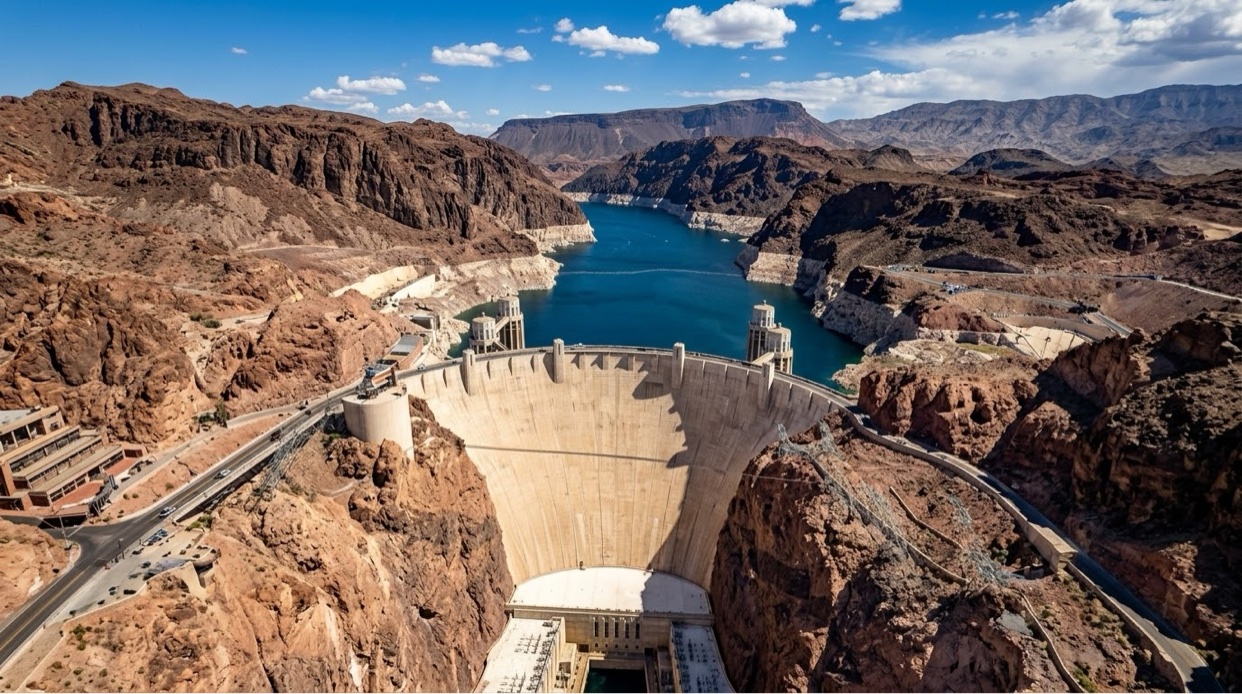
    When people think of Hoover Dam, they usually picture an engineering marvel holding back massive amounts of water. But during its construction in the 1930s, the biggest enemy wasn’t water at all. It was heat.

    As concrete hardens, it generates heat. Because Hoover Dam contained such a huge volume of concrete, that internal heat had nowhere to escape. Left to itself, the structure would have taken about 125 years to cool down completely, leading to massive cracking.

    To solve this, engineers got creative. They poured the dam in separate blocks and ran over 580 miles of steel pipes directly through the concrete. First, they pumped cold river water through the network. Then, they switched to refrigerated water to pull the remaining heat out quickly.

    That exact same chemical process happens right at home. Whenever fresh concrete goes down for a patio or driveway, it gets hot as it cures. Keeping the surface wet controls that heat and keeps your new slab strong and crack-free.

    Inspired by the Water Quality Association’s Friday Fact

  • Friday Fact: In Watercolor, Water Does the Painting

    Friday Fact: In Watercolor, Water Does the Painting

    You look at a watercolor and see the paint. Wrong. The water runs the show.

    Pigment is just dry color dust sitting on paper. Add water and it wakes up. Water pulls the color along, mixes it, blooms it outward, and settles it where it pleases. The artist guides it. The water makes the final call.

    That is because water is a carrier by nature. It grabs things and moves them — color across a page, minerals through your pipes, spots onto your glasses. Same job everywhere. It just looks prettier on art paper.

    Try this tonight. Let a clean glass air-dry upside down. See that cloudy film? That is your water signing its work — the same minerals that stiffen your laundry and scale up your water heater. A cheap test strip tells you exactly what is riding along in yours.

    Water never just sits there. It is always carrying something. iSee, iPour, iDrink.

    Inspired by the Water Quality Association’s Friday Fact

  • Friday Fact: Some Trees Drink the Fog

    Friday Fact: Some Trees Drink the Fog

    Not all water arrives by rain. Along parts of the California coast, redwood trees can pull moisture right out of fog.

    Their needles and bark catch tiny droplets as fog rolls in. Some of that water drips to the forest floor. Some is absorbed and used by the tree. For the tallest trees on Earth, fog is not just weather passing by — it is part of the water supply.

    That matters beyond the redwoods. Your drinking water starts long before the treatment plant. Rain, snowmelt, groundwater, streams, reservoirs, and even coastal fog all feed the bigger water cycle. When the source is healthy, treatment starts ahead. When the source is stressed, everyone downstream feels it.

    Home takeaway: if your town is in a dry spell, do not just watch the sky for rain. Ask where your water actually comes from — reservoir, river, aquifer, or a mix. That one answer explains a lot about taste changes, restrictions, and why source-water protection is not somebody else’s problem.

    Water does not always fall. Sometimes it drifts in and gets caught. iSee, iPour, iDrink.

    Inspired by the Water Quality Association’s Friday Fact

  • Friday Fact: When Lakes Flip in the Fall

    Friday Fact: When Lakes Flip in the Fall

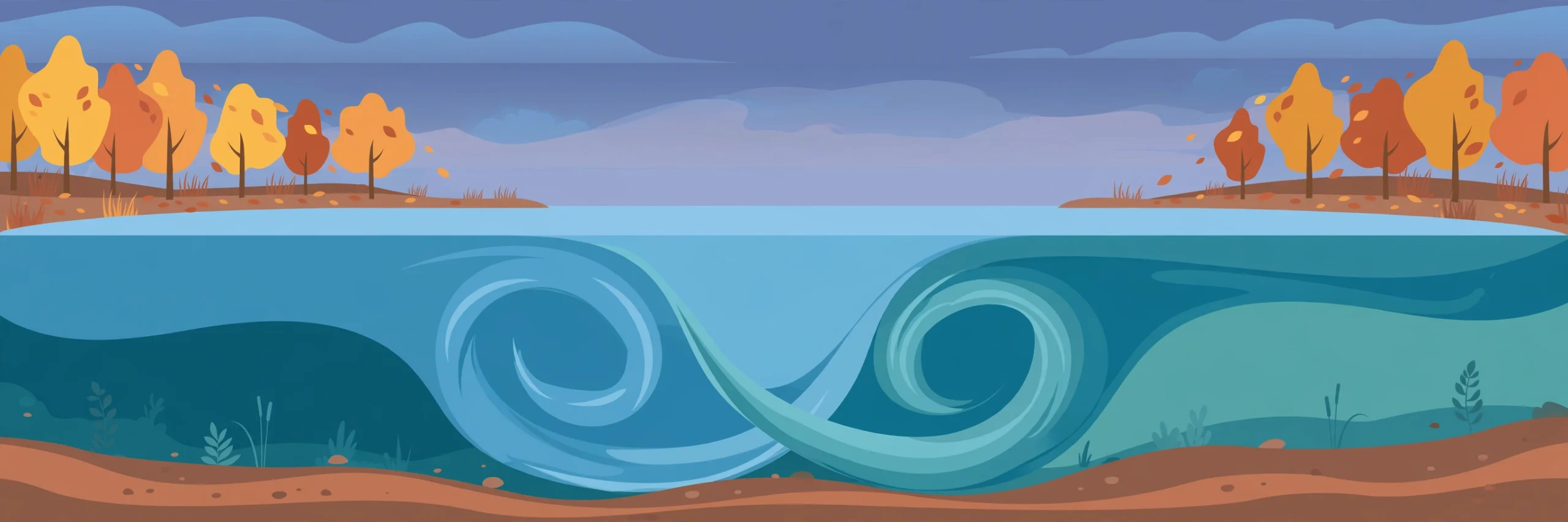
    Every fall, the lakes that feed a lot of our tap water do a slow somersault. Here’s what’s going on.

    All summer, a lake sits in layers. Warm water floats on top. Cold water sinks to the bottom. The two barely mix.

    Then the nights turn cold. That top layer chills, gets heavier, and sinks. The bottom water rises to take its place. The whole lake stirs itself top to bottom. Water pros call it turnover.

    Why should you care at your kitchen sink? That big stir drags up whatever settled down deep all summer — minerals, bits of algae, gases. For a week or two, city water can pick up an earthy or musty taste and smell. It usually clears on its own once the lake settles into winter mode.

    Your move: if your tap tastes off this month, run the cold water for a minute and try again. Fill a pitcher and let it sit in the fridge overnight — the taste often fades by morning. If it lingers past two weeks, call your water provider and ask what’s changed.

    Nature flips the lake. Your water just tells the story. iSee, iPour, iDrink.

    Inspired by the Water Quality Association‘s Friday Fact

  • Friday Fact: That Bang in Your Pipes Has a Name

    Friday Fact: That Bang in Your Pipes Has a Name

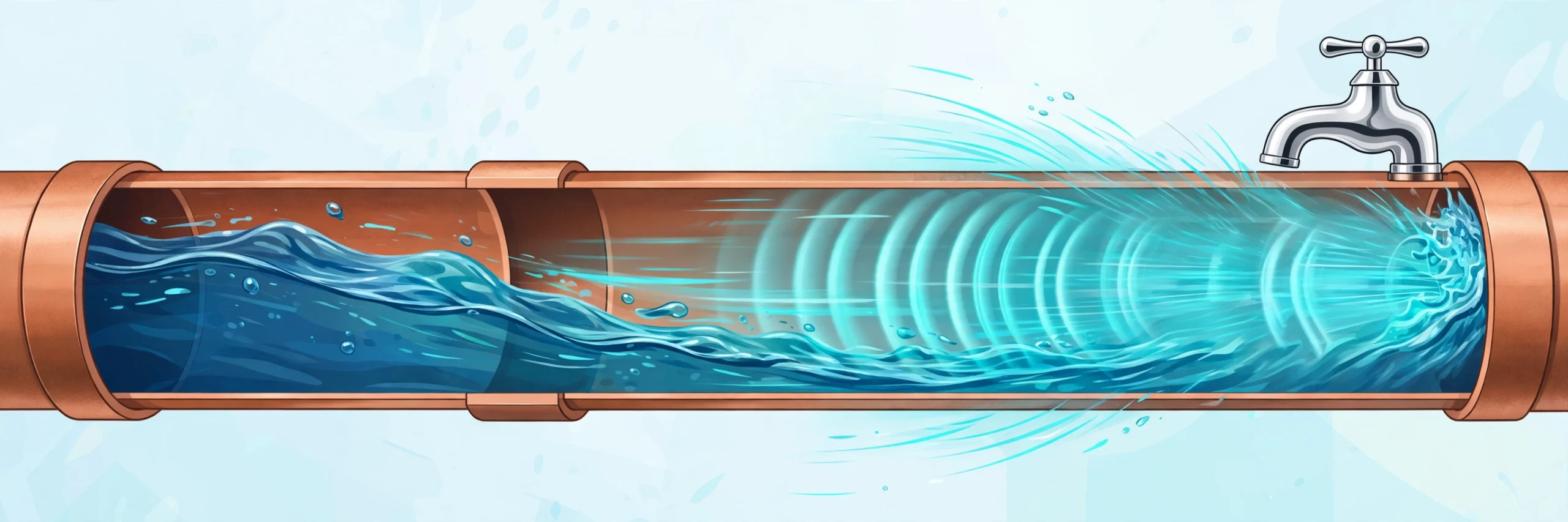
    Hear a bang, thump, or rattle when you shut off a faucet? That’s called water hammer — and it’s not a ghost, even in October.

    Here’s what’s happening: water moving through your pipes has momentum. Slam a valve shut and all that moving water has nowhere to go, so it fires a pressure spike back through the system. That spike is the bang.

    An occasional knock is mostly harmless noise. But chronic water hammer deserves attention — those repeated surges loosen pipe joints over time and beat up valves and appliance solenoids. Your washing machine and dishwasher feel every single one.

    The usual culprit is pressure running too high. Anything above 80 psi is asking for trouble, and plenty of homes sit well above that without knowing it. A ten-dollar gauge that screws onto a hose bib tells you your number in thirty seconds.

    The fix for stubborn hammer is a water hammer arrestor — a small device that absorbs the shock, installed near the offending valve. Cheap, simple, and any plumber knocks it out fast.

    So if your walls go bump this month, now you know its name — and what to check first.

    Inspired by the Water Quality Association‘s Fun Fact Friday