
What Hexachlorocyclopentadiene Is
Hexachlorocyclopentadiene is a synthetic chlorinated organic compound that serves primarily as an intermediate chemical in complex industrial manufacturing processes. This substance is an industrial chemical that consumers never buy or use directly; instead, it functions strictly as a building-block chemical used inside factories to manufacture a wide variety of other chemical products, including several pesticides (such as chlordane and heptachlor). Physically, hexachlorocyclopentadiene appears as a thick, oily liquid that ranges in color from pale yellow to amber, and it is characterized by a sharp, musty smell that can be detected at low concentrations in industrial environments.
Because of its chemical reactivity, it acts as a valuable raw material for synthesizing diverse cyclic compounds. However, this same chemical reactivity also means that handling, storage, and production require stringent safety protocols to prevent environmental release. While everyday consumers will never encounter this substance in retail products or household cleaners, understanding its chemical identity is essential for comprehending how industrial pollutants can intersect with public water resources.
How It Gets into Drinking Water
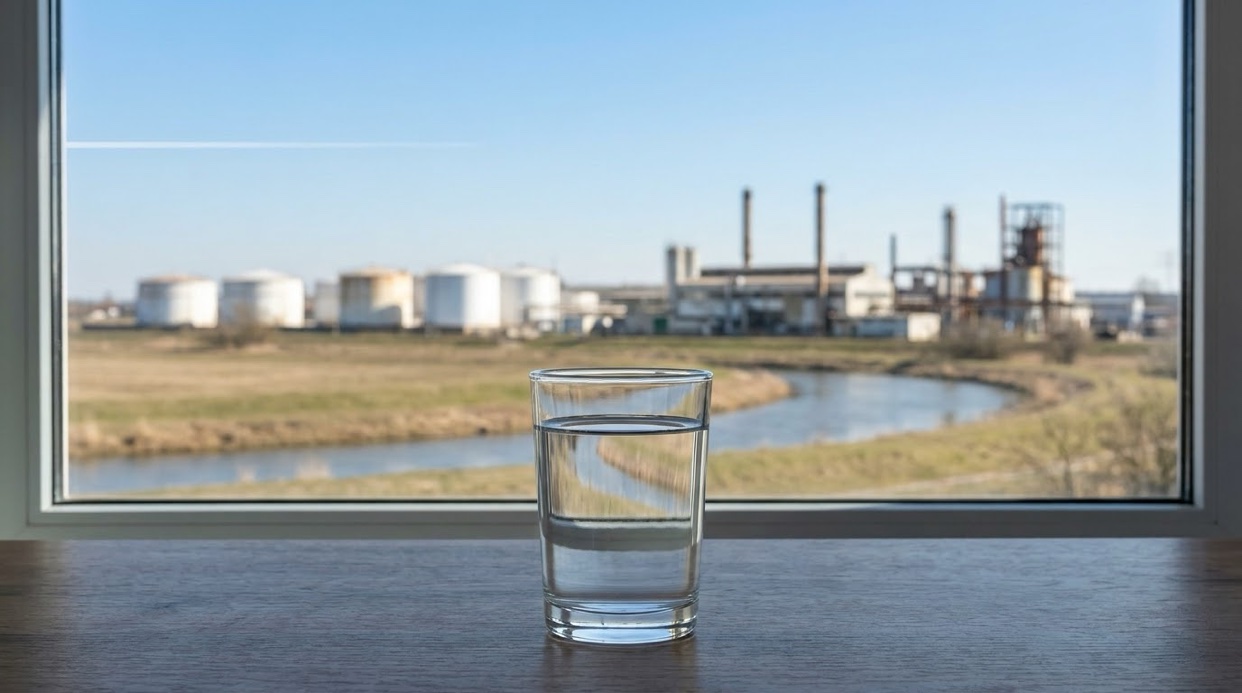
How it gets into drinking water begins directly with the EPA’s listed source: discharge from chemical factories. Because hexachlorocyclopentadiene is exclusively utilized within closed industrial manufacturing settings as a chemical intermediate, its presence in the broader environment is inextricably tied to industrial production, waste handling, and manufacturing effluent. When chemical manufacturing facilities produce pesticides, flame retardants, or other chlorinated compounds, process wastewater, equipment cleaning rinses, and residual chemical solutions are generated.
If this industrial discharge is improperly treated, inadequately managed, or accidentally released, hexachlorocyclopentadiene can find its way into surrounding aquatic environments. Industrial discharge travels through factory outfalls and permitted drainage systems directly into local rivers, streams, and surface water bodies situated near chemical manufacturing facilities. Once in surface waters, the chemical can migrate downstream, partition into bottom sediments, or seep through permeable soils into underlying groundwater aquifers. Proximity to active or historical chemical production plants significantly elevates the likelihood of environmental presence, making local monitoring crucial for communities located near industrial corridors. Furthermore, industrial accidents, aging containment infrastructure, and permitted wastewater release practices can contribute to trace concentrations entering source waters utilized by municipal water treatment plants.
Regulatory Standards: MCLG and MCL
To protect public health from the potential hazards of industrial chemical contamination in municipal and private water systems, federal regulators establish enforceable water quality standards under the legislative authority of the Safe Drinking Water Act. The United States Environmental Protection Agency sets specific benchmarks for hexachlorocyclopentadiene to ensure that drinking water safety is rigorously maintained across public distribution networks.
The EPA Maximum Contaminant Level Goal (MCLG) for hexachlorocyclopentadiene is 0.05 mg/L, which is 50 parts per billion (ppb). The Maximum Contaminant Level Goal represents the maximum level of a contaminant in drinking water at which no known or anticipated adverse effect on the health of persons would occur, allowing an adequate margin of safety.
The EPA Maximum Contaminant Level (MCL) for hexachlorocyclopentadiene is also 0.05 mg/L, which is 50 parts per billion (ppb). Notably, the goal and the legal limit are the SAME number for this chemical. While regulatory standards for many contaminants set the health goal lower than the enforceable legal limit to account for treatment technology limitations, analytical detection limits, or economic feasibility, hexachlorocyclopentadiene stands as an exception where the non-enforceable health goal and the mandatory legal limit match identically. Public water systems must continuously monitor raw water sources and employ appropriate treatment technologies to ensure that finished water distributed to consumers remains in full compliance with this established threshold.
Health Effects from Long-Term Exposure
When water treatment systems experience operational failures or when untreated industrial contamination elevates pollutant levels in source waters over extended periods, consumers face potential health risks from chronic ingestion. The United States Environmental Protection Agency has thoroughly evaluated the toxicological profile of hexachlorocyclopentadiene to determine what physiological consequences arise from prolonged exposure.
According to the EPA, health effects from long-term exposure above the MCL include kidney or stomach problems. That is the whole of the federal finding, and it is reason enough: the two organs named are the ones this chemical meets first and filters through. Staying below the 50 ppb limit is what keeps the question closed.
Protecting Your Water Supply and Assessing Risk
Navigating water safety in regions with heavy industrial activity requires a proactive approach to testing, education, and consumer awareness. Because hexachlorocyclopentadiene originates strictly from industrial manufacturing contexts, households and communities located downriver or in close geographic proximity to chemical plants, pesticide manufacturing facilities, or industrial parks should maintain heightened awareness of local water quality reports.
For municipal water customers, public utility providers are legally mandated to publish annual Consumer Confidence Reports (CCRs). These reports outline comprehensive water testing results, detailing whether any regulated synthetic organic chemicals, including hexachlorocyclopentadiene, have been detected in the finished water supply. Reviewing these reports offers a clear window into the effectiveness of local water treatment plants and the baseline quality of regional source waters.
For residents relying on private groundwater wells situated near industrial zones, routine professional laboratory water testing is an essential safeguard. Because private wells are not monitored by municipal regulatory authorities, well owners must independently verify that their groundwater remains free from industrial pollutants. Understanding the chemical nature of industrial intermediaries, the pathways of industrial discharge, and the strict parameters of regulatory standards empowers consumers to make informed decisions about water filtration, demand accountability from industrial operators, and ensure the long-term safety of their drinking water supply.
What Removes It
The EPA’s own best available technology table (40 CFR 142.62) names two treatments for hexachlorocyclopentadiene: granular activated carbon — water passed slowly through a bed of activated carbon that traps the chemical on the carbon’s surface — and packed tower aeration — an air-stripping tower where water trickles down through packing material while air blows up through it, carrying the chemical out of the water. Those are the two methods the federal government itself recognizes for this contaminant.
What does not remove it is just as important. A sediment filter cannot: this chemical travels dissolved in water, not as grit a cartridge can catch. A water softener cannot either: softening exchanges hardness minerals for sodium and never touches a dissolved industrial chemical. For a homeowner with a confirmed detection, the practical barrier is a properly sized activated carbon system with real contact time — aeration towers are utility-scale equipment — and the starting point is always a certified lab test, so the treatment is matched to a measured level instead of a guess.
The Honest Bottom Line
Hexachlorocyclopentadiene never sat on a store shelf — it lived inside factories, as a building block for other chemicals, and it reaches drinking water only when factory discharge does. That makes this a geography question more than a household one: the homes that should test are the ones near chemical plants, active or long-closed. On public water, check your Consumer Confidence Report. On a well near an industrial corridor, test through a certified lab. If it is found, carbon treatment is the remedy the EPA itself recognizes.
Facts first, then filter. — Steve
Leave a Reply