
Understanding Toxaphene in Drinking Water: Sources, Regulations, and Health Impacts
When homeowners open their water quality reports or think about potential contaminants, they usually focus on modern chemicals used in industry or current farming practices. Yet some of the most persistent substances monitored by water utilities are legacy chemicals from decades past. One such substance is toxaphene. For homeowners living in historic agricultural regions or those who see its name on an environmental report, understanding what toxaphene is, how it travels through the environment, and how federal rules handle it provides a clear picture of water safety without guesswork.
What Toxaphene Is
Toxaphene is not a single chemical compound. Instead, it is a complex mixture of hundreds of related chlorinated compounds manufactured to be used as an insecticide.
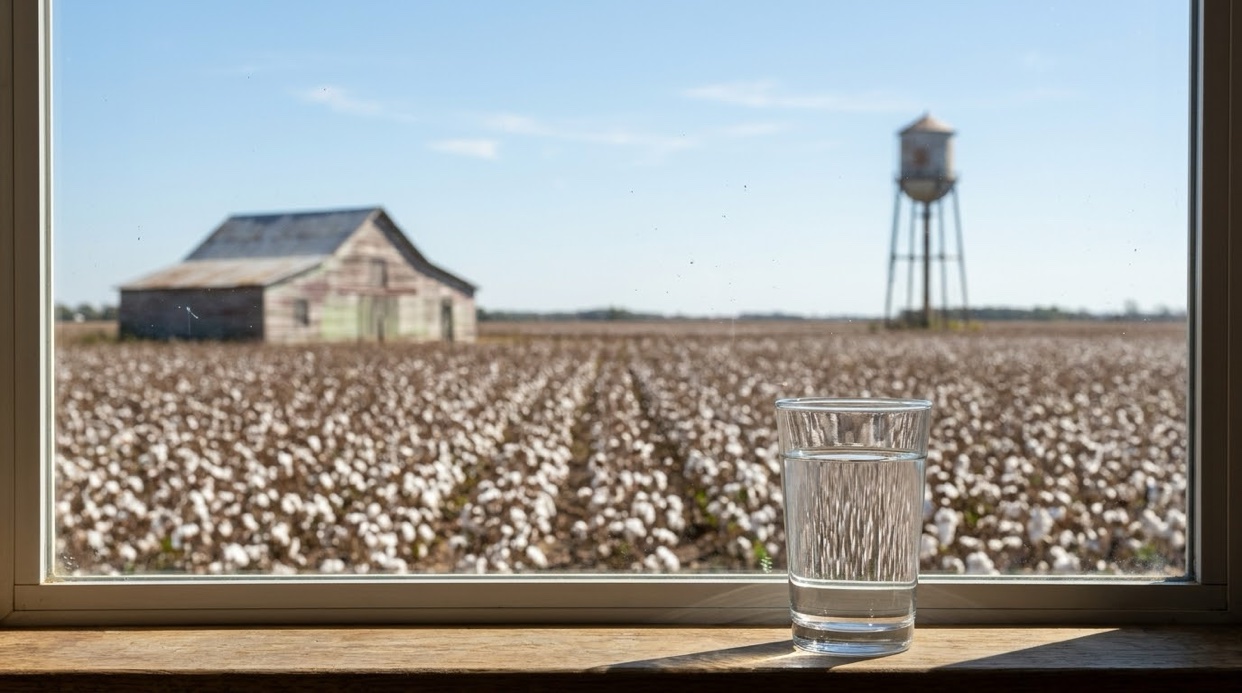
For decades, toxaphene was one of the most heavily used insecticides in the United States. Farmers sprayed it extensively on field crops—above all on cotton—and also applied it to livestock and other crops to control destructive pests. Because of how long it lasts in the environment and how far it can travel from its original application site, the federal government banned all uses of toxaphene.
How It Gets Into Drinking Water
Because toxaphene was banned decades ago, it is no longer sprayed on fields or livestock. However, according to the Environmental Protection Agency (EPA), it can still reach drinking water supplies primarily through runoff from insecticide historically used on cotton and cattle.
To understand how toxaphene persists, you have to look at its chemical character. Toxaphene barely dissolves in water. Instead, it binds tightly to soil and sediment and breaks down very slowly over many years. It also bioaccumulates, meaning it builds up in the fat of fish and wildlife.
Furthermore, toxaphene is notorious for traveling long distances through both air and water far from where it was ever sprayed. Because it evaporates slightly and travels on atmospheric currents before settling back down, traces of toxaphene have famously been found in remote places where the chemical was never used at all.
The Numbers: Goals and Legal Limits
When federal regulators evaluate a drinking water contaminant, they establish two specific benchmarks to protect public health. For toxaphene, those exact numbers are:
- Maximum Contaminant Level Goal (MCLG): zero
- Maximum Contaminant Level (MCL): 0.003 milligrams per liter (which is 3 parts per billion)
Understanding what these two terms mean in plain English makes reading any water report much easier.
The MCLG (Maximum Contaminant Level Goal) is the pure health goal. It is the level of a contaminant in drinking water below which there is no known or expected risk to health. Regulators set this number strictly based on health science, building in an extra margin of safety without considering what water treatment costs or how hard a chemical is to measure.
The MCL (Maximum Contaminant Level) is the enforceable legal limit. It is the highest amount of a contaminant that a public water system is legally allowed to deliver to your tap. When setting the legal limit, the EPA starts with the health goal and then evaluates what treatment technologies can realistically achieve and at what cost. Public water utilities are required by law to test their water and keep contaminant levels below this ceiling.
For toxaphene, the health goal is zero. When the EPA sets a health goal at zero, it is because the agency treats toxaphene as a cancer-causing chemical, meaning scientists cannot identify a threshold below which exposure carries zero risk, so the ideal amount in drinking water is none at all. The legal limit is then set as close to that zero goal as modern treatment technology and laboratory testing allow.
Health Effects
The reason federal regulators set such a strict limit stems from the long-term impact of the chemical on the human body. According to the EPA, the stated concerns from long-term exposure to toxaphene above the legal limit are kidney, liver, or thyroid problems, and an increased risk of cancer.
The liver and kidneys act as the body’s primary filtration organs, working continuously to process foreign substances, while the thyroid regulates key metabolic hormones. When people consume water containing toxaphene above safe limits over years, those organs bear the stress, alongside the elevated long-term cancer risk that drives the zero health goal.
How a Homeowner Finds Out
Finding out whether toxaphene is present in your household tap water depends entirely on where your water comes from.
If you receive your water from a city, town, or regional utility, your supply is regulated as a public water system. Under federal drinking water law, public water systems are required to test regularly for regulated contaminants, including toxaphene. Every year, your utility must publish those findings in an annual water quality report called a Consumer Confidence Report (CCR). You typically receive this report in the mail around mid-year, or you can view it anytime on your utility’s website. If toxaphene is detected in your local water supply, the report must list the level found right alongside the legal limit of 0.003 milligrams per liter (3 parts per billion).
If your home relies on a private well, the responsibility shifts entirely to you. The EPA does not regulate private wells, and county or state agencies do not automatically monitor them. A private well is tested for legacy pesticides like toxaphene only if the homeowner arranges and pays for the test.
To test a private well, you must contact a state-certified water testing laboratory and specifically request an analysis that includes toxaphene. Routine well checkups—the standard packages that test for bacteria, nitrates, lead, or hardness—do not screen for historical insecticides. When you call a certified lab, ask them to confirm that their test panel specifically includes toxaphene.
What Removes It
If a laboratory test shows that toxaphene is in your water, or if you live in an old agricultural region and want reliable protection at your kitchen sink, the treatment solution is clear and well established. The EPA designates granular activated carbon (GAC) as the Best Available Technology for removing toxaphene from drinking water.
In federal drinking water regulations, “Best Available Technology” is an official designation. It means the EPA has evaluated available treatment methods and formally identified the most effective, proven approach for removing a specific chemical. For toxaphene, that designation belongs to carbon filtration, and carbon only. No other treatment technology carries the EPA’s official designation for removing this particular contaminant.
Activated carbon works through a physical and chemical process called adsorption (spelled with a “d,” not a “b”). Unlike a sponge that absorbs liquid into its center, activated carbon traps organic chemicals onto its surface. Manufacturers take carbon-rich raw materials—such as coconut shells, coal, or wood—and treat them with intense heat to carve out millions of microscopic pores and tunnels inside every granule. That process creates an enormous internal surface area. As water flows through a bed of activated carbon, organic molecules like toxaphene are drawn out of the water and stick tightly to the carbon’s internal surfaces, letting clean water pass through.
For a homeowner, this is practical, reassuring news. You do not need exotic or experimental equipment to address toxaphene. A well-built home carbon filter—such as a dense activated carbon block filter under your kitchen sink or a whole-house granular activated carbon tank—is simply the household version of the exact same technology the EPA names for large municipal water systems. What matters most is the carbon itself and the replacement schedule—replace the filter cartridges on schedule so the carbon surfaces do not become saturated.
The Honest Bottom Line
Toxaphene is a heavy legacy insecticide from an era of intensive cotton and livestock farming, which means its presence today is tied to historical usage rather than modern spraying.
Who should actually think about toxaphene? Primarily people in old cotton country and other agricultural regions where it was heavily sprayed in past decades, especially homeowners relying on private wells in those historic farming areas. Because toxaphene binds to soil and persists for a very long time, shallow groundwater or local runoff in those zones warrants awareness.
Who mostly shouldn’t lose sleep over it? Homeowners living far away from historic cotton-growing regions, as well as families served by public water systems that routinely test and report compliance in their annual water reports.
You never have to guess about what is coming out of your tap. Take the one practical step that settles the question: read your annual Consumer Confidence Report if you are on city water, and arrange a certified laboratory test for your private well if you live where toxaphene was historically used.
Facts first, then filter. — Steve
Leave a Reply