
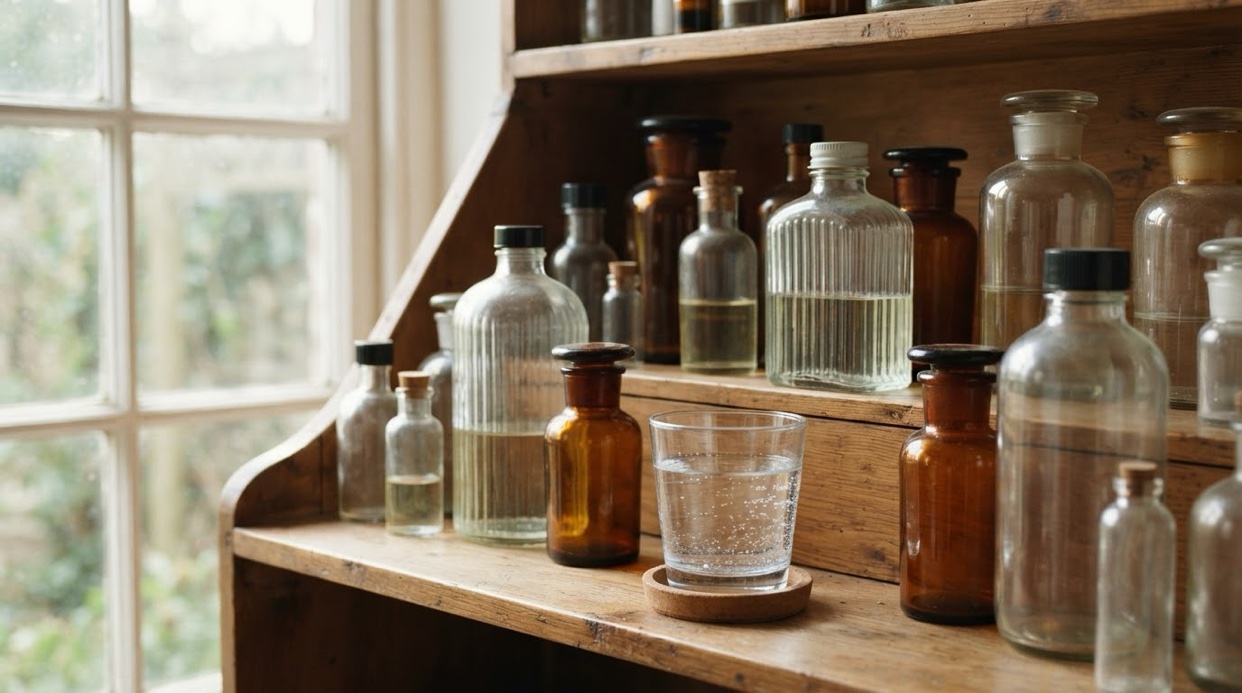
When homeowners read down into the obscure tail of a laboratory water test and spot the word “alcohol,” they usually do a double take. On a residential report, you will occasionally run into a cluster of nine names from this corner of the chemical list: 1-butanol, n-butyl alcohol, isopropyl alcohol, tert-butyl alcohol, 2-methoxyethanol, 2-propen-1-ol, benzyl alcohol, isooctyl alcohol, and 1,3-propanediol. After a lifetime in professional water treatment, I can tell you that seeing “alcohol” on a lab sheet does not mean somebody spilled a cocktail into the aquifer—it means you are looking at a shelf of industrial solvents, everyday product ingredients, and fuel leftovers that behave very differently in water than gasoline hydrocarbons do.
The Family
Every alcohol on a water report carries the exact same chemical signature: an –OH group attached to its carbon structure. That single chemical feature makes it mix with water instead of fighting it.
That is the one critical fact that separates this entire family from the gasoline hydrocarbons we look at elsewhere on the test sheet. Whereas gasoline hydrocarbons barely dissolve and tend to float on top of the water table, most of these alcohols dissolve readily—and some mix completely in all proportions. Because they dissolve so easily, they travel right along with moving groundwater instead of sitting on top of it. In plain terms, they are solvents, ingredients, and chemical leftovers: things built to dissolve other things.
The Names
Before you read a single result next to these nine lines, you need to know about a double identity hiding in plain sight. Although the list carries nine names, there are actually only eight distinct chemicals here. 1-Butanol and n-butyl alcohol are the exact same substance printed under two different labels—they share the exact same CAS registry number, 71-36-3, and a laboratory report can carry either label depending on how the lab formats its software. If you are comparing two water tests from different years or different labs, do not make the mistake of thinking you have two separate contaminants when you are really looking at one chemical wearing two name tags.
With that cleared up, here is what each item on the shelf actually is:
- 1-Butanol / n-butyl alcohol: An industrial solvent and the main ingredient feedstock used to make varnish chemicals. At the exact same time, it is a natural product of fermentation—present in beer, wine, cheese, and cooked rice—and is a permitted artificial flavoring in the United States used in butter, cream, fruit, rum, whiskey, ice cream, candy, and baked goods. It is fairly soluble in water at about 73 grams per liter.
- Isopropyl alcohol: Ordinary rubbing alcohol—the bottle sitting in your medicine cabinet and the active ingredient in hand sanitizers. It is a common solvent that mixes completely with water.
- tert-Butyl alcohol (TBA): A gasoline oxygenate in its own right, and, even more importantly for well owners, what the gasoline additive MTBE breaks down into underground. Because MTBE degrades faster than TBA does, tert-butyl alcohol is the stubborn leftover that lingers in groundwater at old gasoline spill sites. Like isopropyl alcohol, it mixes completely with water.
- 2-Methoxyethanol: A glycol-ether solvent used in paints and coatings. Out of this entire group, it is the one name with a serious toxicology file, showing reproductive effects in animal studies at industrial exposures, though it has no drinking-water standard.
- 2-Propen-1-ol (allyl alcohol): A sharp-smelling industrial chemical intermediate used to manufacture other chemicals and resins.
- Benzyl alcohol: A solvent and preservative commonly found in cosmetics and medicines, which also occurs naturally in many fruits, plants, and essential oils.
- Isooctyl alcohol: An industrial solvent and plasticizer intermediate—a standard working chemical with a very thin toxicological file.
- 1,3-Propanediol: A solvent and moisture-holding humectant used in cosmetics and industrial fluids, which is also produced by fermentation for consumer products.
The Numbers
If you scan across the regulatory columns next to these nine names, you will find zero legal drinking-water limits. Not one of the nine names has a federal drinking-water limit—no Maximum Contaminant Level (MCL) and no Maximum Contaminant Level Goal (MCLG)—and no Environmental Working Group health guideline exists for any of them either.
What does stand out in national water testing is a detection surprise that catches most homeowners off guard. The widest-detected name in this entire corner of the list is 1-butanol, which has been found in public water systems serving more than 15 million people across 39 states. That broad footprint is not the result of one giant chemical spill; it happens because 1-butanol is everywhere fermentation and food are, on top of its widespread industrial use. Behind it, 2-methoxyethanol has been detected in systems serving about 4.8 million people in 23 states, and 2-propen-1-ol in systems serving about 1.4 million people in 16 states.
Health Framing
When putting these results into perspective, you have to keep industrial workplace safety separate from residential tap water. No federal drinking-water health assessment exists for any of these chemicals. Their existing toxicological files are industrial: at high workplace air or handling concentrations, solvents act as irritants and nervous-system depressants, and 2-methoxyethanol carries that specific reproductive flag at industrial exposures. None of those workplace findings is a measurement of what parts per billion in a glass of tap water will do.
What Removes Them
Here is the honest wrinkle when it comes to home water treatment: alcohols that mix completely with water present the hardest physical profile for a residential filter to grab. Standard activated carbon adsorbs the heavier, less-soluble molecules in this set—such as benzyl alcohol, isooctyl alcohol, and the butanols—much better than it holds onto the tiny, fully miscible alcohols like isopropyl or tert-butyl alcohol. Reverse osmosis is the broadest physical barrier for reducing dissolved compounds like these, yet there is no federal best-available-technology listing and no removal guarantee for any of the nine.
The Bottom Line
Here is my verdict after decades of reading laboratory printouts: these are some of the friendliest-looking names on the contaminant list—one of them is literally a common food flavoring—and the core lesson is that seeing “alcohol” on a water report is a solvent and ingredient story, not a drinking story. The one name on this shelf worth circling with a pencil is MTBE’s leftover, tert-butyl alcohol, because its presence is a clear signal pointing toward an old gasoline problem somewhere nearby.
Facts first, then filter. — Steve
Leave a Reply