
You’ve seen the movie. Julia Roberts, 2000, the legal clerk in the tiny skirt who takes down a giant utility company. Great film. Here’s the part that should bother you: the story was real, the chemical is real, and it’s probably in somebody’s tap water within a few miles of you right now.
What actually happened at Hinkley
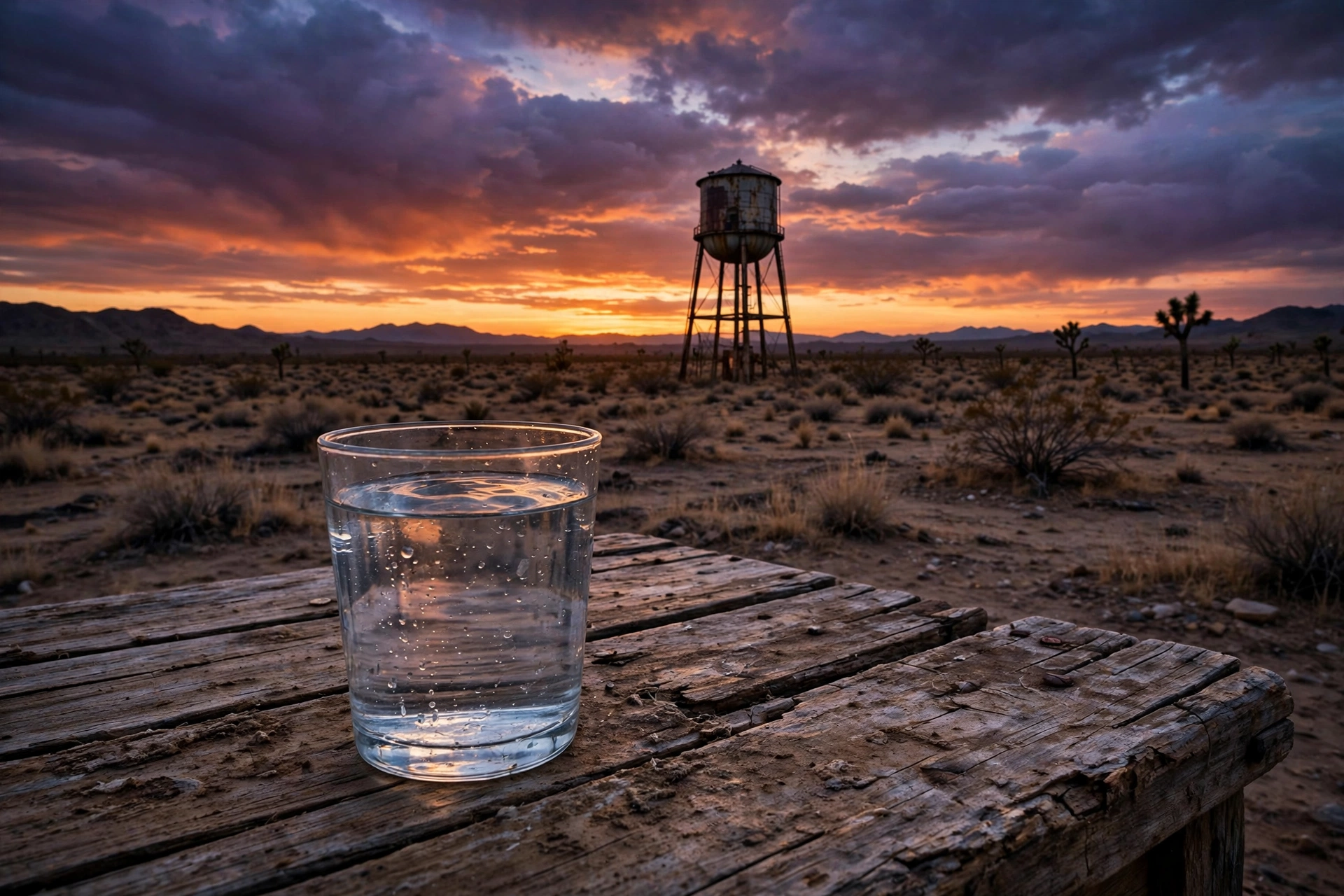
Hinkley, California is a small town in the Mojave Desert. For about 30 years, Pacific Gas & Electric ran a compressor station there, and to keep the cooling towers from corroding, they used hexavalent chromium — chromium-6. The wastewater went into unlined ponds. It seeped into the groundwater. People drank it for years.
Erin Brockovich was a file clerk at a law firm who noticed something wrong in the medical records of Hinkley residents — a pattern of cancers and illnesses. She dug in. The case she helped build ended in 1996 with a $333 million settlement for around 600 residents, the largest direct-action settlement of its kind in American history at the time.
That’s the Hollywood ending. Here’s what didn’t make the movie: the chemical never went away.
What is chromium-6, exactly?
Chromium comes in flavors, and the flavor matters. Chromium-3 is a nutrient your body actually uses in tiny amounts. Chromium-6 — hexavalent chromium — is the evil twin. It’s a known carcinogen. A two-year National Toxicology Program study found it caused cancer in lab rats and mice that drank it in their water. It’s also been linked to liver damage and reproductive problems.
It’s odorless. It’s tasteless. It’s colorless in water. You cannot detect it with your senses, which is exactly why the people of Hinkley drank it for decades without knowing.
It gets into water two ways: industrial pollution (metal finishing, chrome plating, cooling towers, wood preservatives) and, in some regions, natural erosion of chromium-bearing rock. Either way, once it’s in the aquifer, it stays.
The part Hollywood didn’t tell you
In 2016, the Environmental Working Group analyzed federal drinking water data and found chromium-6 in the tap water supplies of more than 200 million Americans — in all 50 states. Their later Tap Water Database put the number even higher, around 250 million. Let that sink in: the “Erin Brockovich chemical” isn’t a Hinkley problem. It’s an everywhere problem.
And here’s the kicker: there is no federal drinking water limit specifically for chromium-6. The EPA regulates total chromium at 100 parts per billion, but that’s a blunt instrument — it doesn’t distinguish between the harmless chromium-3 and the carcinogenic chromium-6. California set a public health goal of 0.02 parts per billion for chromium-6. Read that again: 0.02. The federal total-chromium limit is 5,000 times higher than what California scientists consider a negligible-risk level for chromium-6.
So your water can be 100% legal and still contain chromium-6 at levels that worry scientists. “Legal” and “safe” are not the same word.
How to find out if it’s in your water
Three ways, easiest first:
- Check your water utility’s annual report. Every community water system must publish a Consumer Confidence Report by July 1 each year. Look for chromium — though remember, most report total chromium, not chromium-6 specifically.
- Search EWG’s Tap Water Database (ewg.org) by your ZIP code. It shows what’s actually been detected in your area, including chromium-6.
- Test it yourself. A comprehensive lab test or a quality home test kit that covers heavy metals will tell you what’s coming out of your own tap, which is the only number that really matters.
What actually removes chromium-6
This is where I save you money: a standard pitcher filter or fridge filter with basic activated carbon will not reliably remove chromium-6. If that’s your defense, you don’t have one.
What works:
- Reverse osmosis. Certified RO systems (NSF/ANSI 58) are the gold standard for chromium-6 removal. This is the most practical option for most households.
- Ion exchange. Effective, but typically a whole-house or specialized setup — more complex and more expensive.
- Distillation. Works, but slow and energy-hungry for daily drinking water.
If chromium-6 shows up in your water test, reverse osmosis is where I’d point you. It’s the same technology that handles lead, fluoride, arsenic, and most of the other heavy hitters — one system, many problems solved.
Why this story matters
Erin Brockovich didn’t have a science degree. She had curiosity and a refusal to look away. The people of Hinkley trusted that their water was fine because nobody told them otherwise — the same trust most of us extend to our taps every single day.
You don’t need to be an activist to protect your household. You just need to know what’s in your water. That’s the whole reason this site exists.
Start here: What’s In Your Water? — learn how to read your water report and test your own tap.
Chromium-6 data cited from the Environmental Working Group’s tap water research (ewg.org). EWG is an independent nonprofit; iPhilter is not affiliated with or endorsed by EWG.
What I’d buy
Treatment type: a reverse osmosis system certified to NSF/ANSI 58 for chromium-6 reduction, treating the tap you drink and cook from. Certified RO is the gold standard here — it’s the same technology that also handles lead, fluoride, and arsenic, so one system covers multiple heavy hitters at once.
Leave a Reply