
Here’s a stat that stopped me this week: about 18% of your home’s energy use goes to heating water. (That one’s from the Water Quality Association.) Your water heater is the second-hardest-working appliance in the house, right behind your heating and cooling system — and most people never think about it until the shower runs cold.
But here’s the part nobody talks about: it’s not just an energy story. It’s a water story. What’s in your water is quietly beating up your water heater from the inside, every single day. And there’s plenty you can do about both sides of it.
Sediment: the slow killer
If you have a tank water heater, everything dissolved in your water — calcium, magnesium, minerals — settles to the bottom of that tank over time. That layer of sediment sits between the burner (or heating element) and your water like a blanket. The heater has to work longer and burn hotter to push heat through it. That’s wasted energy and a shorter-lived tank.
You can hear it happening. That rumbling or popping sound from the tank? That’s water trapped under the sediment layer, boiling and bubbling up through it. A quiet tank is a happy tank.
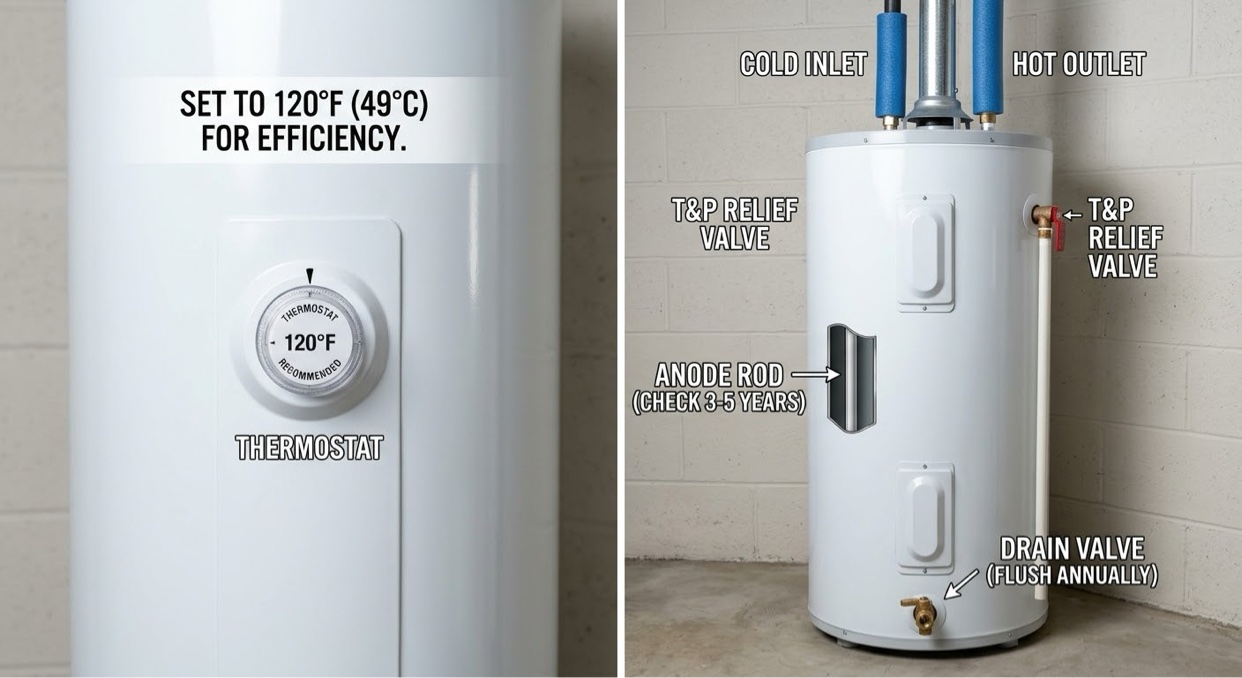
The fix is simple: drain a few gallons from the drain valve once or twice a year. It takes ten minutes and flushes the loose sediment out before it compacts into something permanent.
The anode rod: the part that dies so your tank doesn’t
Inside every tank water heater there’s a metal rod — usually magnesium or aluminum — called the anode rod. Its whole job is to corrode. It attracts the corrosive elements in your water so they eat the rod instead of eating through your steel tank.
It’s sacrificial by design. And when it’s gone, the tank is next.
Checking it every 3 to 5 years and replacing it when it’s worn down (it’s a $20 to $50 part) can add years to your tank’s life. Most people have never heard of it. Now you have.
Hard water hits heaters hardest
If you’re on hard water, everything above happens faster. More minerals in, more scale on the heating elements, more sediment on the tank floor, faster anode rod consumption. A water softener doesn’t just protect your fixtures and your skin — it protects the second-most-expensive appliance to run in your home.
The 120-degree rule
Most water heaters ship set to 140°F. Turning it down to 120°F saves energy — roughly 3 to 5% for every 10 degrees you drop — slows mineral buildup inside the tank, and drops the scalding risk. There’s no good reason to keep it at 140 unless your owner’s manual says otherwise.
Going away for a few days? Drop it to the lowest setting or hit “vacation mode” on gas models. No point heating water for an empty house.
Stop losing heat you already paid for
A lot of the energy your heater uses never makes it to your shower — it radiates straight off the tank and the pipes. If your tank feels warm to the touch, or it sits in an unheated garage or basement, an insulating blanket wrapped around it can cut standby heat loss substantially. Same story with the pipes: wrapping foam insulation around the first several feet of the hot and cold lines near the tank keeps heat where it belongs.
Use less hot water in the first place
This is the easy half nobody thinks about:
- Low-flow showerheads. A good high-efficiency showerhead can cut your hot water use dramatically without you feeling the difference in pressure. The shower is where most of your hot water goes — this is the single biggest lever.
- Wash in cold. The vast majority of the energy your washing machine uses goes to heating the water, not running the machine. Modern detergents are built to work in cold water. Unless you’re dealing with something genuinely filthy, cold gets it done.
- Fix the drip. A hot water faucet with a slow drip can waste hundreds of gallons of heated water in a month. That’s water you paid to heat, going straight down the drain.
Your annual checklist
- Drain a few gallons from the drain valve to flush sediment.
- Lift the lever on the T&P relief valve briefly to make sure it releases water — that’s the safety valve that prevents pressure buildup.
- Check the anode rod every few years.
- Keep the thermostat at 120°F.
- Walk the house once for dripping hot water faucets.
None of this requires a plumber. All of it adds up.
Your water heater doesn’t ask for much. But what you don’t know about your water is costing you money every month — and one day it’ll cost you a Saturday with a flooded basement. A little attention now beats a replacement later.
Leave a Reply