
Hi, I’m Steve. If you’ve spent any time reading around iPhilter, you know my goal as an independent New Jersey water guide is pretty simple: I’m here to give you straightforward, plain-English facts about what’s in your water, without any sales pitches or fearmongering. Water quality can feel like a complicated topic, but when you break down the science and standards into clear terms, it becomes much easier to understand what’s happening at your tap and what options you have as a homeowner.
For years, if you walked down the filter aisle at a hardware store or scrolled through water purifiers online, you might have seen a box claiming the system “reduces glyphosate.” Until recently, that claim had a big catch: there was no official, standardized, independent testing method behind it. A manufacturer could make the claim, but as a consumer, you had no reliable way to verify whether that filter actually did the job under rigorous laboratory conditions.
On October 14, 2026, that finally changed.
For the first time, an independent standard exists to test and certify water filtration products specifically for glyphosate reduction. Let’s take a look at what glyphosate is, how it ends up in water supplies, what the science and regulations say, and what this new test standard means for your home.
What Is Glyphosate and Where Does It Come From?
Glyphosate is best known as the active ingredient in Roundup, and it is currently the most widely used herbicide in the world.
Because it is so effective at controlling weeds and unwanted vegetation, its use is widespread across both agricultural and everyday consumer settings:
- Agriculture: Farmers apply glyphosate extensively on agricultural fields to keep crops clear of competing weeds.
- Residential Lawns and Gardens: Homeowners use it around garden beds, driveways, sidewalks, and patio cracks.
- Landscaping and Infrastructure: Landscapers, municipal crews, and groundskeepers use it along fence lines, park paths, roadsides, and railway corridors.
Because it is applied so broadly across both rural farmlands and suburban neighborhoods, glyphosate is present in many environments where rainwater falls.
How Glyphosate Gets Into Drinking Water
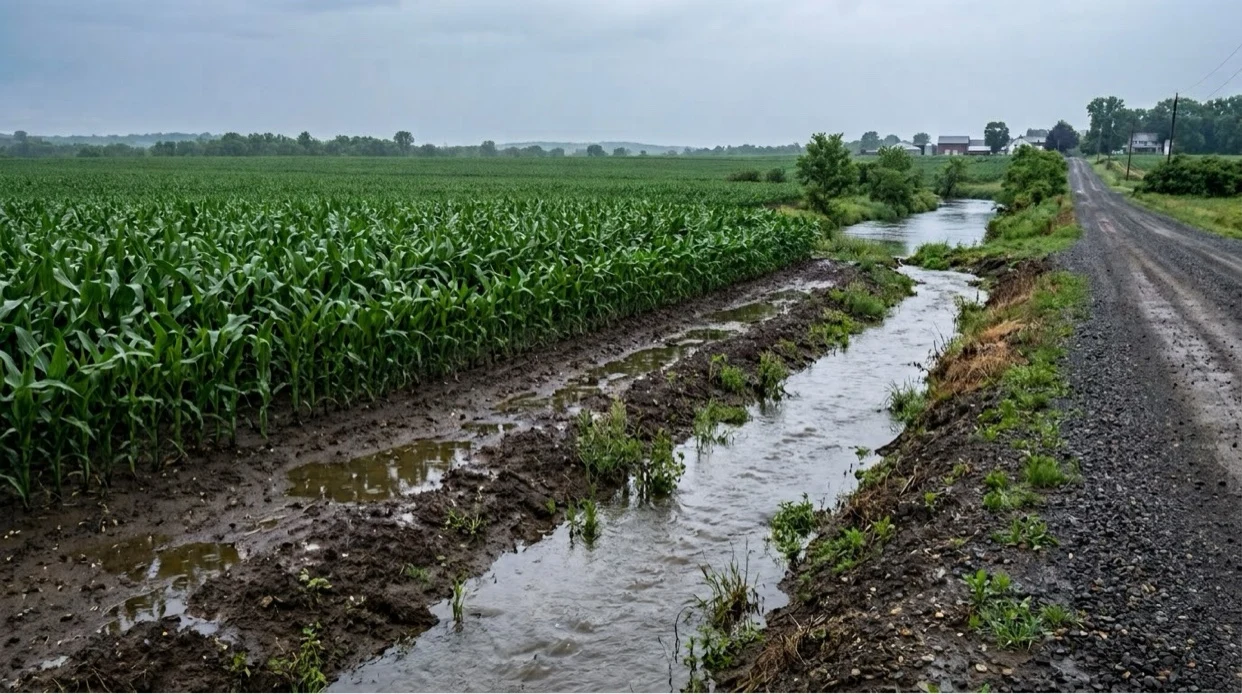
Unlike some industrial contaminants that enter water systems through underground leaks or factory pipes, glyphosate primarily makes its way into drinking water through surface runoff.
Here is how that process typically works:
- Application: Glyphosate is sprayed onto target plants, soil, or paved surfaces across farms, residential lawns, roadsides, and railways.
- Rain Events: When rainfall occurs, stormwater washes over these treated surfaces, picking up unabsorbed herbicide residues.
- Transport to Waterways: This runoff flows into storm drains, drainage ditches, streams, and rivers, eventually reaching reservoirs, lakes, and rivers that serve as source water for public water utilities.
- Soil Infiltration: In some local conditions, surface water carrying these residues can also percolate into shallow groundwater aquifers.
Because runoff is the primary route, levels in raw water sources can fluctuate depending on season, rainfall timing, and local spraying schedules.
The Health Picture: Understanding the Ongoing Debate
When learning about any weed killer or chemical in drinking water, it is completely natural to wonder about health effects. In the case of glyphosate, international health and regulatory agencies have reached different conclusions based on their evaluations of the scientific literature.
It is important to look at both perspectives calmly and honestly, without panic or dismissal:
- The World Health Organization (WHO): The International Agency for Research on Cancer (IARC), which is the specialized cancer agency of the WHO, evaluated the scientific data and classified glyphosate as “probably carcinogenic to humans.”
- The U.S. Environmental Protection Agency (EPA): The U.S. EPA has maintained a different position, concluding that glyphosate is not likely to be carcinogenic to humans at normal expected exposure levels.
Because scientific evaluations, long-term health studies, and legal discussions are ongoing, public health experts continue to monitor and debate the research. As independent educators, our goal at iPhilter is not to take a side in this agency debate, but to present the facts transparently so you understand where the scientific landscape stands today.
Federal Rules and the Old Testing Problem
To understand why the new testing standard matters, it helps to understand how glyphosate has been regulated up until now.
The Federal Limit
In the United States, the federal drinking-water limit—known as the Maximum Contaminant Level (MCL)—for glyphosate is set by the EPA at 0.7 mg/L (milligrams per liter). Public water suppliers are required to monitor their supplies and ensure treated drinking water meets or stays below this regulatory threshold.
The Filter Claim Loophole
While public water utilities manage supply-side compliance, many homeowners look to point-of-use or point-of-entry water filters for an extra layer of peace of mind.
However, until recently, if a filter manufacturer printed “reduces glyphosate” on their packaging, there was no standardized, independent protocol to evaluate that claim. A filter might have been tested under in-house company conditions, but there was no universal benchmark that allowed consumers to verify if the claim held up under standardized, rigorous third-party testing.
The New Standard: What NSF Protocol P549 Changes
That testing gap was officially closed on October 14, 2026, when NSF introduced Protocol P549.
NSF Protocol P549 is the very first standard in the world designed specifically to validate glyphosate reduction claims for water filtration products. It establishes a clear, independent protocol for testing products in a laboratory setting.
Here are the key details of how Protocol P549 works:
- A Stricter Performance Benchmark: Under P549, a filtration system cannot just reduce some glyphosate—it must demonstrate that it reliably reduces glyphosate in the water down to 0.28 mg/L or lower to pass. This 0.28 mg/L benchmark is significantly stricter and more health-protective than the federal drinking-water limit of 0.7 mg/L.
- Alignment with Established Standards: Protocol P549 was created to align directly with existing, widely trusted filtration standards: NSF/ANSI 53, the standard governing filtration systems designed to reduce specific health-related contaminants (such as heavy metals or VOCs), and NSF/ANSI 58, the standard governing point-of-use reverse osmosis (RO) systems.
- Independent Verification: NSF provides independent certification under P549. This means when a manufacturer claims their product is “certified to NSF P549,” consumers can independently look up and verify that certification in public databases.
Treatment Methods and What Readers Should Look For
If you are evaluating filtration technologies for your home, Protocol P549 recognizes two primary treatment methods for reducing glyphosate:
- Activated Carbon (Adsorption): Filtration systems using specialized activated carbon block or media filters capture glyphosate molecules as water passes through, binding them to the carbon surface.
- Reverse Osmosis (Membrane Separation): Point-of-use reverse osmosis systems force water through a semi-permeable membrane that physically blocks dissolved compounds like glyphosate from passing into your drinking water.
What This Means for You as a Consumer
If glyphosate reduction is something you want in your home water treatment setup, you no longer have to rely on unverified marketing language.
When shopping for a system, look for clear, certified claims. Check the product documentation or official listings to ensure the filter is explicitly certified to NSF P549. That certification mark confirms that the system has been independently tested and proven to bring glyphosate levels down below the strict 0.28 mg/L standard.
Summary & Next Steps
Having clear standards makes managing home water quality straightforward. Here is a quick summary of where things stand with glyphosate:
- What it is: The world’s most widely used herbicide, found in agricultural, residential, and municipal weed control products.
- How it enters water: Rain runoff washes herbicide residues from crops, lawns, roadsides, and railways into surface streams, rivers, and reservoirs.
- The Health Landscape: International health bodies disagree—IARC classifies it as a probable carcinogen, while the EPA maintains it is not likely carcinogenic at normal exposure levels.
- The Federal Rule: The federal drinking-water limit (MCL) is 0.7 mg/L.
- The New Standard: On October 14, 2026, NSF launched Protocol P549—the world’s first independent standard for glyphosate reduction in water filters, requiring systems to reduce glyphosate to 0.28 mg/L or lower.
- Effective Technologies: Adsorption through activated carbon and reverse osmosis are the recognized treatment methods under the protocol.
If you ever have questions about reading a water quality report, checking product certifications, or finding the right filter setup for your home, feel free to explore our other guides here on iPhilter. We are always here to help you navigate your water quality with plain facts and neighborly advice.
check the pH, then filter.
Leave a Reply