
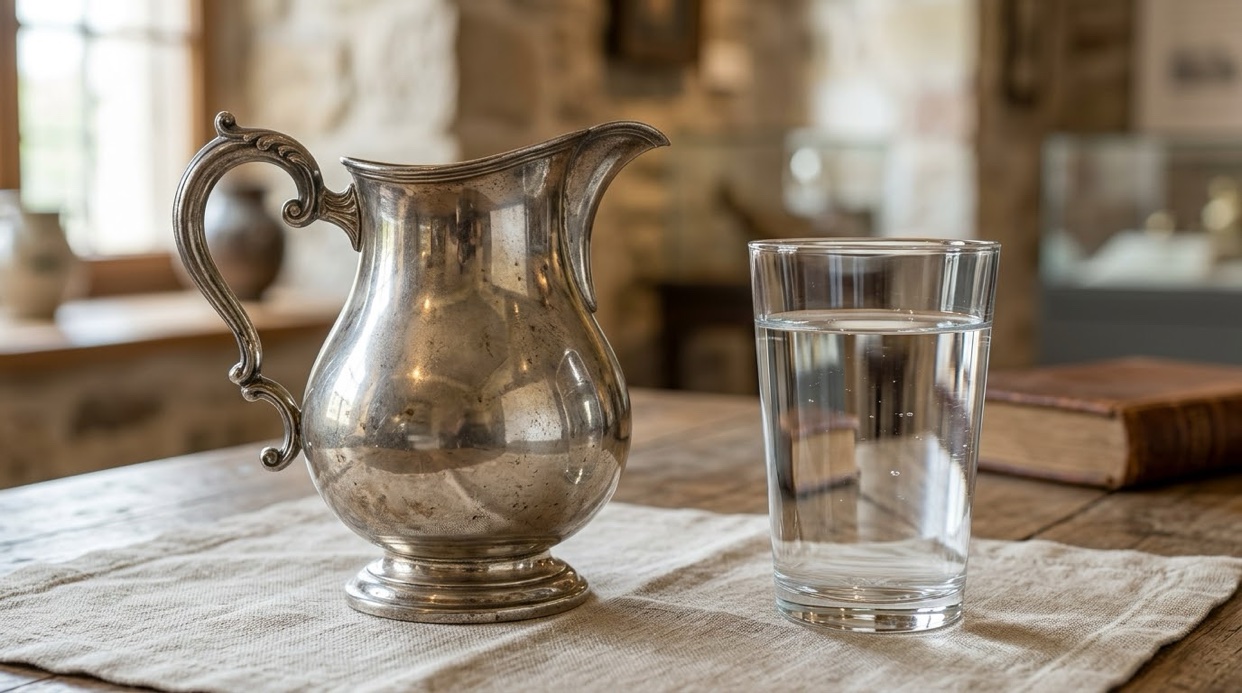
If you take a look at the periodic table, you will spot silver sitting right at element number 47. It is a brilliant, precious metal that has been treasured for thousands of years—not just for jewelry, coins, and mirror coatings, but also for its remarkable natural antimicrobial properties. Long before modern water treatment existed, ancient civilizations knew that storing water in silver vessels helped keep it fresh and free of spoilage.
Because silver is so famous for killing microbes, people are often surprised when they see it pop up on a water test or listed in discussions about drinking water safety. As someone who spends every day helping homeowners understand what is coming out of their taps, I can tell you that silver in drinking water is generally a very minor story, but it comes with a few unique angles worth knowing.
Here is a clear, honest breakdown of what silver is, how it ends up in water, what it does in the body, and how to manage it in your home.
1. What Silver Is and Where It Comes From
Silver is a naturally occurring precious metal found in trace amounts throughout the Earth’s crust, soils, and rock formations. In pure form or bound in mineral ores, it is relatively rare compared to abundant metals like iron or aluminum.
Beyond its traditional uses in jewelry, silverware, and coins, silver plays a vital role in modern industry and technology:
- Electronics & Conductors: It is the single most electrically conductive element, making it indispensable in circuit boards, solar panels, and electrical contacts.
- Antimicrobial Applications: Silver ions (Ag^+) disrupt essential functions in microscopic bacteria, fungi, and algae. Because of this, silver is widely used in medical wound dressings, medical equipment coatings, and anti-odor textiles.
- Photography & Alloys: Historically essential in traditional film photography, silver remains widely used in brazing and soldering alloys.
2. How It Gets Into Drinking Water
Natural erosion of rock deposits releases only microscopic traces of silver into rivers, lakes, and underground aquifers. Industrial discharges from mining, electronics processing, or photographic waste can contribute, but these sources are tightly controlled today.
However, silver has a unique, intentional route into tap water that homeowners often miss: the filtration equipment itself.
- Silver-Impregnated Carbon Filters: Some home water filters—particularly certain carbon block or granular activated carbon (GAC) cartridges—use silver-impregnated media. The silver is added in tiny amounts to act as a bacteriostat, which stops bacteria from colonizing and growing inside the moist filter bed over time. In these systems, minute traces of silver can slowly leach into the filtered water.
- Colloidal Silver & Dietary Supplements: Some individuals intentionally add liquid colloidal silver products to their home drinking water as an alternative health remedy.
3. What It Can Do to a Person’s Health
At typical drinking water concentrations, silver is a minor health concern. Unlike heavy metals like lead or mercury, silver does not accumulate in ways that damage internal organs like the brain, kidneys, or liver.
However, chronic high intake of silver over long periods carries one distinct, well-documented effect:
Argyria: Excessive, long-term consumption or exposure to silver can cause a condition called argyria. Silver particles deposit in skin tissue, mucous membranes, and internal organs, and when exposed to sunlight, they react to turn the skin a permanent blue-gray color.
While health agencies categorize argyria primarily as a cosmetic issue rather than toxic organ damage, the blue-gray discoloration is permanent. It does not fade once exposure stops.
At typical tap water levels—and when using standard home water filters according to manufacturer guidelines—the risk of developing argyria is extremely low.
4. The Federal Picture: Secondary Standards vs. Health Limits
When evaluating a home water test, understanding how the U.S. Environmental Protection Agency (EPA) handles silver is essential.
Silver has NO health-based EPA Maximum Contaminant Level (MCL).
Because typical environmental levels do not present an organ toxicity risk, the EPA does not enforce a mandatory primary health standard for public water utilities. Instead, the EPA lists a Secondary Maximum Contaminant Level (SMCL) of 0.1 mg/L (milligrams per liter, or 100 parts per billion).
It is important to label this correctly:
- Secondary SMCLs are non-enforceable guidelines established to address aesthetic concerns or cosmetic issues—specifically to prevent argyria (skin discoloration) and skin graying—rather than primary organ toxicity.
- Public water suppliers are not legally mandated by federal law to remove silver to meet this target, but it serves as a guideline for water quality management.
5. How a Homeowner Can Test Their Water
You cannot see, taste, or smell trace silver in drinking water. Finding out if it is present—and in what quantity—requires accurate testing.
- Skip DIY Home Test Strips: Over-the-counter test strips sold at home centers are designed for basic pH, hardness, or free chlorine. They cannot accurately measure trace metals like silver down to parts-per-billion levels.
- Use a Certified Laboratory: Send a water sample to a state-certified drinking water laboratory. Labs use sensitive analytical equipment, such as ICP-MS (Inductively Coupled Plasma Mass Spectrometry), to deliver a precise measurement of silver in milligrams per liter (mg/L).
6. How to Remove Silver from Drinking Water
If a certified lab report shows silver levels approaching or exceeding the 0.1 mg/L secondary limit, several effective residential treatment options exist.
Effective Removal Technologies
- Reverse Osmosis (RO): A point-of-use under-sink Reverse Osmosis system is the most dependable home method for removing dissolved silver. RO forces water under pressure through a semi-permeable membrane that rejects positively charged silver ions (Ag^+) while letting pure water pass through.
- Ion Exchange: Because dissolved silver exists as a positively charged ion in water, standard cation exchange resins (similar to those used in water softeners) can effectively swap silver ions for sodium or potassium.
- Distillation: Countertop water distillers boil water into steam and condense it back into liquid, leaving silver and other mineral salts behind in the boiling chamber.
Pre-Filtration and Micron Ratings
While physical sediment pre-filters cannot trap dissolved silver ions, they protect RO membranes and ion exchange resins from getting clogged with rust, sand, and silt.
When selecting pre-filters, pay attention to micron ratings:
- Micron Rating: A micron measures pore size. A 5-micron or 1-micron sediment pre-filter is standard practice ahead of an under-sink RO membrane.
- Nominal vs. Absolute Rating:
- Nominal Rating: Traps approximately 60% to 85% of particles at that micron size under standard flow.
- Absolute Rating: Traps 99.9% or more of particles at the rated micron size under strict lab test conditions.
Using an absolute-rated pre-filter gives your primary treatment equipment reliable, consistent physical protection over time.
The Bottom Line
Silver in drinking water is a rare finding and generally a minor story. It is prized for its natural antimicrobial powers and is sometimes added to filter media to stop bacterial growth inside the cartridge itself.
Because silver has no mandatory primary health limit, compare your test results against the EPA secondary cosmetic guideline of 0.1 mg/L. If your water tests high or if you want absolute peace of mind at your tap, a standard under-sink Reverse Osmosis system is your most effective, straightforward solution for pure drinking water.
Leave a Reply