
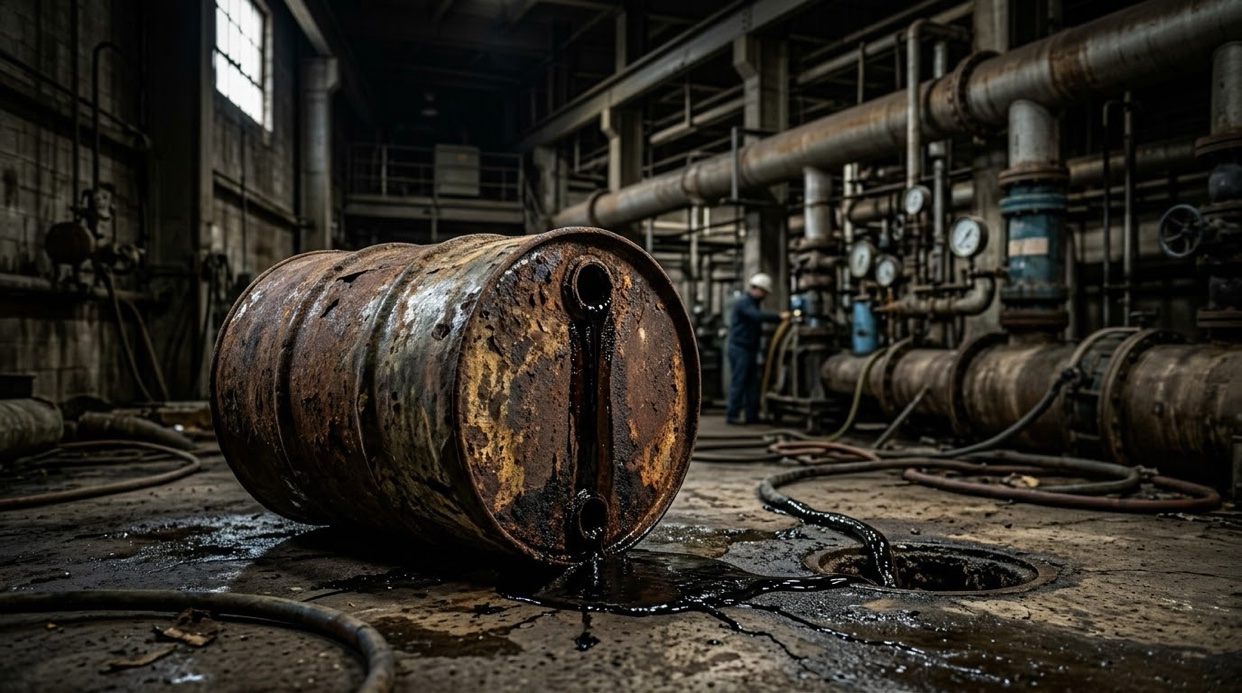
Carbon tetrachloride is a clear, colorless liquid that was once widely used as a solvent, cleaning agent, and refrigerant. It was phased out of most consumer uses decades ago, but it remains a persistent groundwater contaminant. Working in water treatment since 1994, I have seen how industrial chemicals from the past can linger in soil and water long after production stops — and why testing and filtration still matter today.
Where It Comes From
Carbon tetrachloride enters drinking water through several pathways:
- Industrial sites: Manufacturing plants, chemical facilities, and dry-cleaning operations that used carbon tetrachloride as a solvent can leave contaminated soil and groundwater behind.
- Improper disposal: Dumping, spills, and leaking storage tanks at industrial and commercial sites can release carbon tetrachloride into the ground, where it seeps into aquifers.
- Degradation of other chemicals: Carbon tetrachloride can form as a breakdown product of other chlorinated solvents, meaning contamination can persist even where the original chemical is no longer used.
What It Can Do to Health
Carbon tetrachloride is classified as a probable human carcinogen. Short-term exposure to high levels can damage the liver and kidneys and depress the central nervous system. The EPA notes that people who drink water containing carbon tetrachloride in excess of the limit over many years could experience liver problems and may have an increased risk of cancer.
The EPA Drinking-Water Limit
The U.S. Environmental Protection Agency regulates carbon tetrachloride under the Safe Drinking Water Act. The federal Maximum Contaminant Level (MCL) is 0.005 milligrams per liter (mg/L). The Maximum Contaminant Level Goal (MCLG) is zero. Public water utilities are required to monitor for carbon tetrachloride and notify consumers if levels exceed the limit.
Which Home Filtration Actually Removes It
Carbon tetrachloride is a volatile organic compound (VOC) that responds well to activated carbon filtration:
- Activated carbon filtration (granular or solid block): Activated carbon adsorbs VOCs like carbon tetrachloride as water passes through the porous carbon surface. This is the primary home treatment method for this contaminant.
- Reverse osmosis (RO): Residential RO systems combine activated carbon pre-filtration with a semipermeable membrane (pores around 0.0001 microns) to filter out organic contaminants.
Understanding Certification Standards
- NSF/ANSI Standard 53: This is the health-effects standard for drinking water treatment units. In plain English, a Standard 53 certification verifies that a filter reduces the specific contaminants named in that model’s certification — carbon tetrachloride among them, if it is listed. Check the certification list, not just the seal.
- NSF/ANSI Standard 58: This is the performance standard for reverse osmosis systems. It certifies the system and the specific reductions listed in its certification; check the list.
Facts first, then filter. — Steve
Leave a Reply