
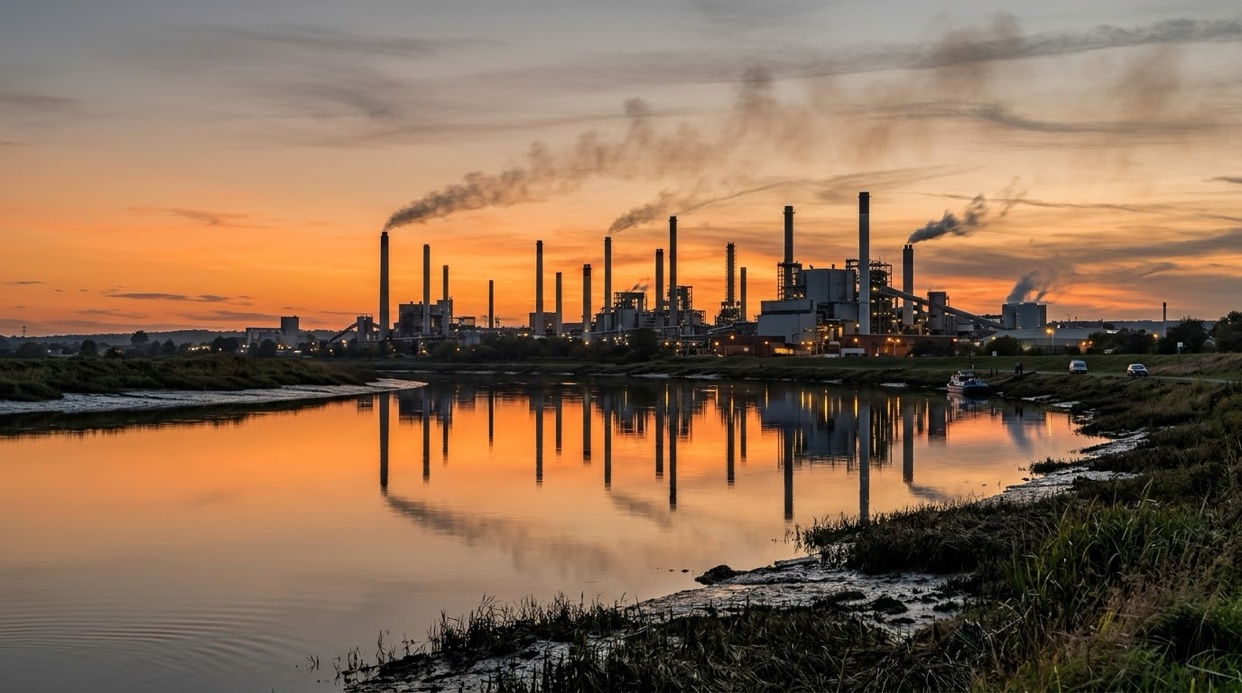
Dioxin is the common name for a group of highly toxic chemical compounds, the most well-known of which is 2,3,7,8-tetrachlorodibenzo-p-dioxin (2,3,7,8-TCDD). Dioxins are not manufactured intentionally — they are unwanted byproducts of industrial processes and combustion. Working in water treatment since 1994, I have seen how these persistent chemicals can accumulate in the environment and why even tiny amounts in drinking water deserve serious attention.
Where It Comes From
Dioxin reaches drinking water through several routes:
- Industrial processes: Chlorine bleaching in paper mills, chemical manufacturing, and metal smelting can produce dioxins as byproducts.
- Waste incineration: Burning municipal and medical waste, especially when chlorine-containing materials are present, can release dioxins into air that eventually settle into water sources.
- Herbicide production: Dioxins were historically produced as contaminants in certain herbicides, including Agent Orange. Contaminated sites can continue to leach dioxins into groundwater for decades.
What It Can Do to Health
Dioxin (2,3,7,8-TCDD) is classified as a known human carcinogen by the International Agency for Research on Cancer (IARC). It is one of the most toxic chemicals known. The EPA notes that people who drink water containing dioxin in excess of the limit over many years could experience reproductive difficulties and may have an increased risk of cancer. Dioxins also accumulate in body fat and can persist in the body for years.
The EPA Drinking-Water Limit
The U.S. Environmental Protection Agency regulates dioxin (2,3,7,8-TCDD) under the Safe Drinking Water Act. The federal Maximum Contaminant Level (MCL) is 0.00000003 milligrams per liter (mg/L) — 30 parts per quadrillion. The Maximum Contaminant Level Goal (MCLG) is zero. Public water utilities must monitor for dioxin and notify consumers if levels exceed the limit.
Which Home Filtration Actually Removes It
Dioxin is an organic compound that binds strongly to activated carbon:
- Activated carbon filtration (granular or solid block): Activated carbon is particularly effective at adsorbing dioxins and other organic compounds. The porous carbon surface attracts and holds organic molecules as water passes through.
- Reverse osmosis (RO): Residential RO systems combine activated carbon pre-filtration with a semipermeable membrane (pores around 0.0001 microns) to filter out organic contaminants.
Understanding Certification Standards
- NSF/ANSI Standard 53: This is the health-effects standard for drinking water treatment units. In plain English, a Standard 53 certification verifies that a filter reduces the specific contaminants named in that model’s certification — dioxin among them, if it is listed. Check the certification list, not just the seal.
- NSF/ANSI Standard 58: This is the performance standard for reverse osmosis systems. It certifies the system and the specific reductions listed in its certification; check the list.
Facts first, then filter. — Steve
Leave a Reply