
Di(2-ethylhexyl) phthalate—commonly abbreviated as DEHP—is a synthetic chemical that belongs to a family of compounds called phthalates. It is not something nature produces. Chemical manufacturers synthesize DEHP specifically to serve as a plasticizer, an additive mixed into polyvinyl chloride (PVC) resin to transform rigid, brittle plastic into a flexible, durable material.
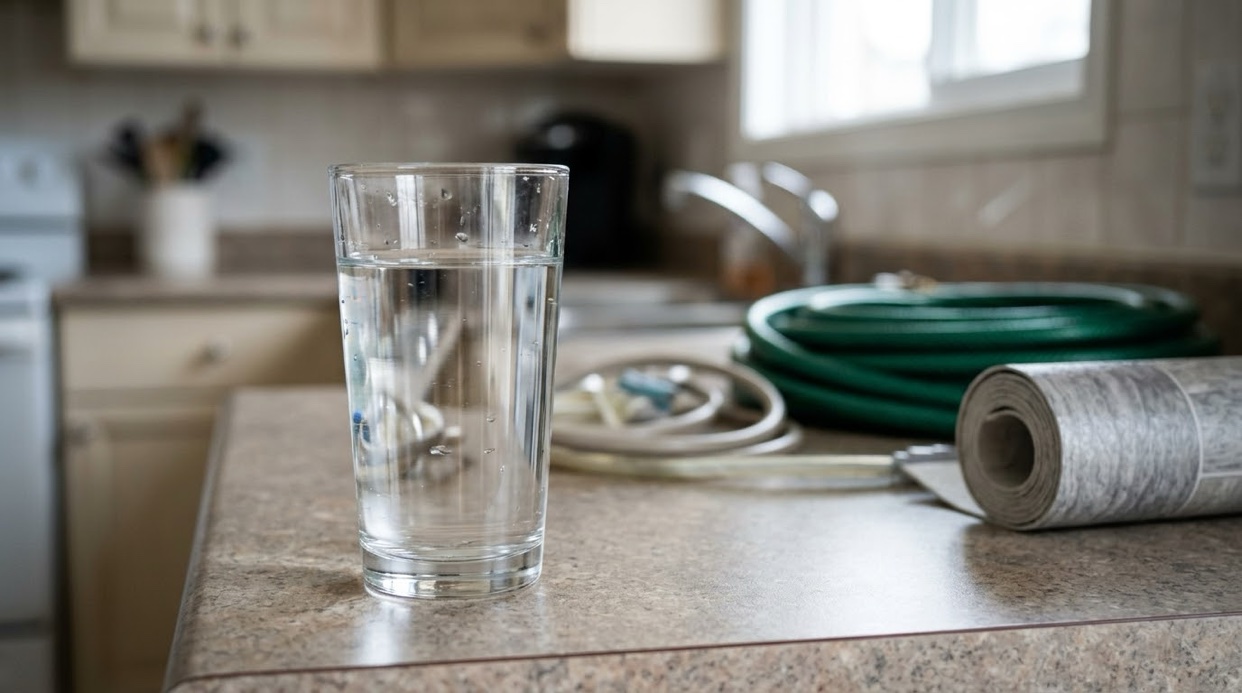
Because of its flexibility and strength, DEHP has historically been used in a vast range of industrial and commercial goods. You will find it in flexible vinyl flooring, wall coverings, rainwear, footwear, medical tubing, blood bags, garden hoses, and various food packaging materials. The chemical does not form a permanent chemical bond with the plastic matrix; instead, it sits within the polymer structure as a dissolved additive. Over time, DEHP can slowly leach, evaporate, or migrate out of plastic products into surrounding air, liquids, or soil.
When reviewing a local water quality report or an analytical laboratory testing panel, it is easy to stumble over long chemical names. One compound that is frequently confused with DEHP is di(2-ethylhexyl) adipate, or DEHA. While the names sound remarkably similar, DEHP and DEHA are entirely different chemicals with distinct molecular structures, different manufacturing uses, and separate regulatory standards under federal drinking water rules.
Under United States Environmental Protection Agency (EPA) regulations, DEHA has a Maximum Contaminant Level of 0.4 milligrams per liter (mg/L). DEHP, on the other hand, is regulated under a far stricter standard. Confusing these two compounds on a lab report can lead to a significant misunderstanding of your water quality, so it is vital to pay close attention to the exact chemical name listed on your test results.
How DEHP Gets Into Drinking Water
The primary pathway for this chemical to enter public drinking water supplies and private wells stems from industrial activity. As defined by the EPA, the main source of DEHP contamination in water is:
“Discharge from rubber and chemical factories.”
Manufacturing facilities that synthesize phthalates, synthesize PVC plastics, or process synthetic rubber generate industrial wastewater. If that wastewater is improperly treated, spilled, or discharged into surface streams or groundwater aquifers, DEHP enters the raw water supply.
Once released into the environment, DEHP behaves differently than many common water contaminants like nitrate or road salt. DEHP has a very low solubility in water, meaning it does not dissolve easily. Instead of remaining evenly mixed in liquid water, the chemical is hydrophobic (“water-fearing”). When it enters a lake, river, or groundwater basin, DEHP rapidly attaches itself to organic matter, suspended sediment particles, and soil beds.
Because it clings to sediment, DEHP can persist in lake bottoms and riverbeds for long periods. However, fine sediment particles carrying bound DEHP can still be drawn into drinking water intake pipes or private wells during pumping, bringing the contaminant into municipal or home water systems. Additionally, the historic disposal of PVC plastics and industrial waste in unlined landfills can create localized leachate plumes that slowly migrate toward groundwater sources over decades.
The Numbers: Understanding the Regulatory Limits
To evaluate DEHP in public drinking water, the EPA establishes two critical figures: the Maximum Contaminant Level Goal (MCLG) and the Maximum Contaminant Level (MCL).
- MCLG (Maximum Contaminant Level Goal): Zero
- MCL (Enforceable Limit): 0.006 mg/L (6 parts per billion)
The Maximum Contaminant Level Goal is set at zero. The EPA establishes an MCLG of zero for a drinking water contaminant when scientific evidence indicates that the compound is a probable human carcinogen and there is no known safe threshold of exposure below which no health risk exists. The zero goal represents a health-focused target where no adverse biological effects would be expected.
The Maximum Contaminant Level is set at 0.006 milligrams per liter, which translates directly to 6 parts per billion (ppb).
It is crucial to understand why the enforceable limit (0.006 mg/L) sits above the health goal of zero. An MCLG is strictly a health-based evaluation without consideration of cost or detection technology. The MCL, however, is a legally enforceable standard set as close to the MCLG as feasible. The EPA determines this limit by evaluating the practical limits of analytical detection equipment in laboratories and the physical performance capabilities of standard municipal water treatment systems. The existence of an enforceable limit above zero does not mean that 6 ppb is a completely risk-free concentration; rather, it reflects the legal balancing point of what environmental testing and industrial filtration technology can reliably measure and remove on a mass scale.
Health Effects
Federal drinking water guidelines outline specific health concerns tied to long-term ingestion of DEHP. The official EPA health-effects evaluation for DEHP in drinking water states:
“Reproductive difficulties; liver problems; increased risk of cancer.”
To understand what this means for consumers, each of these three explicit outcomes can be examined based on how the body processes the compound:
First, reproductive difficulties stem from the classification of DEHP as an endocrine disruptor. When consumed over long periods, the chemical can interfere with the hormone systems that regulate normal reproductive biology, organ development, and tissue function.
Second, liver problems occur because the liver acts as the primary organ responsible for filtering, metabolizing, and clearing synthetic organic chemicals from the bloodstream. Chronic exposure to DEHP forces the liver to continuously process the compound, which can lead to cellular strain, tissue damage, and altered liver enzyme activity.
Third, an increased risk of cancer relates directly to how DEHP and its metabolic breakdown products interact with cellular pathways over a lifetime of exposure. Chronic ingestion of drinking water containing DEHP above the enforceable limit elevates the long-term statistical probability of cellular mutation and tumor development.
What Removes DEHP from Water
When DEHP is present in raw water supplies, standard municipal clarification and settling processes are often insufficient to remove it entirely. However, two specialized treatment technologies are recognized by the EPA for effective DEHP removal: Granular Activated Carbon (GAC) and Reverse Osmosis (RO).
Granular Activated Carbon (GAC)
Activated carbon is an exceptionally effective treatment method for DEHP because of the chemical’s hydrophobic nature. Granular activated carbon features a vast network of microscopic pores, creating an immense internal surface area—a single gram of activated carbon can have a surface area exceeding 1,000 square meters. Because DEHP does not dissolve easily in water, it strongly prefers to adsorb (bind chemically and physically) to the carbon surface as water passes through the filter bed.
Reverse Osmosis (RO)
Reverse osmosis systems push water under high pressure through a dense, semi-permeable membrane. The microscopic pore structure of an RO membrane allows water molecules to pass through while physically blocking larger organic molecules. Because DEHP has a relatively large molecular size compared to water, the membrane mechanically screens out the compound, routing it away in the reject waste stream while clean water passes through to the storage tank.
Boiling Water Does Not Work
A common misconception is that boiling water makes it safe from all contaminants. While boiling kills biological pathogens like bacteria and viruses, it does not remove DEHP. Because DEHP has a significantly higher boiling point than water (over 700°F / 385°C), boiling your water will cause pure water to evaporate into steam while leaving the DEHP behind. This process actually concentrates the chemical in the remaining water, raising the exposure level.
Filter Ratings and Certifications Explained
When evaluating carbon block or post-filters, you will frequently encounter micron ratings. A micron is one-millionth of a meter. A filter’s micron rating measures the size of the openings in the filter media:
- Nominal Micron Rating: Indicates that the filter can trap a general percentage (such as 85%) of particles of a given size. It allows some larger particles to pass through under pressure fluctuations.
- Absolute Micron Rating: Represents a strict laboratory guarantee that the filter will trap 99.9% or more of particles at that specified micron size or larger.
When shopping for home treatment, never rely on a generic claim of being “NSF certified.” A plain label statement like that tells you nothing about what the filter actually removes. Always look for the specific standard number:
- NSF/ANSI Standard 53 (Health Effects): This certification verifies that a drinking water system has been independently tested and proven to reduce specific health-related contaminants—such as volatile organic chemicals and heavy metals—to levels below federal safety limits.
- NSF/ANSI Standard 58 (Reverse Osmosis): This certification specifically applies to reverse osmosis point-of-use systems, verifying structural integrity, safety of materials, and proven performance in reducing health-related contaminants under high-pressure filtration.
An Honest Installer’s Take
I’ve been working in the water treatment trade since 1994, installing and servicing residential filtration equipment across all kinds of well and municipal water supplies. Over the last thirty years, I’ve seen just about every water quality issue you can think of.
When people read about DEHP, they usually picture giant chemical plants dumping slop straight into a river. While industrial discharge from rubber and chemical factories is certainly the primary source of raw water contamination, DEHP is as much a plumbing-and-plastics story as it is a factory story.
Back in the day, flexible plastic lines, cheap vinyl hoses, and unrated commercial gaskets were put into service without a second thought about chemical migration. While modern plumbing codes have tightened up significantly regarding what materials can touch potable water, older infrastructure and off-spec plastic fittings can still play a role in low-level localized chemical leaching.
If you test your water and find DEHP near or above the limit, don’t panic or buy into high-pressure sales pitches for massive, over-engineered equipment you don’t need. The practical, real-world answer for a homeowner is straightforward: install a quality point-of-use reverse osmosis system or an NSF/ANSI Standard 53 certified activated carbon filter right at the kitchen drinking tap. Protect the water you actually drink and cook with first. Maintain your filter cartridges on a strict schedule, and you can keep this chemical out of your glass with complete confidence.
What to Do If You’re Concerned
If you want to verify the safety of your home’s drinking water regarding DEHP, follow these three clear steps:
- Check Your Local Consumer Confidence Report (CCR): If you receive water from a public utility, your provider is required by federal law to publish an annual water quality report. Look through the synthetic organic chemicals section of the CCR to see if DEHP has been detected in your municipal supply and at what levels.
- Conduct Independent Laboratory Testing: If you draw water from a private well, or if you want to verify the water coming out of your specific kitchen faucet, order a testing bottle from a state-certified drinking water laboratory. Request a panel that includes synthetic organic compounds (VOCs/SOCs) and phthalates.
- Select Certified Point-of-Use Treatment: If testing confirms the presence of DEHP, select an activated carbon or reverse osmosis treatment unit that carries explicit certification under NSF/ANSI Standard 53 or Standard 58 for the reduction of this specific compound.
Facts first, then filter. — Steve
Leave a Reply