
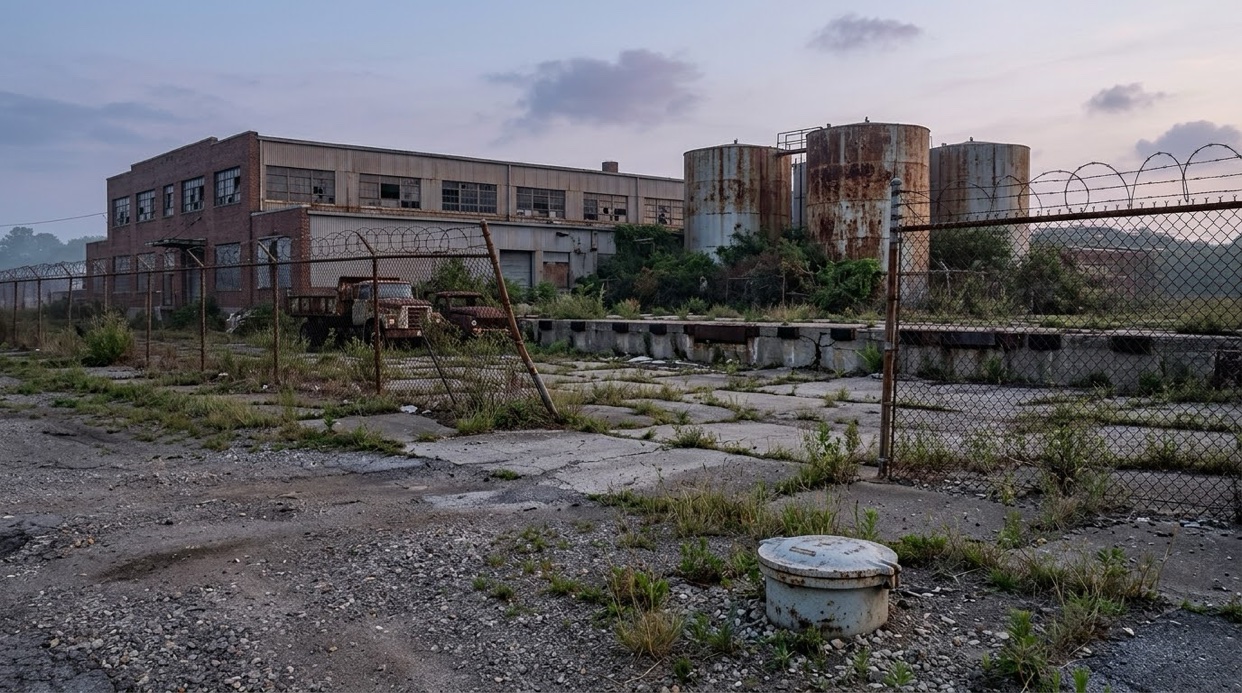
1,1,1-Trichloroethane — often referred to in the trade as methyl chloroform — was for decades one of American industry’s workhorse synthetic solvents. Working in water treatment since 1994, I started right at the end of its working life, and I’ve been explaining its leftovers in well tests ever since. If you’ve been looking over local water quality reports or digging into volatile organic compounds (VOCs) in groundwater, you might have spotted it listed among regulated chemicals. Even though production was halted worldwide decades ago, it remains an environmental legacy pollutant that occasionally shows up in municipal systems and private wells near historical industrial centers.
How It Gets Into Your Water
Back when 1,1,1-trichloroethane was in widespread use, it served primarily as a heavy-duty metal degreaser in factories, auto repair shops, and electronics manufacturing plants, alongside being a solvent in commercial paints, adhesives, and correction fluids. The EPA’s listed source for it in drinking water is discharge from metal degreasing sites and other factories. Because it is a potent ozone-depleting substance, its manufacture was phased out globally in the mid-1990s under international environmental agreements. However, chemicals don’t simply disappear because a factory closes. Accidental surface spills, leaking industrial storage tanks, and careless waste disposal practices sent considerable volumes of this solvent straight into the ground. Once underground, 1,1,1-trichloroethane moves relatively easily through sandy or gravelly aquifers, forming underground plumes that can persist and linger in water tables for generations.
What It Can Do to Health
The health effects the EPA lists for long-term exposure above the limit are liver, nervous system, or circulatory problems — those are the three systems this solvent goes after. The federal concern is chronic exposure: drinking water with 1,1,1-trichloroethane above the legal limit over many years, not a single glass. That is why federal standards exist to keep it out of the tap.
Public systems test for VOCs routinely. If you are on a private well near an old factory, degreasing shop, or waste site, testing is up to you — a certified laboratory can run a VOC panel on a sample of your water.
The EPA Drinking-Water Limit
Federal safety limits for this contaminant are tightly defined under the Safe Drinking Water Act. The Maximum Contaminant Level Goal (MCLG) — the non-enforceable health goal — is set at 0.20 mg/L, which equals 200 parts per billion (ppb). The legally enforceable Maximum Contaminant Level (MCL) for public water systems is 0.2 mg/L, the same 200 ppb. Here the health goal and the legal limit are the exact same number: what the EPA considers the safe level is what utilities are legally held to. If a municipal water utility detects test results pushing toward or crossing that threshold, it is legally required to institute treatment upgrades or issue public warnings.
Which Home Filtration Actually Removes It
If laboratory water testing confirms the presence of 1,1,1-trichloroethane in your supply, basic sediment filters or standard water softeners won’t touch it. You need treatment specifically engineered to strip out volatile organic chemicals:
- Granular activated carbon (GAC) and solid carbon block: This is the primary, most effective frontline home treatment. These filters pull the contaminant out of the water through adsorption, locking its molecules onto the carbon’s high surface area as water flows through the media.
- Reverse osmosis (RO): A certified RO system works as a robust backup or secondary barrier. The carbon stages in an RO unit do the heavy lifting for VOC removal; the membrane is the backstop.
Understanding Certification Standards
The water treatment marketplace is full of marketing noise, so you need to look at hard facts. If you’re buying a carbon or RO system to deal with industrial VOCs, look for independent third-party certification — and read what each seal actually covers:
- NSF/ANSI Standard 53: This is the health-effects standard for drinking water treatment units. In plain English: a unit certified to Standard 53 has been independently tested for the specific health-related contaminant reduction claims named in its certification — for a solvent like this one, the claim that matters is VOC reduction. The standard’s name by itself guarantees nothing; the claim list is what counts.
- NSF/ANSI Standard 58: This is the performance standard for reverse osmosis systems. In plain English: it certifies that an RO system reduces total dissolved solids and the specific contaminants named in its certification — only those named, not everything in the water.
A generic eco-seal or broad manufacturer claim on the box doesn’t cut it. The filter’s official performance data sheet or certification listing must explicitly name 1,1,1-trichloroethane as a certified reduction claim. If the paperwork doesn’t list the contaminant by name, don’t rely on it to protect your family.
Facts first, then filter. — Steve
Leave a Reply