
Di(2-ethylhexyl) adipate is a plasticizer — a chemical compound added to plastics to make them soft, flexible, and pliable rather than rigid. Without plasticizers, materials like polyvinyl chloride (PVC) would be brittle and crack easily. You encounter this substance regularly in everyday life, as it is commonly used in flexible food-packaging films, clear plastic tubing, vinyl hoses, and synthetic leather. It enters the environment mainly from industrial facilities that produce the chemical or manufacture soft plastic goods.
The Naming Trap: Don't Mix These Up
Before looking at the numbers, there is an important detail to keep straight. This chemical is frequently confused with a near-namesake: Di(2-ethylhexyl) phthalate.
While the names sound almost identical and both are used as plasticizers, they are entirely different chemical compounds with different regulatory standards, health profiles, and safety numbers. If you are reviewing a water quality report or researching contaminants online, make sure you are looking at Di(2-ethylhexyl) adipate. Mixing up these two chemicals will give you the wrong facts about what is in your water.
Where Di(2-ethylhexyl) Adipate Comes From
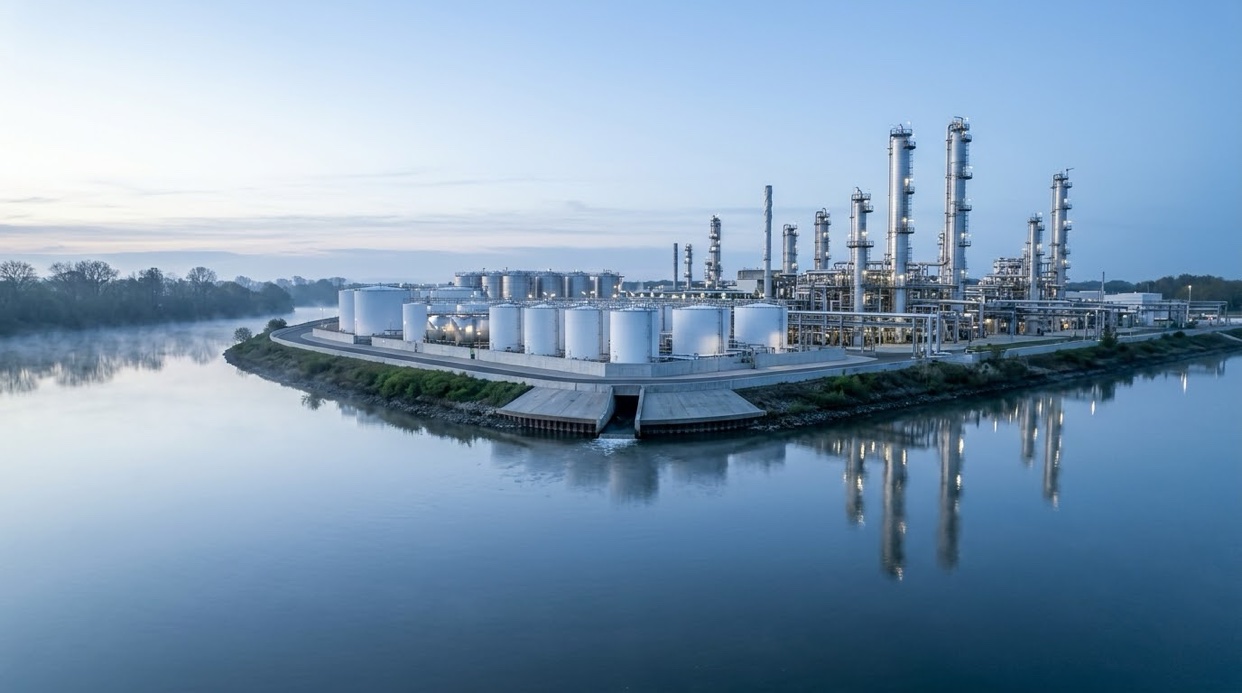
Plastics themselves do not simply dissolve into drinking water reservoirs overnight. According to the U.S. Environmental Protection Agency (EPA), the listed source of Di(2-ethylhexyl) adipate in drinking water is discharge from chemical factories.
When chemical plants produce this plasticizer or use it in high-volume plastic manufacturing, industrial wastewater containing residual amounts of the compound can be discharged into local waterways. Once released, the chemical flows downstream into rivers, lakes, and municipal water intakes. Over time, surface water containing factory runoff can also seep into the ground, carrying dissolved chemicals into deep aquifers that supply private drinking water wells.
Health Effects: What the Science Says
Understanding chemical health reports comes down to looking directly at what regulatory agencies have established through research. For long-term exposure to Di(2-ethylhexyl) adipate at levels above the federal limit, the EPA's stated health effects are weight loss, liver problems, or possible reproductive difficulties.
These effects are tied to chronic, long-term consumption of water that exceeds federal safety benchmarks over an extended period. Knowing the exact health effects listed by public safety officials helps you make practical, informed decisions about your home's water quality without relying on guesswork or exaggeration.
EPA Regulatory Standards
The EPA establishes formal benchmarks to ensure public water supplies remain within safe operational levels. Below are the official regulatory numbers for Di(2-ethylhexyl) adipate in drinking water.
Di(2-ethylhexyl) Adipate EPA Quick Facts
- EPA Health Goal (MCLG): 0.4 mg/L
- EPA Enforceable Limit (MCL): 0.4 mg/L (400 parts per billion)
- Listed Source: Discharge from chemical factories
- Stated Health Effects (above limit): Weight loss, liver problems, or possible reproductive difficulties
Notice that the EPA health goal (MCLG) and the enforceable limit (MCL) are the exact same number: 0.4 mg/L. Unlike certain contaminants where the health goal is set to zero, the EPA determined that maintaining levels at or below 0.4 mg/L (400 parts per billion) provides a safe margin for human health, so the enforceable standard matches the health target directly.
How It Is Removed from Water
If testing confirms the presence of Di(2-ethylhexyl) adipate in your water supply, standard mechanical filtration will not solve the issue. Ordinary sediment filters, paper cartridges, and mesh strainers are built solely to catch suspended solids like dirt, silt, and rust particles. They cannot filter out dissolved organic chemicals on a molecular level.
The recognized treatment methods for removing Di(2-ethylhexyl) adipate from drinking water are granular activated carbon (GAC) and air stripping.
Granular activated carbon works through adsorption. As water flows through the carbon bed, the massive surface area and internal pores of the carbon media pull the organic chemical out of the water and hold it securely. Air stripping, on the other hand, is a process often used in larger treatment setups where water is mixed with high-volume air streams to force volatile or semi-volatile compounds out of the liquid phase into the air. For home water treatment, whole-house or point-of-use activated carbon systems serve as the standard, effective barrier against dissolved synthetic chemicals.
Facts first, then filter. — Steve
Leave a Reply