
Cyanide is a chemical compound composed of carbon and nitrogen atoms bound together. In environmental water testing, the EPA regulates and measures cyanide in drinking water as free cyanide — that is the exact framing of the federal standard. "Free cyanide" simply refers to cyanide ions (CN-) or hydrogen cyanide (HCN) dissolved directly in the water itself, unattached to heavy metals.
While the word cyanide often brings dramatic spy novels or acute poisoning stories to mind, the discussion around drinking water quality is entirely different. It focuses on low, trace-level concentrations that can occasionally find their way into public water systems or groundwater supplies from industrial activities.
Where It Comes From and How It Enters Water
The Environmental Protection Agency (EPA) lists the primary sources of cyanide in drinking water as discharge from steel and metal factories, and discharge from plastic and fertilizer factories.
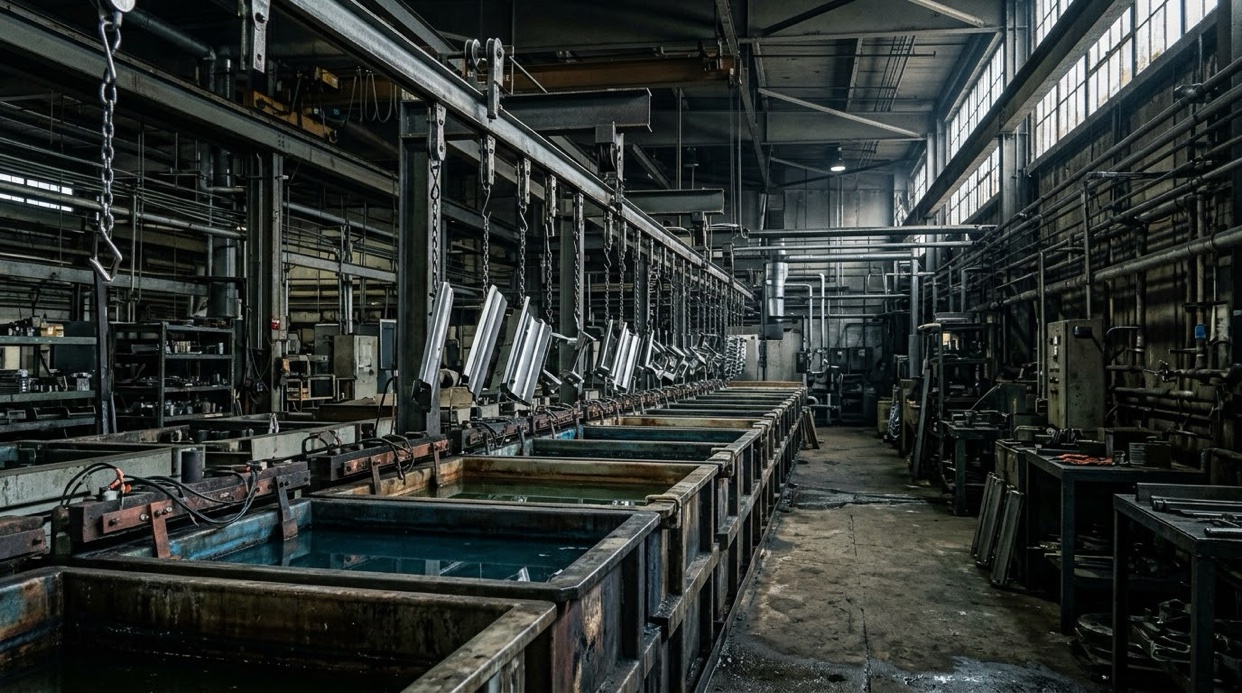
Industrial manufacturing relies on cyanide compounds for a variety of heavy processes. Metal finishing and electroplating plants use cyanide solutions to clean and coat metal components, while chemical facilities use it to produce synthetic fibers, plastics, and nitrogen-based fertilizers.
When manufacturing facilities manage wastewater poorly, experience pipe or storage vessel leaks, or discharge inadequately treated effluent into nearby waterways, free cyanide enters surface water bodies like rivers and streams. Once in surface water, it can migrate downriver toward municipal drinking water intakes. In areas surrounding industrial complexes or unlined waste pits, industrial spills can also leach through soil layers over time, eventually contaminating local groundwater aquifers that feed private wells.
Cyanide Drinking Water Standards (EPA Facts)
- EPA Health Goal (MCLG): 0.2 mg/L
- EPA Enforceable Limit (MCL): 0.2 mg/L (200 parts per billion)
- Comparison: The health goal and the limit are the same number.
- Regulated Form: Measured and regulated specifically as free cyanide.
- Stated Long-Term Health Effect: Nerve damage or thyroid problems (at levels above the limit).
Health Effects of Cyanide
Federal drinking water regulations monitor cyanide levels strictly to protect consumers from long-term exposure risks.
The EPA sets safety benchmarks based on chronic health assessments:
- Target Health Concerns: The EPA's stated health effect of drinking water containing cyanide at levels above the limit over long periods is nerve damage or thyroid problems.
- Goal vs. Limit: The EPA set both the health goal (MCLG) and the enforceable limit (MCL) at 0.2 mg/L, which is 200 parts per billion. The health goal and the limit are the same number. Unlike known carcinogens — where the health goal is set at zero — the health goal for free cyanide is explicitly 0.2 mg/L.
Public water utilities are legally required to test for free cyanide routinely. If testing reveals concentrations higher than the 200 parts per billion limit, the utility must notify the public and take engineering measures to drop levels back into compliance.
How Cyanide Is Removed from Water
If a certified laboratory test reveals free cyanide in your water supply, standard sediment filters and basic activated carbon pitcher filters alone are not the answer. Sediment filters only trap physical particles like dirt, rust, and silt, while standard carbon filters are not designed to reliably strip away light ionic contaminants like free cyanide on their own.
Effective removal relies on chemical oxidation at the utility scale, or reverse osmosis for home treatment:
Utility-Level Oxidation
Municipal water plants handle free cyanide by introducing strong oxidizing agents — such as chlorine, ozone, or sodium hypochlorite — under controlled pH conditions. This process, known as alkaline chlorination or chemical oxidation, breaks down the cyanide molecules before the water enters the distribution system.
Home-Level Reverse Osmosis (RO)
For private well owners or individual households, reverse osmosis is the recognized treatment for dissolved contaminants like this. A reverse osmosis system operates by using house water pressure to force raw water through a semi-permeable membrane with microscopic pores.
- Separation: The membrane acts as a molecular barrier. Water molecules pass through the microscopic pores, while larger dissolved inorganic ions — including free cyanide — are blocked.
- Rejection: The trapped cyanide molecules are flushed away down a wastewater drain line rather than accumulating inside the filter media.
- Purification: Clean, purified drinking water is collected in a holding tank and delivered straight to a dedicated drinking faucet.
Before investing in home treatment equipment, always have your water tested by an accredited laboratory to verify the exact levels and form of any contaminants present in your supply.
Facts first, then filter. — Steve
Leave a Reply