
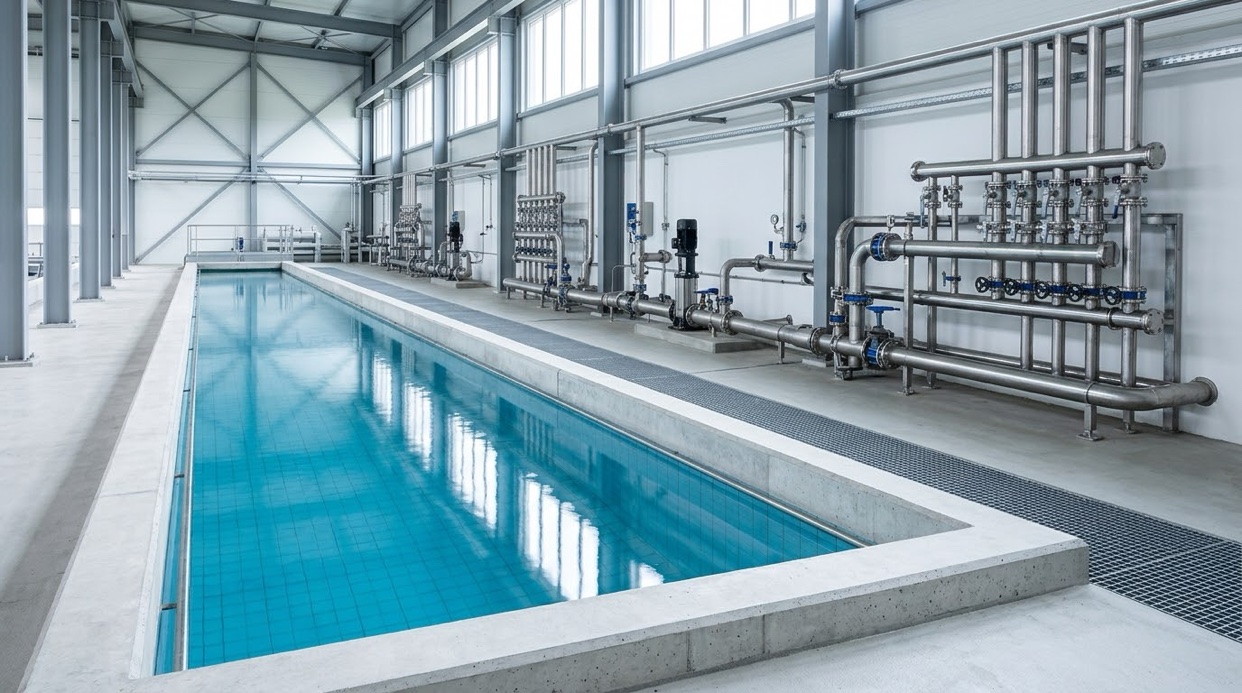
Chlorite is not a chemical that anyone dumps into a river or sprays on a farm field. It is a disinfection byproduct, formed when public water treatment plants use chlorine dioxide to treat drinking water. That means chlorite is a contaminant created by the water treatment process itself rather than an industrial spill or agricultural runoff.
Understanding what chlorite is and how it behaves helps put its presence in municipal tap water into proper perspective.
The Disinfection Trade-Off
Public water utilities use chlorine dioxide for very good reasons. It is a powerful disinfectant that kills dangerous pathogens, bacteria, and viruses. It also helps manage unwanted tastes and odors caused by algae and decaying vegetation in raw water sources.
Chlorite is the price tag that comes with using chlorine dioxide. When chlorine dioxide reacts with organic material and breaks down during the disinfection process, chlorite is produced as an unavoidable byproduct. The water treatment plant's job is balancing the two: adding enough chlorine dioxide to keep the water biologically safe from disease-causing germs while keeping the resulting chlorite levels below federal safety limits.
How It Ends Up in Tap Water
Because chlorite is created right inside the water plant, it does not leach through soil or wash off farm fields. Instead, it forms directly inside the treatment tanks during the disinfection phase. Once formed, it stays dissolved in the finished water as it leaves the facility and travels through miles of distribution pipes, water mains, and service lines until it comes out of your kitchen tap.
Chlorite Drinking Water Standards (EPA Facts)
- EPA Health Goal (MCLG): 0.8 mg/L
- EPA Enforceable Limit (MCL): 1.0 mg/L (1,000 parts per billion)
- Primary Contaminant Source: Byproduct of drinking water disinfection using chlorine dioxide.
- Primary Health Concerns: Anemia; infants and young children: nervous system effects.
- Companion Limit: Chlorine dioxide (the disinfectant itself) has a maximum residual disinfectant level (MRDL) of 0.8 mg/L, with the same stated health concern — anemia, and nervous system effects in infants and young children.
Health Effects of Chlorite
Federal standards establish strict limits on chlorite levels to safeguard public health, paying special attention to vulnerable populations.
The EPA bases its health benchmarks on biological risks associated with chlorite ingestion:
- Infants and Young Children: EPA's stated concern is nervous system effects in infants and young children at levels above the limit.
- Anemia and Blood Impacts: Ingesting chlorite at levels exceeding safety thresholds can also cause anemia — a condition where the body lacks enough healthy red blood cells to carry adequate oxygen to tissues.
Because infants and growing children consume more water per pound of body weight than adults and have developing nervous systems, maintaining chlorite levels at or below federal limits is critical for water suppliers using chlorine dioxide.
How Chlorite Is Managed and Removed
Unlike agricultural pesticides or industrial solvents, chlorite is primarily controlled at the treatment plant by managing the chlorine dioxide dose and optimizing plant operations. Municipal operators carefully monitor feed rates, water temperature, and contact time to ensure disinfection is complete without generating excessive chlorite byproducts. It is fundamentally a utility-level management issue rather than a problem created on private property.
From a home treatment perspective, activated carbon filters can reduce chlorite levels in drinking water. However, chlorite is rarely a standalone issue that requires a homeowner to go out and buy a whole-house filter system. Most public water systems using chlorine dioxide keep chlorite levels comfortably within federal compliance margins.
Nobody should buy water treatment equipment for chlorite without having their local consumer confidence report or an independent laboratory test in hand.
Facts first, then filter. — Steve
Leave a Reply