
pH in Drinking Water: The 0–14 Scale, Explained
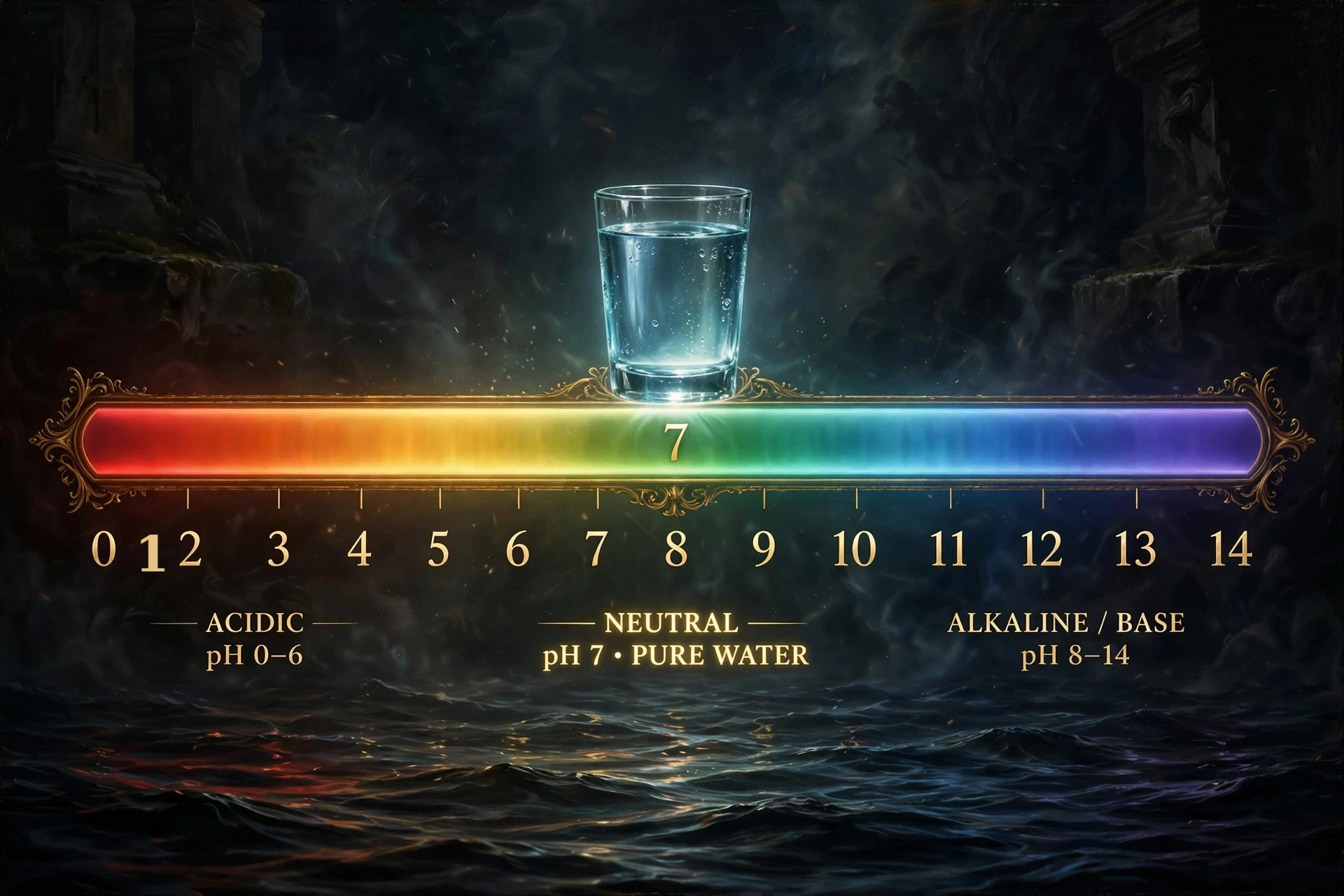
“Check the pH, then filter.” It’s the first half of how I work — and the part most people skip. pH is just a number from 0 to 14 that tells you how acidic or alkaline your water is. 7 is neutral. Below 7 is acidic. Above 7 is alkaline. That’s the whole scale.
What the letters mean. pH stands for “potential of hydrogen.” It’s a straight measure of hydrogen ions in the water — more of them, lower the number, more acidic; fewer of them, higher the number, more alkaline.
Here’s what lives on it:
The scale, with real examples.
- 0: Sulfuric acid (battery acid), concentrated hydrochloric acid, aqua regia (nitric + hydrochloric acid — dissolves gold)
- 1: Hydrochloric acid (stomach acid)
- 2: Lemon juice (citric acid), lime juice, vinegar (acetic acid), cola (phosphoric acid)
- 3: Orange juice, grapefruit juice, sports drinks, energy drinks, pickles
- 4: Tomato juice, beer, wine
- 5: Black coffee, plain rainwater, bananas
- 6: Milk (lactic acid), saliva
- 7: Pure water — neutral; human blood (7.4); heavy water (deuterium oxide — also neutral, its neutral point is 7.4)
- 8: Seawater, baking soda solution (sodium bicarbonate), eggs
- 9: Toothpaste, hand soap
- 10: Milk of magnesia (magnesium hydroxide)
- 11: Household ammonia (ammonium hydroxide)
- 12: Bleach (sodium hypochlorite)
- 13: Oven cleaner (sodium hydroxide)
- 14: Drain cleaner (lye — concentrated sodium hydroxide)
Notice how much of everyday life sits between 2 and 9. Your morning coffee is a 5. Your tap water should be near 7 or 8. Anything at the extremes — near 0 or near 14 — will burn you, and that’s the point of the scale: distance from 7 is intensity.
What it means for YOUR water. The EPA wants drinking water between 6.5 and 8.5. That’s not a health limit — it’s about your pipes and your taste buds. Below 6.5, water turns corrosive: it eats at copper pipes and can pull lead out of old solder and fixtures. That’s the real danger of acidic water — not the pH itself, but what it drags along with it. Above 8.5, you get bitter taste, scale buildup, and chlorine doesn’t disinfect as well.
How to test. pH test strips are cheap and fine for a rough number. A liquid drop kit is better. A digital pH meter is the best value if you test often. Or just read your utility’s annual water quality report — pH is always on it.
How to fix it. Acidic water (below 6.5): a calcite neutralizer filter — water flows through crushed limestone that dissolves just enough to bring the pH up. Simple, no electricity, no chemicals to refill. Very acidic well water may need soda ash injection instead. After reverse osmosis: RO strips the minerals out and usually drops the pH, so most under-sink RO systems finish with an alkaline post-filter — a cartridge of calcite, oyster shell media, or a calcite/Corosex blend that puts minerals back in and brings the pH up before the water hits your glass. Alkaline water (above 8.5): most people don’t treat it for drinking, but acid-injection systems exist for extreme cases.
What I’d buy
Treatment type: a calcite neutralizer tank for acidic well water, sized for your flow rate and installed at the point of entry. Test pH before and after — the number tells you when the media needs replacing.
pH won’t hurt you directly. But it decides what your water does to your pipes — and that decides what ends up in your glass. Check the pH, then filter. That’s the order.
Curious what’s in your tap? Start with What’s In Your Water?
Leave a Reply