
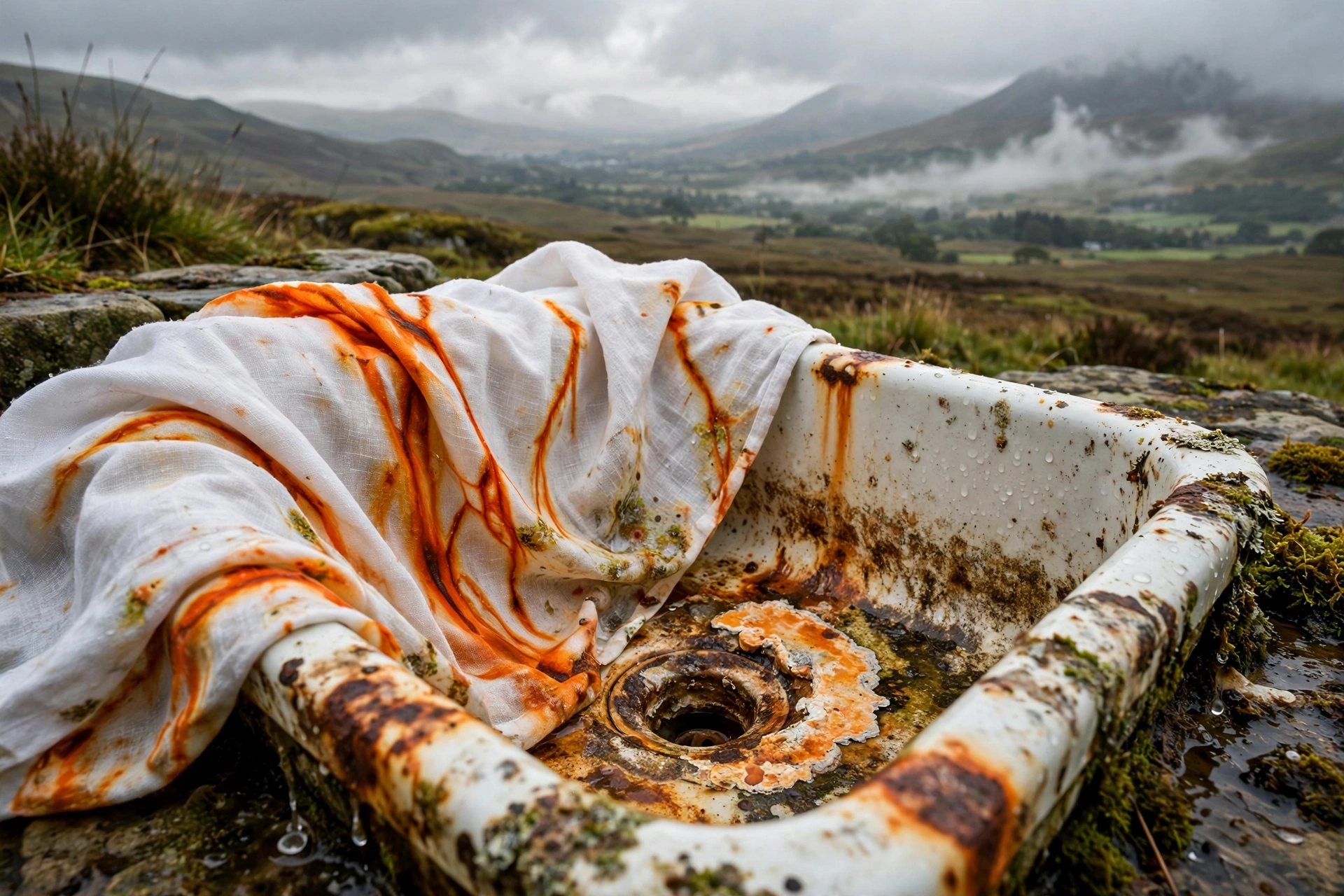
Iron is the most complained-about well-water problem in America — not because it’s dangerous, but because it ruins everything it touches. Orange stains, metallic taste, ruined laundry. If your toilets look like a pumpkin patch, keep reading.
What it is. Iron is one of the most abundant elements on earth, and it dissolves readily into groundwater. It shows up in two forms: ferrous iron (dissolved, invisible — the water looks clear until it hits air) and ferric iron (oxidized, the familiar rust particles). There’s also iron bacteria, which feed on iron and leave slimy orange deposits — a whole separate headache.
Where it comes from. Geology — iron-bearing rock and soil — plus corrosion of iron pipes and well components. It’s the classic private-well complaint, especially in the Northeast, Midwest, and anywhere with acidic groundwater.
The health picture, honestly. Here’s the good news: iron in drinking water is not a health hazard at typical levels. The EPA regulates it under a Secondary Standard — 0.3 mg/L — based on taste, staining, and color, not health. Your body needs iron. But “not dangerous” doesn’t mean “fine” — at high levels it feeds iron bacteria, stains every fixture you own, and makes the water undrinkable by taste.
How to test. A lab test that reports both total iron and dissolved (ferrous) iron, plus pH — the form of iron determines the treatment. Also check for iron bacteria if you see slimy deposits. Test the raw well water before any treatment equipment.
What removes it. Match the treatment to the form: for low levels of dissolved iron, a water softener (cation exchange) handles it. For higher levels, oxidation plus filtration — an oxidizing filter with manganese greensand or similar media converts dissolved iron to filterable particles and strains them out. Aeration followed by filtration works for moderate levels. For very low levels, sequestering agents (polyphosphates) keep iron dissolved so it doesn’t stain — but that doesn’t remove it.
What does NOT remove it. Standard carbon filters, pitcher filters, UV, chlorine alone (chlorine oxidizes iron but you still need filtration to remove the particles), boiling.
What I’d buy: Treatment type: it depends on your test numbers — that’s not a dodge, it’s the truth with iron. Low dissolved iron: a water softener. Higher levels: an oxidizing filter (manganese greensand or equivalent) at the point of entry. Test first for iron level, form, and pH, then size the system to the numbers.
Iron won’t hurt you, but it’ll wreck your fixtures, your laundry, and your patience. The fix is well understood — you just have to match it to your water. Test, identify the form, treat accordingly.
Curious what’s in your tap? Start with What’s In Your Water?
Leave a Reply