
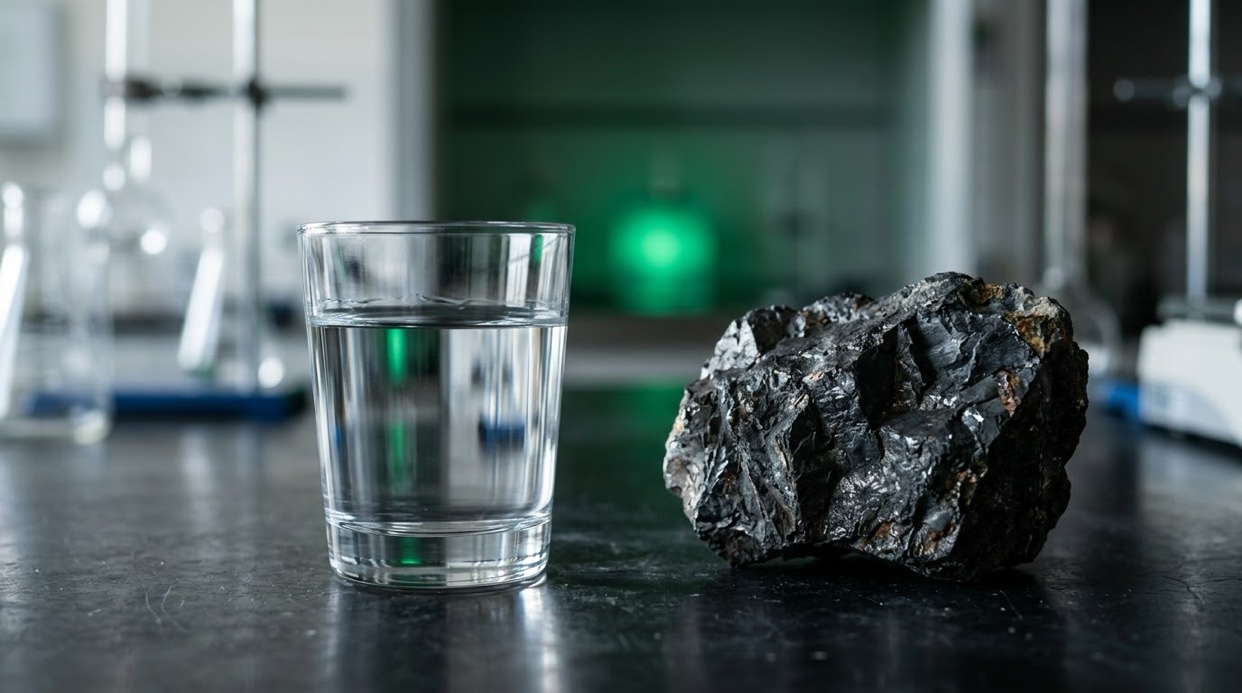
If you take a look at the periodic table, you will spot thallium sitting way down near the bottom at element number 81. It is a soft, malleable heavy metal that sits right in the same chemical neighborhood as lead, bismuth, and mercury.
To be completely candid with you, thallium is known in chemistry circles as one of the most toxic metals on the entire periodic table. Because of that reputation, seeing it mentioned anywhere near drinking water can sound alarming. But as someone who spends every day helping homeowners understand water chemistry, my goal is always to bring facts, clarity, and practical solutions—not panic.
Here is a clear, honest breakdown of what thallium is, where it comes from, how it behaves in drinking water, and what you can do about it if it turns up in your home.
1. What Thallium Is and Where It Comes From
Thallium is a naturally occurring heavy metal found in trace amounts throughout the Earth’s crust. In its pure form, it is odorless, tasteless, and bluish-white, though it quickly tarnishes to a dark gray when exposed to air.
Historically, thallium compounds were widely used as the active ingredient in rat poisons, ant baits, and agricultural insecticides. Due to its extreme toxicity, the United States banned thallium-based pesticides for residential and agricultural use decades ago.
Today, thallium is primarily used in specialized industrial manufacturing:
- Electronics & Semiconductors: It is used in fiber optics, infrared optical equipment, and electronic switches.
- Specialty Glass: Thallium is added to create high-density, high-refractive glass formulations.
- Pharmaceuticals & Imaging: Small amounts of radioactive thallium isotopes are used in specialized medical heart scans.
2. How It Gets Into Drinking Water
Thallium enters water supplies through both natural geological processes and industrial activities:
- Natural Erosion: As groundwater flows through deep subterranean rock and mineral deposits containing trace thallium, small amounts can naturally leach into private wells and aquifers.
- Coal Combustion & Fly Ash: Burning coal in power plants releases thallium into the air in fly ash, which can settle on surface waters (rivers and reservoirs) or wash into local soil and groundwater.
- Cement Plant Emissions & Smelting: Processing cement and smelting base metals (like copper, lead, and zinc) can release thallium into nearby surface water runoff.
- Legacy Waste Sites: Old industrial sites or legacy disposal areas where thallium-bearing wastes were buried can slowly leach into surrounding soil and groundwater tables over time.
3. What It Can Do to a Person’s Health
Because thallium is biologically toxic even at extremely small concentrations, exposure through drinking water is taken very seriously by health authorities.
Thallium mimics potassium inside the human body. Because your cells rely heavily on potassium to function, they accidentally absorb thallium, which disrupts crucial cellular processes.
Consuming water with elevated thallium levels over long periods—or at high acute doses—can lead to severe health complications:
- Nervous System Effects: Peripheral neuropathy, including numbness, tingling, muscle weakness, and joint pain.
- Characteristic Hair Loss: Sudden or significant hair loss (alopecia) is one of the classic, hallmark signs of thallium exposure.
- Gastrointestinal Distress: Abdominal pain, severe vomiting, and persistent diarrhea.
- Organ Damage: Long-term exposure places stress on internal organs, potentially causing liver and kidney damage as well as blood changes.
Because these health risks exist even at trace concentrations, safety limits for thallium are set at extremely low levels compared to almost any other element.
4. The Federal Picture: The EPA Limit
To safeguard public health, the U.S. Environmental Protection Agency (EPA) strictly regulates thallium in public water supplies under the Safe Drinking Water Act.
The standard: The Maximum Contaminant Level (MCL) for thallium is 0.002 mg/L (which is equal to 2 parts per billion).
To put that into perspective, 2 parts per billion is an extraordinarily tiny amount—roughly equivalent to two drops of water in a giant, olympic-sized swimming pool. Public water systems are required to test for thallium and ensure finished tap water remains below this strict threshold. For private well owners, testing and verification are up to you.
5. How a Homeowner Can Test Their Water
Because thallium is odorless, colorless, and tasteless, you cannot detect it with your senses—and because the safety limit is a tiny 2 parts per billion, DIY home test kits and color strips cannot detect it.
To test your drinking water for thallium:
- Use a State-Certified Laboratory: You must send a water sample to a certified drinking water laboratory.
- High-Precision Instrumentation: Labs analyze thallium using advanced equipment like ICP-MS (Inductively Coupled Plasma Mass Spectrometry), which can accurately quantify trace metals down to fractions of a part per billion (EPA Method 200.8).
- Metals Panel: Thallium is usually ordered as part of a comprehensive heavy metals panel that includes lead, arsenic, cadmium, mercury, and antimony.
6. How to Remove Thallium from Drinking Water
If a certified laboratory report shows thallium in your water near or above the 0.002 mg/L limit, addressing it promptly with effective treatment technology is essential.
Effective Removal Technologies
- Reverse Osmosis (RO): An under-sink point-of-use Reverse Osmosis system is the most dependable, practical home method for removing thallium. RO forces water through a dense semi-permeable membrane that rejects dissolved heavy metal ions—including thallium (Tl^+)-while allowing pure water molecules to pass through.
- Cation Exchange Resins: Because dissolved thallium typically exists as a positively charged ion (Tl^+), specialized strong-acid cation exchange resins can remove it from water. However, competing hardness minerals (like calcium and magnesium) can reduce resin efficiency over time.
- Activated Alumina: Specialized media filters using activated alumina can adsorb trace metals including thallium under properly controlled pH and flow conditions.
What Does NOT Work
- Standard Pitcher Filters & Basic Carbon Blocks: Standard activated carbon filters excel at removing chlorine and improving taste, but they do not reliably remove dissolved heavy metals like thallium.
- Standard Sediment Filters: Physical filters alone cannot capture dissolved ions.
The Role of Physical Pre-Filters & Micron Ratings
While physical sediment pre-filters cannot catch dissolved thallium ions, they play a vital protective role by keeping rust, silt, and sediment from clogging your RO membrane or ion exchange media.
When choosing pre-filters, pay attention to micron ratings:
- Micron Rating: A micron measures pore size. A 5-micron or 1-micron sediment pre-filter is standard ahead of an RO system.
- Nominal vs. Absolute Rating:
- Nominal Rating: Traps approximately 60% to 85% of particles at that micron size under standard flow.
- Absolute Rating: Traps 99.9% or more of particles at the rated micron size under strict lab testing conditions.
Using an absolute-rated pre-filter ensures consistent physical protection for your primary thallium removal equipment.
The Bottom Line
Thallium is an extremely toxic heavy metal, but finding it in drinking water at dangerous levels is quite rare. Because the federal EPA limit is set at a strict 0.002 mg/L (2 parts per billion), any presence near or above that line should be addressed immediately.
If you rely on a private well near coal-burning power plants, legacy industrial sites, or areas with unique geology, get your water tested by a certified lab. If thallium is detected, a quality under-sink Reverse Osmosis system is your most dependable, straightforward defense for safe, pure drinking water.
Leave a Reply