
If you take a look at the periodic table, you will spot zinc sitting right at element number 30. It is a bluish-white, lustrous metal that plays a massive role in both industrial manufacturing and biological life.
Most people know zinc for its immune-boosting powers in throat lozenges or as the main active ingredient in white sunblock. But in the world of plumbing and home water quality, zinc is best known as the protective coating applied to steel pipes to keep them from rusting.
As someone who spends every day helping homeowners make sense of what comes out of their taps, I can tell you that finding zinc in your water is usually a story about taste and aging plumbing rather than a health emergency. Here is a clear, honest breakdown of what zinc is, how it gets into your water, how it affects your home, and what you can do about it.
1. What Zinc Is and Where It Comes From
Zinc is a naturally occurring metal found throughout the Earth’s crust, rock formations, and soil. It is also an essential micronutrient that human bodies, animals, and plants need in trace amounts to function properly.
In manufacturing and construction, zinc is an absolute workhorse:
- Galvanization: Most refined zinc is used to “galvanize” steel and iron—coating them with a thin layer of zinc to shield the underlying metal from moisture and rust.
- Brass and Alloys: Zinc is alloyed with copper to create brass, which is widely used in plumbing valves, fittings, and household faucets.
- Die Casting & Rubber: It is used in manufacturing automotive parts, hardware, rubber products, and paints.
2. How It Gets Into Drinking Water
While zinc can naturally leach into groundwater from mineral-rich rock deposits or enter surface water via industrial discharge and mining runoff, the vast majority of zinc issues in residential drinking water come from your home’s plumbing.
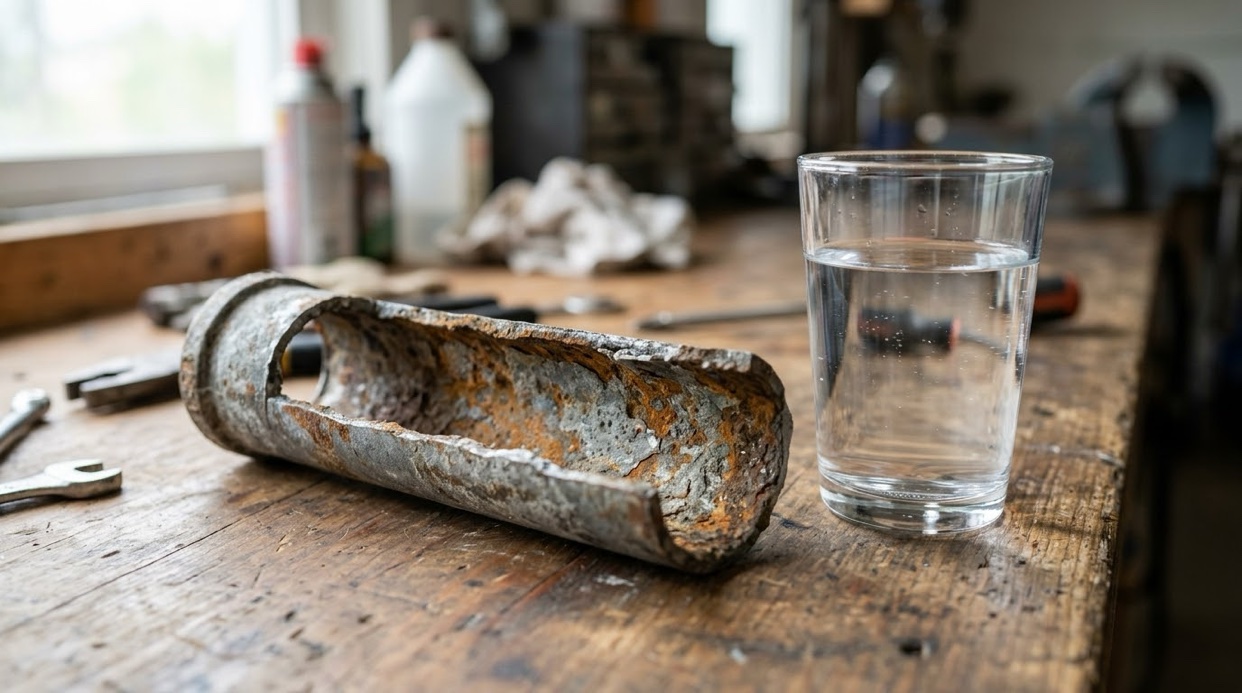
- Corrosion of Galvanized Pipes: Up until the mid-to-late 20th century, galvanized steel pipes were standard in residential construction. Over time, as water flows through these lines, the protective zinc coating slowly dissolves into the water supply.
- Brass Fixtures and Fittings: Modern and older plumbing fixtures made of brass contain zinc. Water sitting motionless in brass faucets or fittings overnight can pick up trace amounts of zinc.
- Acidic Water (Low pH): Water with a low pH (acidic water) or low mineral content is naturally aggressive. Acidic water dissolves the zinc out of galvanized pipes and brass fittings much faster than pH-balanced water.
3. What It Can Do to a Person’s Health: The Two-Sided Story
When evaluating zinc in drinking water, it helps to keep a balanced perspective: zinc is mostly an aesthetic and plumbing story, not a poison story.
- The Essential Nutrients Side: Zinc is vital for a healthy immune system, DNA synthesis, wound healing, and cell growth. You absorb it daily through foods like meat, shellfish, nuts, and seeds.
- The High Concentration Side (Taste & Tummy Upset): At elevated levels in drinking water, zinc gives water an astringent, harsh, or bitter metallic taste, and can give the water a greasy-looking film or milky appearance. Drinking water with very high zinc concentrations can cause acute stomach irritation, nausea, and cramps.
- The Copper Balance Problem: On a chronic level, consuming excessively high amounts of zinc over a long period can interfere with your body’s ability to absorb copper—another essential mineral. This induced copper deficiency can lead to anemia and neurological issues over time.
4. The Federal Picture: Secondary Standards vs. Health Limits
When looking at a water quality test, understanding how the U.S. Environmental Protection Agency (EPA) treats zinc is important.
Zinc has NO health-based EPA Maximum Contaminant Level (MCL).
Because zinc at typical tap water levels does not pose a primary toxicity threat to the general public, the EPA does not enforce a mandatory health limit. Instead, the EPA lists a Secondary Maximum Contaminant Level (SMCL) of 5 mg/L (milligrams per liter, or parts per million).
It is crucial to understand what a Secondary standard means:
- Secondary SMCLs are non-enforceable guidelines established to manage aesthetic qualities—specifically bitter metallic taste, odor, and milky appearance—rather than health hazards.
- Water typically becomes unpalatable due to a sharp metallic taste at levels around or above 5 mg/L, well before reaching levels that cause acute health risks.
5. How a Homeowner Can Test Their Water
At high concentrations, the obvious clue is sensory: your water will have an astringent, metallic taste or leave an oily sheen in glass containers. However, to know the exact numbers, you need proper testing.
- Skip DIY Home Test Strips: Over-the-counter dip strips sold at home centers are designed for basic pH, hardness, or free chlorine. They cannot measure specific metal concentrations like zinc accurately.
- Use a Certified Laboratory: Send a water sample to a state-certified drinking water laboratory. Labs use precise analytical testing, such as ICP-OES or ICP-MS (EPA Method 200.7 / 200.8), to give you an exact measurement in mg/L.
- Test First-Draw vs. Flushed Water: If you suspect aging galvanized pipes or brass faucets, collect a “first-draw” sample right when you turn on the tap in the morning, and a second sample after running the water for two minutes. If the first sample is high and the second is low, your internal plumbing or faucet is the source.
6. How to Remove Zinc from Drinking Water
If a lab report shows zinc levels exceeding the 5 mg/L secondary aesthetic threshold, effective home treatment technologies are readily available.
Effective Removal Technologies
- Reverse Osmosis (RO): An under-sink point-of-use Reverse Osmosis system is the most dependable, practical home method for removing zinc. RO forces water under pressure through a semi-permeable membrane that rejects dissolved zinc ions (Zn^{2+}) while allowing pure water molecules to pass through.
- Ion Exchange (Water Softeners): Standard cation exchange water softeners designed to remove calcium and magnesium can also effectively swap out dissolved zinc ions (Zn^{2+}) for sodium or potassium ions.
- Distillation: Countertop water distillers boil water into steam and condense it back into pure liquid, leaving zinc and other mineral salts behind in the boiling chamber.
The Honest Truth About Carbon Filters
Standard activated carbon block filters are great for removing chlorine and organic bad tastes, but they do not reliably remove dissolved inorganic metals like zinc on their own.
Pre-Filtration and Micron Ratings
If zinc is flaking off old pipes as physical particles of corrosion or rust, physical sediment pre-filters play an important role ahead of an RO system or softener.
When selecting pre-filters, pay attention to micron ratings:
- Micron Rating: A micron measures pore size. A 5-micron or 1-micron sediment pre-filter is standard practice ahead of an under-sink RO membrane.
- Nominal vs. Absolute Rating:
- Nominal Rating: Traps approximately 60% to 85% of particles at that micron size under standard flow.
- Absolute Rating: Traps 99.9% or more of particles at the specified micron size under strict lab test conditions.
Using an absolute-rated pre-filter ensures consistent physical protection against plumbing debris and rust particles.
The Bottom Line
Zinc in drinking water is primarily a story of aging galvanized steel pipes, brass fixtures, or acidic water dissolving your home’s plumbing.
Because zinc carries no mandatory health limit, compare your test results against the EPA secondary aesthetic guideline of 5 mg/L. If your water tastes unpleasantly metallic or tests high, flushing your faucet for a minute, correcting acidic water pH, or installing an under-sink Reverse Osmosis system will give you fresh, pure-tasting drinking water.
Leave a Reply