
If you take a look at the periodic table, you will spot nickel sitting right at element number 28. It is a hard, silvery-white metal known for its strength, resistance to corrosion, and shiny finish.
Most people know nickel from everyday objects—coins, keys, jewelry, and stainless steel cookware. But as someone who spends every day helping homeowners understand what comes out of their taps, I know that even common industrial metals can cause confusion when they show up on a drinking water report.
Here is a clear, honest breakdown of what nickel is, how it makes its way into your water, how it affects health, and what you can do about it at home without any sales hype or scare tactics.
1. What Nickel Is and Where It Comes From
Nickel is a naturally occurring element found throughout the Earth’s crust, soils, and rock deposits. Because it resists heat and corrosion so well, it is a true workhorse of modern industry:
- Stainless Steel & Alloys: Most refined nickel goes directly into producing stainless steel, brass, and bronze alloys used in modern appliances, cookware, and plumbing fixtures.
- Plating: It is widely used in electroplating to give hardware, taps, and automotive parts a bright, rust-resistant coating.
- Batteries & Electronics: Nickel is a vital component in rechargeable nickel-cadmium (NiCd) and nickel-metal hydride (NiMH) batteries, as well as lithium-ion battery chemistry.
2. How It Gets Into Drinking Water
Nickel reaches home tap water through three main pathways:
- Natural Erosion: As groundwater flows through subterranean rock and soil formations rich in nickel minerals, small amounts naturally dissolve into wells and aquifers.
- Industrial Discharge: Wastewater from metal plating operations, steel manufacturing, mining, and waste incineration can enter surface waters or filter down into nearby groundwater tables.
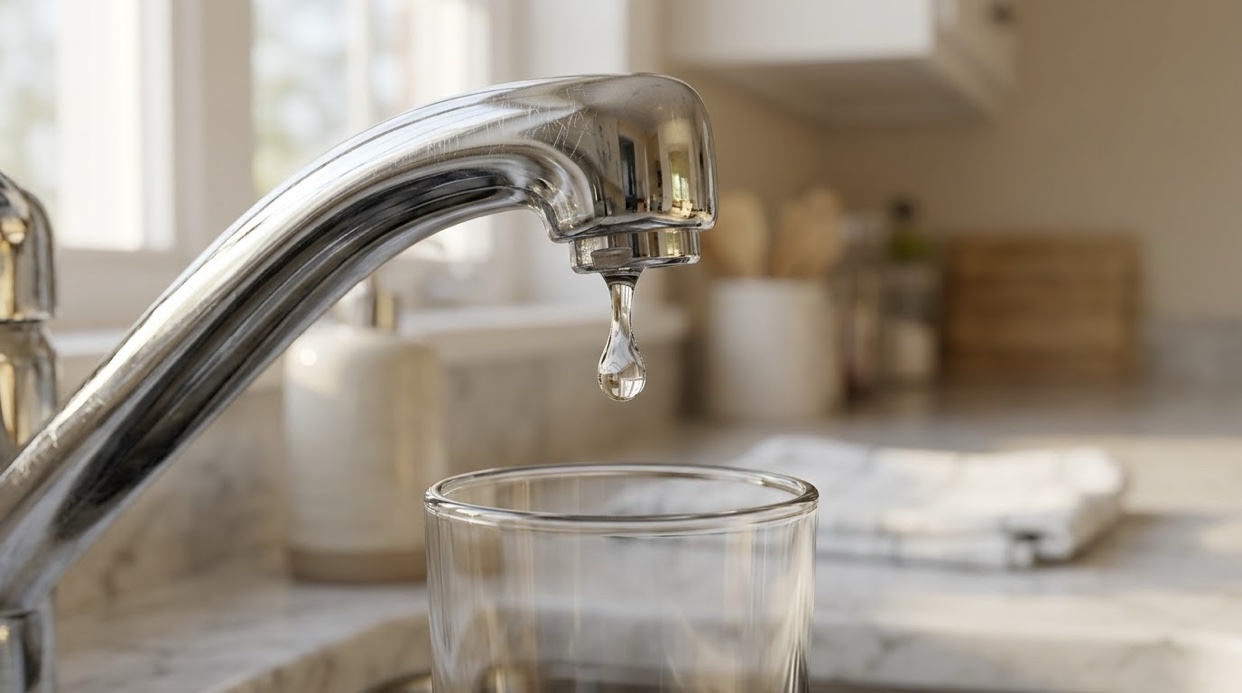
- Leaching from Fixtures (The Hidden Route): This is the pathway most homeowners miss. Nickel is commonly used in chrome- and nickel-plated faucets, brass fittings, and plumbing valves. When water sits motionless inside modern faucets overnight, nickel can slowly leach into the standing water. That is why a “first-draw” sample taken right when you turn on the faucet in the morning often tests significantly higher for nickel than a sample taken after letting the water run for a minute.
3. What It Can Do to a Person’s Health
Understanding nickel’s health effects comes down to route of exposure and individual sensitivity.
- Nickel Sensitization and Allergies: The most common real-world issue with nickel is contact allergy. Nickel allergy is the most common contact allergy, affecting roughly 1 in 10 people overall — up to about 17% of women and only about 3% of men. While most people think of skin contact with jewelry or watch bands, individuals who are already sensitized to nickel can experience allergic flare-ups—such as eczema, skin rashes, and dermatitis—from ingesting nickel in drinking water.
- Kidney and Stomach Concerns: Drinking water with elevated nickel concentrations over long periods can cause gastrointestinal distress (nausea, cramps) and place stress on the kidneys.
- The Cancer Question: When reviewing cancer claims, perspective is essential. The strong, established cancer evidence regarding nickel involves the inhalation of industrial nickel dust and vapors in workplace settings, not consuming dissolved nickel in tap water. Evidence linking ingested nickel in drinking water to cancer remains limited and inconclusive.
4. The Federal Picture: Regulations and Guidelines
When evaluating nickel on a water test, homeowners are often surprised by the regulatory history in the United States.
Nickel currently has NO enforced EPA Maximum Contaminant Level (MCL).
Here is the honest background you should know:
- The Remanded Standard: In July 1992, EPA set a Maximum Contaminant Level for nickel of 0.1 mg/L, effective in 1994. In 1995, after EPA and industry jointly asked the court to send the rule back, the federal appeals court in Washington vacated the standard and EPA removed it from the regulations. It has never been replaced, so nickel has no enforceable federal limit today.
- The World Health Organization (WHO) Benchmark: Because there is no active federal MCL in the U.S., health professionals look to international guidance. The WHO has established a health-based drinking water guideline value of 0.07 mg/L (which is equal to 70 parts per billion).
Labeling this correctly is important: 0.07 mg/L is an international guidance benchmark, not an enforceable U.S. federal limit.
5. How a Homeowner Can Test Their Water
You cannot see, taste, or smell nickel at typical drinking water concentrations. Finding out if it is in your tap water requires certified lab analysis.
- Skip DIY Home Test Strips: Over-the-counter dip strips sold at hardware stores are fine for basic pH or free chlorine, but they cannot accurately measure trace heavy metals like nickel down to parts-per-billion levels.
- Use a Certified Laboratory: Order a test kit from a state-certified drinking water laboratory using precise instrumentation, such as ICP-MS (EPA Method 200.8).
- Test “First-Draw” vs. “Flushed” Samples: If you want to know whether your kitchen faucet is the source of the nickel, collect two separate samples:
- First-Draw Sample: Collect the very first cup of water coming out of the faucet first thing in the morning after the water has sat unused overnight.
- Flushed Sample: Let the water run cold for 1 to 2 minutes before filling a second bottle.
If the first-draw sample is high but the flushed sample is low, your faucet or internal plumbing is leaching the nickel.
6. How to Remove Nickel from Drinking Water
If lab test results show nickel levels approaching or exceeding the WHO guideline of 0.07 mg/L, effective residential treatment options exist.
Effective Removal Technologies
- Reverse Osmosis (RO): An under-sink point-of-use Reverse Osmosis system is the most dependable home method for removing nickel. RO forces water under pressure through a semi-permeable membrane that rejects dissolved nickel ions (Ni^{2+}) while allowing clean water through.
- Distillation: Countertop water distillers boil water into steam and condense it back into liquid, leaving nickel and other dissolved mineral ions behind.
- Ion Exchange (Water Softeners): Because nickel exists in water as a positively charged ion (Ni^{2+}), standard cation-exchange water softeners can reduce nickel levels. However, high levels of calcium and magnesium hardness can compete with nickel for resin binding sites.
The Honest Truth About Carbon Filters
Standard activated carbon filters excel at removing chlorine and organic tastes, but they do not reliably remove dissolved inorganic metals like nickel on their own.
Pre-Filtration and Micron Ratings
While physical sediment pre-filters cannot catch dissolved nickel ions, they protect RO membranes and ion exchange resins from getting clogged with rust, sand, and silt.
When selecting pre-filters, pay attention to micron ratings:
- Micron Rating: A micron measures pore size. A 5-micron or 1-micron sediment pre-filter is standard practice ahead of an under-sink RO membrane.
- Nominal vs. Absolute Rating:
- Nominal Rating: Traps approximately 60% to 85% of particles at that micron size under standard flow.
- Absolute Rating: Traps 99.9% or more of particles at the rated micron size under strict lab test conditions.
Using an absolute-rated pre-filter gives your primary treatment equipment reliable, consistent physical protection.
The Bottom Line
Nickel in tap water often stems from sitting overnight in plated faucets or plumbing fixtures, though regional geology and industrial runoff can also play a role.
Because there is no active federal EPA limit, compare your lab test results against the World Health Organization guideline of 0.07 mg/L. If your test shows elevated nickel—or if anyone in your household suffers from a nickel allergy—flushing your tap for a minute before drinking, or installing a quality under-sink Reverse Osmosis system, will provide clean, pure drinking water you can trust.
Leave a Reply