
If you take a look at the periodic table, you will spot oxygen sitting at element number 8. It is the most abundant element in the Earth’s crust and the third most abundant element in the universe.
When homeowners ask me about oxygen in drinking water, I always start with an honest, fundamental fact: oxygen is the “O” in H_2O. Just like hydrogen, oxygen is part of the water molecule itself. You cannot filter oxygen out of water—without it, you wouldn’t have water at all!
Because oxygen forms the chemical backbone of water itself, no water quality report lists “oxygen” as a pollutant or contaminant. Instead, oxygen’s real role in water quality comes down to dissolved oxygen—oxygen gas (O_2) from the atmosphere that gets trapped and dissolved in liquid water.
As someone who spends every day helping people understand what comes out of their taps, here is a clear, plain-English breakdown of what dissolved oxygen does in your water, how it behaves as both a troublemaker and a vital water treatment tool, and what you need to know about it.
1. Dissolved Oxygen: Surface Water vs. Deep Wells
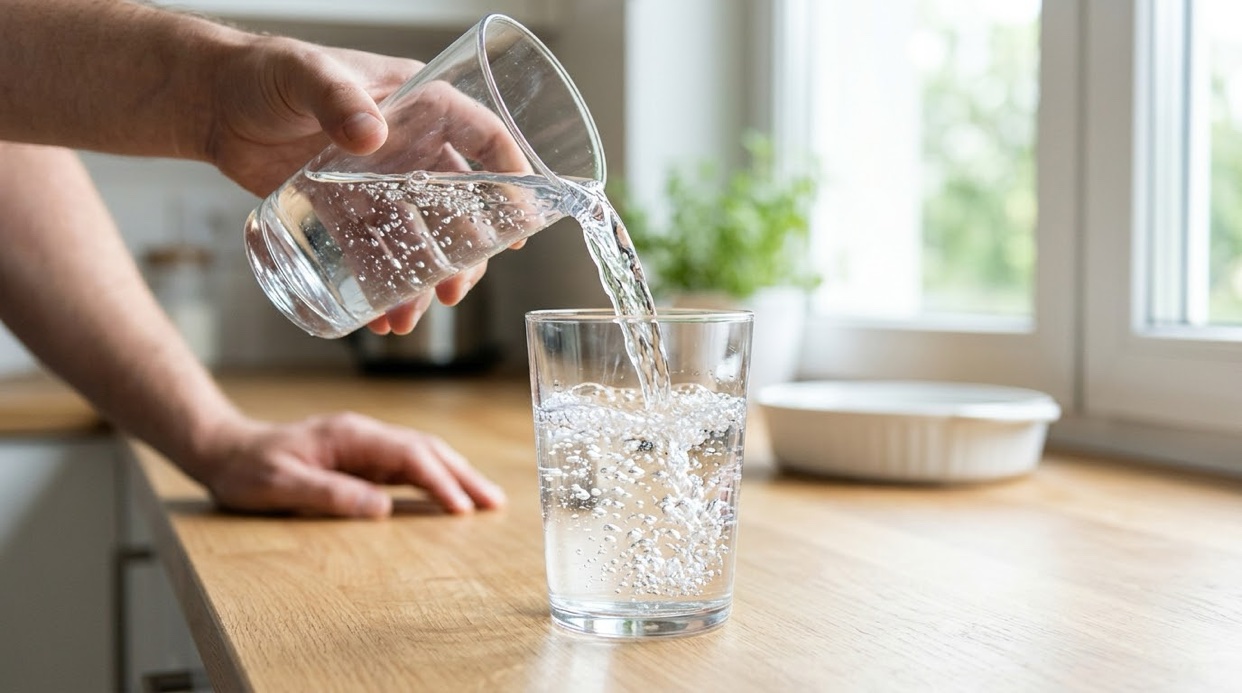
Dissolved oxygen refers to free, unbonded oxygen gas (O_2) molecules dissolved right into the water stream, usually measured in milligrams per liter (mg/L).
Where your water comes from dictates how much dissolved oxygen it contains:
- Surface Water (Rivers & Lakes): Water exposed to open air and flowing over rocks naturally absorbs oxygen from the atmosphere. Splashing waves, wind, and aquatic plants constantly aerate surface water, keeping dissolved oxygen levels high.
- Deep Well Water (Groundwater): Water trapped deep underground in subterranean aquifers has no contact with the atmosphere and limited exposure to air. As a result, deep well water often has very low dissolved oxygen—sometimes near zero.
How Dissolved Oxygen Affects Taste
Dissolved oxygen plays a major role in how your water tastes at the tap:
- Fresh and Crisp: Water rich in dissolved oxygen tastes fresh, light, and crisp.
- Flat or Stale: Water with very low or zero dissolved oxygen—like fresh draw from a deep private well—often tastes “flat,” heavy, or stale. (If you’ve ever poured well water back and forth between two clean glasses to mix in air, you’ve tasted how adding oxygen instantly perks up the flavor!)
2. Oxygen the Troublemaker: Corrosion and Rust Stains
While dissolved oxygen makes water taste great, it comes with a mischievous side inside your plumbing: oxygen drives corrosion and rust.
When dissolved oxygen interacts with metal pipes and plumbing fixtures, it acts as an oxidizing agent:
- Corrosion of Iron and Steel Pipes: Dissolved oxygen reacts with galvanized steel, cast iron, and copper pipes, slowly eating away at metal surfaces and causing pinhole leaks or flaking pipe debris.
- Creating Rust Stains: If your groundwater contains dissolved, invisible clear-water iron (Fe^{2+}), exposure to dissolved oxygen turns that iron into oxidized, insoluble red rust particles (Fe^{3+}). This chemical transformation is what leaves stubborn, reddish-orange rust stains on your sinks, toilets, and laundry.
3. Oxygen the Tool: How Water Treatment Professionals Use It
Here is where my trade gets interesting: water treatment professionals routinely use oxygen as one of our most effective filtration tools.
Because oxygen reacts so reliably with dissolved minerals, air injection oxidation is one of the oldest and most dependable tricks in the book for solving well water problems.
How Air Injection Oxidation Works
If your well water contains dissolved clear-water iron, manganese, or that terrible “rotten egg” hydrogen sulfide gas, we can use oxygen to clean it up naturally without harsh chemicals:
- Air Injection: We draw raw well water through a specialized valve that injects a pocket of air (rich in oxygen) directly into the water stream.
- Rapid Oxidation: The dissolved oxygen instantly reacts with the dissolved iron and manganese, converting them into solid, physical rust and mineral particles. It also oxidizes hydrogen sulfide gas into harmless elemental sulfur particles, destroying the odor.
- Physical Filtration: The water then flows through a media bed (like manganese dioxide or greensand) that physically traps those solid particles, allowing crystal-clear, odor-free water to flow to your home.
4. The Federal Picture: No EPA Limits
When reviewing a municipal water quality report or private well test, you will not find a federal safety standard for dissolved oxygen.
There is NO EPA standard for dissolved oxygen in drinking water.
Dissolved oxygen poses no primary health hazard to humans. Because it is a natural component of water with no toxic health effects, the U.S. Environmental Protection Agency does not regulate or set maximum limits for it in public drinking water supplies.
5. Testing for Dissolved Oxygen
Testing for dissolved oxygen requires specialized electronic meters or chemical titration kits, and it is usually done on-site right at the wellhead by water treatment professionals or environmental scientists.
As a homeowner, you rarely need a dissolved oxygen number on a lab report. What you see instead is what oxygen does in your home:
- Reddish rust stains in sinks (dissolved iron hitting air and oxidizing).
- A rotten egg smell from the tap (indicating an absence of oxygen in raw well water, allowing anaerobic sulfur-reducing bacteria to thrive).
- Flat-tasting water straight from a deep well.
6. The Truth About “Oxygenated” Bottled Water
In recent years, trendy bottled “oxygenated water” products and oxygen-injection gadgets have claimed that drinking oxygen-enriched water boosts athletic performance, increases energy, or detoxifies the body.
Here is the honest, plain-English truth: those health claims are scientifically unproven.
Your body is designed to absorb oxygen through your lungs, not your digestive tract. When you drink oxygenated water, the extra oxygen gas simply bubbles out in your stomach or gets burped out long before it ever reaches your bloodstream. Paying extra for bottled “oxygenated water” for health benefits is a marketing gimmick, plain and simple.
The Bottom Line
Oxygen isn’t a contaminant—it is the literal foundation of water itself (H_2O), and its dissolved gas form determines how fresh your water tastes and how dissolved minerals behave.
You don’t need to fear oxygen or try to filter it out. While dissolved oxygen can drive pipe corrosion, it is also one of the cleanest, most effective natural tools we have to eliminate rust stains and rotten-egg smells from well water.
Leave a Reply