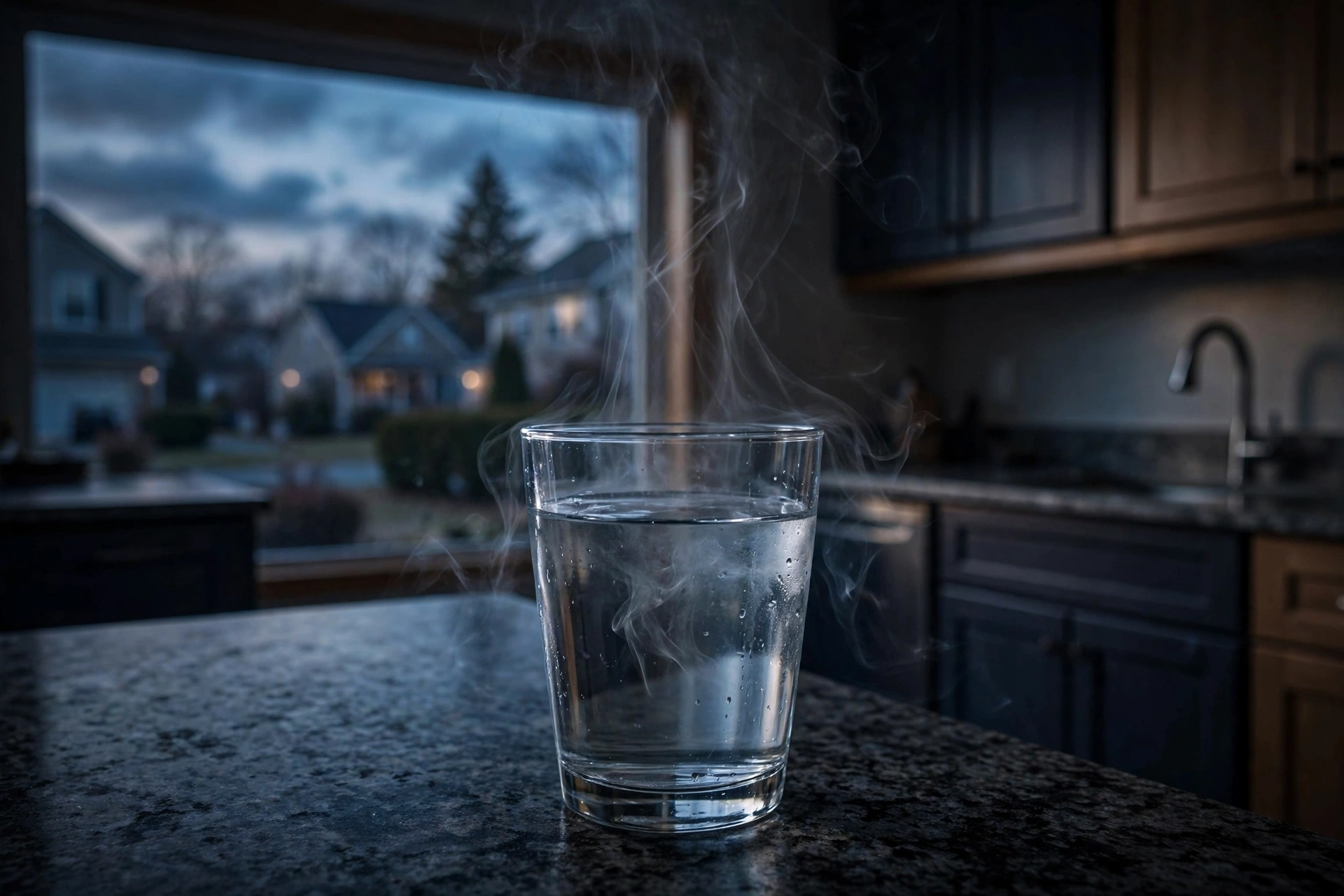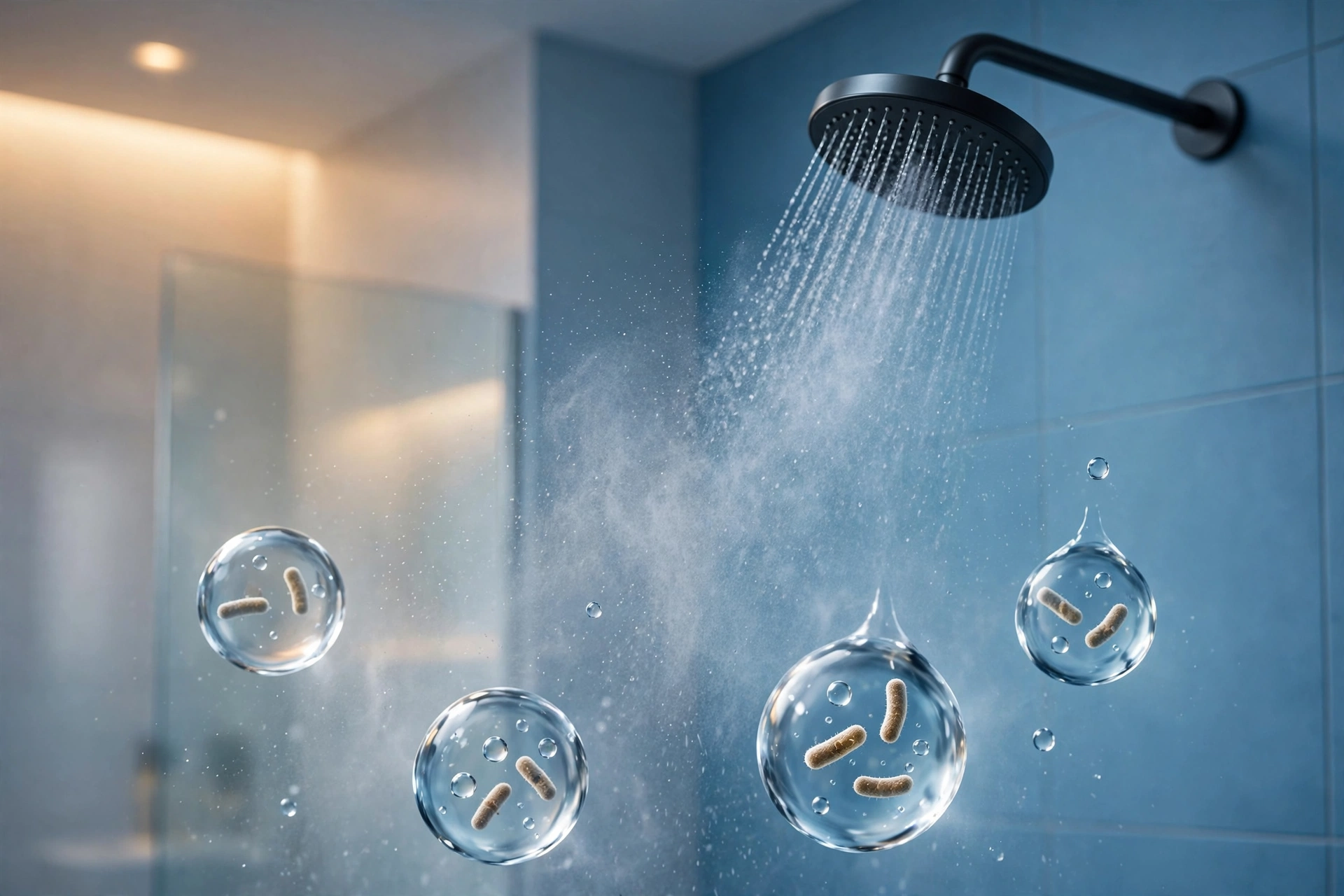
Legionella is the odd one in this series, so let’s get the biggest misconception out of the way first: you cannot get Legionnaires’ disease from drinking water. Not from your tap, not from your fridge. You get it from breathing in tiny droplets of contaminated water — shower mist, a hot tub’s steam, mist off a cooling tower or a decorative fountain. That’s the whole exposure story. Drink a glass of water with Legionella in it and nothing happens; stand in a mist of it and you could get sick.
It’s why the headline is the Bronx right now. In September 2026, New York City’s Health Department announced a community cluster of Legionnaires’ disease in Melrose and Morrisania in the South Bronx — 14 confirmed cases and 2 deaths — traced toward building cooling towers, ten of which tested positive for the bacteria and were ordered cleaned and disinfected. This is a bacteria that lives in buildings, not in reservoirs.
Where it comes from
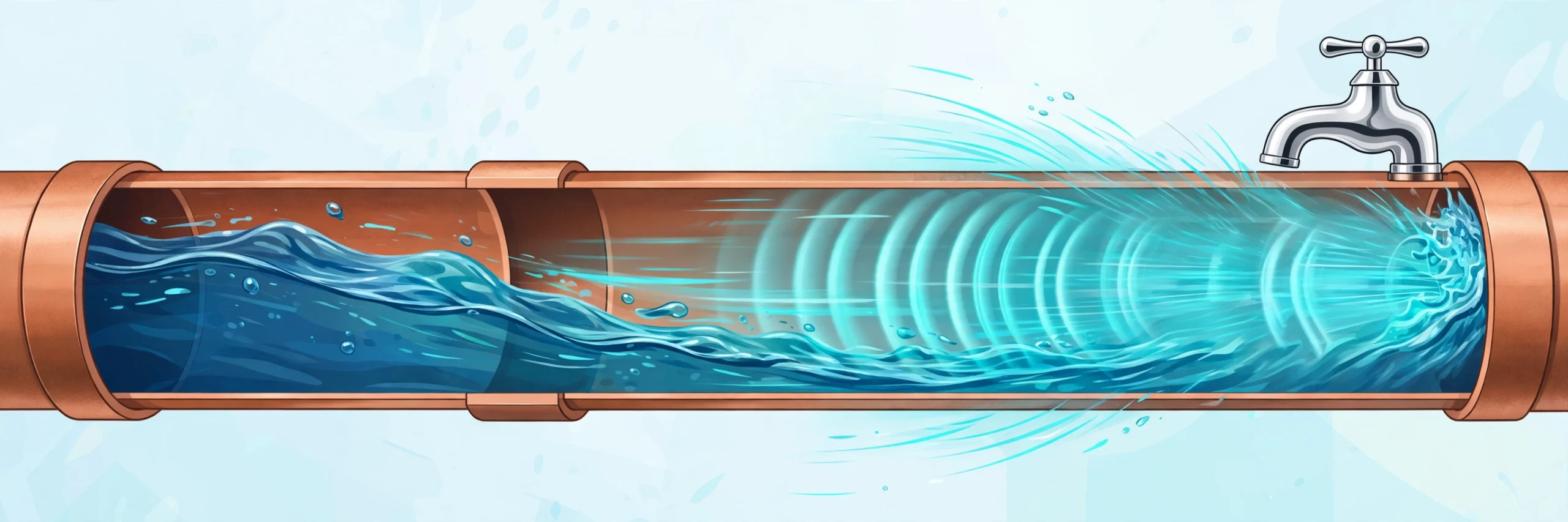
Legionella is a naturally occurring bacterium — it’s in lakes and streams everywhere at low levels. It becomes a problem when it gets into warm, stagnant man-made water: hot tubs, cooling towers, decorative fountains, and plumbing systems where water sits in the “Goldilocks” range, roughly 77–124°F (25–50°C). It loves biofilm — that slimy layer inside pipes — and scale buildup. The danger spots in a building are showerheads, rarely-used faucets, and hot-water systems that run too lukewarm to suppress it.
The health picture, honestly
Two illnesses. Legionnaires’ disease is a severe form of pneumonia — fever, cough, shortness of breath, muscle aches. Pontiac fever is the milder version, flu-like, usually clearing up on its own. Neither spreads from person to person.
Here’s the honest math from the CDC: most people exposed to Legionella don’t get sick at all. Roughly 1 in 20 people exposed develop illness — and of those who get Legionnaires’ disease, about 1 in 10 die, usually people already at higher risk. The risk group is specific: age 50 and older, current or former smokers, and people with chronic heart, lung, kidney, or liver disease, diabetes, or weakened immune systems. If that’s not you or your household, your personal risk is low. If it is someone you live with, this one deserves your attention — and EPA’s health goal for Legionella in drinking water is zero organisms.
How to test
There is no dip strip for this. Legionella is tested by environmental/water-quality labs using culture assays — the most common method — and PCR testing, the same approach NYC’s Health Department used on the South Bronx cooling towers (PCR finds the bacteria’s DNA but can’t tell live from dead, which is why confirmatory culture matters). For a homeowner, testing is usually a lab kit you order through a water-testing company. If you’re on city water, check with your water utility or local health department first — building-scale testing is their lane. Routine home testing is not standard; testing usually follows a known case or a concern about a specific source, like a neglected hot tub or a building’s cooling system.
What actually kills it
Heat and disinfection — not filtration alone. For a whole building or hot-water system, the proven methods per EPA and the CDC are:
- Heat. Superheat-and-flush: raise the hot water system above 140°F (60°C) and circulate it to kill the bacteria throughout the system. At home, keeping your water heater set to 140°F suppresses growth — just use mixing valves or be careful at the tap, because 140°F scalds.
- Chlorine / chlorine dioxide. Hyperchlorination — shock-dosing the system — is a standard remediation method after an outbreak.
- UV sterilization. A properly sized UV disinfection system kills Legionella as water passes through. One honest catch: UV gives no residual protection, so water downstream of the unit can recolonize — it works best as part of a system, not a magic bullet.
- Copper-silver ionization and ozone. Professional building-scale methods; used in hospitals and large facilities.
- Point-of-use microbial filters. Filters with a pore size of 0.2 microns or finer can block bacteria at a faucet or showerhead — agencies recommend these during outbreaks and for high-risk settings like transplant wards. Quick micron lesson that matters everywhere: 0.2 micron absolute means every pore is that size; 0.2 micron nominal means only some pores are — for bacteria, absolute is what counts.
And the boring free fixes that do a lot: flush fixtures you rarely use, clean or replace old showerheads, and don’t let a hot tub or fountain sit stagnant and warm.
What does NOT remove it:
- Any pitcher, faucet, or fridge filter not rated for microbes. Most are certified for chlorine taste and odor — they don’t touch bacteria.
- An under-sink RO system protecting your kitchen tap — against Legionella, that misses the point: exposure comes through mist, not the drinking tap.
- A water softener. It swaps hardness minerals; it disinfects nothing.
- Letting water sit. Stagnation is what Legionella wants. Flushing — the opposite — is part of the fix.
What I’d buy
Treatment type: a whole-house (or shower point-of-use) UV disinfection system, sized for the home’s flow rate — it kills bacteria, including Legionella, without changing the water’s taste or adding chemicals. Pair it with a 140°F water heater setting and a habit of flushing rarely used fixtures. For a household with someone high-risk — over 50, smoker, immune-compromised — 0.2-micron absolute point-of-use microbial filters on the showerheads add a physical barrier at the exact spot the mist reaches the lungs.
The bottom line
Legionella is one of the few contaminants in this series that your drinking-water filter can’t protect you from — because drinking isn’t the exposure. It’s the mist. The defense is heat, disinfection, and not letting water sit warm and stagnant. If your building’s water system has been neglected, test it; if your household has someone in the risk group, the point-of-use options above are worth doing.
Start here: What’s In Your Water? — learn how to read your water report and test your own tap.
October 2026 Update: New Jersey’s Legionella Law — the Deadline Is December 12, 2026
New Jersey now has one of the strongest Legionella laws in the country, and its big deadline is weeks away. The law (P.L. 2024, c. 66, originally Senate bill S2188, signed September 12, 2024) requires covered buildings to run a written Water Management Program built on ASHRAE Standard 188 — the industry blueprint for keeping Legionella from growing in building water systems.
Covered buildings include hospitals, nursing homes and assisted-living facilities, correctional facilities, residential high-rises of six or more floors with centralized hot water, hotels and motels with shared central water heaters, and any building with a cooling tower, spa, pool, ornamental fountain, mister, or humidifier. A home with four or fewer units is exempt — this law aims at buildings, not houses.
The dates that matter: programs had to be developed by September 12, 2026, and they must be fully operational by December 12, 2026, with records kept for at least five years. The penalties have teeth: up to $2,000 for a first violation, $5,000 for repeat violations, and $10,000 if a violation causes serious injury or death.
Across the river, watch New York City: a proposed Council bill (Int. 1094-2026) would make cooling-tower owners report Legionella results of 10 CFU/mL or higher to the Health Department — today, reporting only kicks in above 1,000 CFU/mL. It got a committee hearing in October 2026, with experts arguing both sides. It is a proposal, not a law — plenty of headlines blurred that line, so we’re drawing it clearly here.
Why a homeowner should care: Legionella grows in warm, still building water — the same conditions created by water heaters set too low and taps that sit unused. The law governs big buildings, but the biology doesn’t care how many units you have. Keep your water heater at 120°F or higher, flush taps that sit, and be careful with anything that makes a mist.
Update — October 2026: New York City’s proposed Legionella law, Intro 1094, has now had its City Council hearing. As proposed, building owners would have to report Legionella test results of 10 CFU/mL or higher to the city health department within 24 hours and take corrective action — today, owners don’t have to notify the department until a result reaches 1,000 CFU/mL. At the hearing, industry groups cautioned against triggering corrective action on a single low reading. The bill has not passed — I’ll update this page again when it does.