
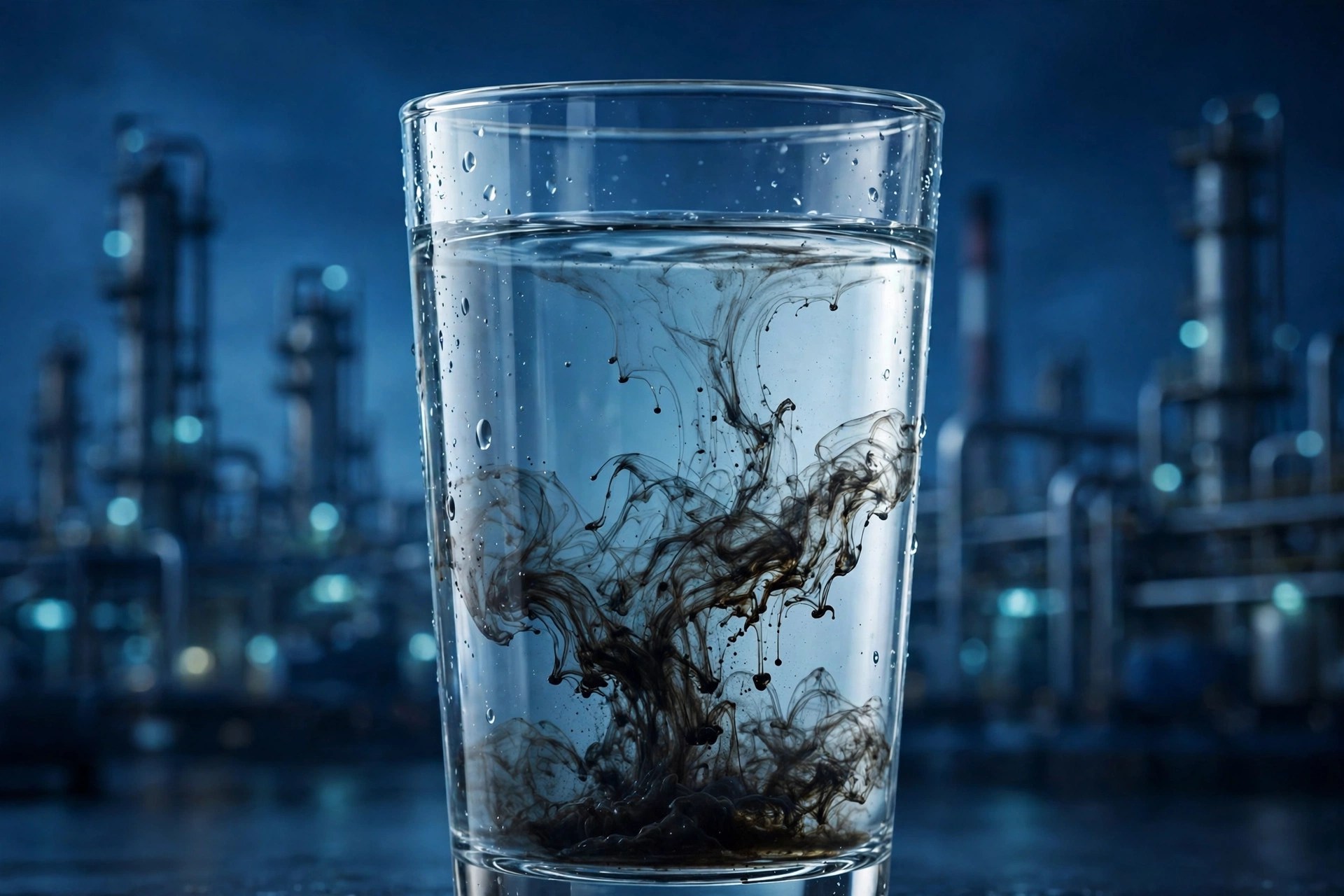
Benzene in Drinking Water
If there’s a gas station, an old factory, or a leaking underground fuel tank anywhere near your well, keep reading. Benzene is the one that shows up when petroleum gets into groundwater — and it’s the nastiest of the bunch.
What it is. Benzene is a volatile organic compound — a building block of gasoline and a feedstock for plastics, resins, and synthetic fibers. It’s a known human carcinogen. Not a “maybe,” not “suggestive” — the occupational evidence settled that decades ago, and the cancer it causes is leukemia. That “known carcinogen” label is a hazard classification — it says benzene can cause cancer, not how much risk any given dose carries.
Where it comes from. Gasoline, mostly. Leaking underground storage tanks at gas stations are the classic source: a slow drip of fuel into the soil becomes a plume in the groundwater. Petroleum refineries, chemical plants, and hazardous waste sites round out the list. If your well sits downhill from any of those, test.
The health picture, honestly. Long-term exposure above the legal limit is linked to leukemia and other blood cancers, plus anemia and immune system damage. At high doses it causes dizziness and headaches first — and because it’s volatile, it gets into you through the air in your home too, not just the glass. The EPA’s legal limit is 5 parts per billion, with a health goal of zero. Some states go further — California and Florida hold it to 1 ppb.
How to test. A lab test for VOCs (EPA Method 524.2) from a state-certified lab. On city water, check your annual water quality report first. On a well near gas stations, industrial sites, or known spill areas — test, don’t guess.
What removes it. Granular activated carbon (GAC) plus aeration — that’s the EPA-approved combo. A whole-house carbon system at the point where water enters the home, sized for your flow rate and maintained on schedule. For serious contamination, packed tower aeration strips it out before carbon polishes what’s left.
What does NOT remove it. Here’s the one that surprises people: reverse osmosis does NOT reliably remove benzene — the solvent can dissolve into the RO membrane and migrate through to the treated water. Standard pitcher filters are the wrong scale for this. Boiling just drives it into the air. Water softeners, UV, chlorine — nothing.
What I’d buy
Treatment type: a whole-house granular activated carbon system, NSF or WQA listed, sized for your home and installed at the point of entry. Carbon works — but only until it’s exhausted, so replace it on schedule and retest to prove it.
Benzene is the real deal as contaminants go. But it’s also very treatable — carbon and aeration have been doing this job for decades. Test, treat the whole house, verify. That’s the order.
Curious what’s in your tap? Start with What’s In Your Water?
Leave a Reply