Category: Water Contaminants

  • Barium in Drinking Water

    Barium in Drinking Water

    Barium doesn’t make headlines, but it has a federal limit for a reason — and in drilling country, it shows up in wells often enough to matter.

    What it is. Barium is a naturally occurring metal found in mineral deposits. It’s also used in drilling fluids, which is why oil and gas regions see it in groundwater. Dissolved barium in water is tasteless and invisible.

    Where it comes from. Erosion of natural mineral deposits is the background source. On top of that: discharge of drilling wastes, discharge from metal refineries, and copper smelting. If you’re in drilling country or near metal refining, barium belongs on your test list.

    The health picture, honestly. Long-term exposure above the legal limit is linked to increased blood pressure — that’s the EPA’s stated concern. Short-term high exposures can cause gastrointestinal disturbance and muscle weakness. No evidence of cancer risk from drinking-water exposure. The EPA’s legal limit is 2 mg/L (2 ppm), with the health goal set at the same level.

    How to test. A lab metals panel from a state-certified lab — barium rides along on the standard screen. City water folks, check the annual report. Well owners near drilling activity or refineries should include it.

    What removes it. Ion exchange (a water softener-style cation exchange system), reverse osmosis, and lime softening all take barium below the legal limit. For homes, an under-sink RO unit handles drinking and cooking water; a whole-house ion exchange system handles it at the entry point.

    What does NOT remove it. Boiling (concentrates it). Standard carbon pitchers and filters, UV, chlorine. Note: a standard water softener does exchange some barium through its cation resin, but it’s not designed or rated for barium removal — don’t rely on it.

    What I’d buy: Treatment type: an under-sink reverse osmosis unit, NSF listed, for drinking and cooking water. If barium runs high across the whole house, a properly sized ion exchange system at the point of entry. Test first, retest after install.

    Barium is a straightforward contaminant with straightforward treatment. The only mistake is not testing for it in the places it occurs. If there’s drilling history near your well, add it to the panel.

    Curious what’s in your tap? Start with What’s In Your Water?

  • Copper in Drinking Water

    Copper in Drinking Water

    Copper is the contaminant that comes from inside the house — literally. Your water can leave the treatment plant perfectly clean and pick up copper on the way to your glass, straight out of your own plumbing.

    What it is. Copper is an essential mineral in trace amounts — your body needs a little. The problem is dose, as usual. In drinking water, copper comes almost entirely from corrosion of copper pipes, fittings, and fixtures in household plumbing, especially when the water is acidic or low in mineral content.

    Where it comes from. Your pipes. New copper plumbing leaches the most in its first few years, and corrosive water (low pH, soft water) keeps leaching indefinitely. The tell is unmistakable: blue-green stains in sinks, tubs, and toilets. If you see that staining, you’ve got copper in the water — the only question is how much.

    The health picture, honestly. Short-term, excess copper causes nausea, vomiting, and stomach cramps — the classic “bad water at the new house” story. Long-term exposure above the action level can damage the liver and kidneys, and it’s dangerous for people with Wilson’s disease, a genetic condition that prevents the body from clearing copper. The EPA’s action level is 1.3 mg/L — not a hard MCL but a trigger: if more than 10% of sampled taps exceed it, the utility must act.

    How to test. A first-draw sample (water that’s sat in the pipes overnight) from a lab, or your utility’s report. If you see blue-green staining, don’t wait for a report — test. Also check your water’s pH; acidic water plus copper pipes is the combination that causes this.

    What removes it. Two approaches: fix the cause or filter the symptom. Fixing the cause means addressing corrosive water — a calcite neutralizer or soda ash injection raises pH and stops the leaching. Filtering the symptom means reverse osmosis or ion exchange at the drinking-water tap, both effective against dissolved copper. NSF-53 listed filters cover copper.

    What does NOT remove it. Standard pitcher filters aren’t rated for meaningful copper reduction at high levels. Boiling concentrates it. Water softeners don’t remove dissolved copper — and soft water can actually be more corrosive to copper pipes.

    What I’d buy: Treatment type: start with a water test plus a pH check. If the water is acidic, a calcite acid neutralizer treats the cause for the whole house. For the drinking water specifically, an under-sink reverse osmosis unit takes out the copper that’s already dissolved. Cause first, filter second.

    Copper is one of the few contaminants where your house is the source — which means it’s also one of the few you can fix at the root. Test, check the pH, and treat accordingly.

    Curious what’s in your tap? Start with What’s In Your Water?

  • Manganese in Drinking Water

    Manganese in Drinking Water

    If iron stains orange, manganese stains black — and it’s iron’s constant companion in well water. Most people meet manganese through their laundry: dark brown or black stains that no detergent fixes.

    What it is. Manganese is a naturally occurring mineral, an essential nutrient in trace amounts — your body needs a little. Like iron, it dissolves into groundwater invisibly and reveals itself through staining, metallic taste, and black particles.

    Where it comes from. Geology — manganese-bearing rock and soil — the same aquifers that produce iron problems usually produce manganese alongside it. It’s the classic private-well nuisance, often riding in with iron.

    The health picture, honestly. At typical levels, manganese is an aesthetic problem: black staining, bitter metallic taste. But unlike iron, it has a health dimension at higher levels — the EPA’s lifetime health advisory is 0.3 mg/L, with infants under 6 months the most vulnerable (developing brains, and formula made with high-manganese water is the exposure route). Long-term high exposure is linked to neurological effects: memory, attention, and motor issues. The secondary standard is 0.05 mg/L — that’s about staining, not health.

    How to test. A lab test for manganese plus iron and pH — you almost always treat them together. If you see black staining, test. If you’re mixing infant formula with well water, test before the first bottle.

    What removes it. Same playbook as iron: for low levels, a water softener (cation exchange). For higher levels, oxidation plus filtration — manganese greensand or equivalent oxidizing media converts dissolved manganese to filterable particles. Aeration plus filtration for moderate levels. NSF/ANSI 42 covers manganese reduction claims.

    What does NOT remove it. Boiling — it concentrates manganese as water evaporates. Standard carbon pitchers, UV, chlorine alone.

    What I’d buy: Treatment type: match it to the numbers like iron — a water softener for low levels, an oxidizing filter (manganese greensand or equivalent) at the point of entry for higher levels. If iron is present too (it usually is), one properly sized system handles both. Test first: manganese level, iron level, pH.

    Manganese is iron’s shadow — same sources, same treatment, darker stains. And unlike iron, it deserves respect at high levels, especially around infants. Test, treat, verify.

    Curious what’s in your tap? Start with What’s In Your Water?

  • Iron in Drinking Water

    Iron in Drinking Water

    Iron is the most complained-about well-water problem in America — not because it’s dangerous, but because it ruins everything it touches. Orange stains, metallic taste, ruined laundry. If your toilets look like a pumpkin patch, keep reading.

    What it is. Iron is one of the most abundant elements on earth, and it dissolves readily into groundwater. It shows up in two forms: ferrous iron (dissolved, invisible — the water looks clear until it hits air) and ferric iron (oxidized, the familiar rust particles). There’s also iron bacteria, which feed on iron and leave slimy orange deposits — a whole separate headache.

    Where it comes from. Geology — iron-bearing rock and soil — plus corrosion of iron pipes and well components. It’s the classic private-well complaint, especially in the Northeast, Midwest, and anywhere with acidic groundwater.

    The health picture, honestly. Here’s the good news: iron in drinking water is not a health hazard at typical levels. The EPA regulates it under a Secondary Standard — 0.3 mg/L — based on taste, staining, and color, not health. Your body needs iron. But “not dangerous” doesn’t mean “fine” — at high levels it feeds iron bacteria, stains every fixture you own, and makes the water undrinkable by taste.

    How to test. A lab test that reports both total iron and dissolved (ferrous) iron, plus pH — the form of iron determines the treatment. Also check for iron bacteria if you see slimy deposits. Test the raw well water before any treatment equipment.

    What removes it. Match the treatment to the form: for low levels of dissolved iron, a water softener (cation exchange) handles it. For higher levels, oxidation plus filtration — an oxidizing filter with manganese greensand or similar media converts dissolved iron to filterable particles and strains them out. Aeration followed by filtration works for moderate levels. For very low levels, sequestering agents (polyphosphates) keep iron dissolved so it doesn’t stain — but that doesn’t remove it.

    What does NOT remove it. Standard carbon filters, pitcher filters, UV, chlorine alone (chlorine oxidizes iron but you still need filtration to remove the particles), boiling.

    What I’d buy: Treatment type: it depends on your test numbers — that’s not a dodge, it’s the truth with iron. Low dissolved iron: a water softener. Higher levels: an oxidizing filter (manganese greensand or equivalent) at the point of entry. Test first for iron level, form, and pH, then size the system to the numbers.

    Iron won’t hurt you, but it’ll wreck your fixtures, your laundry, and your patience. The fix is well understood — you just have to match it to your water. Test, identify the form, treat accordingly.

    Curious what’s in your tap? Start with What’s In Your Water?

  • First the Coal Ash, Now the Data Centers: Erin Brockovich Asks Who Pays

    First the Coal Ash, Now the Data Centers: Erin Brockovich Asks Who Pays

    Erin Brockovich posted something this week that stopped my scroll. North Carolina residents, she wrote, are watching major projects get forced on their communities again — first it was Duke Energy’s coal ash, and now it’s a surge of AI data centers driving electricity demand through the roof, with more coal burned to feed them. Her ask was simple: transparency and real oversight.

    You know her name from chromium-6 — it’s pinned near the top of my article library for a reason. But forget the famous name for a minute. I spent 40 years in the water business, so I did what I always do: I checked her claim against the paper. Here’s what holds up, and what it means for anybody’s water — including yours.

    The old bill: coal ash

    On February 2, 2014, a stormwater pipe ruptured under a coal ash pond at Duke Energy’s retired Dan River plant in Eden, North Carolina. About 39,000 tons of ash and up to 27 million gallons of ash water poured into the Dan River and coated roughly 70 miles of it gray. Duke pleaded guilty to federal Clean Water Act crimes in 2015 and paid $102 million in fines and restitution.

    That spill forced the reckoning. Duke had 14 coal plant sites in North Carolina holding 32 ash basins — ponds of ash slurry sitting in the ground, many unlined, next to rivers and over groundwater. Coal ash isn’t inert dirt. It’s what’s left when you burn coal, concentrated: arsenic, hexavalent chromium, mercury, lead, selenium, boron. State monitoring around these sites has documented those chemicals moving into groundwater for years.

    On December 31, 2019, Duke settled with the state and community groups, and a court approved the consent order in February 2020: dig up more than 80 million tons of ash at the remaining sites and move it into lined, dry landfills — the largest coal ash cleanup in American history, about 124 million tons statewide when you count the sites already underway. That digging is still going on and will run for years. The communities Erin is talking about have been living next to this for a decade. They’ve earned their suspicion of the next big project.

    The new load: data centers

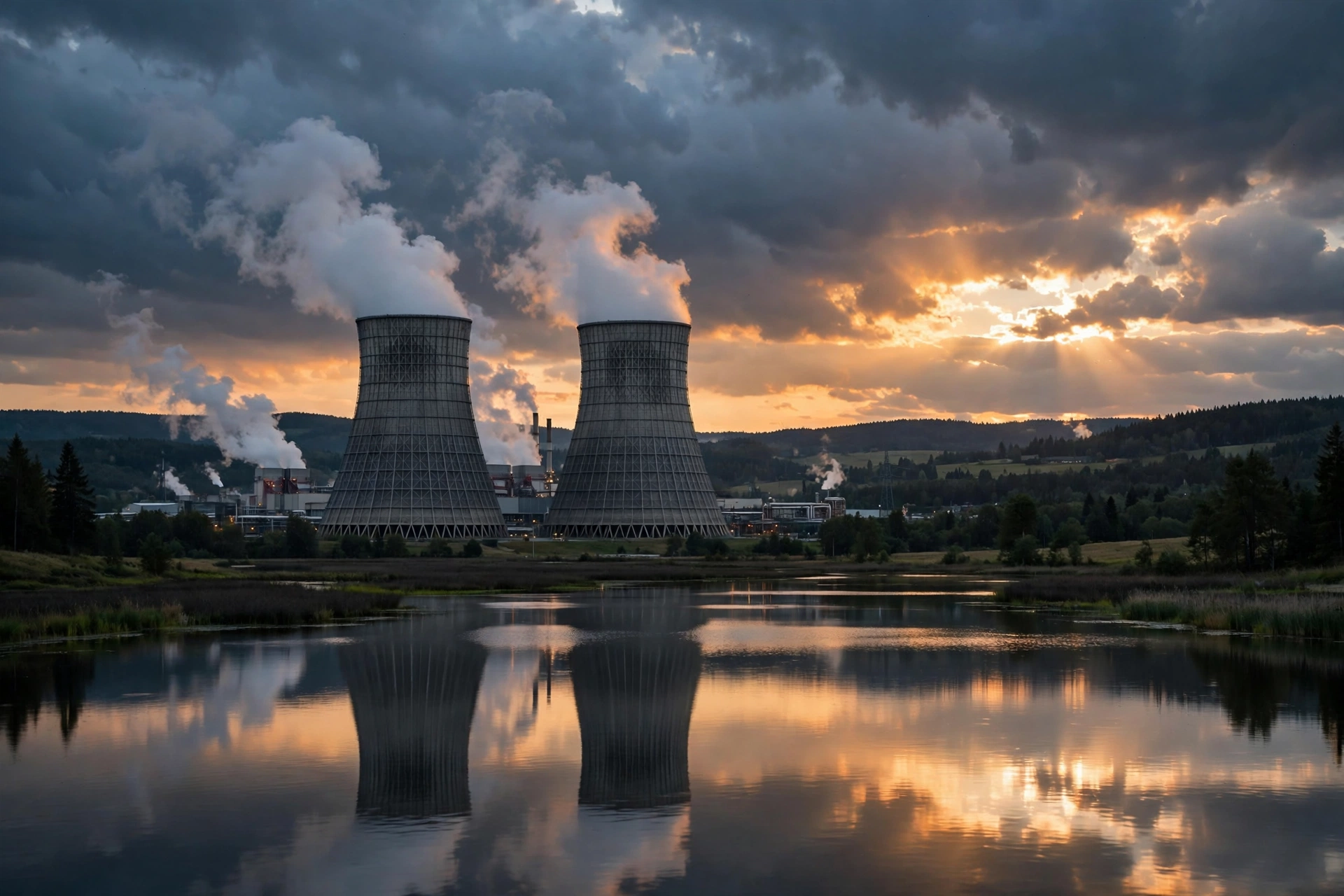
    So is she right that data centers are driving the new demand? Check Duke’s own numbers. In Duke Energy’s 2025 load forecast, total electricity demand across its two Carolina systems is projected to grow between 16% and nearly 60% through 2040 — and data centers account for roughly 80% of that projected growth. Duke says it’s tracking about 37 gigawatts of proposed data center projects in the Carolinas. One gigawatt is roughly a nuclear reactor’s worth of output. After decades of nearly flat demand, that’s not growth — that’s a wave.

    The water math nobody puts on the brochure

    Here’s the part that lands in my world. A typical data center drinks a few hundred thousand gallons of water a day, mostly to cool the servers. The biggest campuses use millions of gallons a day — Google’s Council Bluffs, Iowa campus has averaged about 2.8 million gallons daily. And that’s just the water on site.

    Lawrence Berkeley National Laboratory’s 2024 report for the U.S. Department of Energy put hard numbers on it: in 2023, American data centers directly consumed about 17.4 billion gallons of water for cooling — and the water consumed generating their electricity came to roughly 211 billion gallons, about twelve times more. Every kilowatt-hour has a water shadow, because most power plants cool themselves with water too.

    Now the honest scale check, because I don’t do scare numbers: nationally, 17 billion gallons a year is small next to power generation’s overall water use. Spread across the whole country, data centers are not draining America. But water is never national — it’s local. One campus pulling a small city’s worth of water out of one town’s system, in one watershed, is a real thing for the people on that water. Ask Person County.

    A year of not being told

    In the fall of 2024, Microsoft bought the 1,350-acre Mega Park site in Person County, North Carolina, for about $27 million. For more than a year, neither the company nor the county would say what it was for — the deal was wrapped in non-disclosure agreements, which everyone involved described as standard practice. Residents asked anyway. At a community meeting in Roxboro in November 2025, neighbors voiced their frustration to a room where the honest answer was still “we can’t tell you.” It wasn’t until February 24, 2026 — after reporters kept asking — that Microsoft and the county confirmed the site would become a data center.

    To Microsoft’s credit, its promises since then are the right ones: pay its own way so the project doesn’t raise electricity prices, minimize water use, and replenish more water than it consumes. Other North Carolina communities aren’t waiting to find out — Chatham County put a one-year moratorium on new data center permitting in February 2026, and other local governments have paused to write rules first. That’s not anti-technology. That’s a town insisting on reading the contract before signing it.

    The deal that answers Erin’s question — partly

    This month, the fight produced something real. On October 7, 2026, Duke Energy announced a settlement with the North Carolina Public Staff — the agency that represents utility customers — joined by Amazon, Google, Meta, and Microsoft, along with the U.S. Department of Defense and an industrial customers’ group. The terms: new large customers of 50 megawatts or more must pay upfront, nonrefundable, for the grid facilities built just for them; post deposits and guarantees for shared upgrades like transmission lines; take service on a special High Load Factor rate schedule; and pay minimum monthly bills of at least 75% of the demand they projected — so if a data center promises big and builds small, it still pays for what it said it would use. Duke’s North Carolina president put it plainly: “Data centers will pay upfront for all costs to connect to the grid.”

    Two honest caveats. First, the settlement still needs approval from the North Carolina Utilities Commission — a decision is expected by mid-November — so as of today it’s a signed deal, not yet the law of the land. Second, a rate schedule settles the power bill. It doesn’t by itself answer the water questions: how much, from which river or aquifer, and what happens to the town’s supply in a drought year. Those get decided project by project, in county hearings most people never hear about until the land is already bought.

    What I’d ask if one came to my town

    Erin’s post wasn’t really about North Carolina. It’s about a pattern, and New Jersey is not exempt from it — the same proposals are landing here. So if a data center gets proposed near you, here are the questions worth asking early, in public, while they’re still questions:

    • How much water will it use on its hottest day, and where does that water come from?
    • Is the cooling closed-loop, or does the water evaporate into the sky?
    • Who pays for the power and water upgrades if the project shrinks or walks away?
    • Why is any of it under non-disclosure? A town can keep a secret’s timing without keeping its own residents in the dark for a year.

    None of that is anti-data-center. I use the internet too. It’s the same rule I give every homeowner about their own tap: don’t take anybody’s word for what’s in your water or what it’s going to cost you. Test it, read the report, and make them show you the numbers — before the concrete is poured, not after.

    The coal ash took a disaster, a guilty plea, and a decade of fighting to get dug up. The whole point of asking questions now is not needing that again.

    — Steve Bella, iPhilter

  • Uranium in Drinking Water

    Uranium in Drinking Water

    Yes, uranium — the radioactive element — shows up in drinking water. Not from nuclear plants. From rocks. In parts of the country, wells draw from granite and other uranium-bearing formations, and the water comes up carrying dissolved uranium with it.

    What it is. Uranium is a naturally occurring radioactive metal, present in varying amounts in rock, soil, and water everywhere. In groundwater it usually travels as dissolved uranium complexes — invisible, tasteless, odorless. The health concern at drinking-water levels is actually chemical toxicity to the kidneys more than radiation, though both matter over a lifetime.

    Where it comes from. Geology, almost entirely. Granite bedrock regions — parts of New England, the Southeast, the Mountain West — produce the highest well-water readings. It’s a private-well story: public systems test for it and treat when needed, but nobody’s testing your well but you.

    The health picture, honestly. The kidney is the primary target — uranium accumulates there and damages it with chronic exposure. Lifetime exposure above the legal limit also carries increased cancer risk. The EPA’s legal limit is 30 parts per billion (30 µg/L), with a health goal of zero. If your well tests anywhere near that number, act.

    How to test. A lab test for uranium specifically, or a gross-alpha/radiological panel from a state-certified lab. Standard home test kits don’t cover it. If you’re in a granite region and have never tested for radionuclides, this is the one to add to your next lab order.

    What removes it. Reverse osmosis and anion exchange — those are the proven home answers. Important detail: it must be ANION exchange (strong-base anion resin); a standard water softener is cation exchange and does NOT remove uranium. Distillation works too. Note that no NSF standard currently includes a uranium-reduction claim, so look for independently validated performance, not a badge.

    What does NOT remove it. Water softeners (wrong resin type entirely). Standard carbon filters, pitcher filters, boiling (concentrates it), UV, chlorine.

    What I’d buy: Treatment type: an under-sink reverse osmosis unit, NSF listed — the straightforward, proven answer for uranium in drinking water. For whole-house treatment on a high reading, a strong-base anion exchange system designed for uranium, installed and validated by a water treatment professional. Test before, test after.

    Uranium sounds scarier than it is to treat — RO handles it cleanly. The scary part is not knowing it’s there. In granite country, a radiological test belongs on every well owner’s list.

    Curious what’s in your tap? Start with What’s In Your Water?

  • MTBE in Drinking Water

    MTBE in Drinking Water

    MTBE is the gasoline additive that was supposed to clean up the air — and ended up contaminating groundwater across the country instead. If benzene is gasoline’s worst ingredient, MTBE is its most stubborn.

    What it is. MTBE (methyl tert-butyl ether) is an oxygenate blended into gasoline to reduce air pollution. It’s highly soluble in water, resists biodegradation, and moves fast through groundwater — a combination that makes it exceptionally good at spreading from a spill and exceptionally hard to clean up.

    Where it comes from. Leaking underground storage tanks at gas stations — same story as benzene, worse behavior. A small fuel leak that would keep benzene relatively localized can carry MTBE hundreds of feet. It was used in gasoline nationwide for years, so legacy plumes exist far from any current gas station.

    The health picture, honestly. There’s no federal MCL for MTBE — the EPA issued a drinking-water advisory based on taste and odor (you can taste it at very low levels, which is actually a useful early warning). The health research is less settled than for benzene, but “we can’t taste it anymore” is not a safety standard. Several states set their own limits. Treat it as guilty until proven innocent.

    How to test. A lab VOC test (EPA Method 524.2) from a state-certified lab. If your water has a turpentine-like taste or smell and there’s a gas station uphill, MTBE is on the suspect list alongside benzene. Test for the full VOC panel, not just one compound.

    What removes it. Air stripping plus granular activated carbon, used together — that’s the EPA-recognized approach. MTBE’s solubility makes either one alone less effective than it is against other gasoline components, so the combo matters: aeration knocks down the bulk, carbon polishes. NSF Standard 53 includes an MTBE reduction claim — look for it. For homeowners, a whole-house GAC system is the practical answer.

    What does NOT remove it. Pitcher filters, boiling, water softeners, UV, chlorine. Standard single-stage approaches underperform against MTBE specifically — this is a “do it right or don’t bother” contaminant.

    What I’d buy: Treatment type: a whole-house granular activated carbon system, NSF 53 listed with the MTBE reduction claim, at the point of entry. If your numbers are high, talk to a water treatment professional about adding aeration ahead of the carbon — MTBE rewards the full combo.

    MTBE is the cautionary tale of solving one pollution problem by creating another. It’s fading from gasoline, but the plumes it left behind aren’t going anywhere. Test if there’s fuel history near your water, and treat it like the stubborn chemical it is.

    Curious what’s in your tap? Start with What’s In Your Water?

  • Mercury in Drinking Water

    Mercury in Drinking Water

    When people hear “mercury,” they think of fish advisories and old thermometers. But mercury gets into drinking water too — and unlike the mercury in fish, the kind in water has its own treatment playbook.

    What it is

    Mercury is a heavy metal that exists in several forms. In drinking water, the regulated form is inorganic mercury — the kind that comes from erosion of natural deposits and industrial discharge. (The organic methylmercury that accumulates in fish is the more toxic form, but that’s a food story, not a water story.)

    Where it comes from

    Erosion of natural mineral deposits is the background source. On top of that: discharge from refineries and factories, runoff from landfills and croplands, and fallout from coal burning that settles into watersheds. Private wells near any of those deserve a test.

    The health picture, honestly

    The kidney is mercury’s primary target — it’s where the metal accumulates and does its damage. The nervous system is the other concern, especially with inhaled or organic forms. The EPA’s legal limit is 2 parts per billion (0.002 mg/L), and the health goal sits at the same level — there’s no “a little extra is fine” here.

    How to test

    A lab metals panel from a state-certified lab. Mercury needs specific analytical methods (it doesn’t show up on a basic test strip), so make sure the lab actually runs it. City water folks, check the annual report.

    What removes it

    Reverse osmosis and distillation are the EPA’s best available technologies for inorganic mercury — both highly effective. Granular activated carbon handles the organic forms. Copper-zinc filtration (KDF media) is another proven option, one New Jersey’s DEP specifically recommends for private wells. NSF-53 listed filters cover mercury.

    What does NOT remove it

    Boiling — and this one matters, because boiling can release certain forms of mercury into the air while concentrating the inorganic form left behind. Standard pitcher filters, water softeners, UV, chlorine — none of them are mercury treatments.

    What I’d buy: Treatment type: an under-sink reverse osmosis unit, NSF listed — it’s the straightforward, proven answer for inorganic mercury in drinking and cooking water. Test first, retest after install.

    Mercury doesn’t announce itself — no taste, no smell, no staining. If your well sits near industrial history, landfills, or heavy agriculture, a metals panel is cheap insurance. And if it’s there, RO takes it out.

    Curious what’s in your tap? Start with What’s In Your Water?

  • Trihalomethanes (TTHMs) in Drinking Water

    Trihalomethanes (TTHMs) in Drinking Water

    Here’s the irony of disinfected water: the chlorine that kills the germs can create its own problem. When chlorine reacts with natural organic matter — decaying leaves, algae, runoff — it forms trihalomethanes. The disinfection worked. The byproducts are the price.

    What they are. Trihalomethanes are a group of four volatile organic compounds: chloroform, bromodichloromethane, dibromochloromethane, and bromoform. The EPA regulates them as a group — “total trihalomethanes,” or TTHMs — because they form together and travel together.

    Where they come from. Your utility’s chlorine, doing its job. Anywhere chlorine meets organic matter in source water, TTHMs form — and they keep forming as water sits in the distribution system. Levels run highest in warm months and in surface-water systems, where organic matter is plentiful. This is mostly a city-water story, not a well-water one.

    The health picture, honestly. Drinking water with TTHMs above the legal limit over many years is linked to liver, kidney, and central nervous system effects, plus increased cancer risk. The EPA’s legal limit is 80 parts per billion (0.080 mg/L). Because TTHMs are volatile, you also breathe them in the shower — this is one contaminant where whole-house treatment has a real argument.

    How to test. Your utility’s annual water quality report lists TTHM levels — check it first, since this is their byproduct. Independent labs can run the test too. If your utility has ever sent you a violation notice for TTHMs, you already know your answer.

    What removes them. Granular activated carbon — GAC — is the proven answer, and it handles TTHMs well because they’re volatile and carbon-friendly. A whole-house carbon system at the point of entry takes them out of drinking, cooking, and shower water alike. Aeration works too. A quality under-sink carbon block handles the drinking-water side.

    What does NOT remove them. Standard pitcher filters help a little but aren’t the right tool at scale. Water softeners, UV, and boiling don’t cut it — boiling can actually drive more of them out of the water and into the air you breathe.

    What I’d buy: Treatment type: a whole-house granular activated carbon system, NSF or WQA listed, at the point of entry. TTHMs are volatile — you drink them, cook with them, and breathe them in the shower — so treating the whole house, not just the kitchen tap, is the honest answer.

    TTHMs are the trade-off nobody asked for: safe from germs, exposed to byproducts. The good news is carbon filtration handles them cleanly. Know your utility’s numbers, treat accordingly.

    Curious what’s in your tap? Start with What’s In Your Water?

  • Pharmaceuticals in Drinking Water

    Pharmaceuticals in Drinking Water

    Trace amounts of prescription drugs — antibiotics, hormones, mood stabilizers, painkillers — have been detected in tap water across the country. The amounts are tiny. The question everyone asks is whether tiny matters.

    What they are

    Pharmaceuticals and personal care products (PPCPs): the residues of medicines people take, excreted or washed down drains, passing through wastewater treatment that was never designed to remove them. An AP investigation found dozens of pharmaceuticals in tap water supplies serving tens of millions of Americans. Concentrations are typically measured in parts per trillion — far below a medical dose.

    Where they come from

    Us — flushed toilets, shower drains, and the biggest avoidable source: unused medications flushed or poured down the drain. Wastewater plants remove some fraction, and the rest rides into rivers that become someone else’s drinking water downstream.

    The health picture, honestly

    There’s no federal MCL for pharmaceuticals in drinking water, and at detected levels, no study has shown direct human health harm from tap-water exposure. But “no proven harm at trace levels” isn’t the same as “proven safe” — especially for hormones and endocrine disruptors, where tiny doses can have outsized effects, and for the mixture of dozens of compounds nobody’s tested in combination. The honest position: levels are very low, the science is incomplete, and reducing exposure is reasonable.

    How to test

    Specialized lab analysis — not a home test-kit item, and expensive. For most people, the practical assumption is that trace PPCPs are present in any surface-water-derived supply, and the response is filtration, not testing.

    What removes them

    Reverse osmosis — the most effective home treatment, removing 90–99%+ of pharmaceutical molecules. Activated carbon (especially GAC) adsorbs many pharmaceutical compounds effectively. Ozonation and advanced oxidation destroy them. A four-year utility study ranked RO first, with ozone, advanced oxidation, nanofiltration, and activated carbon all “superior.” Conventional chlorination removes roughly half — better than nothing, not the answer.

    What does NOT remove them

    Standard pitcher filters, boiling, water softeners, UV at disinfection doses, basic sediment filtration.

    What I’d buy: an under-sink reverse osmosis unit, NSF listed — the most effective home answer for pharmaceuticals, hormones, and the personal-care chemicals riding with them. Pair it with carbon pre-filtration for the broadest coverage. And do your part upstream: never flush unused meds — use a drug take-back program.

    Pharmaceuticals in water are a “low dose, open question” contaminant — not a crisis, not nothing. RO filtration handles them along with nearly everything else on this list. And the cheapest contribution anyone can make is a take-back envelope instead of a toilet.

    Curious what’s in your tap? Start with What’s In Your Water?