
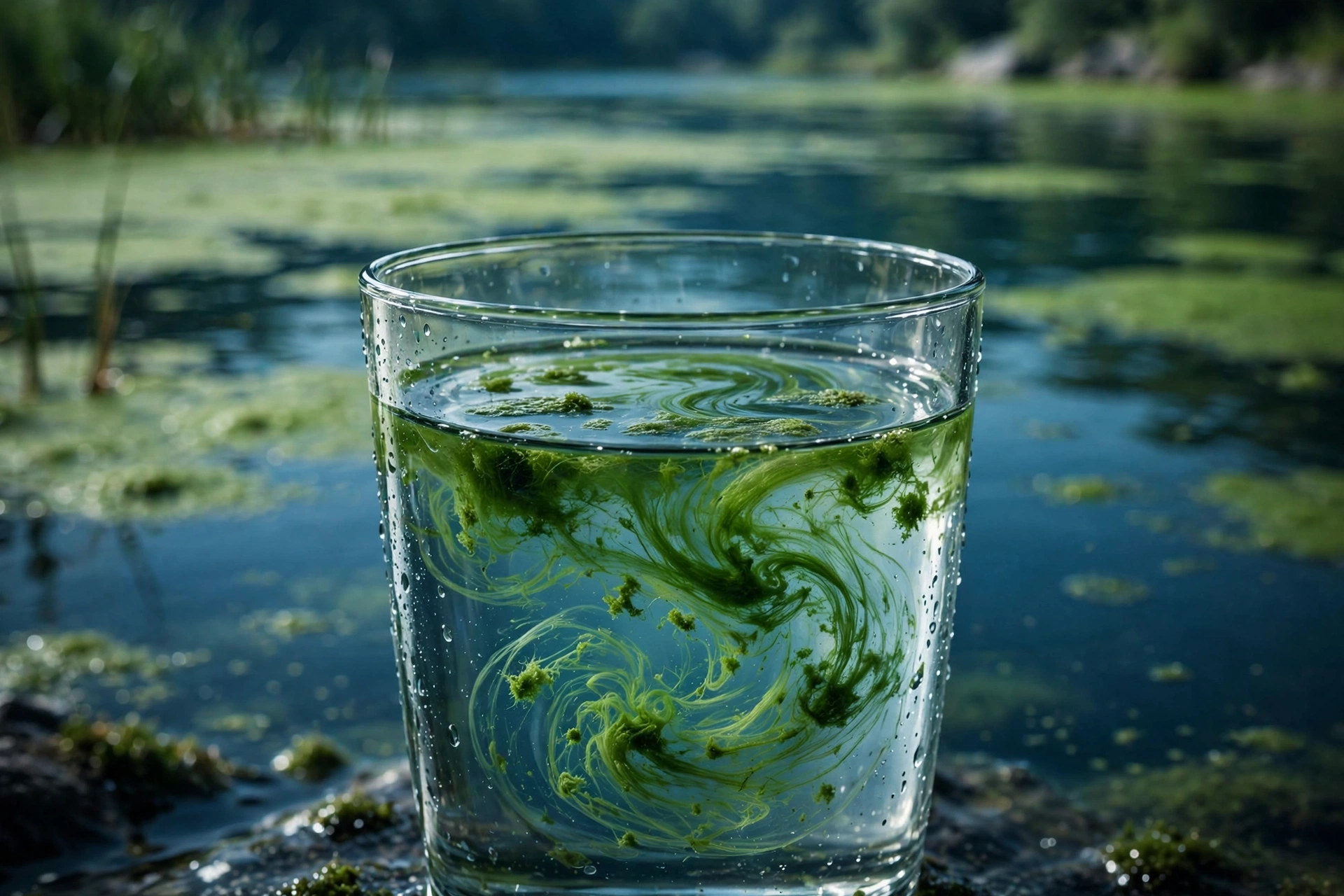
Every summer, lakes and reservoirs across the country turn green with algal blooms — and some of those blooms produce cyanotoxins, potent natural poisons that can end up in tap water. Toledo learned this the hard way in 2014, when half a million people were told not to drink their water.
What they are. Cyanotoxins are toxins produced by cyanobacteria — “blue-green algae,” though they’re actually bacteria. The main ones in drinking water: microcystins (liver toxins, the most common), cylindrospermopsin (liver and kidney), anatoxin-a (a fast-acting neurotoxin), and saxitoxins. They’re dissolved chemicals, not living organisms — killing the algae doesn’t remove the toxins.
Where they come from. Nutrient-polluted surface water — farm fertilizer runoff and sewage feed the blooms, warm still water grows them. Any utility drawing from a lake or reservoir in farm country can face a bloom season. This is a surface-water story, and it’s getting worse as waters warm.
The health picture, honestly. Microcystins attack the liver; acute exposure causes vomiting, diarrhea, and liver damage. There’s no federal MCL — the EPA has health advisories instead: 0.3 parts per billion of microcystins for young children, 1.6 ppb for everyone else, for short-term exposure. When a bloom hits, utilities issue do-not-drink advisories. Take them seriously.
How to test. Specialized lab testing for microcystins — not a home test-kit item. Practically: watch your utility’s bloom-season notices. If your water comes from a reservoir and the lake looks like pea soup, pay attention to advisories before you pay for a lab.
What removes them. Activated carbon — powdered or granular — adsorbs dissolved microcystins effectively, though the carbon must be fresh and properly sized; exhausted carbon stops working. Reverse osmosis removes them. Ozone destroys them. NSF P477 is the certification for microcystin reduction — look for it specifically. For homeowners during a bloom event, an RO unit plus fresh carbon is the practical defense.
What does NOT remove them. Boiling — and this is critical, because boiling does NOT destroy cyanotoxins and prolonged boiling concentrates them as water evaporates. Most camping filters and standard home filters are not effective. Chlorine alone is unreliable. Killing the algae with algaecide can actually make things worse by bursting the cells and releasing more dissolved toxin.
What I’d buy: Treatment type: an under-sink reverse osmosis unit, NSF listed, plus fresh activated carbon — the practical home defense during bloom season. But the honest primary advice: obey do-not-drink advisories. No home filter replaces that.
Cyanotoxins are the reminder that “natural” doesn’t mean safe — these are among the most potent natural poisons known. Watch the bloom reports, heed the advisories, and keep RO plus fresh carbon as your backup.
Curious what’s in your tap? Start with What’s In Your Water?
Leave a Reply