
The Family
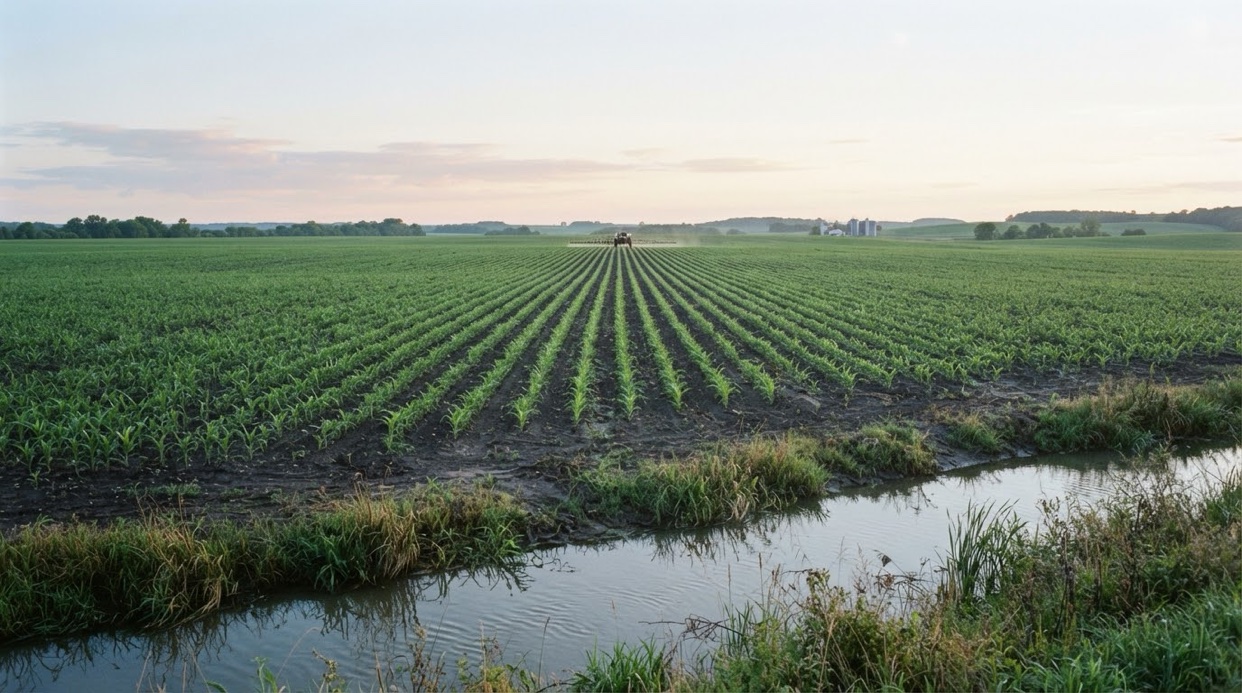
If you spend enough time reading municipal water quality reports from agricultural counties, you start to recognize certain pairings. Simazine belongs to the triazine family of herbicides, making it the close chemical sister to atrazine. For decades, atrazine has grabbed almost all the headlines as America’s most-detected pesticide in tap water. Meanwhile, simazine has been sprayed on many of those exact same fields since the 1950s, quietly following the same roads and drainage ditches into the same drinking water supplies.
Because these two chemicals share a family tree and an application history, they rarely travel alone. When I look at a homeowner’s lab report and see one sister listed on the page, I always assume the other is sitting in the same watershed. Simazine has simply lived in atrazine’s shadow, even though it carries its own federal limit, its own regulatory history, and its own set of rules for getting it out of your tap.
The Name
To understand why simazine shows up where it does, you have to look at what it was built to do. Simazine is a triazine herbicide that has been in commercial use since the 1950s, designed specifically to kill broadleaf weeds and grasses. Like its sister atrazine, it works by stopping photosynthesis in the plants it targets, shutting down their ability to turn sunlight into energy.
Over its long working life, simazine has been applied across a wide variety of landscapes. Farmers rely on it in cornfields, citrus groves, vineyards, orchards, and Christmas tree farms, and groundskeepers use it heavily on turf. Unlike many agricultural chemicals that stay strictly on dry land, simazine has also been applied directly to water itself, serving as an aquatic herbicide to control vegetation in ponds and reservoirs. That dual life—on the fields and directly in the water—gives it plenty of pathways into a local water supply.
Why It Is in the Water at All
When you look up simazine on the Environmental Protection Agency’s regulatory tables, the agency’s official source line for how it enters drinking water is just two words: herbicide runoff. When rain falls on treated fields, groves, or turf, water washes the chemical off the soil surface and carries it into nearby streams, rivers, and reservoirs. At the same time, simazine leaches downward through the soil profile, eventually reaching the underground aquifers that feed private wells and municipal groundwater systems.
Because it is applied seasonally, simazine does not show up at a steady trickle all year long. Levels spike sharply in the spring and early summer, right after farmers and groundskeepers put it down. Once it enters the environment, it breaks down slowly, meaning it lingers in soil and water long after the sprayers have been parked for the season. While Europe banned simazine back in 2004—in the exact same regulatory decision that banned atrazine—the United States still registers and uses it. To complicate matters further, simazine travels with company: atrazine’s own breakdown products ride along in the very same water, creating a chemical mixture that deserves its own separate conversation.
The Numbers
When you read a Consumer Confidence Report or a private lab test, you need to know how to judge the numbers sitting next to simazine’s name. The EPA’s legal limit—known as the Maximum Contaminant Level, or MCL—for simazine is 0.004 milligrams per liter, which translates to 4 parts per billion.
What makes simazine interesting from a regulatory standpoint is its Maximum Contaminant Level Goal, or MCLG. For many contaminants, the EPA sets an ideal health goal of zero and then sets a higher legal limit based on what water utilities can realistically afford or achieve with existing equipment. For simazine, the health goal is also 4 parts per billion. In plain English, that means the level the EPA considers safe for human health and the level the law allows coming out of a public tap are one and the same, with no feasibility gap between them.
Still, regulatory numbers depend on who is doing the measuring. The World Health Organization sets a stricter guideline for simazine at 2 parts per billion—exactly half of the American legal limit. For a quick family comparison, sister atrazine carries a slightly tighter American legal limit of 3 parts per billion.
Health Framing
Homeowners always ask me what these trace numbers actually mean for their bodies, and I believe in giving you a straight, unvarnished answer without scaring you with unverified claims. According to the EPA’s own stated concern, the primary risk from simazine is “problems with blood” for people who drink water containing the chemical well above the legal limit over many years.
Beyond that specific regulatory benchmark, simazine sits inside the wider triazine family, which carries the ongoing hormone questions that have followed atrazine for decades. The chemical structure of the triazine family interacts with endocrine systems, which is the main reason these herbicides remain controversial well beyond the standard debates over farm pesticides. Keep in mind that federal limits are built around long-term, chronic exposure over many years of drinking the water, rather than a single glass poured from the tap.
What Removes It
Getting simazine out of your water requires matching the right piece of equipment to the chemistry of the contaminant. Granular activated carbon is the EPA’s recommended treatment for simazine, and in my experience, it genuinely works. Whether you install a properly sized whole-house granular activated carbon system at the point of entry or a quality carbon block filter under your kitchen sink, carbon handles simazine reliably. Reverse osmosis membranes and water distillation units will also strip it out of your drinking water.
To understand why carbon works, you have to understand what simazine actually is in your pipes. It is a dissolved chemical, not a suspended particle. You cannot strain it out with a physical screen—no sediment filter and no tight micron rating will touch it on its own. Activated carbon removes simazine through a process called adsorption, acting like a chemical magnet that grabs the dissolved herbicide molecules and locks them onto the carbon’s vast internal surface area. Because that surface area has a finite number of parking spaces, carbon eventually loads up over time and must be changed strictly on schedule, or the chemical will simply slip right past it.
Just as important is knowing what does not work. Conventional municipal water treatment—coagulation, settling, and standard sand filtration—does not remove simazine. At home, boiling your water will not get rid of it, ultraviolet light will not break it down, chlorine disinfection will not touch it, and a standard ion-exchange water softener will let it pass right through.
The Bottom Line
Atrazine’s quieter sister plays by the exact same rules as the rest of the triazine family: agricultural runoff, predictable spring spikes, and a federal limit that any prudent homeowner should treat as an absolute ceiling rather than a target to aim for. If your water report comes from corn country, orchard country, or anywhere with heavy turf management, do not rely on a winter water test to tell you the whole story. Test your water in late spring when the seasonal numbers are honest, and let properly maintained activated carbon do the job it is proven to do.
Facts first, then filter. — Steve
Leave a Reply