
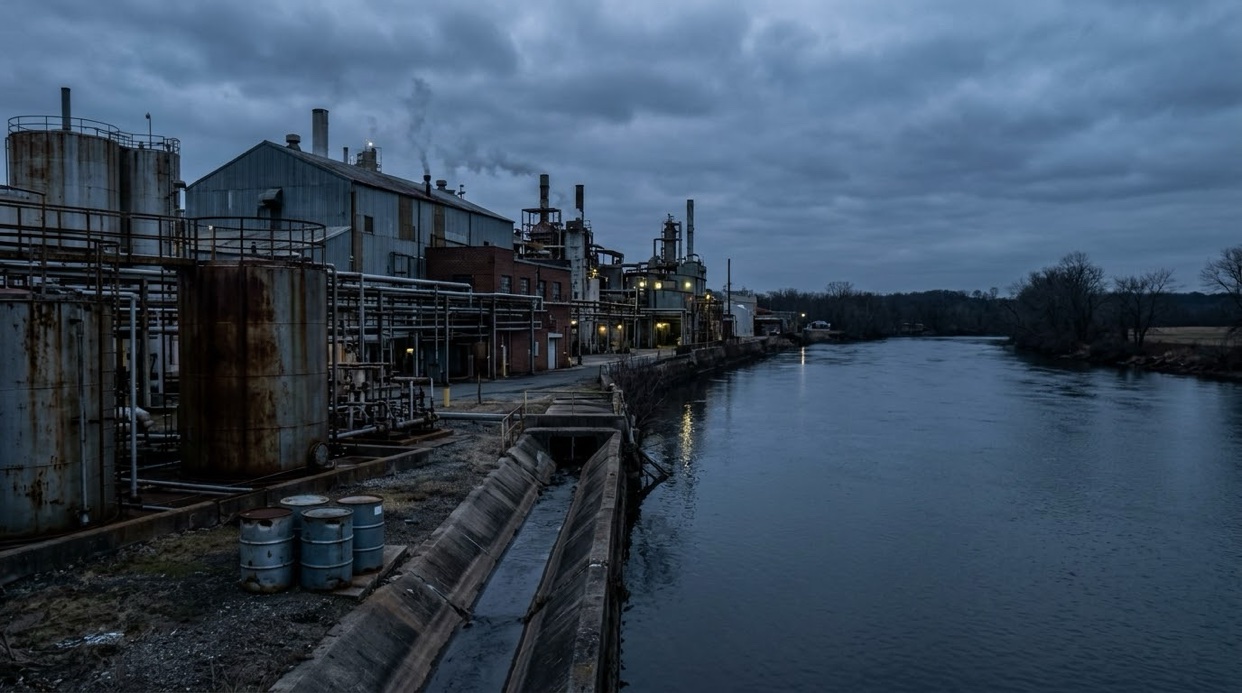
1,2-Dichloropropane is a synthetic chemical that does not occur naturally in the environment. For decades, it was manufactured for heavy industrial work and commercial agriculture. Industry used it primarily as an industrial solvent, a chemical intermediate, a paint stripper, and a metal degreaser. In agriculture, farmers used it as a soil fumigant to target crop-damaging nematodes and as an insecticide to protect stored grain.
Because of its chemical makeup and long-term environmental persistence, understanding what this compound is and how it behaves in ground and surface water is essential for keeping your home's water supply clean and safe.
Where It Comes From and How It Enters Water
The Environmental Protection Agency (EPA) lists the primary source of 1,2-dichloropropane in tap water as discharge from industrial chemical factories. During its peak production years, chemical manufacturing plants released this solvent into local waterways through industrial wastewater discharges, chemical spills, and improper waste disposal practices.
Once released into the environment, 1,2-dichloropropane travels easily. When spilled onto soil or buried in unlined landfills, it resists binding to dirt particles. Rainwater and natural moisture leach the chemical down through soil layers until it reaches underlying aquifers. Because it evaporates slowly when dissolved in groundwater, it can remain trapped underground for long periods, migrating into private well water and municipal water intakes.
Dow Chemical, the only listed producer in EPA's fact sheet, discontinued production in 1991. However, because the compound breaks down very slowly underground, it remains a legacy chemical still found in water today rather than a brand-new contaminant.
1,2-Dichloropropane Drinking Water Standards (EPA Facts)
- EPA Health Goal (MCLG): Zero — EPA treats this chemical as a carcinogen with no safe level.
- EPA Enforceable Limit (MCL): 0.005 mg/L (5 parts per billion)
- Stated Long-Term Health Effect: Increased risk of cancer at levels above the limit.
- Short-Term Exposure Risks: Short-term exposure above the limit can damage the liver, kidneys, adrenal glands, bladder, and the gastrointestinal and respiratory tracts.
Health Effects of 1,2-Dichloropropane
Understanding the potential health impacts of 1,2-dichloropropane helps highlight why regulatory agencies monitor it closely in public water systems.
The EPA sets drinking water standards based on toxicological studies and risk assessments:
- Cancer Risks: The EPA's stated health effect of drinking water containing 1,2-dichloropropane at levels above the enforceable limit over many years is an increased risk of cancer. Because the EPA treats this chemical as a carcinogen with no safe level, the health goal is set strictly at zero.
- Organ Damage: Short-term exposure above the limit can damage the liver, kidneys, adrenal glands, bladder, and the gastrointestinal and respiratory tracts.
If your water supplier detects 1,2-dichloropropane above the enforceable limit of 5 parts per billion, they are required by federal law to notify the public and take immediate corrective steps to reduce the concentration.
How to Remove 1,2-Dichloropropane from Drinking Water
If a lab test shows 1,2-dichloropropane in your well or tap water, standard sediment filters or basic pitcher filters will not fix the problem. Dissolved solvents are not removed by ordinary sediment filtration, which only catches physical debris like rust, grit, and dirt particles. Because chemical solvents dissolve completely in water at the molecular level, removing them requires specialized treatment technologies.
The two standard treatment methods for this kind of solvent are Granular Activated Carbon (GAC) and Air Stripping:
Granular Activated Carbon (GAC)
Granular activated carbon filters use highly porous carbon particles — usually made from coconut shells or coal — that have been processed to create a massive internal surface area. As water flows through the carbon bed, a process called adsorption takes place. The chemical molecules of the solvent are attracted to the carbon and stick tightly to its inner surfaces, trapping the contaminant while letting clean water pass through. GAC systems can be installed as whole-house point-of-entry (POE) systems or point-of-use (POU) drinking systems under the sink.
Air Stripping
Air stripping works by taking advantage of the chemical's tendency to evaporate when exposed to moving air. In a typical packed-tower air stripper, raw water is pumped to the top of a column and sprayed downward over packing material while a high-powered blower forces clean air up from the bottom. As the water breaks into fine drops and trickles down, the solvent moves from the liquid water into the air stream and is vented safely outside. Air stripping is commonly used for whole-house treatment or community-scale water systems where high volumes of water need processing.
To protect your home, always have your water tested by a certified laboratory first to confirm the exact contamination levels before selecting and installing treatment equipment.
Facts first, then filter. — Steve
Leave a Reply