
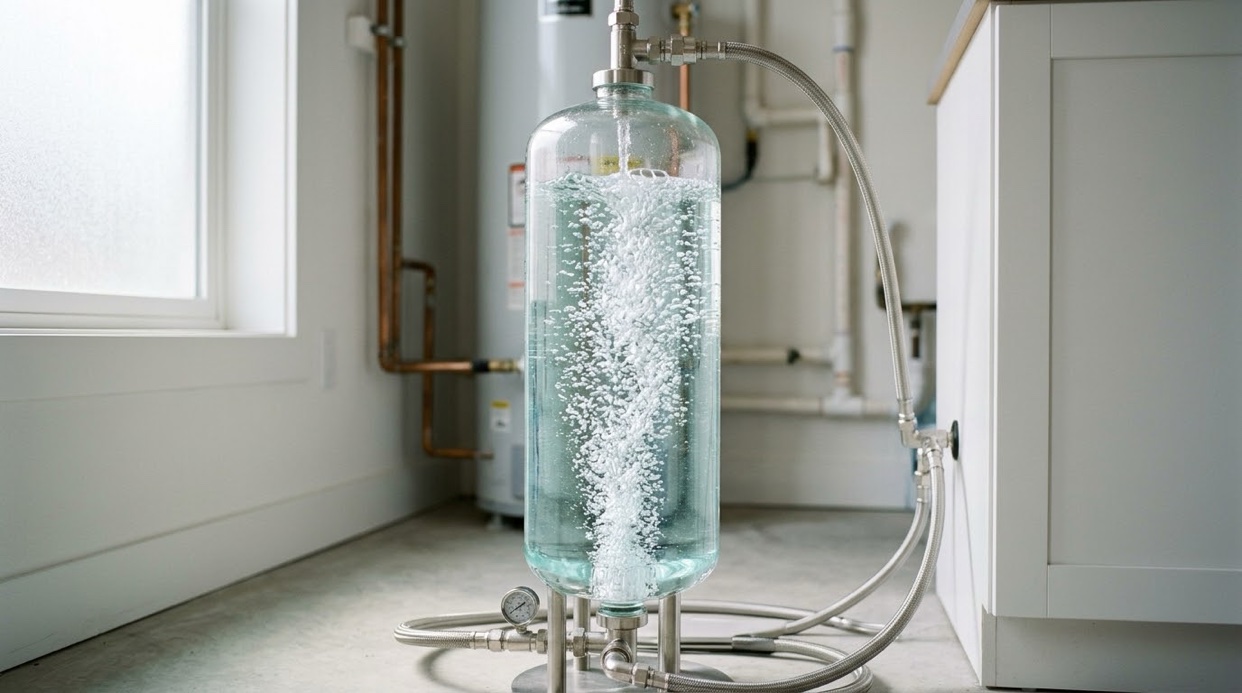
Aeration is simple: you put air into water, or you spray water into air. That is the core of the whole process. When you create contact between atmosphere and water, two distinct chemical behaviors occur simultaneously. Dissolved gases and light, volatile compounds leave the liquid and escape into the surrounding air. At the same time, oxygen from the air dissolves into the water, starting a transformation in dissolved metals.
In water treatment, water holds certain unwanted substances only because it has been under pressure underground without exposure to atmosphere. Once you strip away that pressure and force the water to interface with air, the balance changes. Gases that were trapped in solution partition out of the water phase and into the gas phase. Meanwhile, oxygen forces dissolved, invisible minerals to oxidize, converting them from soluble liquids into solid, physical particles.
The Main Ways Aeration Is Done
Whether in a municipal water plant serving thousands of homes or in a basement unit running off a private well, aeration relies on a few fundamental mechanical designs:
- Spray Aeration: Water is pumped through nozzles that atomize it into a fine mist or spray inside a tank or open basin. By breaking the water stream into millions of tiny droplets, the total surface area exposed to air increases exponentially, allowing dissolved gases to escape quickly into the surrounding space.
- Diffused-Bubble Aeration: Air is forced through submerged diffusers or porous plates at the bottom of a water tank. As thousands of tiny bubbles rise through the water column, dissolved gases inside the liquid migrate into the rising air bubbles, which bubble up and vent out at the surface.
- Packed Tower Aeration: Water is pumped to the top of a tall column filled with specialized plastic packing material and allowed to trickle down. Simultaneously, a blower forces air up through the packing from the bottom. As the thin film of water flows over the high-surface-area packing against the airflow, volatile compounds are continuously stripped out.
- Air-Injection (Venturi) Systems: Commonly installed in residential settings ahead of a backwashing filter, this inline system uses a venturi valve or air injection draw to pull air into the water line as it passes into a specialized aeration tank. The air pocket inside the tank saturates the water under pressure, initiating oxidation before the stream moves directly to a media bed.
What Aeration Genuinely Handles
Aeration is a targeted tool designed to address a specific set of dissolved contaminants and gases:
- Volatile Organic Chemicals (VOCs): Light chemical solvents, industrial degreasers, and fuel components like benzene evaporate readily. Aeration strips these volatile compounds out of the liquid phase and transfers them into the air.
- Radon Gas: Radon is a naturally occurring, radioactive gas dissolved in ground water. Because it is a gas, physical aeration efficiently drives radon out of solution before the water enters your household pipes.
- Hydrogen Sulfide: Famous for its unmistakable rotten-egg smell, hydrogen sulfide gas escapes water easily when exposed to air and agitation, neutralizing the odor.
- Carbon Dioxide: Excess dissolved carbon dioxide makes water acidic and corrosive to plumbing. Aerating the water releases carbon dioxide gas, raising the pH to make the water less aggressive toward metals.
- Iron and Manganese (Initial Stage): Dissolved iron (ferrous iron) and manganese exist in clear, invisible forms underground. Aeration introduces oxygen, which oxidizes dissolved ferrous iron into solid ferric iron particles, and manganese into solid manganese dioxide.
It is critical to understand that aeration alone does not remove iron or manganese from your water. Aeration merely changes their chemical state from dissolved liquids to solid specks. The physical solids remain suspended in the water until a downstream media filter catches them.
What Aeration Does NOT Do
Aeration is often misunderstood or oversold as a total water purifier. It is vital to recognize its physical limits:
- No Lead or Heavy Metals Removal: Lead, copper, and arsenic do not evaporate into air, nor does aeration eliminate them from your supply.
- No PFAS Elimination: Per- and polyfluoroalkyl substances (“forever chemicals”) are non-volatile in water under typical aeration conditions and will pass straight through an aeration system.
- No Salt or Hardness Reduction: Aeration has zero impact on dissolved calcium, magnesium, or sodium ions. It will not soften hard water or lower total dissolved solids (TDS).
- No Nitrate Removal: Dissolved nitrates remain fully in solution regardless of how much air is bubbled through the water.
- No Disinfection: Aeration does not kill bacteria, viruses, or cysts. In fact, introducing ambient air into open water tanks can introduce biological contaminants if not properly protected.
Aeration is strictly one process stage inside a complete water treatment system, never a single-handed cure-all.
Why Aeration Requires a Partner Filter
Because aeration alters dissolved metals by turning them into suspended solid particles, those newly formed solids must be physically trapped and removed from the water stream. Without a dedicated filter placed directly after the aeration stage, oxidized iron rust and manganese specks will flow straight into your household plumbing, staining fixtures, clogging aerators, and fouling appliances.
The performance of that partner filter hinges directly on its micron rating — the measure of the physical pore size in the filter media that determines the smallest particle size it can physically stop:
Water Flow → [ Aeration Stage ] → [ Oxidized Solids ] → [ Media Filter (Micron Rated) ] → Clean Water
- Particle Size Matching: If oxidized iron forms particles around 10 microns in size, a filter bed with an effective rating of 20 microns will allow those particles to pass right through.
- Backwashing Functionality: The downstream filter must routinely backwash — reversing water flow to flush trapped iron and manganese particles out of the media bed and down the drain — so the filter does not clog or channel over time.
The Honest Downsides
Every water treatment approach involves operational trade-offs. Aeration is no exception:
- Venting and Off-Gassing Requirements: Stripping radon, hydrogen sulfide, or volatile solvents means those gases are transferred out of the water and into the surrounding air. They must be safely piped and vented outside the home to avoid indoor air hazards or foul smells.
- Re-Pressurization Pumps: Non-pressurized aeration tanks rely on gravity or ambient air exposure to release gases. Once aerated, the water loses line pressure and requires a secondary booster pump to pressurized-feed your home plumbing.
- Routine Maintenance: Air-injection venturi nozzles, air draw valves, and air-release heads collect mineral scale, iron buildup, and debris over time. If air valves stick open or clog, the entire oxidation process fails.
- Bacterial Growth Risks: Open-air spray aeration or unmonitored air intake vents draw ambient air directly into your water storage. If intake filters are neglected or dirty, airborne bacteria and biological matter can settle into the moist environment and multiply.
Who Aeration Is Actually For
Aeration is primarily built for private well owners whose water source carries high levels of dissolved gases, rotten-egg odors, radon, or high concentrations of dissolved clear-water iron.
Municipal water treatment plants also utilize large-scale packed towers or spray aerators to treat raw water sources containing volatile organic compounds or heavy gas loads before sending water through city mains.
However, if you live in a town or city and receive municipally treated tap water, you will almost certainly never need to buy or operate an aeration system in your home. City water has already undergone off-gassing, oxidation, settling, and filtration at the treatment plant long before reaching your meter.
Bottom Line
Aeration is a proven, EPA-recognized technology engineered for a specific, narrow task: driving dissolved gases out of water and supplying the oxygen needed to convert dissolved metals into filterable solids. Respect it for the exact job it was designed to do, maintain the mechanical equipment it relies on, pair it with the proper downstream filter, and never let anyone sell it to you as a magic bullet for every problem in your water.
Facts first, then filter. — Steve
Leave a Reply