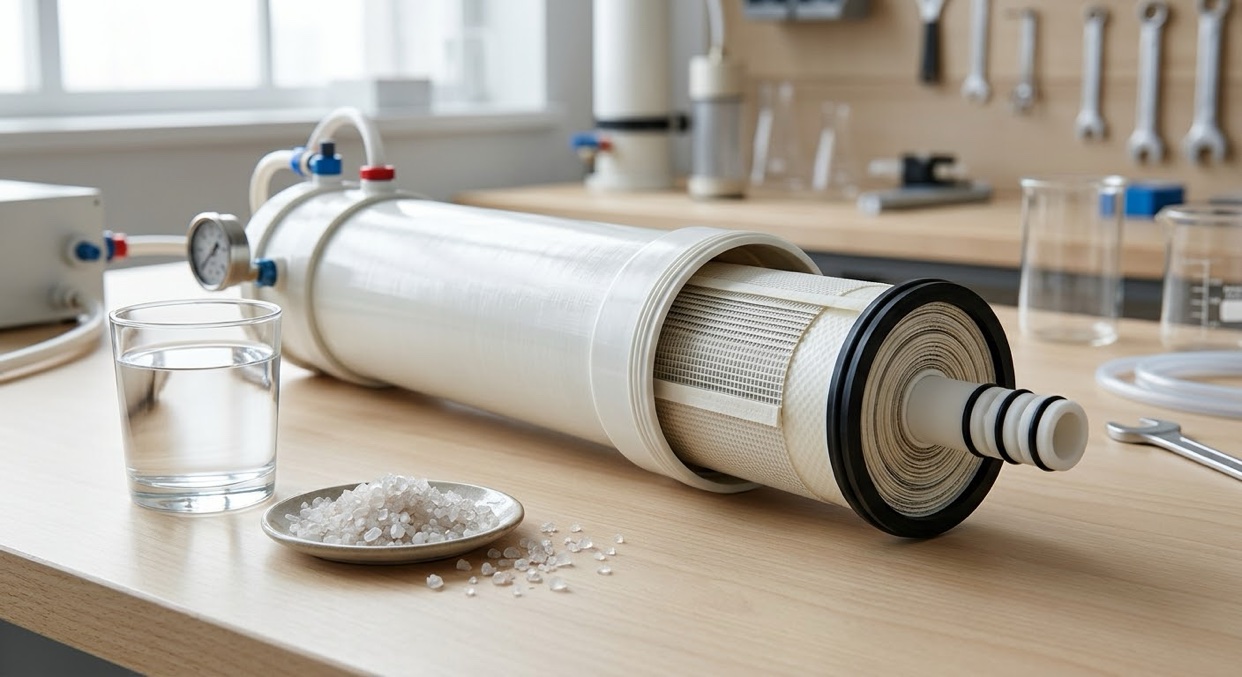
If you have started researching hard water solutions recently, you have almost certainly come across products called “salt-free water softeners.” They promise the scale-fighting power of traditional softeners without the heavy salt bags, the wastewater, or the electrical hookups.
It sounds like the perfect solution. But after working in water treatment since 1994, I can tell you that the single biggest source of frustration for homeowners comes down to a simple misunderstanding of terminology and expectations.
To make the right choice for your home, you need to understand what these systems actually do, how they work, and why calling them “softeners” is misleading.
The Big Secret: “Salt-Free Softeners” Are Not Softeners
Let us start with the core technical reality: a salt-free softener does not soften water.
In the water treatment industry, “soft water” has a precise definition. Softening means removing hard minerals—specifically calcium and magnesium—from the water supply.
A salt-free system does not remove calcium or magnesium. Instead of removing those minerals, it conditions them. The correct technical name for these units is a water conditioner or a scale inhibitor.
Most modern salt-free conditioners rely on a process called Template Assisted Crystallization (TAC).
How Template Assisted Crystallization (TAC) Works
To understand TAC, think about how scale forms in your pipes. Normally, calcium and magnesium dissolved in hard water are looking for surfaces to cling to. When hard water gets heated or loses pressure inside your plumbing, these minerals bind to your pipe walls, tile surfaces, and heating elements, forming a rock-hard crust known as scale.
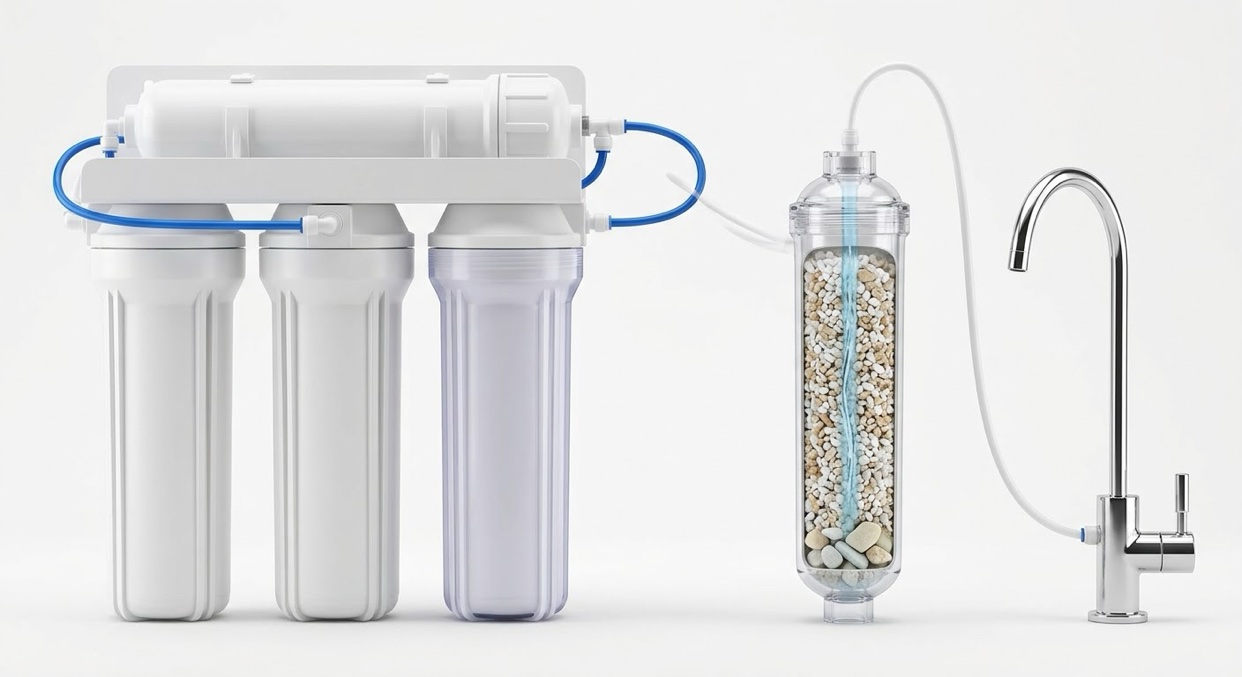
A TAC system changes how these minerals behave using microscopic polymer beads inside a media tank:
- As hard water flows through the tank, calcium and magnesium ions interact with active sites on the surfaces of these specialized beads.
- The media acts as a template, encouraging the hard minerals to bond with each other right there in the tank, forming microscopic, inert crystals.
- Once these micro-crystals form, they release back into the water flow.
- Because the minerals are already locked into stable crystal structures, they can no longer cling or cement themselves onto your plumbing, hot water heater, or appliances. They simply float right past your surfaces and down the drain.
The minerals stay in the water, but their ability to form scale is largely neutralized.
What TAC Can and Cannot Do
Because the hard minerals remain dissolved in your water supply, your water chemistry is unchanged. That single fact explains both the benefits and the limitations of TAC systems.
Real Advantages
- Zero Salt: You never have to buy, haul, or pour 40-pound bags of salt into a brine tank.
- No Regeneration Wastewater: Traditional softeners periodically flush themselves with water, sending gallons down the drain. TAC units run continuously without backwashing or producing wastewater.
- No Electricity Needed: TAC systems operate entirely on incoming water pressure.
- Low Maintenance: The media inside a TAC tank typically lasts several years before needing replacement, making day-to-day upkeep virtually non-existent.
- Plumbing and Appliance Scale Protection: TAC is effective at preventing scale build-up on heating elements, inside water heaters, and along internal pipe walls.
Real Limitations
- Water Spots Still Happen: Because calcium and magnesium are still in the water, when water drops evaporate on your dishes, glass shower doors, or chrome faucets, the minerals remain behind as spotty deposits. However, unlike hard scale, these spots are usually much easier to wipe away.
- No “Slippery” Feel: If you like the silky, slick feeling on your skin after showering in softened water, you will not get it from a TAC conditioner.
- Sensitivity to Water Chemistry: TAC performance varies depending on your overall water profile. High levels of copper, silica, or hydrogen sulfide can coat the media and ruin its efficiency.
- Not a Filter: A salt-free conditioner does not filter out sediment, iron, heavy metals, or chemical contaminants.
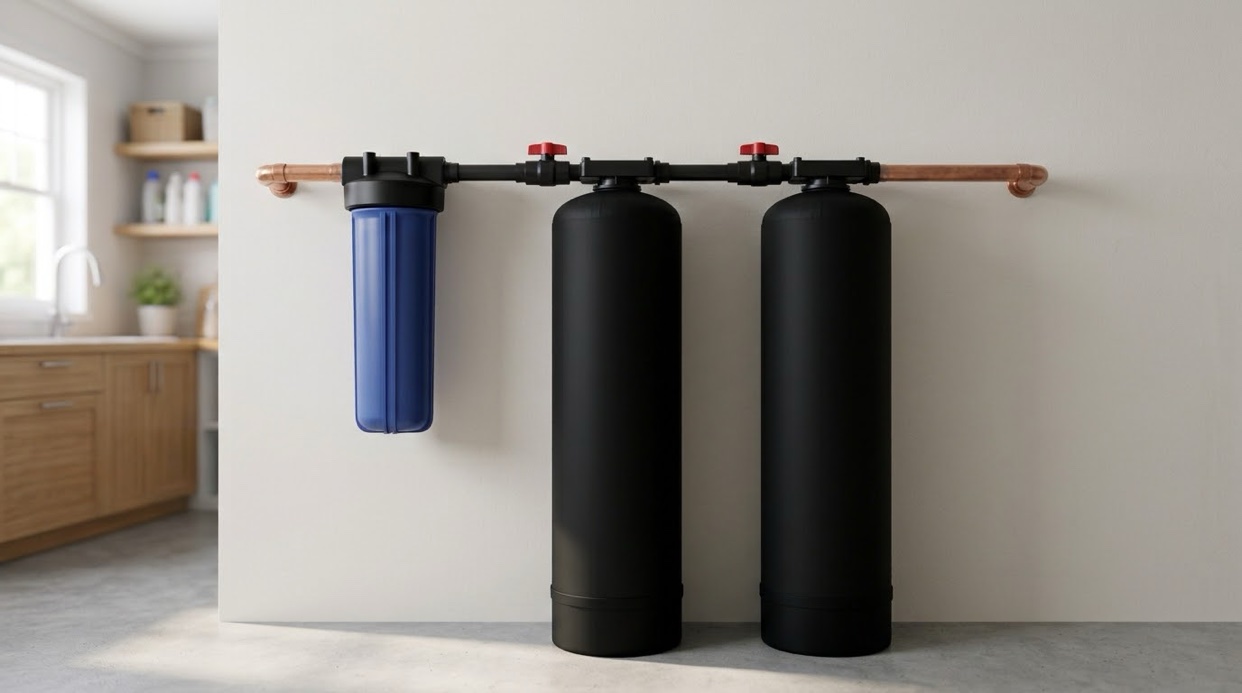
A Note on Combination Systems: Many manufacturers sell dual-tank setups or combination systems that feature a carbon or KDF filter tank alongside a TAC tank. Be cautious with marketing claims here: any reduction in chlorine, taste, odor, or heavy metals comes entirely from the carbon or KDF filter stage, NOT from the TAC conditioner. Ads often blur these benefits together, but the TAC media only handles scale prevention.
Comparing Salt-Free Conditioners and Ion-Exchange Softeners
Choosing between a salt-free conditioner and a true salt-based softener comes down to what you want to achieve in your home.
| Feature / Goal | Salt-Free TAC Conditioner | Traditional Ion-Exchange Softener |
|---|---|---|
| Primary Function | Conditions scale minerals | Removes scale minerals |
| Calcium/Magnesium Removal | No | Yes |
| Prevents Scale in Pipes/Heaters | Yes | Yes |
| Eliminates Hard Water Spots | No | Yes |
| Provides Silky Bathing Feel | No | Yes |
| Consumes Salt & Water | No | Yes |
| Requires Drain Line & Power | No | Yes |
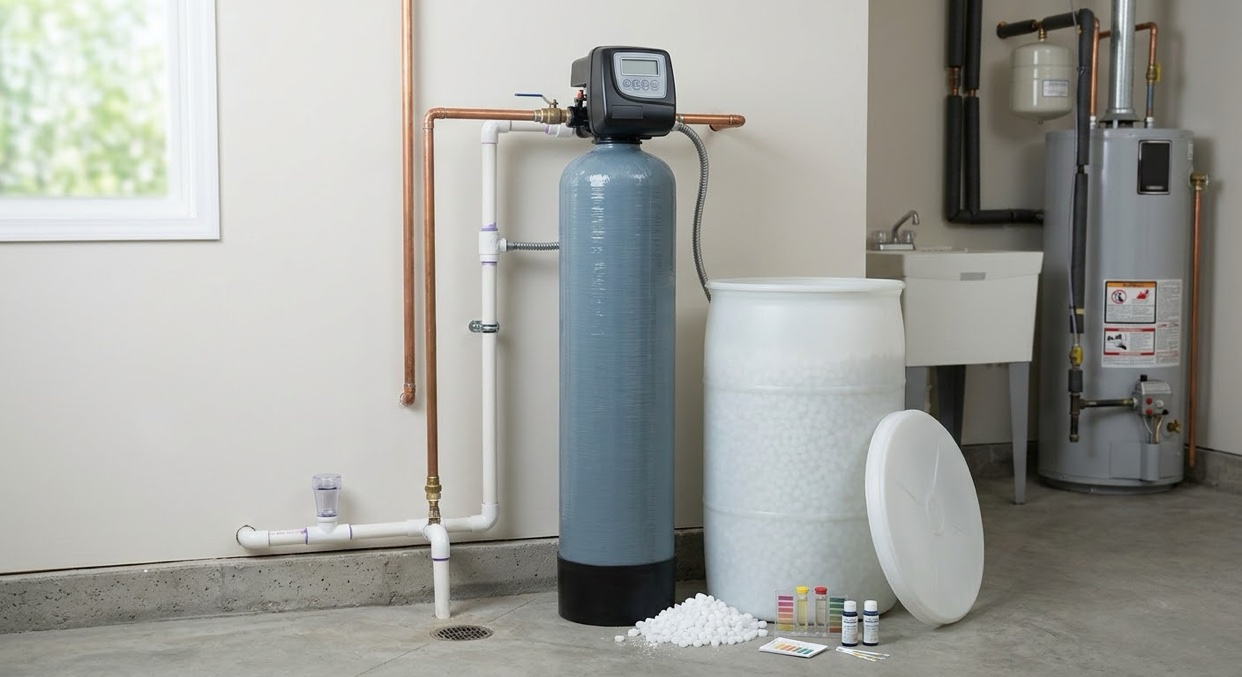
A traditional ion-exchange softener uses resin beads coated with sodium or potassium ions. As hard water passes through, the resin physically grabs the calcium and magnesium ions and trades them for sodium or potassium ions. When the resin fills up with hard minerals, the system regenerates by flushing itself with a saltwater brine solution.
This process physically removes the hardness minerals, giving you soft water that lathers soap effortlessly, keeps glass spot-free, and leaves your skin feeling smooth.
Who Should Buy Which?
A Salt-Free Conditioner is Right For You If:
- Your main concern is protecting your home’s plumbing, tankless water heater, and appliances from destructive scale build-up.
- You live in an area with salt bans or strict environmental restrictions on backwash wastewater discharge.
- You want a low-upkeep system with no heavy lifting, electricity, or maintenance routines.
- You prefer drinking water that retains natural minerals.
A Traditional Softener is Right For You If:
- You want true soft water performance: zero water spots on glass and dishes, brighter laundry, and less soap usage.
- You want to eliminate hard water scum in showers and tubs completely.
- You have extremely high water hardness that causes severe aesthetic issues throughout your house.
Buying Honesty: Look Past the Marketing
When shopping for water treatment equipment, remember that using the word “softener” on a salt-free product label is a marketing choice designed to match what consumers search for online.
When reviewing salt-free options, cut through the sales pitch by asking manufacturers for independent third-party testing that validates their scale-reduction claims. Trustworthy manufacturers will gladly share independent performance test data verifying how effectively their media prevents scale under tested conditions.
A word on certifications, because this is where buyers get fooled. There is no NSF or WQA certification of a salt-free conditioner as a softener. The softener standard, NSF/ANSI 44, covers only ion-exchange systems regenerated with salt — a conditioner cannot qualify for it, by definition. If you see “NSF certified” on a salt-free product, it is almost always NSF/ANSI 61, which certifies that the materials touching your water are safe. It says nothing about scale. A genuine scale-performance standard does exist: IAPMO/ANSI Z601, written for scale reduction devices. Ask whether the system is listed to it, and where the listing lives. Almost none are.
Understanding the difference between conditioning water and softening water keeps your expectations grounded and ensures you invest in the right equipment for your home.
Facts first, then filter. — Steve