
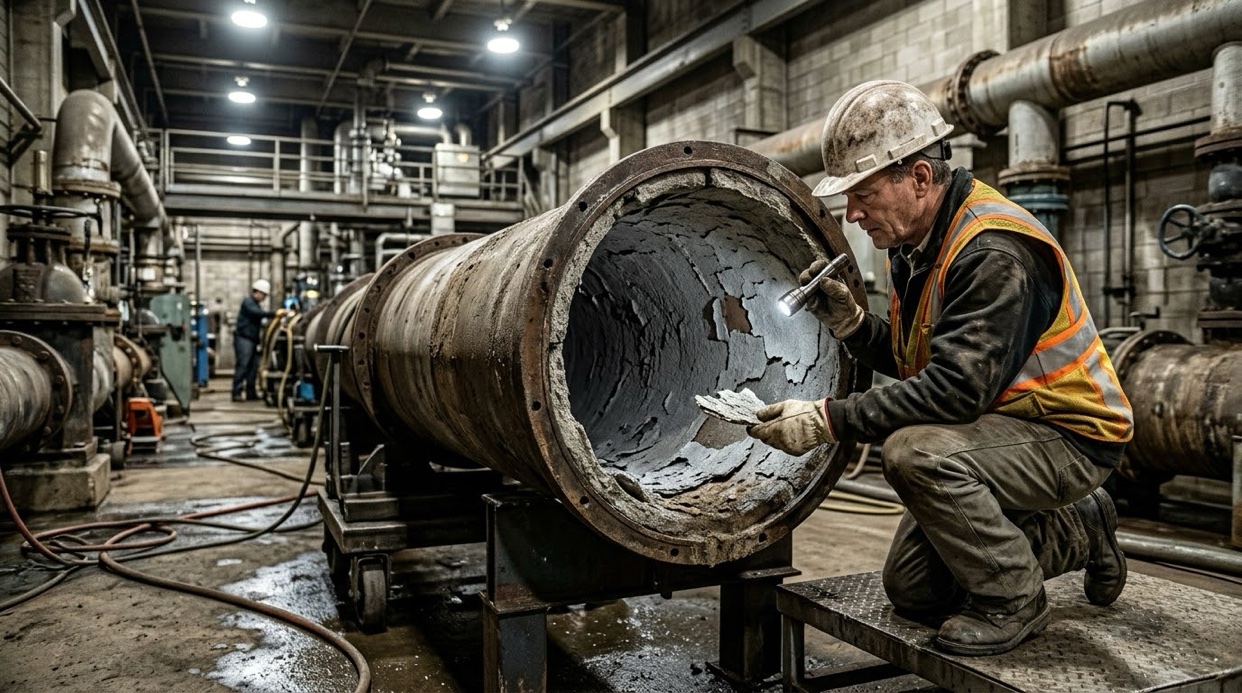
Asbestos is a group of naturally occurring fibrous minerals that, for decades, were prized in construction and manufacturing for their heat resistance and durability. That same toughness is exactly why asbestos is a problem in drinking water: the fibers do not break down easily, and once released, they persist. Working in water treatment since 1994, I have helped homeowners understand how building materials from another era can still affect the water coming out of their taps today.
Where It Comes From
Asbestos enters drinking water through three main pathways:
- Natural mineral deposits: Asbestos occurs naturally in certain rock formations. When water flows through or over these deposits, it can pick up fibers and carry them into groundwater and surface water supplies.
- Cement pipes and building materials: Asbestos-cement pipes were widely installed in water distribution systems through much of the 20th century. As these pipes age and deteriorate, fibers can shed into the water flowing through them. Older homes may also have asbestos-containing materials that degrade over time.
- Industrial and mining runoff: Mining operations, manufacturing sites, and demolition of older buildings can release asbestos fibers into nearby water sources through runoff and erosion.
What It Can Do to Health
Asbestos is a known human carcinogen. The health risks from asbestos in drinking water are different from the better-known risks of inhaling asbestos fibers. When ingested, asbestos fibers can irritate the digestive tract. The EPA notes that some people who drink water containing asbestos well in excess of the limit over many years may have an increased risk of developing benign intestinal polyps.
The EPA Drinking-Water Limit
The U.S. Environmental Protection Agency regulates asbestos under the Safe Drinking Water Act. The enforceable federal Maximum Contaminant Level (MCL) is 7 million fibers per liter (MFL) for fibers longer than 10 micrometers. The Maximum Contaminant Level Goal (MCLG) is also 7 MFL. Public water utilities are required to test for asbestos and notify consumers if levels exceed the limit.
Which Home Filtration Actually Removes It
Asbestos fibers are physical particles, which means mechanical filtration is the key to removing them:
- Activated carbon filtration (granular or solid block): High-quality carbon block filters with fine pore structures can physically trap asbestos fibers as water passes through the dense carbon matrix.
- Reverse osmosis (RO): Residential RO systems combine carbon pre-filtration with a semipermeable membrane (pores around 0.0001 microns) to filter out particles, including asbestos fibers. The membrane is far smaller than the fibers it needs to block.
Understanding Certification Standards
- NSF/ANSI Standard 53: This is the health-effects standard for drinking water treatment units. In plain English, a Standard 53 certification verifies that a filter reduces the specific contaminants named in that model’s certification — asbestos among them, if it is listed. Check the certification list, not just the seal.
- NSF/ANSI Standard 58: This is the performance standard for reverse osmosis systems. It certifies the system and the specific reductions listed in its certification; check the list.
Facts first, then filter. — Steve
Leave a Reply