
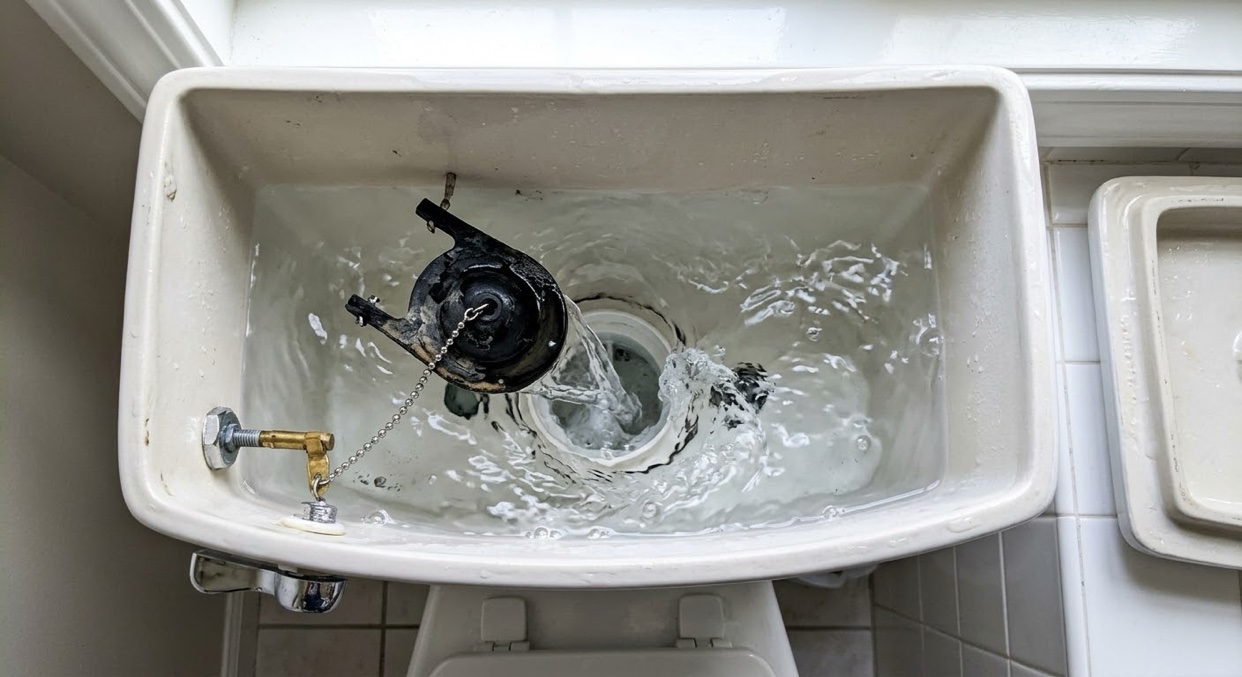
There is a stealthy little water thief hiding in plain sight in most homes, and chances are good it is working right now without making a sound. It is your toilet’s flapper valve — the rubber disc at the bottom of the tank that lifts when you flush and drops back down to hold the water in place.
Over time, exposure to common disinfectants like chlorine and chloramines, along with natural mineral deposits, causes that rubber to warp, harden, or degrade. When it loses its seal, water quietly slips past it from the tank down into the bowl. Because it happens below the waterline, you won’t see a puddle on the bathroom floor. But the EPA’s WaterSense program puts a running toilet at 200 gallons of water a day or more — 73,000 gallons over a year — adding up to hundreds of dollars in unnecessary water and sewer costs before most people ever notice.
The good news is that diagnosing and fixing this silent leak requires no special plumbing skills, no expensive service calls, and about ten minutes of your time.
Three Ways to Check for a Flapper Leak
Before you pull out any tools, you can easily confirm whether your toilet is leaking using one of these three diagnostic methods:
The Listen Test
Stand quietly in your bathroom when the house is still. If you hear the toilet tank refilling on its own every few minutes — even when nobody has flushed — water is escaping through the flapper and dropping the tank level until the fill valve kicks back on.
The Food-Coloring Dye Test
Remove the lid from your toilet tank. Drop a few drops of dark food coloring (or a dye tablet) directly into the water until the tank turns a distinct color. Do not flush. Wait about 10 to 15 minutes, then look inside the toilet bowl. If colored water has seeped down into the bowl without anyone touching the handle, your flapper is failing to seal. (Flush right after the test so the dye doesn’t stain.)
The Water Meter Test
Go out to your main water meter box. Make sure every faucet, appliance, and outdoor spigot in the house is turned completely off. Look closely at the meter dial; most meters feature a small, low-flow indicator — a little triangle or gear. If that indicator is spinning or ticking upward even slightly, water is moving somewhere in your home, and a running toilet is one of the most common culprits.
How to Replace a Flapper in 10 Minutes (No Tools Required)
Once you’ve confirmed the leak, replacing the flapper is a straightforward DIY project that doesn’t even require a wrench.
- Shut off the water supply: Turn the small oval-shaped valve located on the wall behind your toilet clockwise until it stops. This prevents the tank from continually refilling while you work.
- Drain the tank: Flush the toilet to empty most of the water out of the tank. Hold the handle down for a few extra seconds to drain as much as possible. Absorb any remaining puddles at the bottom with an old sponge or towel.
- Unhook the old flapper: Reach into the tank and disconnect the small chain from the toilet flush lever arm. Next, slide the rubber “ears” or ring of the flapper off the mounting pegs located on either side of the overflow tube.
- Attach the new flapper: Take your replacement flapper and slide its mounting loops over the overflow tube pegs. One caution before you buy: most standard toilets use a 2-inch flapper, but many newer toilets use a 3-inch one — check the size of the old flapper first so you only make one trip to the store. Hook the chain onto the flush lever arm, making sure there is just a little slack — about half an inch — so the flapper can sit completely flat against the drain opening when closed.
- Restore water and test: Turn the wall water supply valve counterclockwise to reopen it. Allow the tank to fill back up, then test-flush a couple of times to ensure the chain isn’t catching and the seal is tight.
One last habit worth starting: flappers are a wear part, not a lifetime part. WaterSense guidance points to replacing them about every five years, before the silent leak starts — a universal flapper costs about $6, which is a lot cheaper than 73,000 gallons.
Taking care of a worn flapper protects your municipal water supply, keeps your utility bills predictable, and gives you peace of mind knowing your home’s plumbing is running efficiently.
Facts first, then filter. — Steve
Leave a Reply