If you’ve landed on this page, chances are you’ve seen perchlorate pop up on a local water quality report, read about it in the news, or simply want to know more about what’s flowing through your taps. My name is Steve, and I’ve spent a lifetime in the water treatment business. Over the years, I’ve worked on everything from simple under-sink filters to complex well systems, sitting down at kitchen tables with homeowners just like you to make sense of water chemistry.
When folks first hear the word “perchlorate,” it often sounds intimidating or overly technical. But like most water quality topics, once you break it down into plain English, it becomes a straightforward puzzle with clear solutions. Today, we’re going to cover what perchlorate is, where it comes from, how it affects the body, why you won’t notice it with your senses, the confusing regulatory situation around it, and—most importantly—what actually works to filter it out of your home’s water supply. Let’s get right to it.
What Is Perchlorate and Where Does It Come From?
To understand perchlorate, it helps to look at how it behaves chemically. Perchlorate is an inorganic anion—a combination of chlorine and oxygen atoms—that dissolves remarkably well in water. Because it is highly soluble and incredibly stable in liquid, once it enters groundwater or surface water, it can travel long distances without breaking down easily.
So, how does it get into the water supply in the first place? For the most part, perchlorate is a synthetic chemical created for industrial and military applications. Its main claim to fame is that it acts as a powerful oxidizer. An oxidizer provides the fast-burning oxygen needed to propel solid fuel rockets, missiles, and munitions. Because of this, historical manufacturing, testing, and disposal practices around military installations, aerospace defense facilities, and chemical manufacturing plants have historically been primary pathways for perchlorate entering regional aquifers.
However, rocket fuel isn’t the only source. Perchlorate is also used as an ignition component in everyday items like fireworks, road flares, and automotive safety airbags. In agricultural settings, certain imported nitrate fertilizers mined from arid regions naturally contain perchlorate compounds, which can leach into shallow groundwater over years of widespread application.
Additionally, perchlorate can form naturally in extremely dry, arid environments—such as parts of the American Southwest—where atmospheric chemical reactions produce tiny amounts that accumulate in the soil and mineral deposits over long periods. Whether from industrial runoff, consumer products, or dry-land geology, perchlorate makes its way into local water sources through the natural movement of rain and groundwater.
Why It Matters: The Thyroid Connection
When we evaluate any element in drinking water, we always ask how it interacts with human biology. Unlike some minerals that cause aesthetic issues like staining or pipe scale, perchlorate interacts directly with an essential body process: the thyroid gland.
The thyroid relies on iodide—a form of iodine we get from our food and drink—to produce thyroid hormones. These hormones act as the body’s master regulators, controlling metabolism, energy levels, heart rate, and overall growth.
Here is the key biological mechanism: the human body accidentally mistakes the perchlorate molecule for an iodide molecule. Because they look chemically similar to the transport system inside the thyroid, perchlorate effectively blocks the doorway, inhibiting the gland’s ability to take up the iodide it needs. If the thyroid cannot absorb enough iodide, it cannot produce adequate levels of thyroid hormones.
For healthy adults, a temporary reduction in iodide uptake usually isn’t cause for panic, as the adult body maintains a healthy reserve of stored hormones. However, the situation is quite different for vulnerable populations—specifically pregnant women, developing fetuses, nursing mothers, and infants.
During pregnancy and early infancy, thyroid hormones are absolutely critical for proper brain development and physical growth. A developing fetus cannot manufacture its own thyroid hormones early on and relies entirely on the mother. If a mother’s thyroid function is suppressed by perchlorate exposure, or if an infant receiving reconstituted formula ingests high levels of perchlorate, it can disrupt normal development. Educating homeowners about this isn’t meant to cause alarm; rather, it highlights why monitoring and protecting drinking water for growing families is so important.
The Hidden Contaminant: No Smell, No Taste
One of the trickiest aspects of perchlorate is that you cannot rely on your physical senses to detect it.
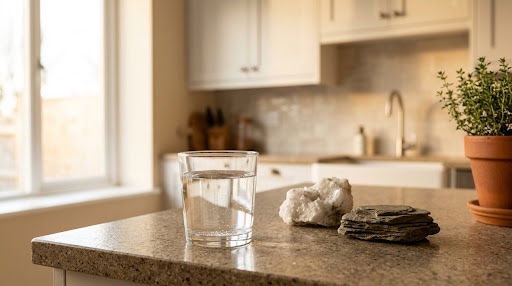
When water contains high levels of iron, it turns reddish-brown. If it has excess sulfur, it smells like rotten eggs. If it has high sulfate, it tastes bitter. But perchlorate leaves no visual or sensory clues whatsoever. It is completely odorless, colorless, and tasteless at the concentrations typically found in municipal or well water supplies. You could pour a crystal-clear glass of water that looks and tastes completely refreshing, completely unaware of whether perchlorate is present.
This invisible nature means that you can never diagnose a perchlorate issue by simply pouring a glass at the sink or checking for pipe corrosion. The only way to know if perchlorate is in your water is through proper scientific testing.
The Regulatory Picture: A Decades-Long Debate
If you try to look up the official national safety limit for perchlorate, you might end up more confused than when you started. That is because perchlorate has been the subject of a long, complex debate among regulators, scientists, and lawmakers in Washington for decades.
At the federal level, the Environmental Protection Agency has spent years studying perchlorate, evaluating toxicological data, and weighing proposed drinking water standards. During this lengthy process, official guidance numbers have shifted, proposed regulations have been delayed, and federal rulemaking has faced legal challenges. As a result, there is still no single, simple, permanent federal maximum contaminant level that applies uniformly across every single state. The newest chapter: in January 2026, acting under a court order, EPA finally proposed a federal health goal of 20 parts per billion and asked for public comment on an enforceable limit of 20, 40, or 80 parts per billion. But a proposal is not a standard — a final rule is not expected before 2027, and until it lands, the state rules below are the numbers that actually govern.
Because the national picture has taken so long to settle, individual states have stepped up to set their own rules. States with significant aerospace histories, heavy agriculture, or dry climates have established their own strict state-level drinking water standards and monitoring requirements.
What does this mean for you as a homeowner? It means you shouldn’t wait around for a clear-cut federal decree to tell you what to do. Your local municipal water authority’s annual quality report or your state’s department of environmental protection will give you the most accurate picture of what is happening in your immediate area.
How to Test Your Water
Because perchlorate is invisible to your senses, accurate testing is the essential first step before considering any filtration equipment.
If you are on a public water system, start by checking your utility’s annual Consumer Confidence Report. Many public utilities regularly test for perchlorate, especially in areas with known historical exposure, and will publish their findings measured against state benchmarks like California’s enforceable limit of 6 parts per billion or Massachusetts’ stricter 2 parts per billion.
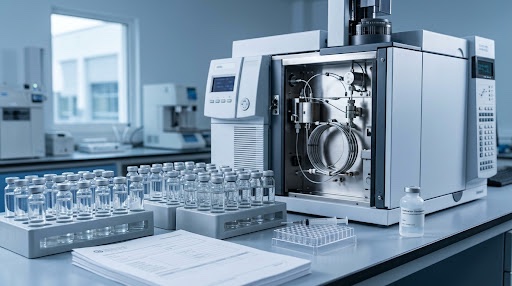
If you rely on a private well, testing is entirely your responsibility. Standard home DIY test kits from the local hardware store generally do not check for perchlorate, as measuring it requires specialized laboratory equipment like ion chromatography. To get a reliable answer:
- Contact a state-certified drinking water laboratory.
- Request a test panel specifically configured for perchlorate.
- Follow the lab’s instructions carefully for drawing and shipping the sample to ensure accurate results.
Once your lab report comes back, it will display your water’s exact perchlorate concentration expressed in standard parts per billion. Having that precise number allows a water professional to recommend a system properly calibrated for your home.
What Actually Removes Perchlorate (and What Doesn’t)
This brings us to the most practical question: if perchlorate is in your water, how do you get it out? Over my decades in the trade, I’ve seen plenty of homeowners buy expensive filters that were completely ineffective for their specific problem. Let’s look at what works and what doesn’t.
What Does NOT Work
- Standard Pitcher Filters and Pour-Through Pitchers: Basic countertop pitchers designed for taste and odor rely on standard granular activated carbon, which does not effectively trap or remove dissolved perchlorate ions.
- Standard Sediment and Carbon Block Filters: Whole-house sediment cartridges and typical under-sink carbon block filters will pass perchlorate right through without stopping it.
- Traditional Water Softeners: Conventional water softeners use a cation exchange resin designed to grab positively charged minerals like calcium and magnesium. Because perchlorate is a negatively charged ion, standard softeners will not remove it.
- Boiling Water: Boiling your water will only evaporate pure water steam, actually concentrating the perchlorate left behind in the pot.
What DOES Work
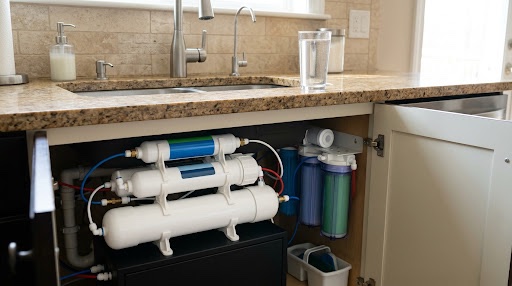
- Reverse Osmosis (RO): Reverse osmosis systems push water under pressure through a semi-permeable membrane with microscopic pores. This membrane effectively blocks dissolved inorganic ions like perchlorate while letting pure water pass through. A quality point-of-use RO system installed under the kitchen sink is often the most practical, reliable, and cost-effective solution for providing clean drinking and cooking water for a family.
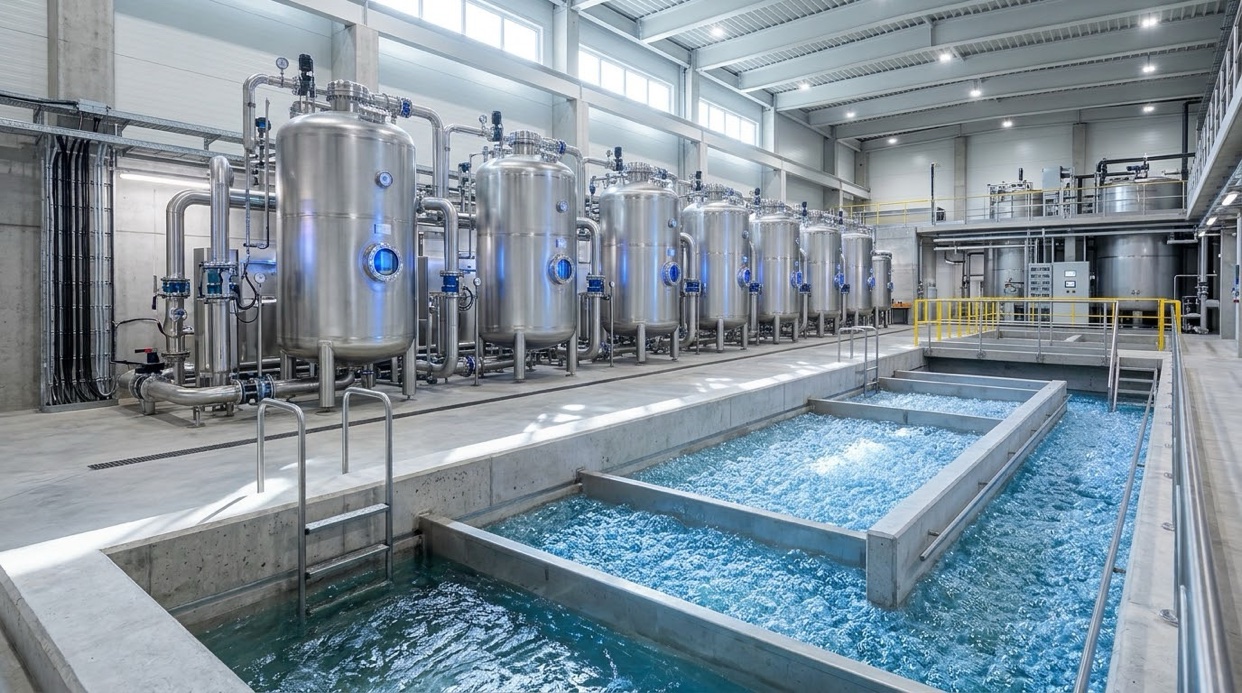
- Perchlorate-Selective Anion Exchange Resin: For whole-house treatment, specialized anion exchange systems use custom-engineered synthetic resins designed specifically to attract and bind perchlorate ions. As water flows through the media tank, the resin captures the perchlorate and replaces it with a harmless ion like chloride. Because these resins have a very strong affinity for perchlorate, they are highly effective, though they require professional sizing and routine maintenance.
- Distillation: Countertop water distillers boil water into steam, leaving perchlorate and other heavy minerals behind in the heating chamber, then condense the pure steam back into drinking water. While very effective, distillers process water slowly and use more energy than RO systems.
Conclusion
Understanding your home’s drinking water doesn’t have to be overwhelming. While perchlorate is a unique chemical with a complex industrial history and real biological effects on the thyroid, it is also a completely solvable problem.
By getting a certified lab test, understanding your state’s local guidelines, and choosing proven technology like reverse osmosis or specialized ion exchange, you can ensure your home’s water is clean, safe, and wholesome for your entire family. Take it one step at a time, rely on verified testing, and enjoy the peace of mind that comes with knowing exactly what’s in your glass.