Author: iPhilter

  • Friday Fact: The Great Pumpkin Boat Race

    Friday Fact: The Great Pumpkin Boat Race

    Every autumn, people scoop out giant pumpkins, hop inside, and race them across lakes. They call these pumpkin regattas.

    It sounds crazy, but giant gourds actually make great boats. A 1,000-pound pumpkin might look heavy, but its inside is mostly air and water. Once you scrape out the seeds and pulp, you leave behind a thick, lightweight hull.

    When you slide that giant shell into the lake, it pushes away a huge volume of water. As long as the pumpkin weighs less than the water it displaces, it stays afloat. That is basic buoyancy at work. Gravity pulls down, water pushes up, and off you paddle.

    Nature built those thick gourd walls to move fluids efficiently. Your home plumbing needs that same smart design.

    Takeaway: Before freezing temperatures hit this season, disconnect your outdoor garden hoses and drain your spigots. Trapped water expands when it turns to ice, and split pipes are a lot less fun than pumpkin boats.

    Inspired by the Water Quality Association’s Friday Fact

  • Water Dowsing: The Old Way of Finding Water — and What Science Says About It

    Water Dowsing: The Old Way of Finding Water — and What Science Says About It

    By Steve

    When you spend your life working in water treatment, you get used to looking at water through a microscope or a lab report. You talk about parts per million, total dissolved solids, filter micron ratings, and pipe friction loss. It is a precise world built on chemistry and fluid mechanics.

    But if you spend enough time out in the field — talking to well drillers, farmers, and old-timers who have lived on the same plot of land for generations — you eventually run into a practice that does not fit neatly into a textbook.

    You will see a man step out of a pickup truck holding two thin, L-shaped brass rods, or maybe a Y-shaped fork cut from a peach tree. He will grip them loosely in his hands, hold them straight out in front of his chest, and start walking across a dry pasture. Suddenly, without his hands visibly turning, the two brass rods cross over each other like a pair of scissors.

    He stops, points his boot at the soil, and says, “Dig here.”

    That is water dowsing — sometimes called water witching, divining, or doodlebugging. Depending on who you talk to, it is either an ancient trade tradition, a subconscious skill, or outright nonsense. Having spent my career helping folks understand what is in their water and how it gets to their tap, I have always found the tradition fascinating.

    Here is a plainspoken look at what dowsing is, where it comes from, what science has to say about it, why it has refused to disappear — and how the professionals find water today, when the rods stay in the truck.

    What Is Water Dowsing?

    At its core, dowsing is the practice of using a hand-held tool to locate underground water, minerals, or utilities.

    While some people use pendulum weights or wooden sticks, the most common setup you will see today involves two L-shaped metal rods — usually brass, copper, or steel cut from old coat hangers. The short end of each “L” is held loosely in the hand, often inside a light sleeve or tube so the rod can pivot freely, while the long end points forward.

    The dowser walks slowly across the terrain. When they pass over what they believe is an underground stream or aquifer, the tips of the rods swing inward and cross over one another. Some dowsers claim they can feel a slight magnetic pull; others say their hands get warm or feel a subtle twitching sensation.

    A History Measured in Centuries

    Water witching is not a modern fad. People have been walking fields with sticks for hundreds of years.

    Historical woodcuts and documents show miners and farmers using wooden divining rods across Europe. Originally, the practice was used to locate silver, copper, and iron ore seams deep underground — the oldest written accounts come from German mining country, where the forked rod was a working tool of the ore hunters. Over time, as communities expanded and needed reliable drinking water for livestock and farming, the technique was adapted to find underground water sources.

    When European settlers migrated to North America, they brought the tradition with them. On the American frontier, finding a good spot to dig a well was a matter of survival. Drilling equipment was rudimentary, costly, and backbreaking to move. Calling in a local “water witch” was often the very first step a homebuilder took before breaking ground.

    Who Still Uses It Today?

    You might assume that dowsing disappeared with the invention of modern geology, satellite imaging, and electrical resistivity testing. But if you talk to people who work outdoors for a living, you will find it is still surprisingly common.

    • Well Drillers: Plenty of commercial well drillers — even those with modern rigs worth hundreds of thousands of dollars — keep a pair of brass rods behind the seat of their truck. Some use them before setting up their rig; others will offer to dowse a spot if a landowner asks where to drill.
    • Farmers and Ranchers: When you need to sink a borehole across hundreds of acres of pasture, calling out a local dowser is still a common neighborhood tradition in many rural communities.
    • Utility Crews: Interestingly, even some municipal water department workers and underground line locators have been known to pull out a set of rods when looking for buried iron pipes or water mains.

    Whether they view it as a trusted method or just a fun secondary check, plenty of practical, field-tested workers still carry the rods.

    What Does Science Say?

    If you ask a scientist or a government agency about dowsing, you will get a very straightforward answer: there is no scientific evidence that dowsing works.

    The U.S. Geological Survey (USGS), which studies the distribution and quality of water across the nation, maintains an official position on water witching. They state clearly that the practice is scientifically unproven. According to geologists, water is present almost everywhere beneath the Earth’s surface at varying depths in what is known as the water table. In many regions, if you drill deep enough, you will hit water regardless of where you put the hole.

    When scientists put dowsers to controlled testing — placing water pipes underground in hidden locations or burying water-filled containers under wooden boards — dowsers generally perform no better than random guessing.

    So, why do the rods move?

    Science points to a well-understood phenomenon called the ideomotor effect. This is a physical process where a person makes tiny, involuntary muscle movements in response to an expectation or subconscious thought.

    Because the dowsing rods are balanced delicately in the hands, even an imperceptible movement of the wrists or fingers — so slight that the person holding the rods does not even realize they are doing it — causes the long end of the rod to swing dramatically. The rods act as a mechanical amplifier for subtle body twitches.

    Giving the Practitioner Their Due

    It is easy to stop there and dismiss the whole thing as a parlor trick. But if you talk to experienced dowsers with respect, a more interesting picture emerges.

    Many people who dowse successfully are not trying to fool anyone, nor are they foolish. Many of them are seasoned outdoorsmen — farmers, drillers, and land observers who have spent decades studying the terrain.

    Without consciously realizing it, an experienced dowser may be picking up on subtle environmental cues as they walk the property:

    • The way the slope of the land drains surface water.
    • Changes in soil moisture or soil color underfoot.
    • The types of trees and vegetation growing in a specific patch (certain plants thrive only where groundwater is shallow).
    • Knowledge of local geology and existing wells nearby.

    Their brain processes all these physical clues and arrives at a logical conclusion: there is probably water beneath this spot. That subconscious conclusion triggers a microscopic muscle movement in the hands, and the rods cross.

    In this view, the rods are not sensing the water directly through some unknown force. Instead, the rods are simply revealing what the practitioner’s body and experience have already figured out.

    A Measured Conclusion

    In my years in the water industry, I have learned that the world of water is full of quiet wonders — some explained by clear science, and others wrapped in trade tradition.

    When it comes to dowsing, science gives us a clear answer: the rods do not possess physical forces that pull toward underground streams, and controlled tests do not support the claims. Yet, walk into almost any rural township, and you will find someone who can show you three successful wells on their property, all picked by an old man holding a piece of peach wood.

    Whether you believe the rods feel the water, or simply feel the subtle instincts of the man holding them, the practice has survived for centuries because people in the field swear it works. And as long as folks need to draw clean water out of the earth, the old L-rods will likely stay tucked behind the seats of a few pickup trucks.

    The Modern Way: How Hydrogeologists Find Water Today

    So what happens when the job leaves the pasture and goes to the professionals? Modern hydrogeologists rely on a combination of geology, physics, data analysis, and technology to map what lies beneath the surface. Finding water is not about guessing where a hidden “underground river” flows; it is about mapping the layer cake of rock, sand, gravel, and clay that makes up the earth’s crust, to find saturated, permeable formations capable of yielding water.

    Here are the primary tools and methods they use.

    1. Topographic & Geological Mapping

    Before setting foot in the field or hauling in heavy machinery, hydrogeologists start with existing data.

    • Geological Surveys: Scientists analyze local bedrock maps, soil survey reports, and regional cross-sections to understand the underlying rock types (such as porous sandstone vs. dense granite).
    • Existing Well Logs: Neighboring well records — which list the depth, soil layers, and water yields of existing wells in the area — provide a clear picture of local water tables and subsurface geology.
    • Topography & Surface Hydrology: Aerial photography and satellite imagery help identify surface drainage patterns, fault lines, fracture zones, and vegetation shifts that often signal shallow groundwater.

    2. Geophysical Prospecting (Seeing Into the Ground)

    To “see” beneath the soil without digging, hydrogeologists use non-invasive geophysical methods that measure physical properties of the subsurface.

    • Electrical Resistivity: Sending electrical currents into the ground via metal stakes. Water-saturated sand and gravel conducts electricity differently than dense rock or dry clay.
    • Seismic Refraction: Creating small sound waves (using a sledgehammer or a small charge) and timing how fast they travel through ground layers. Sound travels faster through dense rock and saturated soil than through loose, dry dirt.
    • Ground-Penetrating Radar (GPR): Transmitting high-frequency radio pulses into the soil. It detects shallow water tables, soil transitions, and bedrock depth — a shallow tool, and one that struggles in clay soils.
    • Electromagnetic (EM) Surveys: Measuring magnetic fields produced by induced underground currents. Identifies conductive water-bearing zones and changes in soil salinity across large areas.

    3. Exploratory Drilling & Soil Sampling

    Once potential zones are identified on paper and through geophysics, test wells are drilled to confirm the predictions.

    • Borehole Logging: A small probe is lowered down a narrow test hole to measure natural radiation (gamma logging), electrical resistance, or sonic velocity along the entire depth of the hole.
    • Soil & Core Samples: Drillers extract physical soil and rock cores to inspect grain size, porosity (how much water the rock can hold), and permeability (how easily water flows through it).

    4. Pumping Tests & Hydrologic Modeling

    Finding water is only half the battle; knowing if the aquifer can yield enough water sustainably is the other.

    • Aquifer Pumping Tests: Water is pumped out of a test well at a controlled rate for hours or days while monitoring drawdown levels in nearby observation wells. This determines the aquifer’s transmissivity (how freely water flows through it) and storativity (how much water it stores).
    • Computer Modeling: Hydrogeologists plug soil, recharge, and pump test data into 3D computer models to simulate how the aquifer will perform over years of dry spells and heavy pumping.

    Two very different toolboxes, one job: the dowser walks the land reading it with his hands, and the hydrogeologist reads the same land with maps, current, and sound. Both start from the same truth — the water is down there, in the rock, whether the rod crosses or the meter sings. The honest man just wants to know where, and how much, before he digs.

    Prefer the lab-report side of water? Start with How to Spot an Honest Water Treatment Company — then check the pH, then filter.


  • Molybdenum in Drinking Water: What You Should Know

    Molybdenum in Drinking Water: What You Should Know

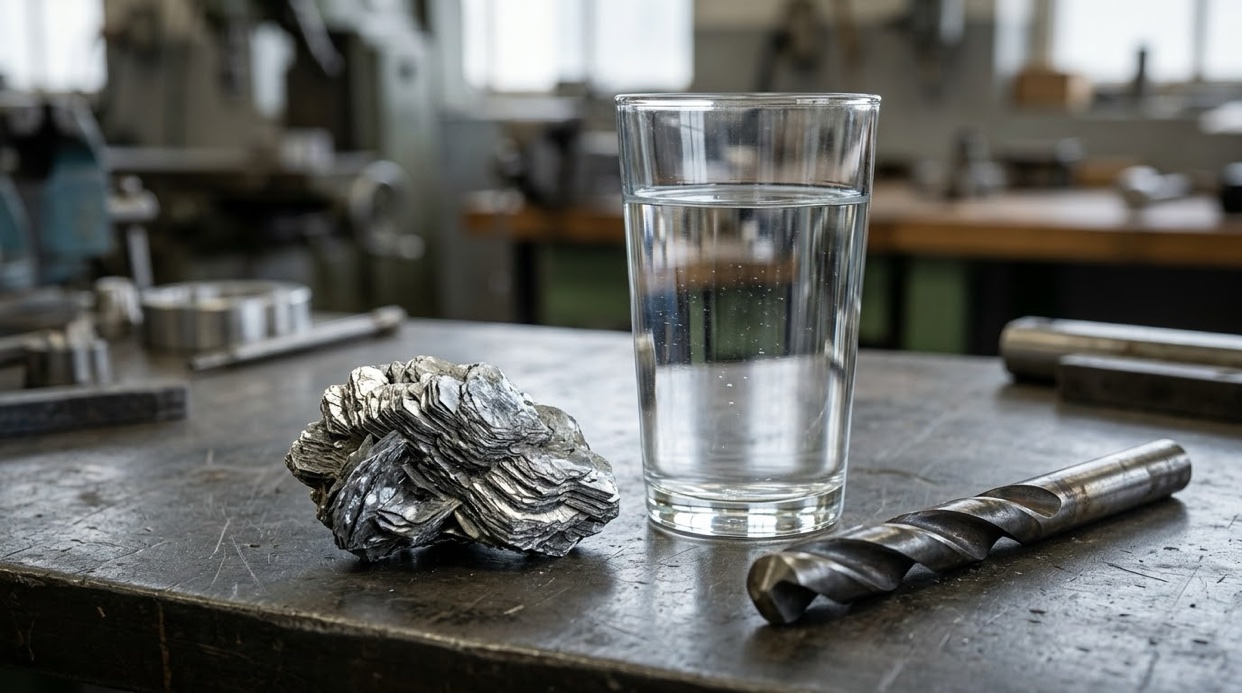
    If you take a look at the periodic table, you will spot molybdenum sitting at element number 42. It is a metal with a tongue-twister name and a quiet double life: industry mines it for steel, and your body uses a trace of it to stay alive.

    I’m Steve, and I spend my days helping homeowners make sense of what comes out of their taps. Molybdenum is one of the elements I file under “nutrient first” — most people who find it on a water report have never heard of it, and the honest story is calmer than the name sounds. Here is a clear, honest breakdown of what molybdenum is, how it gets into drinking water, what it means for your health, and what you can do about it, without any sales hype or scare tactics.

    1. What Molybdenum Is and Where It Comes From

    Molybdenum is a metal that occurs naturally in rock and soil. It is an essential nutrient in trace amounts — and at the same time a genuinely useful industrial metal:

    • Steel Alloys and Industry: Molybdenum is mined for steel alloys and industrial uses, where it earns its keep in hard-working metal.
    • A Copper Connection: It sometimes comes out of the same mining operations that produce copper — the two metals can share the same ground.

    So the molybdenum in a water report has two possible authors: the geology under your feet, and the mining that geology sometimes attracts.

    2. How It Gets Into Drinking Water

    Molybdenum reaches drinking water the natural way, with mining adding its share:

    • Natural Deposits: Molybdenum is natural in rock and soil, and groundwater in the right geology carries it. Water moving slowly through molybdenum-bearing rock dissolves traces of it, the way groundwater picks up so many of the elements in this series.
    • Mining: Where molybdenum is mined — including operations that also produce copper — mining activity can add to what local water carries.

    3. What It Can Do to a Person’s Health: A Nutrient First

    This one is a nutrient first, and I want to lead with that because it is the truth of the element.

    • The Nutrient Side: Your body uses trace molybdenum in enzymes — the workhorse proteins that run your chemistry. Molybdenum is not an intruder your body has no use for; it is a required trace nutrient, normally arriving through food.
    • The Water Side: The amounts in drinking water are normally small. A molybdenum result on a lab report is a piece of information, not an alarm — and there is no federal standard against which the number is judged.

    If a test ever comes back high and you want the level reduced, that is a reasonable homeowner preference, and standard treatment handles it. But nobody should lose sleep over a normal trace result for an element their body actually uses.

    4. The Federal Picture: No Federal Standard

    Molybdenum currently has NO federal drinking-water limit — no EPA Maximum Contaminant Level (MCL).

    No federal standard exists for it. That means public water systems are not working against a molybdenum limit, and a homeowner reading a lab report has no official federal number to compare the result against.

    So the honest way to read a molybdenum result is with the element’s own story in mind: it is an essential trace nutrient, the amounts in drinking water are normally small, and the choice to treat it is a preference — one that good equipment makes easy if you decide on it.

    5. How a Homeowner Can Test Their Water

    You cannot see, taste, or smell molybdenum at normal levels. The only way to know whether it is in your water — and how much — is laboratory analysis.

    • Skip DIY Home Test Strips: Over-the-counter dip strips are fine for basic pH or free chlorine, but they cannot measure trace metals like molybdenum down at these levels.
    • Use a Certified Laboratory: Send a sample to a state-certified drinking water laboratory, and ask for molybdenum specifically if it is not on the standard panel. Labs measure trace metals with precise instruments such as ICP-MS.

    6. How to Remove Molybdenum from Drinking Water

    If a certified lab test comes back high and you want the level reduced, standard treatment handles it.

    Effective Removal Technologies

    • Reverse Osmosis (RO): An under-sink point-of-use Reverse Osmosis system is the most dependable home method. RO pushes water through a semi-permeable membrane that rejects dissolved metals, including molybdenum, while letting purified water pass through.
    • Ion Exchange: Molybdenum in water can also be reduced by ion exchange treatment — the same family of technology used in water softeners — which swaps dissolved ions out of the water.

    The Honest Truth About Carbon Filters

    Standard activated carbon filters are excellent for chlorine, taste, and odor, but they do not reliably remove dissolved metals like molybdenum on their own.

    Pre-Filtration and Micron Ratings

    While sediment pre-filters cannot catch dissolved molybdenum, they protect your RO membrane or ion exchange equipment from silt, rust, and sand.

    When selecting pre-filters, pay attention to micron ratings:

    • Micron Rating: A micron measures pore size. A 5-micron or 1-micron sediment pre-filter is standard practice ahead of an under-sink RO membrane.
    • Nominal vs. Absolute Rating:
    • Nominal Rating: Traps approximately 60% to 85% of particles at that micron size under standard flow.
    • Absolute Rating: Traps 99.9% or more of particles at the specified micron size under strict lab test conditions.

    Using an absolute-rated pre-filter gives your treatment equipment consistent physical protection over time.

    The Bottom Line

    Molybdenum in drinking water is a nutrient first: an essential trace element your body uses in enzymes, reaching water from natural deposits and mining. It has no federal drinking-water limit, and the amounts in water are normally small. If a test comes back high and you want it reduced, reverse osmosis or ion exchange will handle it.

  • Cobalt in Drinking Water: What You Should Know

    Cobalt in Drinking Water: What You Should Know

    If you take a look at the periodic table, you will spot cobalt sitting at element number 27. It is a natural metal found in rock and soil — and it has a second identity most people never hear about: cobalt is an essential nutrient, because it is part of vitamin B12.

    I’m Steve, and I spend my days helping homeowners make sense of what comes out of their taps. Cobalt surprises people in both directions — a metal with an industrial résumé that your body also needs, in a very small amount. Here is a clear, honest breakdown of what cobalt is, how it gets into drinking water, what it means for your health, and what you can do about it, without any sales hype or scare tactics.

    1. What Cobalt Is and Where It Comes From

    Cobalt is a naturally occurring metal embedded in rock and soil. It comes to us from natural deposits, and it is also a working industrial metal:

    • Alloys and Batteries: Cobalt is used in alloys and in batteries, which is why mining and metalworking regions know it well.
    • The Vitamin Connection: Cobalt serves as an essential nutrient in trace amounts as part of vitamin B12 — the cobalt is built right into the vitamin.

    So cobalt lives in two worlds at once: the geology and industry that produce it, and the nutrition that quietly requires a trace of it.

    2. How It Gets Into Drinking Water

    Cobalt reaches drinking water through natural and industrial routes:

    • Natural Deposits: Cobalt is a natural metal in rock and soil, so groundwater moving through that geology can carry traces of it into wells and aquifers.
    • Mining and Metal Industry: Mining, smelting, and metalworking add more. Where cobalt-bearing rock is dug up and processed, cobalt has more ways to reach local water.

    3. What It Can Do to a Person’s Health: A Nutrient in Trace Amounts

    Cobalt is one of the clearest two-sided stories on the whole table — and the honest headline is about amounts.

    • The Nutrient Side: Your body needs cobalt — but only in the tiny amount built into vitamin B12. That is the form and the scale at which cobalt belongs in your life, and it normally arrives through food.
    • The Water Side: The levels surveys find in drinking water are traces. Cobalt on a lab report is not a five-alarm finding; it is a trace metal showing up at trace levels, in a country with no federal standard for it.

    My honest advice is the same as the science’s posture: know it is there, keep the amounts in perspective, and treat it if you would rather not have it — not because a trace on a report is an emergency.

    4. The Federal Picture: No Federal Standard

    Cobalt currently has NO federal drinking-water limit — no EPA Maximum Contaminant Level (MCL).

    That is the whole federal picture, and I will not dress it up: there is no federal standard for cobalt in drinking water. Public water systems are not working against a cobalt limit, and a homeowner with cobalt on a lab report has no official number to compare the result against.

    So the decision is a homeowner’s decision, made with honest information: the amounts found in drinking water are traces, your body’s need for cobalt is the tiny amount inside vitamin B12, and if you prefer your water without it, treatment exists.

    5. How a Homeowner Can Test Their Water

    You cannot see, taste, or smell cobalt at trace levels. The only way to know whether it is in your water — and how much — is laboratory analysis.

    • Skip DIY Home Test Strips: Over-the-counter dip strips are fine for basic pH or free chlorine, but they cannot measure trace metals like cobalt down at these levels.
    • Use a Certified Laboratory: Send a sample to a state-certified drinking water laboratory, and ask for cobalt specifically if it is not on the standard panel. Labs measure trace metals with precise instruments such as ICP-MS.

    6. How to Remove Cobalt from Drinking Water

    If a lab test shows cobalt and you would rather not have it there, standard treatment handles it.

    Effective Removal Technologies

    • Reverse Osmosis (RO): An under-sink point-of-use Reverse Osmosis system is the most dependable home method. RO pushes water through a semi-permeable membrane that rejects dissolved metals, including cobalt, while letting purified water pass through.
    • Ion Exchange: Cobalt in water can also be reduced by ion exchange treatment — the same family of technology used in water softeners — which swaps dissolved ions out of the water.

    The Honest Truth About Carbon Filters

    Standard activated carbon filters are excellent for chlorine, taste, and odor, but they do not reliably remove dissolved metals like cobalt on their own.

    Pre-Filtration and Micron Ratings

    While sediment pre-filters cannot catch dissolved cobalt, they protect your RO membrane or ion exchange equipment from silt, rust, and sand.

    When selecting pre-filters, pay attention to micron ratings:

    • Micron Rating: A micron measures pore size. A 5-micron or 1-micron sediment pre-filter is standard practice ahead of an under-sink RO membrane.
    • Nominal vs. Absolute Rating:
    • Nominal Rating: Traps approximately 60% to 85% of particles at that micron size under standard flow.
    • Absolute Rating: Traps 99.9% or more of particles at the specified micron size under strict lab test conditions.

    Using an absolute-rated pre-filter gives your treatment equipment consistent physical protection over time.

    The Bottom Line

    Cobalt in drinking water is a natural trace metal with an unusual résumé: an industrial metal that is also part of vitamin B12. It has no federal drinking-water limit, and the levels surveys find in water are traces. If a test shows it and you want it out, reverse osmosis or ion exchange will handle it.

  • Calcium in Drinking Water: What You Should Know

    Calcium in Drinking Water: What You Should Know

    If you take a look at the periodic table, you will spot calcium sitting right at element number 20. It is a soft, silvery-white metal that ranks as the fifth most abundant element in the Earth’s crust—and the single most abundant mineral inside the human body.

    When people hear “calcium,” they naturally think of strong bones, milk, and dietary health. But in my line of work as a water treatment professional, calcium is the single biggest player in home plumbing decisions. It is the senior partner in hard water (with magnesium as its junior partner), and managing it is the backbone of residential water quality.

    Here is a clear, honest breakdown of what calcium is, how it gets into your tap water, what it does to your body and your plumbing, and how to manage it in your home without any sales pitch or scare tactics.

    1. What Calcium Is and Where It Comes From

    In nature, calcium is embedded in vast rock formations across the globe—primarily as limestone (calcium carbonate), chalk, and gypsum (calcium sulfate).

    Because these calcium minerals dissolve readily when exposed to natural groundwater, calcium ions (Ca^{2+}) wash into deep aquifers and subterranean streams every time it rains.

    In human biology, calcium is essential. Roughly 99% of the body’s calcium is stored in bones and teeth, while the remaining 1% plays a vital role in blood clotting, nerve signaling, muscle contraction, and heart function.

    2. How It Gets Into Drinking Water (And How It Is Reported)

    Groundwater flowing over subterranean limestone and gypsum rock formations is the primary route calcium takes to enter private wells and municipal supplies.

    When you look at a water test report or municipal water quality panel, you will see calcium reported as part of Total Hardness.

    Because water treatment chemistry developed around limestone, the industry uses a standard reporting convention: hardness is reported as “calcium carbonate equivalent” (CaCO_3).

    You will typically see this measured in two ways:

    • Milligrams per Liter (mg/L) or Parts per Million (ppm): Standard lab metric where 1 mg/L equals 1 ppm.
    • Grains per Gallon (GPG): The practical trade measurement used for sizing home water softeners. One Grain per Gallon equals 17.1 mg/L of calcium carbonate equivalent.

    3. What It Does in the Home: The Cost of Limescale

    While calcium is a great mineral for human health, it is the number one mineral troublemaker for household plumbing and appliances.

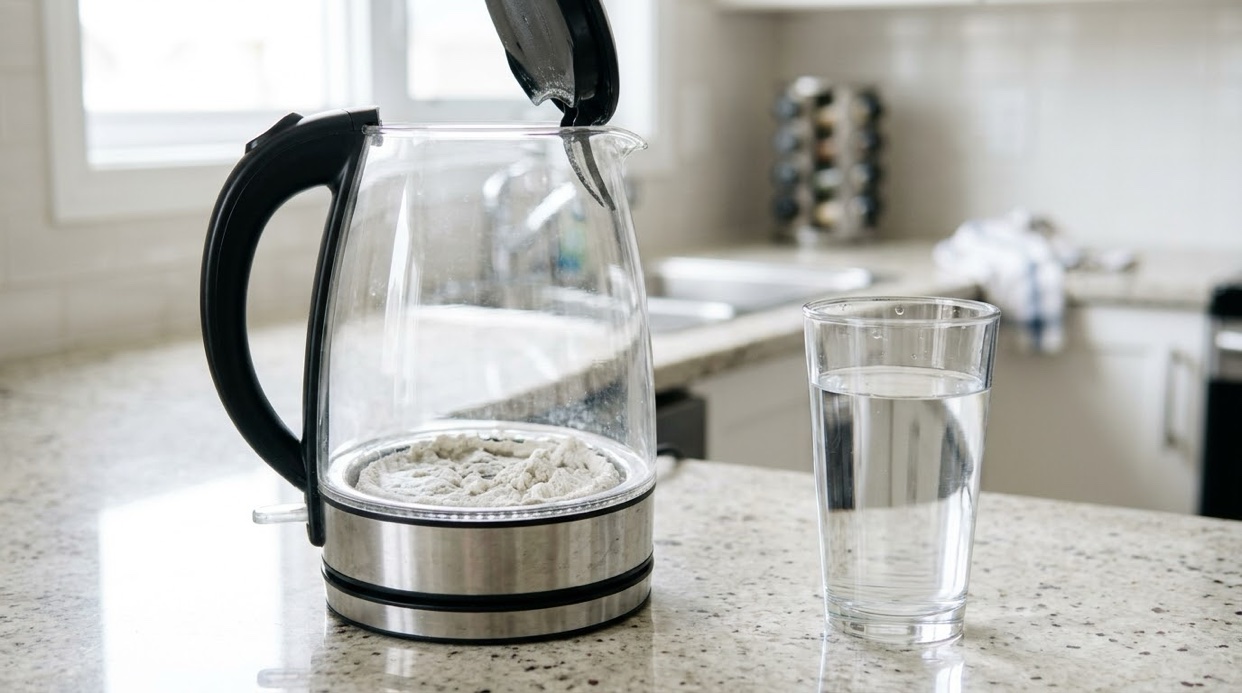
    • Water Heater Limescale: When hard, calcium-rich water is heated inside a water heater, boiler, or electric kettle, dissolved calcium drops out of solution and forms hard, rock-like limescale. A layer of calcium scale on a water heater element acts like an insulating blanket, forcing the heater to work significantly harder and consuming extra energy to heat the water. Over time, this shortened lifespan and reduced efficiency cost homeowners real money.
    • Soap Curd & Fights with Soap: Calcium reacts directly with soap molecules to form an insoluble, sticky soap curd (the classic bathtub ring). Because calcium “ties up” soap, you need to use significantly more laundry detergent, shampoo, and dish soap to achieve a good lather.
    • Spotting & Film: As water droplets evaporate off glass shower doors, dishes, and chrome faucets, calcium leaves behind white, crusty mineral spots and dull haze.

    4. What It Can Do to Health: Nutrient vs. Kidney Stone Caution

    When evaluating calcium from a health perspective, the picture is overwhelmingly positive, with one important nuance regarding kidney stones.

    An Essential Dietary Mineral

    Calcium in drinking water is biologically active and absorbed by the body. Drinking hard water rich in calcium provides a modest, helpful boost toward your daily dietary calcium needs. There is no toxicity story or health hazard associated with drinking calcium at tap water levels.

    The Honest Truth About Kidney Stones

    Because the majority of kidney stones are made of calcium oxalate, people often wonder if drinking calcium-rich hard water causes kidney stones.

    To be completely clear and honest: drinking-water calcium is NOT established as a primary driver of kidney stones. Research shows that dietary calcium intake actually binds with oxalates in the digestive tract, reducing overall stone risk. Overall fluid intake (staying properly hydrated) and dietary sodium matter far more than the calcium concentration of your tap water.

    However, if you are a known kidney stone former, always follow your own physician’s specific dietary and fluid guidance.

    5. The Federal Picture: Unregulated and Beneficial

    When reviewing a home water quality report, homeowners often look for a federal safety limit.

    Calcium has NO EPA Maximum Contaminant Level (MCL) and NO Secondary standard.

    It is completely unregulated at the federal level by the U.S. Environmental Protection Agency. Because calcium is an essential nutrient with no primary toxicity risks, the EPA does not enforce health limits or aesthetic secondary guidelines for calcium in public water supplies.

    6. How a Homeowner Can Test Their Water

    Testing for calcium is one of the easiest tasks in water quality:

    • At-Home Hardness Test Kits: A simple, inexpensive home hardness test kit or test strip (measured in GPG or mg/L) is genuinely useful here. Because calcium makes up the vast majority of hard water, a total hardness test gives you 90% of the practical information you need for home plumbing decisions.
    • Certified Laboratory Testing: If you want to know the exact, isolated calcium number separate from magnesium, send a sample to a state-certified drinking water laboratory for an inorganic minerals panel.

    7. How to Manage Calcium in Drinking Water

    Managing calcium comes down to treating whole-home plumbing versus drinking water at the kitchen tap.

    Effective Management Technologies

    • Traditional Water Softeners (Ion Exchange): The traditional ion-exchange water softener exists primarily because of calcium. Water softeners pass hard water through a bed of cation resin that swaps dissolved calcium ions (Ca^{2+}) for sodium or potassium ions, protecting your water heater, pipes, and appliances from limescale buildup throughout the entire house.
    • Under-Sink Reverse Osmosis (RO): For drinking and cooking water, a point-of-use Reverse Osmosis system typically removes 95% to 98% of dissolved calcium at the kitchen tap, giving you pure, low-mineral water that won’t leave spots in kettles or coffee makers.
    • The Neutralizer Twist (Adding Calcium On Purpose): Here is an interesting twist in my trade: if a home has acidic water (low pH below 6.5), we install a calcite neutralizer tank filled with calcium carbonate. As acidic water passes through, it dissolves a small amount of calcium on purpose to raise the pH to a safe, non-corrosive level (around 7.0), protecting copper pipes from pinhole leaks!

    Pre-Filtration and Micron Ratings

    While physical sediment pre-filters do not remove dissolved calcium ions, they protect water softeners and RO systems from getting clogged with sand, rust, and dirt.

    When evaluating pre-filters, pay attention to micron ratings:

    • Micron Rating: A micron measures pore size. A 5-micron or 1-micron sediment pre-filter is standard industry practice ahead of a water treatment system.
    • Nominal vs. Absolute Rating:
    • Nominal Rating: Traps approximately 60% to 85% of particles at that rated micron size under standard flow.
    • Absolute Rating: Traps 99.9% or more of particles at the specified micron size under strict lab testing conditions.

    Using an absolute-rated pre-filter gives your primary treatment equipment reliable, consistent physical protection over time.

    The Bottom Line

    Calcium isn’t a pollutant—it is an essential nutrient that happens to be the senior partner in hard water.

    Because there is no federal EPA limit, you only need to manage calcium if limescale buildup, soap curd, or spotty glassware is causing headaches in your home. If hard water scale is costing you efficiency or ruining your fixtures, a whole-house water softener will solve the problem, while an under-sink Reverse Osmosis system will give you complete control over the drinking water at your kitchen tap.

  • Potassium in Drinking Water: What You Should Know

    Potassium in Drinking Water: What You Should Know

    If you take a look at the periodic table, you will spot potassium sitting right at element number 19. It belongs to the alkali metal family—sitting directly underneath sodium—and shares many of its chemical habits.

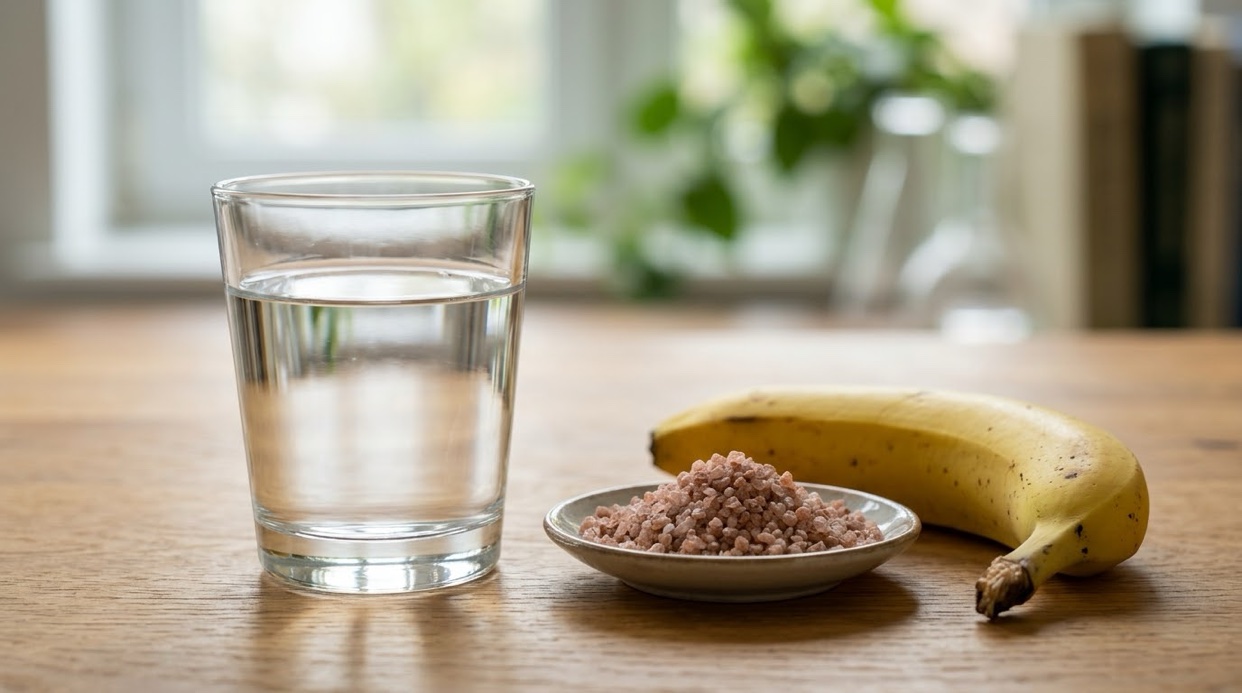
    Most people know potassium as the essential electrolyte that keeps muscle cramps at bay after a hard workout, or as the mineral that made bananas famous (even though it is packed into plenty of other foods like potatoes, spinach, avocados, and beans).

    In the world of home water treatment, potassium is a fascinating mineral because it often enters the conversation as a healthy alternative to sodium. As someone who spends every day helping homeowners navigate what comes out of their taps, here is a clear, honest breakdown of what potassium is, how it gets into your water, what it means for your health, and how to manage it in your home without any hype or scare tactics.

    1. What Potassium Is and Where It Comes From

    Potassium is an essential mineral and electrolyte that every living cell on Earth relies on to function. In human biology, potassium works alongside sodium to regulate fluid balance, transmit nerve signals, manage heart rhythms, and control muscle contractions.

    In nature, potassium is abundant throughout the Earth’s crust, locked inside feldspar, mica, and clay minerals. Because it is highly reactive in its pure metallic form, pure potassium metal never exists in nature. In soil, rock, and water, it always travels dissolved as a positively charged potassium ion (K^+).

    2. How It Gets Into Drinking Water

    Potassium enters home tap water through three primary pathways:

    • Natural Geological Leaching: As groundwater flows over subterranean rock formations, small amounts of potassium naturally dissolve into surrounding aquifers and private wells.
    • Fertilizer Runoff: Potassium (often called potash) is one of the three primary nutrients in commercial plant fertilizers (the “K” in N-P-K). Rainwater washing over agricultural fields, golf courses, and residential lawns can carry excess potassium into local surface waters and shallow aquifers.
    • The In-Home Route (Potassium-Based Water Softening): This is where many homeowners encounter potassium directly. Traditional water softeners trade hardness minerals (calcium and magnesium) for sodium ions. However, homeowners who want to avoid adding sodium to their water can load their softener brine tanks with potassium chloride salt pellets instead of sodium chloride. When the system regenerates, it trades calcium and magnesium for potassium, adding a small amount of potassium directly to every gallon of water moving through the home.

    3. What It Can Do to Health: Nutrient vs. Medical Caution

    When evaluating potassium in drinking water, an honest, measured perspective is key.

    The Favorable Nutrient Side

    Most people do not get enough potassium in their daily diets. Consuming drinking water that contains trace amounts of potassium provides a small, helpful boost to your daily electrolyte intake. Under normal biological conditions, healthy human kidneys easily filter out and balance any excess dietary potassium.

    The Honest Medical Caution

    While potassium is beneficial for the general public, there is a specific group of people who need to keep track of it:

    • Kidney Disease & Medication: Individuals living with advanced kidney disease, or those taking specific blood pressure medications (such as ACE inhibitors, ARBs, or potassium-sparing diuretics), may have impaired abilities to excrete potassium. For these individuals, elevated potassium in blood serum (hyperkalemia) can cause dangerous heart rhythm irregularities.
    • A Check-With-Your-Doctor Note: If you fall into this medical category and choose to use potassium chloride salt pellets in your whole-house water softener, it is worth having a quick conversation with your physician. Knowing if your softened drinking water contributes extra potassium helps your doctor manage your overall dietary plan accurately.

    4. The Federal Picture: Unregulated and Essential

    When reviewing a home water test, homeowners often search for a federal safety threshold.

    Potassium currently has NO EPA Maximum Contaminant Level (MCL) and NO Secondary standard.

    It is completely unregulated at the federal level by the U.S. Environmental Protection Agency. Because potassium is an essential dietary nutrient with no primary toxicity risks for healthy populations, the EPA does not enforce health limits or aesthetic secondary guidelines for potassium in public drinking water supplies.

    5. How a Homeowner Can Test Their Water

    You cannot see, smell, or taste typical trace concentrations of potassium in drinking water.

    • Certified Laboratory Testing: A state-certified drinking water laboratory can accurately measure potassium using analytical instrumentation like ICP-OES (EPA Method 200.7).
    • Do You Need to Test? Honestly, the vast majority of homeowners never need to test specifically for potassium. Unless a medical doctor specifically asks you to verify potassium levels in your drinking water due to a kidney condition or medication regimen, chasing a potassium number on a water panel is usually unnecessary.

    6. How to Manage Potassium in Drinking Water

    For healthy individuals, potassium in drinking water requires no special management—it is simply a beneficial background mineral.

    However, if you need to lower potassium levels in your home’s drinking water for medical reasons:

    • Under-Sink Reverse Osmosis (RO): Installing a point-of-use Reverse Osmosis system at your kitchen tap is the most effective solution. An RO membrane easily blocks multi-charged and single-charged ions, typically removing 90% to 98% of dissolved potassium (K^+) right at the kitchen sink.
    • Switching Softener Salts: If you use potassium chloride pellets in your whole-house softener and need to eliminate added potassium, you can switch back to standard sodium chloride salt pellets (and use an under-sink RO to remove the resulting sodium).

    The Role of Physical Sediment Pre-Filters & Micron Ratings

    While physical sediment pre-filters do not catch dissolved potassium ions, they protect under-sink RO membranes from clogging with sand, rust, and silt.

    When evaluating pre-filters, pay attention to micron ratings:

    • Micron Rating: A micron measures pore size. A 5-micron or 1-micron sediment pre-filter is standard industry practice ahead of an under-sink RO membrane.
    • Nominal vs. Absolute Rating:
    • Nominal Rating: Traps approximately 60% to 85% of particles at that rated micron size under standard flow.
    • Absolute Rating: Traps 99.9% or more of particles at the specified micron size under strict lab testing conditions.

    Using an absolute-rated pre-filter ensures consistent physical protection for your under-sink RO system over time.

    The Bottom Line

    Potassium in drinking water is an essential mineral and electrolyte, carries no federal EPA limit, and poses zero concern for the vast majority of people.

    If you choose to use potassium chloride salt in your whole-house water softener, it is a great way to soften your water without adding sodium. Just remember: if anyone in your home manages kidney disease or takes specific blood pressure medications, check in with your doctor to see if your softened tap water needs to be accounted for on their daily dietary plan.

  • Phosphorus in Drinking Water: What You Should Know

    Phosphorus in Drinking Water: What You Should Know

    Phosphorus and Phosphate in Drinking Water: What You Should Know

    If you take a look at the periodic table, you will spot phosphorus sitting right at element number 15, directly underneath nitrogen. In its pure, elemental state, phosphorus is a highly reactive, volatile non-metal that glows in the dark and can even catch fire spontaneously in air.

    However, when homeowners see “phosphorus” or “phosphate” pop up on a water lab report or in local water discussions, they are often unsure what to make of it. As someone who spends every day helping people make sense of what comes out of their taps, I can tell you that phosphorus is a fascinating element with a unique role in drinking water safety.

    Here is a clear, honest breakdown of what phosphorus is, why it is in your water, why treatment plants sometimes add it on purpose, and how to manage it without any sales pitch or scare tactics.

    1. The Honest Naming Point: Phosphorus vs. Phosphate

    Just as nobody deals with pure silicon metal in drinking water (it exists dissolved as silica), the same honest naming rule applies here:

    In water chemistry, nobody is dealing with elemental phosphorus. Instead, it travels dissolved as phosphate (PO_4^{3-}).

    When elemental phosphorus interacts with oxygen and hydrogen in nature or industrial processes, it forms phosphate compounds. On drinking water test panels and water utility reports, you will almost always see it listed as Phosphate, Orthophosphate, or Total Phosphorus. Whenever you see those terms, you are looking at dissolved phosphorus compounds in your water.

    2. How It Gets Into Drinking Water

    Phosphate makes its way into source waters through several distinct natural and human-made avenues:

    • Agricultural Runoff: Commercial crop fertilizers are rich in phosphorus because plants rely on it as a primary nutrient. Rainwater washing over farm fields carries excess fertilizer into nearby rivers, lakes, and shallow groundwater basins.
    • Wastewater & Septic Systems: Human waste and animal manure contain significant amounts of natural phosphorus. Discharge from municipal sewage treatment plants or leaking private septic systems can elevate phosphate levels in regional waterways.
    • Natural Erosion: As water flows through rock formations and mineral deposits containing apatite (phosphate rock), tiny amounts of natural phosphate slowly dissolve into groundwater.
    • Legacy Detergents: Historically, household laundry and dishwasher detergents contained high levels of phosphates to soften water and boost cleaning power. Because excess phosphates harmed local waterways, many states and countries restricted or banned phosphate additives in residential detergents decades ago.

    3. The Route That Surprises People: Added on Purpose

    Here is the twist that surprises most homeowners when reviewing their local city water report: many municipal water utilities intentionally add phosphate to drinking water.

    Utilities add food-grade orthophosphate or polyphosphates during the treatment process as a critical tool for corrosion control.

    How Orthophosphate Protects Your Home

    When orthophosphate flows through utility water mains and home plumbing, it reacts with the metal surfaces inside the pipes to form a microscopic, insoluble protective barrier along the pipe walls.

    This protective mineral coating seals off old metal pipes, preventing aggressive, oxygenated water from making direct contact with raw metal. By doing so, it stops lead, copper, and iron from dissolving and leaching out of aging utility service lines and household solder into your drinking glass. If you live in a city with older infrastructure, the phosphate added to your water is actively working to protect your health.

    4. What It Can Do to Health and the Environment

    When evaluating phosphorus in drinking water, it is vital to separate personal health from environmental impact.

    Personal Health: An Essential Nutrient

    To put it plainly: there is no drinking-water poisoning story for phosphorus at typical tap water levels.

    Phosphorus is an essential nutrient that human bodies require to build strong bones and teeth, synthesize DNA, and generate cellular energy. We consume hundreds of milligrams of phosphorus every single day through common foods like dairy, meat, fish, nuts, and whole grains. The trace amounts of phosphate found in drinking water—even water treated with orthophosphate—are tiny compared to what is on your dinner plate.

    The Real Problem: Environmental Algae Blooms

    The true phosphorus issue is environmental, not personal.

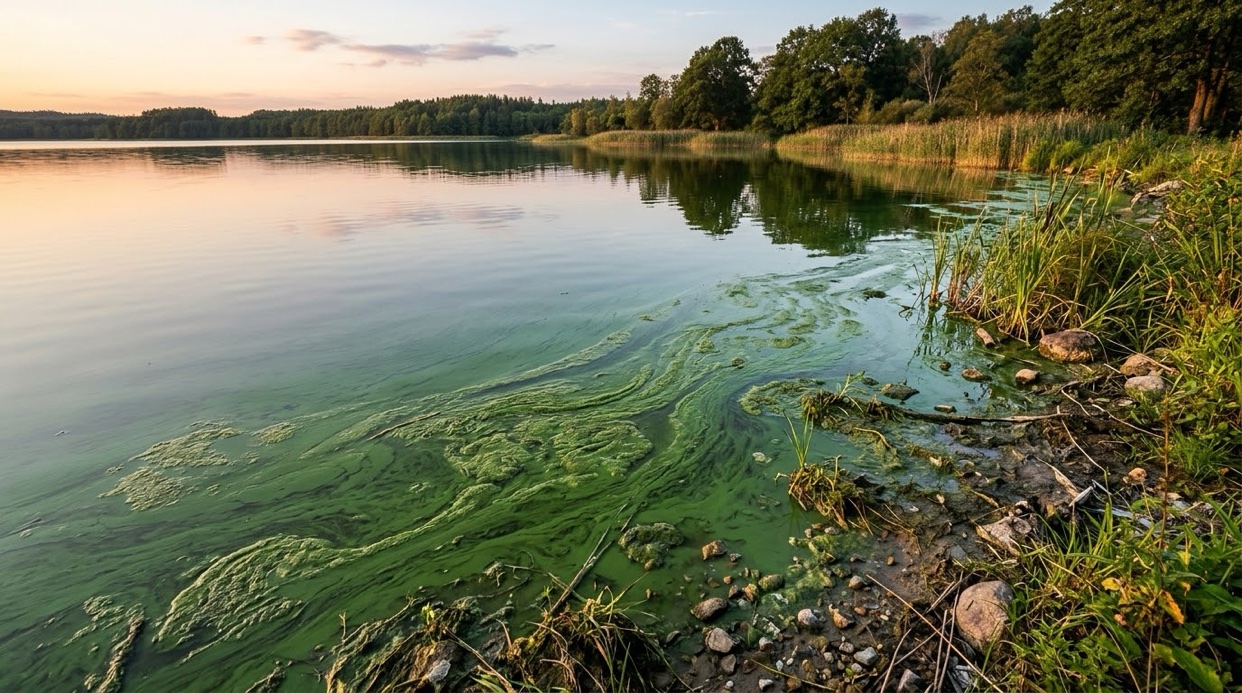
    When excessive amounts of phosphate from agricultural runoff or sewage discharge flow into lakes, rivers, and reservoirs, it acts as a massive plant fertilizer in the water. This leads to eutrophication—rapid, overgrown blooms of algae and cyanobacteria (toxic blue-green algae). These algae blooms block sunlight, deplete oxygen levels in the water, kill fish, and create taste and odor problems for drinking water supplies.

    5. The Federal Picture: Unregulated in Drinking Water

    When reviewing a home water test, homeowners often look for a mandatory federal standard.

    Phosphorus has NO EPA Maximum Contaminant Level (MCL) for drinking water.

    Because trace phosphate presents no primary health risk when consumed, the U.S. Environmental Protection Agency does not enforce a mandatory health limit for phosphorus or phosphate in drinking water supplies. (The EPA and state environmental agencies do set environmental discharge limits for wastewater entering lakes and rivers to prevent algae blooms, but not as a drinking water health threshold).

    6. How a Homeowner Can Test Their Water

    You cannot see, taste, or smell typical concentrations of phosphate in tap water.

    • Certified Laboratory Testing: A state-certified drinking water laboratory can accurately measure total phosphorus or orthophosphate levels using colorimetric or spectrophotometric testing methods.
    • Do You Need to Test? Truthfully, testing for phosphate is rarely a priority for a homeowner. Unless you are an aquarium enthusiast managing delicate fish tanks or a water treatment professional calculating pipe corrosion indexes, chasing a phosphate number on a home test is usually unnecessary.

    7. How to Manage Phosphate in the Home

    For most homeowners on city water, you do not need to remove phosphate. If your local utility adds orthophosphate to prevent lead and copper leaching, that phosphate is performing a valuable safety service for your plumbing.

    However, if you truly want to remove dissolved phosphate at your kitchen tap for specific cooking, brewing, or aquarium needs:

    • Reverse Osmosis (RO): An under-sink point-of-use Reverse Osmosis system is the most dependable home method. The semi-permeable RO membrane blocks multivalent ions like dissolved phosphate (PO₄³⁻) especially well — typically removing about 95–98% or more of it.
    • Standard Carbon & Softeners: Standard activated carbon filters and traditional water softeners do not reliably remove dissolved phosphate ions.

    The Role of Physical Sediment Pre-Filters & Micron Ratings

    While physical sediment pre-filters cannot catch dissolved phosphate ions, they play an essential role in protecting under-sink RO membranes from clogging with silt, rust, and dirt.

    When evaluating pre-filters, pay attention to micron ratings:

    • Micron Rating: A micron measures pore size. A 5-micron or 1-micron sediment pre-filter is standard industry practice ahead of an RO membrane.
    • Nominal vs. Absolute Rating:
    • Nominal Rating: Traps approximately 60% to 85% of particles at that rated micron size under standard flow.
    • Absolute Rating: Traps 99.9% or more of particles at the specified micron size under strict lab testing conditions.

    Using an absolute-rated pre-filter ensures consistent physical protection for your primary treatment equipment over time.

    The Bottom Line

    Phosphorus in drinking water travels as phosphate. It is an essential nutrient for human life, carries no health-based EPA drinking water limit, and presents no personal health hazard at tap water concentrations.

    While excess phosphate in rivers and lakes is a real environmental concern for algae blooms, the trace phosphate in your city tap water is often added deliberately by treatment professionals to protect your home from lead and copper pipe corrosion. Unless you have a specialized reason to remove it, you can let it do its job.

  • Magnesium in Drinking Water: What You Should Know

    Magnesium in Drinking Water: What You Should Know

    If you take a look at the periodic table, you will spot magnesium sitting right at element number 12. It is a light, silvery-white metal and one of the most abundant elements in the Earth’s crust, found deep within rocks, soil, and sea salt.

    In daily life, magnesium is famous for many things—from lightweight racing wheels and fireworks to dietary supplements and Epsom salts. But in the world of home water treatment, magnesium is best known as one-half of the dynamic duo responsible for “hard water.”

    As someone who spends every day helping homeowners understand what comes out of their taps, I can tell you that magnesium is a classic example of an essential nutrient that can simultaneously be a headache for your home’s plumbing. Here is a clear, honest breakdown of what magnesium is, how it gets into your water, what it does in your body and your home, and how to manage it.

    1. What Magnesium Is and Where It Comes From

    Magnesium is a naturally occurring mineral and an essential nutrient that human bodies need to run hundreds of biochemical reactions—everything from muscle and nerve function to blood sugar control and bone building.

    In nature, magnesium is locked inside rock deposits throughout the Earth’s geology, most notably in dolomite (magnesium calcium carbonate) and magnesium-rich limestone. Because magnesium minerals dissolve readily in natural water, groundwater flowing through subterranean rock formations picks up dissolved magnesium ions (Mg^{2+}) along its journey to local wells and reservoirs.

    2. How It Gets Into Drinking Water (The Hard Water Partnership)

    Magnesium enters drinking water almost exclusively through natural geological leaching as rainwater and groundwater flow over underground mineral deposits.

    When you look at a water test report, you will rarely see magnesium discussed in isolation. Instead, it is paired with its chemical cousin, calcium.

    The Hard Water Partnership: In water chemistry, “total hardness” is primarily the sum of dissolved calcium plus magnesium.

    Together, these two minerals make up virtually the entire hard-water story. If your groundwater flows through dolomite or limestone geology, you have hard water. Calcium usually accounts for most hardness and magnesium for a smaller share, but the split varies widely with local geology — from a minor fraction to roughly half in magnesium-rich (dolomite) waters. There is no standard fixed proportion.

    3. What It Does in the Home: The Hard Water Story

    While magnesium in drinking water won’t hurt your body, it can certainly wage a quiet war on your home’s plumbing and appliances:

    • Limescale Buildup: When hard water containing magnesium and calcium is heated inside your hot water heater, boiler, or coffee maker, the minerals precipitate out of solution, forming hard, crusty limescale. This scale coats heating elements, reducing energy efficiency and shortening appliance lifespan.
    • Soap Resistance: Magnesium reacts directly with soaps and detergents to form an insoluble curd (the classic bathtub ring). Because of this reaction, hard water fights soap, requiring you to use significantly more laundry detergent, shampoo, and dish soap to get a good lather.
    • Spotting and Film: As water droplets evaporate off glass shower doors, chrome faucets, and dishes in the dishwasher, magnesium leaves behind stubborn white mineral spots and cloudy films.

    4. What It Can Do to a Person’s Health: The Honest Picture

    When evaluating magnesium from a health perspective, the news is overwhelmingly positive, with just one practical caveat.

    • The Beneficial Nutrient Side: Magnesium is a crucial mineral that many people do not get enough of in their daily diets. Drinking hard water rich in magnesium quietly contributes to your daily magnesium intake, supporting cardiovascular health, bone density, and muscle function. There is zero poisoning or toxicity story here at drinking water levels.
    • The Laxative Effect: To be completely frank and plain: consuming water with extremely high concentrations of magnesium—especially when paired with high sulfate levels (forming magnesium sulfate, which is chemically identical to Epsom salt)—can have a mild to moderate laxative effect. People unaccustomed to high-magnesium well water may experience temporary digestive upset or loose stools when visiting an area with exceptionally hard water.

    5. The Federal Picture: Unregulated and Beneficial

    When looking at a water quality report, homeowners often search for a federal safety limit.

    Magnesium currently has NO EPA Maximum Contaminant Level (MCL) and NO Secondary Maximum Contaminant Level (SMCL).

    It is completely unregulated at the federal level by the U.S. Environmental Protection Agency. Because magnesium is an essential nutrient with no toxic health risks at tap water levels, the EPA does not enforce health limits or aesthetic secondary guidelines for it in public water supplies.

    6. How a Homeowner Can Test Their Water

    Testing for magnesium in your water is straightforward, depending on how detailed you want to be:

    • At-Home Hardness Test Kits: Because magnesium travels hand-in-hand with calcium, a standard total hardness test kit or test strip (measured in Grains Per Gallon, or GPG) gives you 90% of the information you need for practical home decisions.
    • Certified Laboratory Testing: If you want to know the exact breakdown—specifically how many milligrams per liter are calcium versus how many are magnesium—send a water sample to a state-certified drinking water laboratory for an inorganic minerals panel.

    7. How to Manage Magnesium in Drinking Water

    Managing magnesium comes down to balancing your home’s plumbing needs with your personal taste preferences.

    Effective Management Options

    • Traditional Water Softeners (Ion Exchange): A whole-house water softener is the classic solution for removing magnesium and calcium. The softener passes hard water through a bed of cation exchange resin that trades dissolved magnesium (Mg^{2+}) and calcium (Ca^{2+}) ions for sodium or potassium ions, protecting your whole home from scale and soap curd.
    • Under-Sink Reverse Osmosis (RO): For drinking and cooking water at the kitchen tap, a point-of-use Reverse Osmosis system typically removes 95% to 98% of dissolved minerals, including magnesium, leaving you with pure, low-mineral water.
    • Remineralization (Taste Preference): Some homeowners love the crisp, clean taste of low-mineral RO water, while others prefer the natural body of mineralized water. Many under-sink RO systems can be paired with a post-filter remineralization cartridge that adds a small, balanced amount of magnesium and calcium back into the water for flavor. Retaining or re-adding minerals is purely a matter of personal taste preference, not a health requirement.

    Pre-Filtration and Micron Ratings

    While physical sediment pre-filters do not remove dissolved mineral ions like magnesium, they protect water softeners and RO systems from getting clogged with sand, rust, and dirt particles.

    When selecting pre-filters, pay attention to micron ratings:

    • Micron Rating: A micron measures pore size. A 5-micron or 1-micron sediment pre-filter is standard practice ahead of a water treatment system.
    • Nominal vs. Absolute Rating:
    • Nominal Rating: Traps approximately 60% to 85% of particles at that rated micron size under standard flow.
    • Absolute Rating: Traps 99.9% or more of particles at the specified micron size under strict lab testing conditions.

    Using an absolute-rated pre-filter gives your primary water treatment equipment consistent physical protection over time.

    The Bottom Line

    Magnesium in drinking water isn’t a pollutant—it is an essential dietary nutrient that partners with calcium to create hard water.

    Because there is no federal limit, you only need to manage magnesium if hard water scale, soap curd, or spotty glassware is causing problems in your home. If hard water is giving your plumbing a hard time, a whole-house water softener will eliminate the scale, while an under-sink Reverse Osmosis system will give you complete control over your drinking water’s mineral content.

  • Sodium in Drinking Water: What You Should Know

    Sodium in Drinking Water: What You Should Know

    If you take a look at the periodic table, you will spot sodium sitting right at element number 11. It is a soft, silvery alkali metal that is so reactive in its pure form that it reacts vigorously when brought into contact with plain air or water.

    Because of that intense reactivity, you will never find pure sodium metal floating in your tap water. Instead, in nature and in water chemistry, sodium always travels dissolved as a positively charged sodium ion (Na^+)—the exact same sodium that combines with chloride to give us common table salt.

    As someone who spends every day helping homeowners navigate what is coming out of their taps, sodium is one of the topics I get asked about most. Here is a clear, honest breakdown of what sodium is, how it gets into your water, what it means for your health, and how to manage it in your home without any sales pitch or scare tactics.

    1. What Sodium Is and Where It Comes From

    Sodium is one of the most abundant elements on Earth, making up roughly 2.6% of the Earth’s crust. It is naturally present in soil, rocks, mineral deposits, and oceans across the planet.

    In everyday life, sodium is an essential mineral that human bodies need to maintain fluid balance, conduct nerve impulses, and contract muscles. Beyond dietary salt, sodium compounds are widely used in food preservation, commercial manufacturing, agriculture, and chemical processing.

    2. How Sodium Gets Into Drinking Water

    Sodium enters drinking water through several distinct routes—some natural, some environmental, and one right inside your own home:

    • Natural Geological Leaching: As groundwater flows over subterranean rock, clay, and mineral salt deposits, sodium naturally dissolves into aquifers and deep private wells.
    • Road Salt Runoff (Snow Country): In colder northern climates, winter road salting is a real and growing water quality issue. Tons of rock salt (sodium chloride) applied to icy roads wash into roadside ditches during spring thaws, slowly seeping into shallow groundwater wells and surface water reservoirs.
    • Seawater Intrusion: Coastal groundwater wells can experience elevated sodium levels due to coastal ocean water seeping into freshwater aquifers, especially when heavy pumping pulls the water table down.
    • The Route Inside Your Home (Water Softeners): This is the pathway that constantly surprises homeowners: an ion-exchange water softener actively adds sodium to your water. A traditional water softener works by swapping hardness minerals (calcium and magnesium) for sodium ions. For every grain of hardness removed, a small, proportional amount of sodium is added directly to your household water supply.

    3. What It Can Do to a Person’s Health: Keeping Proportions in Mind

    When discussing sodium in drinking water, an honest perspective on dietary proportions is essential.

    • Food vs. Water: The overwhelming majority of sodium in most people’s diets comes from processed foods, restaurant meals, and cooking—not from tap water. Drinking two liters of typical tap water usually contributes only a tiny fraction of your total daily sodium intake.
    • High-Sodium Taste Threshold: At elevated concentrations—typically above 200 mg/L—water begins to take on a noticeably salty, flat, or brackish taste.
    • When Water Sodium Counts (Low-Sodium Diets): For individuals on doctor-ordered, strictly restricted low-sodium diets (such as those managing severe hypertension, congestive heart failure, or kidney disease), every milligram matters. If your doctor has put you on a 1,500 mg or 2,000 mg daily sodium limit, drinking a gallon of water that contains elevated sodium—especially water softened with sodium chloride—can contribute a meaningful portion of your daily allowance. In those cases, knowing your exact water sodium number is critical.

    4. The Federal Picture: Advisory Levels vs. Standards

    When reviewing a home water test, homeowners often expect a federal health limit.

    Sodium currently has NO EPA Maximum Contaminant Level (MCL).

    Because sodium is a necessary dietary nutrient and dietary food intake completely dwarfs water intake for the general public, the U.S. Environmental Protection Agency does not enforce a mandatory health standard for sodium in public water supplies.

    However, the EPA has established a guidance benchmark:

    EPA’s Drinking Water Advisory sets a guidance level for sodium of 20 mg/L, developed for individuals on a very low-sodium diet of 500 mg/day. It is guidance for that specific group — not an enforceable standard, and not a limit meant for the general population.

    5. How a Homeowner Can Test Their Water

    You cannot see or smell sodium in drinking water, and unless levels are quite high, you usually cannot taste it either.

    • Skip DIY Home Test Strips: Over-the-counter test strips sold at hardware stores are fine for basic pH or total hardness, but they cannot measure sodium concentrations accurately.
    • Use a Certified Laboratory: Send a water sample to a state-certified drinking water laboratory. Labs analyze sodium using precise instruments, such as ICP-OES (EPA Method 200.7), to deliver an exact measurement in milligrams per liter (mg/L).

    6. How to Manage Sodium in Drinking Water

    If your water test shows elevated sodium—or if you have a whole-house water softener and want sodium-free drinking water at your kitchen sink—effective management options exist.

    Practical Management Solutions

    • Under-Sink Reverse Osmosis (RO): Installing a point-of-use under-sink Reverse Osmosis system at the kitchen tap is the classic, dependable answer. RO forces water under pressure through a semi-permeable membrane that typically rejects tiny sodium ions (Na^+) by 90% to 98%, giving you sodium-free drinking and cooking water right at the sink, even if you soften your whole house.
    • Potassium Chloride Softener Salt: If you have a traditional ion-exchange water softener, you can swap out standard sodium chloride salt pellets for potassium chloride pellets in your salt tank. The softener will then trade calcium and magnesium for potassium instead of sodium. (Potassium chloride is typically more expensive, but it prevents sodium addition at the whole-house level).

    What Does NOT Remove Sodium

    Standard activated carbon block filters (like pitcher filters or refrigerator filters) excel at removing chlorine, bad tastes, and odors, but they have zero effect on dissolved sodium ions.

    Pre-Filtration and Micron Ratings

    While physical sediment pre-filters do not catch dissolved sodium ions, they play a vital protective role in keeping rust, silt, and sand from clogging your under-sink RO membrane.

    When evaluating pre-filters, pay attention to micron ratings:

    • Micron Rating: A micron measures pore size. A 5-micron or 1-micron sediment pre-filter is standard ahead of an under-sink RO membrane.
    • Nominal vs. Absolute Rating:
    • Nominal Rating: Traps approximately 60% to 85% of particles at that rated micron size under standard flow.
    • Absolute Rating: Traps 99.9% or more of particles at the rated micron size under strict lab testing conditions.

    Using an absolute-rated pre-filter ensures consistent physical protection for your under-sink RO membrane over time.

    The Bottom Line

    For most people, sodium in tap water is a minor contributor compared to what is on our dinner plates. But if you have a whole-house water softener or follow a strict, doctor-ordered low-sodium diet, sodium in your drinking water is something to pay attention to.

    Because there is no federal limit, compare your test results against the EPA advisory level of 20 mg/L if you are on a restricted diet. If your numbers are high, installing an under-sink Reverse Osmosis system at your kitchen tap is the simplest, most dependable solution for pure, low-sodium drinking water.

  • Oxygen in Drinking Water: What You Should Know

    Oxygen in Drinking Water: What You Should Know

    If you take a look at the periodic table, you will spot oxygen sitting at element number 8. It is the most abundant element in the Earth’s crust and the third most abundant element in the universe.

    When homeowners ask me about oxygen in drinking water, I always start with an honest, fundamental fact: oxygen is the “O” in H_2O. Just like hydrogen, oxygen is part of the water molecule itself. You cannot filter oxygen out of water—without it, you wouldn’t have water at all!

    Because oxygen forms the chemical backbone of water itself, no water quality report lists “oxygen” as a pollutant or contaminant. Instead, oxygen’s real role in water quality comes down to dissolved oxygen—oxygen gas (O_2) from the atmosphere that gets trapped and dissolved in liquid water.

    As someone who spends every day helping people understand what comes out of their taps, here is a clear, plain-English breakdown of what dissolved oxygen does in your water, how it behaves as both a troublemaker and a vital water treatment tool, and what you need to know about it.

    1. Dissolved Oxygen: Surface Water vs. Deep Wells

    Dissolved oxygen refers to free, unbonded oxygen gas (O_2) molecules dissolved right into the water stream, usually measured in milligrams per liter (mg/L).

    Where your water comes from dictates how much dissolved oxygen it contains:

    • Surface Water (Rivers & Lakes): Water exposed to open air and flowing over rocks naturally absorbs oxygen from the atmosphere. Splashing waves, wind, and aquatic plants constantly aerate surface water, keeping dissolved oxygen levels high.
    • Deep Well Water (Groundwater): Water trapped deep underground in subterranean aquifers has no contact with the atmosphere and limited exposure to air. As a result, deep well water often has very low dissolved oxygen—sometimes near zero.

    How Dissolved Oxygen Affects Taste

    Dissolved oxygen plays a major role in how your water tastes at the tap:

    • Fresh and Crisp: Water rich in dissolved oxygen tastes fresh, light, and crisp.
    • Flat or Stale: Water with very low or zero dissolved oxygen—like fresh draw from a deep private well—often tastes “flat,” heavy, or stale. (If you’ve ever poured well water back and forth between two clean glasses to mix in air, you’ve tasted how adding oxygen instantly perks up the flavor!)

    2. Oxygen the Troublemaker: Corrosion and Rust Stains

    While dissolved oxygen makes water taste great, it comes with a mischievous side inside your plumbing: oxygen drives corrosion and rust.

    When dissolved oxygen interacts with metal pipes and plumbing fixtures, it acts as an oxidizing agent:

    • Corrosion of Iron and Steel Pipes: Dissolved oxygen reacts with galvanized steel, cast iron, and copper pipes, slowly eating away at metal surfaces and causing pinhole leaks or flaking pipe debris.
    • Creating Rust Stains: If your groundwater contains dissolved, invisible clear-water iron (Fe^{2+}), exposure to dissolved oxygen turns that iron into oxidized, insoluble red rust particles (Fe^{3+}). This chemical transformation is what leaves stubborn, reddish-orange rust stains on your sinks, toilets, and laundry.

    3. Oxygen the Tool: How Water Treatment Professionals Use It

    Here is where my trade gets interesting: water treatment professionals routinely use oxygen as one of our most effective filtration tools.

    Because oxygen reacts so reliably with dissolved minerals, air injection oxidation is one of the oldest and most dependable tricks in the book for solving well water problems.

    How Air Injection Oxidation Works

    If your well water contains dissolved clear-water iron, manganese, or that terrible “rotten egg” hydrogen sulfide gas, we can use oxygen to clean it up naturally without harsh chemicals:

    • Air Injection: We draw raw well water through a specialized valve that injects a pocket of air (rich in oxygen) directly into the water stream.
    • Rapid Oxidation: The dissolved oxygen instantly reacts with the dissolved iron and manganese, converting them into solid, physical rust and mineral particles. It also oxidizes hydrogen sulfide gas into harmless elemental sulfur particles, destroying the odor.
    • Physical Filtration: The water then flows through a media bed (like manganese dioxide or greensand) that physically traps those solid particles, allowing crystal-clear, odor-free water to flow to your home.

    4. The Federal Picture: No EPA Limits

    When reviewing a municipal water quality report or private well test, you will not find a federal safety standard for dissolved oxygen.

    There is NO EPA standard for dissolved oxygen in drinking water.

    Dissolved oxygen poses no primary health hazard to humans. Because it is a natural component of water with no toxic health effects, the U.S. Environmental Protection Agency does not regulate or set maximum limits for it in public drinking water supplies.

    5. Testing for Dissolved Oxygen

    Testing for dissolved oxygen requires specialized electronic meters or chemical titration kits, and it is usually done on-site right at the wellhead by water treatment professionals or environmental scientists.

    As a homeowner, you rarely need a dissolved oxygen number on a lab report. What you see instead is what oxygen does in your home:

    • Reddish rust stains in sinks (dissolved iron hitting air and oxidizing).
    • A rotten egg smell from the tap (indicating an absence of oxygen in raw well water, allowing anaerobic sulfur-reducing bacteria to thrive).
    • Flat-tasting water straight from a deep well.

    6. The Truth About “Oxygenated” Bottled Water

    In recent years, trendy bottled “oxygenated water” products and oxygen-injection gadgets have claimed that drinking oxygen-enriched water boosts athletic performance, increases energy, or detoxifies the body.

    Here is the honest, plain-English truth: those health claims are scientifically unproven.

    Your body is designed to absorb oxygen through your lungs, not your digestive tract. When you drink oxygenated water, the extra oxygen gas simply bubbles out in your stomach or gets burped out long before it ever reaches your bloodstream. Paying extra for bottled “oxygenated water” for health benefits is a marketing gimmick, plain and simple.

    The Bottom Line

    Oxygen isn’t a contaminant—it is the literal foundation of water itself (H_2O), and its dissolved gas form determines how fresh your water tastes and how dissolved minerals behave.

    You don’t need to fear oxygen or try to filter it out. While dissolved oxygen can drive pipe corrosion, it is also one of the cleanest, most effective natural tools we have to eliminate rust stains and rotten-egg smells from well water.