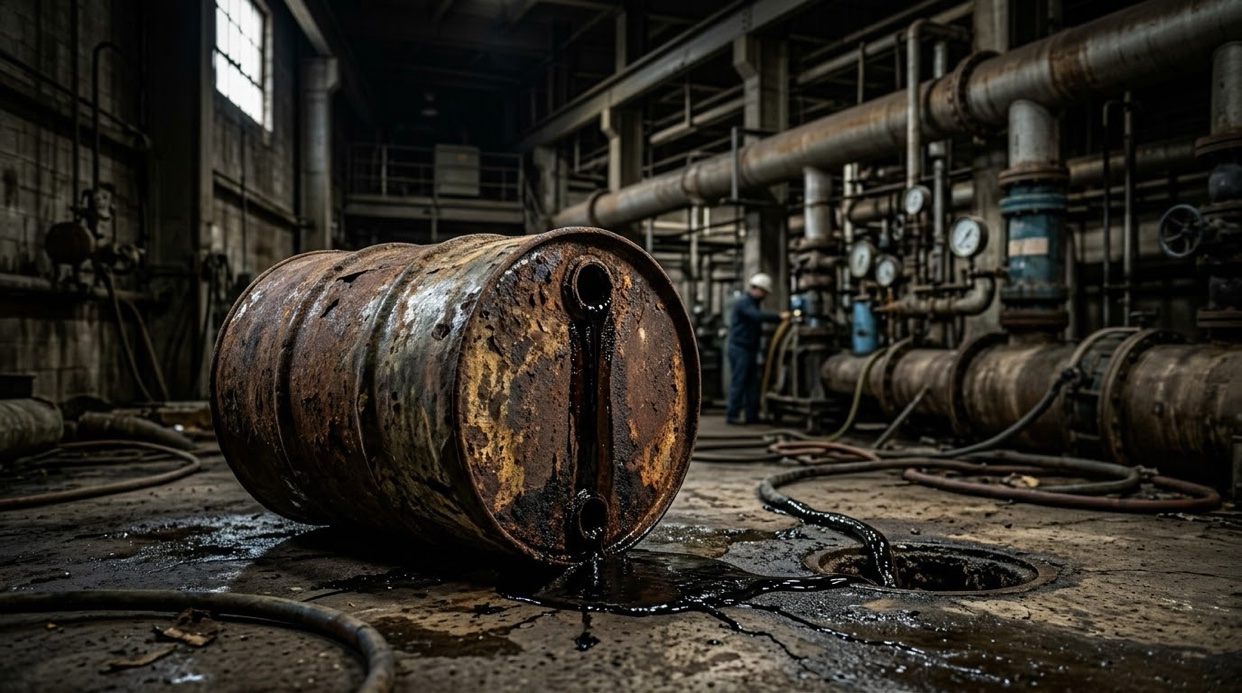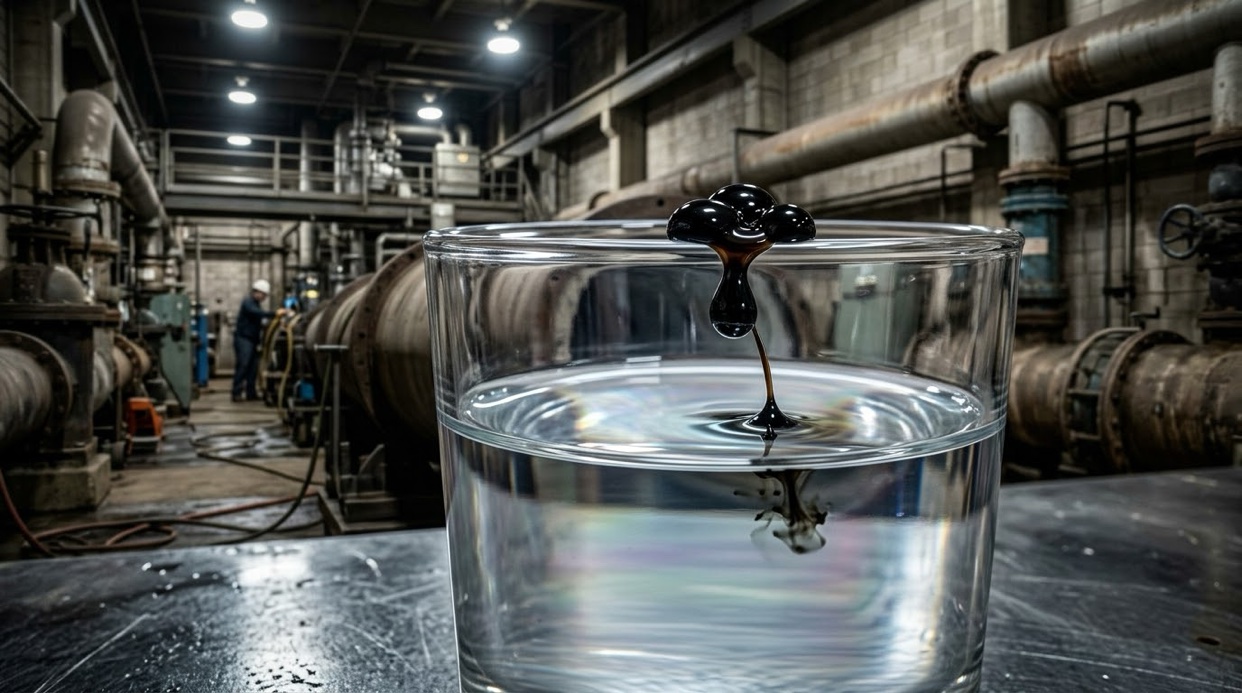
Aldrin is an organochlorine insecticide that was used extensively across the United States from the 1950s through the 1970s to combat soil insects in corn and cotton fields, as well as to protect wooden structures from termites. Working in water treatment since 1994, I still run into its name on lab reports from farm country and older neighborhoods — usually paired with the chemical it turns into, which is where the real story is.
Because of its environmental persistence and toxicity, most agricultural uses of aldrin were discontinued in 1974, when the EPA’s cancellation of all but a few uses was finalized. Its final remaining application — underground termite control — was canceled by the manufacturer in 1987, ending aldrin use in the United States.
How It Gets Into Your Water
To understand aldrin in a water supply, you have to understand its twin compound, dieldrin. Once aldrin is applied to soil or enters a living organism, plants and bacteria rapidly convert it into dieldrin. Dieldrin is even more stable and long-lived than aldrin, which is why regulatory agencies and water professionals almost always evaluate the two chemicals together.
Aldrin and dieldrin bind tightly to soil particles, but over decades, agricultural runoff, soil erosion, and deep leaching carry these persistent chemicals into groundwater aquifers. Private wells and groundwater sources located near former corn and cotton farmland, old agricultural mixing sites, or building foundations treated heavily for termites remain at the highest risk for contamination.
What It Can Do to Health
The EPA’s toxicological assessments associate chronic exposure to aldrin and dieldrin with effects on the central nervous system and the liver. The EPA classifies aldrin as a probable human carcinogen (group B2) based on evidence of liver tumor development in animal studies.
There is no EPA table line for aldrin’s drinking-water health effects, because — as the next section explains — the EPA never wrote a drinking-water rule for it. What the EPA has published instead are the health advisories covered below.
The EPA Drinking-Water Limit
There is no federal drinking-water limit for aldrin. Aldrin does not appear in the EPA’s National Primary Drinking Water Regulations — no Maximum Contaminant Level (MCL), no health goal (MCLG). And this wasn’t an oversight: in July 2003, after studying aldrin as a priority contaminant, the EPA formally announced its determination that “no regulatory action is appropriate or necessary” for it. Public water systems have no federal aldrin standard to test against.
What exists instead are EPA health advisories — and the distinction matters. A health advisory is guidance, not law: it tells utilities and health officials what levels the EPA considers a concern, but no system is legally required to meet it. For aldrin, the EPA’s published advisory values are:
- One-day and ten-day health advisory (for a child): 0.0003 mg/L (0.3 ppb) — the level the EPA considers safe for short-term exposure.
- Lifetime health advisory: none published. The EPA lists no lifetime advisory for aldrin.
- Cancer benchmark: 0.0002 mg/L (0.2 ppb) — the drinking-water concentration the EPA calculates corresponds to a one-in-ten-thousand (10⁻⁴) lifetime cancer risk.
Some states apply their own groundwater or drinking-water standards for aldrin. But if you are on a private well near old farmland or a termite-treated foundation, no federal rule is standing between you and this chemical — testing is your own job, and aldrin (with dieldrin) has to be asked for by name on the lab panel.
Which Home Filtration Actually Removes It
When dealing with legacy chlorinated pesticides like aldrin and dieldrin, standard pitcher filters or basic sediment screens won’t solve the problem. You need dedicated chemical adsorption or physical barrier media:
- Activated Carbon (Granular Activated Carbon & Carbon Block): This is your primary defense. High-grade activated carbon relies on adsorption to capture organic compounds. As water passes through the porous carbon block, aldrin and dieldrin molecules adhere directly to the carbon surface, pulling them out of solution.
- Reverse Osmosis (RO): RO acts as an ideal point-of-use backstop. An RO system forces water under pressure through a semi-permeable membrane that rejects organic molecules, while also utilizing pre- and post-carbon filters to trap synthetic chemical contaminants.
Understanding Certification Standards
Never rely on a box that simply promises “cleaner water” or claims it “reduces pesticides in general.” When shopping for home treatment hardware, insist on seeing official third-party certification — and read what each seal actually covers, because the seal’s name alone doesn’t tell you what was tested:
- NSF/ANSI Standard 53: This is the health-effects standard for drinking water treatment units. In plain English: a unit certified to Standard 53 has been independently tested for the specific health-related contaminant reduction claims named in its certification — which can include specific pesticides, herbicides, and volatile organic chemicals. The standard’s name by itself guarantees nothing; the claim list is what counts.
- NSF/ANSI Standard 58: This is the performance standard for reverse osmosis systems. In plain English: it certifies that an RO system reduces total dissolved solids and the specific contaminants named in its certification — only those named, not everything in the water.
A filter standard seal tells you the unit was tested under rigorous laboratory conditions, but you must check the system’s official Performance Data Sheet. The documentation must explicitly list aldrin (or dieldrin) by name under the verified reduction claims. If it isn’t listed on the sheet, don’t assume it works.
Facts first, then filter. — Steve