Category: Water Contaminants

  • Dichloroacetic Acid in Drinking Water: What You Should Know

    Dichloroacetic Acid in Drinking Water: What You Should Know

    Hi, I’m Steve. I’ve been in the water treatment business since 1994. Dichloroacetic acid is one of the most common disinfection byproducts in American tap water — if your city chlorinates, it’s almost certainly in your water at some level. That sentence sounds alarming until you learn how it’s regulated and what the levels actually are. Let’s do this one the way we do all of them: facts first.

    What It Is, and How It Forms

    Dichloroacetic acid (often shortened to DCA) is one of the five haloacetic acids regulators track together as HAA5. It’s a disinfection byproduct: it isn’t in the source water and it doesn’t come from a pipe or a factory. It’s made during treatment, when chlorine or chloramine reacts with the natural organic matter — decaying leaves, algae, soil compounds — in river, lake, or reservoir water.

    Along with trichloroacetic acid, it’s typically one of the two most abundant members of the HAA5 family. Levels rise in warm months (more organic material, higher chlorine doses), and with water age, because the reaction keeps working while water travels the mains — far ends of a system and dead-end streets run higher.

    Private wells: untreated groundwater isn’t chlorinated, so the reaction doesn’t happen. No chlorine, no haloacetic acids.

    What the Science Says About Health

    DCA is not an acute poison — typical city levels won’t make you sick tonight. The file on it is a long-term file:

    • In rodent studies, high lifetime doses produced liver tumors in rats and mice. On that evidence, the EPA classifies it as a probable human carcinogen, and IARC lists it as Group 2B — possibly carcinogenic to humans. Note the honest wording: “sufficient evidence in animals, no direct data in humans” is what 2B means.
    • The doses in those studies were enormous compared to tap water — the WHO’s risk math starts from mice dosed at levels millions of times higher than your glass.

    One fact puts the dose question in perspective better than any multiplier: dichloroacetic acid has also been used as a medicine — given deliberately, at high doses, to treat conditions like lactic acidosis, under medical supervision. That’s not an argument that it’s harmless (at drug doses it can affect nerves, which is exactly why it’s supervised). It’s an argument that dose is the whole conversation — and at parts-per-billion in drinking water, we’re talking about a different universe of exposure than either the rodent studies or the pharmacy.

    The Difference That Matters: It Doesn’t Evaporate

    If you read our trihalomethane articles, you met byproducts that escape into shower steam. Haloacetic acids are not like that. DCA is non-volatile: it stays dissolved in the water. It does not meaningfully come out in shower steam, bathwater, or a boiling pot.

    So the exposure route is simple: drinking and cooking water, full stop. That also means the fix is simple — you do not need whole-house treatment or a shower filter for this family, whatever a salesperson tells you. Anyone selling you a shower filter “for haloacetic acids” is selling you a solution to a route that doesn’t exist.

    The Numbers

    • Individual legal limit: none. The EPA does not cap dichloroacetic acid alone.
    • The legal limit that applies (HAA5 MCL): 60 ppb (0.060 mg/L) — the enforceable ceiling for all five haloacetic acids combined, as an annual average.
    • EPA health goal (MCLG): zero — set at zero because of the animal cancer evidence. A goal, not a law: it marks where theoretical risk reaches zero, while the enforceable limit sits where treatment can actually hold it without weakening disinfection.
    • WHO guideline: 50 ppb (0.05 mg/L), provisional — and here’s an honest detail most sites skip: WHO’s own math put the health-based value at about 40 ppb, and the guideline was set at 50 and labeled provisional because holding every system under 40 while still disinfecting properly isn’t always technically achievable. That’s regulators saying the quiet part out loud: the limit is a balance, and they show their work.
    • EWG health guideline: 0.2 ppb — the one-in-a-million-risk target.

    My own utility’s report: dichloroacetic acid at 10.1 ppb, inside an HAA5 total of 19.4 ppb against the 60 ppb limit. Below the legal limit, below the WHO guideline — and fifty times the EWG target, which is where that scary “50x” headline on the report comes from. Same water, three yardsticks. Now you know all three.

    How It’s Reduced — the Honest Version

    Here’s where this family breaks the pattern, and where a lot of filter marketing falls apart:

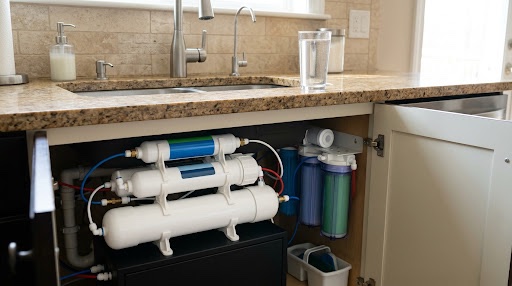
    Reverse osmosis is the reliable tool. DCA in water is a charged, dissolved ion, and an RO membrane (0.0001 micron) rejects charged ions. A properly maintained under-sink RO system typically removes 90% or more of haloacetic acids. This is the technology to reach for with the HAA family.

    Anion exchange can work — resins that swap ions can capture haloacetic acids the way they capture nitrate. It’s real, but uncommon as a standalone home setup: other minerals compete for the resin, and cost and maintenance are steep for a single-purpose job.

    Standard carbon is only modestly effective — and this matters. Carbon is the champion for the THM family because those are uncharged organic molecules that adsorb beautifully. Haloacetic acids are highly soluble, charged ions, and carbon’s grip on them is weak — worse as the cartridge ages. A pitcher or a basic carbon block will take out some, especially when fresh, but it is not the tool I’d stake this family on. If a filter claims HAA5 reduction, the claim to trust is a certified one: NSF/ANSI Standard 53 or 58 with haloacetic acids named on the performance data sheet, certified by NSF International, WQA, or IAPMO. “Reduces chemicals” on a box is not that.

    And the standing rule from the THM articles still holds: boiling doesn’t remove it — it concentrates what’s left as water steams off.

    How to Find Your Level

    Test strips can’t read parts per billion. Two honest routes:

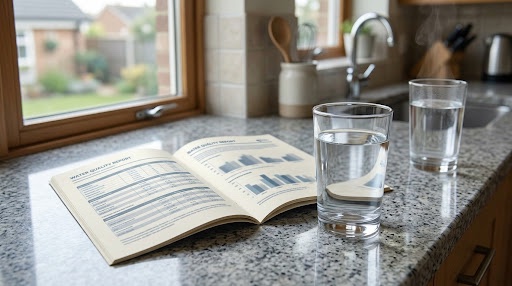
    Your Consumer Confidence Report — free, published by July 1 every year. Find the Haloacetic Acids (HAA5) row: that’s the group total against the 60 ppb limit. Utilities don’t break out DCA individually, but since DCA is usually one of the two biggest members of the group, a low HAA5 total means a low DCA number inside it.

    A certified lab for the individual figure: ask for a haloacetic acid test — EPA Methods 552.2 or 552.3 are the standard ones. The lab’s sample bottle contains a neutralizer that stops the formation reaction at the moment you fill it, so the result reflects your tap, not the drive to the lab.

    The Bottom Line

    • Dichloroacetic acid is the HAA family’s most common member; the law caps the family at 60 ppb combined, its own health goal is zero, and WHO’s guideline is 50 ppb provisional.
    • It’s non-volatile: drinking and cooking water is the only route that matters. Skip the shower-filter pitch for this one.
    • Carbon is the weak tool here; reverse osmosis is the strong one. Match the technology to the chemistry, not to the advertising.
    • Check your report’s HAA5 line first — free, two minutes, and it tells you whether you have anything to solve at all.

    Facts first, then filter. — Steve

  • Dibromochloromethane in Drinking Water: What You Should Know

    Dibromochloromethane in Drinking Water: What You Should Know

    Hi, I’m Steve. I’ve been in the water treatment business since 1994, and I can tell you the four-syllable names on a water report scare more people than the chemicals themselves do. Dibromochloromethane is one of those names. It’s a disinfection byproduct — a member of the trihalomethane family — and it’s the one that shows up most where the source water carries natural bromide, which means coastal supplies like ours here in New Jersey see more of it than most. Here’s what it is and what the numbers honestly say.

    What It Is, and How It Forms

    Dibromochloromethane is one of the four trihalomethanes your water report adds up as Total Trihalomethanes (TTHMs), alongside chloroform, bromodichloromethane, and bromoform.

    The formation is the same family recipe: source water carries natural organic matter and dissolved bromide; the plant adds chlorine or chloramine to kill germs; the disinfectant reacts with the organic matter and bromide, and trihalomethanes form along the way.

    Bromide is the steering wheel. In low-bromide water, chlorine mostly makes chloroform. The more bromide in the source — coastal groundwater, rivers touched by the estuary, aquifers with seawater intrusion — the more the reaction shifts toward the heavier, bromine-carrying members of the family, like this one. That’s why two towns with identical treatment can have very different THM fingerprints.

    Levels climb in warm months (more organic matter, faster reactions) and with water age (the reaction continues in the pipes, so the far ends of a system and dead-end mains run higher).

    Private wells: no continuous chlorination, no reaction, essentially none of it — unless a well was shock-chlorinated and put back in service without a thorough flush.

    What the Science Says About Health

    Like its sister chemicals, dibromochloromethane is a long-term story, not an acute one. At city-water levels it won’t make you sick tonight. It is volatile, so the exposure routes are the same three as the other THMs: drinking, breathing steam in a hot shower, and skin absorption.

    But this is where honest reading matters, because the evidence for this member is weaker than for bromodichloromethane — and the regulators’ numbers show it:

    • In the big government bioassay (NTP), dibromochloromethane produced liver tumors in female mice — and not in rats. Even that mouse result carries a footnote the scientists themselves raise: the chemical was dosed in corn oil, which complicates what the liver findings prove.
    • The EPA’s older classification calls it a possible human carcinogen (Group C).
    • IARC — the international cancer agency — puts it in Group 3: not classifiable as to whether it causes cancer in humans. The evidence just isn’t there to say more.

    Compare that to bromodichloromethane, one seat over in the same family: probable carcinogen, health goal of zero. Same family, different evidence, different numbers. Anyone who quotes you one blanket verdict for “trihalomethanes” is skipping the part that matters.

    The Numbers

    • Individual legal limit: none. The EPA does not cap dibromochloromethane by itself.
    • The legal limit that applies (TTHM MCL): 80 ppb (0.080 mg/L) for all four trihalomethanes combined, as an annual average.
    • EPA health goal (MCLG): 60 ppb (0.06 mg/L). Note what this tells you: unlike its sister chemical, this one’s goal is not zero — because the EPA judged the evidence at a level where a threshold could be named. The MCLG is a non-enforceable health benchmark, not a law.
    • WHO guideline: 100 ppb (0.1 mg/L).
    • EWG health guideline: 0.1 ppb.

    My own utility’s report lists dibromochloromethane at 2.17 ppb — inside a TTHM total of 31.7 ppb, against the 80 ppb group limit. Under every legal and international benchmark on the list, and above only the strictest advocacy target. That’s a normal, compliant reading for a bromide-influenced coastal supply — and now you know how to read yours the same way.

    How It’s Reduced

    The removal story matches the rest of the THM family, because the chemistry that matters — an organic molecule that sticks to carbon and escapes into air — is the same.

    Activated carbon works. Dibromochloromethane adsorbs onto carbon’s internal surface; solid carbon block and granular activated carbon both do it well with adequate contact time and a cartridge that’s changed on schedule.

    Reverse osmosis works as a system — its carbon pre- and post-filters do most of the THM capture, with the membrane (0.0001 micron) behind them. Expect typical THM reductions in the 90%+ range from a maintained system.

    Aeration helps because it’s volatile — open air pulls some of it out of the water — but it’s a partial measure, not a primary one.

    The shower, honestly: ventilation and water temperature are the real levers for vapor exposure. A carbon shower filter can take out chlorine at the showerhead, but water moves through it too fast for major THM adsorption, whatever the box claims. Run the fan, ease the heat, and you’ve handled most of it.

    Certification, as always: look for NSF/ANSI Standard 53 (health effects) with trihalomethane or VOC reduction named on the performance data sheet, certified by NSF International, WQA, or IAPMO. Standard 42 alone means taste and odor only. “Tested to” is not certified to.

    How to Find Your Level

    Strips and drop kits can’t read parts-per-billion. Two honest routes:

    Your Consumer Confidence Report (free, every year by July 1): find the Total Trihalomethanes row. Utilities report the group sum, not the individual members — but simple logic applies: if the four combined are well under 80 ppb, each member is lower still.

    A certified lab if you want the individual breakdown: ask for a volatile organics test (EPA Method 524.2). The lab will send air-tight vials — a volatile chemical escapes a sloppy sample before it’s ever tested.

    The Bottom Line

    • Dibromochloromethane is the bromide-driven member of the THM family — expect more of it in coastal, bromide-bearing supplies, less inland.
    • Its evidence file is thinner than its sister chemicals’: health goal 60 ppb, not zero; IARC says “not classifiable.” Read each chemical on its own record.
    • The law caps the family at 80 ppb total; check your report’s TTHM line for free before spending a dime.
    • Carbon — and RO as a system — handles it at the tap; ventilation handles the shower.
    • As with every byproduct: disinfection is the hero of this story. The byproduct is the manageable footnote.

    Facts first, then filter. — Steve
  • Bromodichloromethane in Drinking Water: What You Should Know

    Bromodichloromethane in Drinking Water: What You Should Know

    Hi, I’m Steve. I’ve been in the water treatment business since 1994. Bromodichloromethane is a mouthful, so let’s break it down: it’s one of the chemicals your water picks up because it was disinfected. It isn’t leaked by a factory and it doesn’t wash off a field. It’s made inside the treatment process, in the same family as chloroform. Here’s what it is, what the numbers mean, and what actually removes it.

    What It Is, and How It Forms

    Bromodichloromethane is one of the four trihalomethanes — the group your water report calls Total Trihalomethanes (TTHMs). The four are chloroform, bromodichloromethane, dibromochloromethane, and bromoform.

    The recipe is simple. Source water from a river or reservoir carries natural organic matter — decaying leaves and plant material — plus trace amounts of natural bromide. The plant adds chlorine or chloramine to kill bacteria and viruses. As the disinfectant travels through the system, it reacts with that organic matter and bromide, and trihalomethanes form as a side effect.

    Two things push levels up:

    • Warm weather. Summer water carries more organic material, and warm water makes chlorine react faster. THM levels are usually highest in the warm months.
    • Water age. The reaction doesn’t stop at the plant. It continues while the water sits in mains and storage tanks, so homes at the far end of a distribution system often see higher THM levels than homes near the plant.

    Private wells: untreated well water doesn’t get continuously chlorinated, so the reaction doesn’t happen. The rare exception is a well that was shock-chlorinated and used before it was thoroughly flushed.

    What the Science Says About Health

    Bromodichloromethane is not an acute poison. At the levels found in city water, it won’t make you sick tonight. The concern is long-term exposure over decades.

    In rodent studies, high lifetime doses produced tumors of the kidney, liver, and large intestine. Based on that evidence, the EPA classifies bromodichloromethane as a probable human carcinogen, and the IARC lists it in Group 2B. Some studies have also looked at high trihalomethane exposure during pregnancy and possible effects like low birth weight; the findings there are suggestive, not settled, and I’ll tell you plainly that the science isn’t finished.

    What makes this one different from most contaminants is that drinking is only one of three doors in:

    • Drinking — the water itself, ice, and drinks made with it.
    • Breathing — it’s volatile, meaning it escapes from hot water into the air. A hot shower fills a small bathroom with THM vapor.
    • Skin — some absorbs through skin in a hot bath or shower.

    Studies have found that a hot shower can put as much trihalomethane into the body as drinking the water does — sometimes more. That’s not a reason to fear your shower. It’s a reason to know the whole picture, and it’s why the fix list below includes your bathroom, not just your kitchen.

    The Numbers

    Read these carefully, because this is where most websites muddy the water:

    • Individual legal limit: none. The EPA does not set a limit for bromodichloromethane by itself.
    • The legal limit that applies (TTHM MCL): 80 ppb (0.080 mg/L) — the enforceable ceiling for all four trihalomethanes added together, measured as an annual average. Your utility must stay under it.
    • EPA health goal for bromodichloromethane (MCLG): zero. For a probable carcinogen, the goal is set at zero — the level at which there’d be no expected risk at all. The goal is not a law; it’s the target the law is built around. A goal of zero does not mean water is unsafe at the legal limit; it means the EPA couldn’t name a threshold where the theoretical cancer risk is provably zero.
    • WHO guideline: 60 ppb (0.06 mg/L) for bromodichloromethane individually.
    • EWG health guideline: 0.06 ppb — a one-in-a-million lifetime cancer-risk target, far stricter than any law.

    Those numbers explain a pattern you’ll see on water reports: my own utility reports bromodichloromethane at 6.13 ppb, inside a TTHM total of 31.7 ppb — comfortably under the 80 ppb legal limit, and over a thousand times higher than EWG’s 0.06 ppb guideline. Both statements are true at once. The legal limit, the health goal, and the advocacy guideline are three different yardsticks; an honest reading names which one it’s using.

    How It’s Reduced

    Good news: trihalomethanes are among the more cooperative contaminants to remove at home, because they’re organic chemicals — and carbon eats organic chemicals.

    Activated carbon works. Bromodichloromethane sticks to carbon’s enormous internal surface by adsorption. Granular activated carbon and solid carbon block both do this well, provided the water gets enough contact time — a quality filter run at its rated flow. A worn-out cartridge that’s long past its change date won’t.

    Reverse osmosis works too — mostly because a good RO system is a chain: carbon prefilters strip the THMs before the membrane, and the membrane (pores around 0.0001 micron) and post-filter finish the job. RO units typically reduce trihalomethanes by 95% or more as a system.

    Aeration helps because THMs are volatile — left open to air, they leave the water. It’s real but slow and impractical as a whole-house strategy; carbon and RO are the reliable tools.

    The bathroom half of the problem: a kitchen filter can’t help your shower. What honestly helps there:

    • Ventilation — run the exhaust fan during and after hot showers. This is the biggest, cheapest lever, because the exposure is mostly vapor.
    • Temperature — warm instead of steaming-hot showers vaporize far less.
    • Shower filters — a carbon shower filter can reduce chlorine at the showerhead, but be skeptical of any shower filter claiming big THM reductions; the water moves too fast for much adsorption. Ventilation does more than the cartridge does.

    Certification is how you tell the real from the marketing. NSF/ANSI Standard 53 is the health-effects standard — a filter certified under Standard 53 for VOC or trihalomethane reduction has been independently lab-tested for it. Standard 42 is only about taste and odor. Read the performance data sheet and look for trihalomethanes or bromodichloromethane by name. “Tested to” a standard is not the same as certified to it.

    How to Find Your Level

    Hardware-store strips can’t measure trihalomethanes at parts-per-billion. You have two honest routes:

    Your Consumer Confidence Report. Every community water system publishes one by July 1, free. Find the “Total Trihalomethanes (TTHM)” row under disinfection byproducts: the highest level and range tell you where your system stands against the 80 ppb limit. The report won’t break out bromodichloromethane alone — utilities report the group, not the members.

    A certified lab. If you want your own tap’s individual number, a state-certified lab can run it — ask for a volatile organics test (EPA Method 524.2 is the standard one). They’ll give you special vials with no air space, because a volatile chemical escapes a half-full bottle before it ever reaches the lab.

    The Bottom Line

    • Bromodichloromethane forms wherever chlorine meets natural organic matter and bromide — which is most chlorinated city water. It’s a managed trade-off of disinfection, not a scandal.
    • The law limits the group at 80 ppb; the health goal for this one member is zero; know which yardstick a claim is using before you react to it.
    • Check your water report’s TTHM line first — it’s free.
    • For drinking and cooking water, a carbon block or RO system certified under NSF/ANSI 53 or 58 handles trihalomethanes at the tap for pennies a gallon.
    • For the shower, ventilate and ease the temperature. That’s the honest fix.

    Chlorination is one of public health’s greatest wins — it ended the era of cholera and typhoid from the tap. The byproducts are real, they’re manageable, and now you know how to read them. Facts first, then filter. — Steve
  • Bromate in Drinking Water: What You Should Know

    Bromate in Drinking Water: What You Should Know

    Hi, I’m Steve. I’ve been in the water treatment business since 1994, and I can tell you bromate is one of the contaminants almost nobody has heard of — not because it doesn’t matter, but because it doesn’t come from where people expect. It doesn’t leak out of old pipes. It doesn’t run off a farm or a factory. Bromate is created inside the water treatment plant itself, during disinfection. Here’s what it is, where it comes from, and what the numbers actually mean.

    What Bromate Is, and How It Forms

    Bromate is a disinfection byproduct — a compound that isn’t in the source water, but gets made while the water is being cleaned.

    Start with bromide. Bromide is a harmless, naturally occurring mineral found in small amounts in rivers, lakes, and groundwater, dissolved out of soil and rock. On its own, at natural levels, it’s not a health concern.

    The problem starts when a city treats its water with ozone. Ozone is one of the strongest disinfectants a plant can use — excellent at killing bacteria, viruses, and tough parasites like Cryptosporidium. But when ozone bubbles through water that contains bromide, the ozone oxidizes the bromide and converts some of it into bromate.

    So bromate is a trade-off chemical: the plant gets powerful disinfection, and in exchange it has to manage this byproduct. It belongs to the same broad family of trade-offs as the trihalomethanes and haloacetic acids, which form when chlorine reacts with natural organic matter.

    Where It Shows Up — and Where It Doesn’t

    Whether bromate is a concern for you depends almost entirely on how your water is treated.

    City water treated with ozone: this is where bromate forms. If your utility uses ozone and its source water has natural bromide in it, plant operators manage bromate formation every day.

    City water treated with chlorine or chloramine only: no ozone, no bromate. If your plant never ozonates, this isn’t your contaminant.

    Private well water: almost certainly no bromate. A well doesn’t get disinfected with ozone, so the reaction never happens. The one rare exception: a home that installed its own ozone system for iron or sulfur problems on bromide-bearing well water could form a small amount — residential ozone runs far weaker than a municipal plant, but the chemistry is the same.

    What the Science Says About Health

    At the levels found in public drinking water, bromate causes no immediate symptoms. You can’t taste it, smell it, or see it, and it doesn’t stain anything.

    The concern is long-term. In laboratory studies, rats and mice given high doses of bromate in their drinking water over their lifetimes developed tumors — kidney, thyroid, and the lining of the abdomen. On the strength of those animal studies, bromate is classified as a probable human carcinogen. Two honest qualifications:

    • The animals were dosed at levels far above anything permitted in tap water.
    • There is no direct evidence of increased cancer in people drinking water at or below the legal limit.

    The legal limit exists precisely because of that animal evidence — it’s set with a wide margin of safety built in. Bromate is not an emergency. It’s a long-term risk that regulators watch, and one you can check for yourself in about two minutes (see the testing section below).

    The Numbers

    • EPA legal limit (MCL): 0.010 mg/L — that’s 10 parts per billion (ppb). This is the enforceable ceiling for public water systems, measured as a running annual average.
    • EPA health goal (MCLG): zero. For a probable carcinogen, the goal is set at zero because regulators assume any exposure carries some theoretical risk. The goal is not enforceable — it’s the target the legal limit is built to approach as closely as treatment allows.
    • WHO guideline: 0.01 mg/L (10 ppb), listed as a provisional guideline because of limits in testing and treatment methods. Same number as the EPA’s limit.

    To feel what 10 ppb means: it’s about ten drops of water in an Olympic-size swimming pool. Small numbers can still matter over a lifetime of exposure — that’s why the limit exists — but keep the scale in mind when a headline tries to scare you with a multiplier.

    I checked my own water report while writing this. Bromate shows up at 0.866 ppb — a real detection, well under the 10 ppb legal limit, and a good example of how to read these reports: a detection is information, not an alarm.

    How Bromate Is Removed

    Bromate is a dissolved ion, which means it behaves like other dissolved minerals in your water — most ordinary filters can’t touch it.

    Reverse osmosis works. An under-sink RO system pushes water through a membrane with pores around 0.0001 micron — small enough to reject dissolved ions, including bromate. A properly maintained RO system typically reduces bromate by roughly 80–95%. The membrane is the working part; that’s why keeping prefilters changed on schedule matters, because a fouled membrane can’t do its job.

    Specialty ion exchange can work. Anion exchange resins designed to swap out ions like nitrate and perchlorate can also take out bromate. They’re uncommon as a standalone home drinking-water setup because other minerals in the water compete for the resin and maintenance is finicky.

    Standard carbon filters don’t do it. Carbon is the right tool for chlorine taste, chloramines, and organic chemicals — but bromate is a dissolved inorganic ion, and it passes through an ordinary carbon filter. This is the single most important shopping lesson in this article: a filter that says “reduces contaminants” means nothing unless the specific contaminant is named.

    Boiling makes it slightly worse. Boiling kills germs, but bromate doesn’t evaporate — the water does. Boil a pot down and the bromate left behind is a little more concentrated than when you started.

    How to shop honestly: look for certification, not claims. NSF/ANSI Standard 58 is the standard for reverse osmosis systems. Then check the system’s certified performance data sheet for the specific contaminants it is certified to reduce, certified by an accredited body — NSF International, WQA, or IAPMO. If bromate isn’t on the sheet, don’t assume it’s covered.

    How to Find Out If Your Water Has Bromate

    You don’t need a test kit — and the home strips and drop kits at the hardware store can’t measure bromate at parts-per-billion levels anyway.

    Step 1: read your Consumer Confidence Report (CCR). Every community water system in the U.S. publishes one by July 1 each year, free, on your utility’s website or by request. Look under “Disinfection Byproducts” or “Regulated Contaminants.” If your utility uses ozone and detected bromate, the report must list the level found, the range, the 10 ppb limit, and whether the system complied. If bromate isn’t listed, your utility either doesn’t use ozone or didn’t detect it in routine testing.

    Step 2: a certified lab, if you want your own number. If you have a private well with an ozone system, or you just want independent verification, use a state-certified drinking water lab (your state or county health department keeps the list). Labs measure bromate by ion chromatography — EPA Methods 300.1 or 317.0 are the standard ones. They’ll send a sample bottle and instructions.

    The Bottom Line

    • Bromate only forms where ozone disinfects water that contains natural bromide. No ozone, no bromate.
    • The legal limit is 10 ppb, the health goal is zero, and your utility’s annual report tells you exactly where your water stands — for free.
    • If your level is below the limit, your water meets the federal standard. If it’s near the limit, or you simply want the extra margin, an under-sink reverse osmosis system certified under NSF/ANSI 58 is the proven, economical answer — and you only need to treat the water you drink and cook with, not the whole house.
    • Don’t buy anything based on a scary multiplier. Check the report, read the actual number, compare it to the legal limit, and then decide.

    That’s how you handle bromate: facts first, then filter. — Steve
  • Perchlorate in Drinking Water: What You Should Know

    Perchlorate in Drinking Water: What You Should Know

    If you’ve landed on this page, chances are you’ve seen perchlorate pop up on a local water quality report, read about it in the news, or simply want to know more about what’s flowing through your taps. My name is Steve, and I’ve spent a lifetime in the water treatment business. Over the years, I’ve worked on everything from simple under-sink filters to complex well systems, sitting down at kitchen tables with homeowners just like you to make sense of water chemistry.

    When folks first hear the word “perchlorate,” it often sounds intimidating or overly technical. But like most water quality topics, once you break it down into plain English, it becomes a straightforward puzzle with clear solutions. Today, we’re going to cover what perchlorate is, where it comes from, how it affects the body, why you won’t notice it with your senses, the confusing regulatory situation around it, and—most importantly—what actually works to filter it out of your home’s water supply. Let’s get right to it.

    What Is Perchlorate and Where Does It Come From?

    To understand perchlorate, it helps to look at how it behaves chemically. Perchlorate is an inorganic anion—a combination of chlorine and oxygen atoms—that dissolves remarkably well in water. Because it is highly soluble and incredibly stable in liquid, once it enters groundwater or surface water, it can travel long distances without breaking down easily.

    So, how does it get into the water supply in the first place? For the most part, perchlorate is a synthetic chemical created for industrial and military applications. Its main claim to fame is that it acts as a powerful oxidizer. An oxidizer provides the fast-burning oxygen needed to propel solid fuel rockets, missiles, and munitions. Because of this, historical manufacturing, testing, and disposal practices around military installations, aerospace defense facilities, and chemical manufacturing plants have historically been primary pathways for perchlorate entering regional aquifers.

    However, rocket fuel isn’t the only source. Perchlorate is also used as an ignition component in everyday items like fireworks, road flares, and automotive safety airbags. In agricultural settings, certain imported nitrate fertilizers mined from arid regions naturally contain perchlorate compounds, which can leach into shallow groundwater over years of widespread application.

    Additionally, perchlorate can form naturally in extremely dry, arid environments—such as parts of the American Southwest—where atmospheric chemical reactions produce tiny amounts that accumulate in the soil and mineral deposits over long periods. Whether from industrial runoff, consumer products, or dry-land geology, perchlorate makes its way into local water sources through the natural movement of rain and groundwater.

    Why It Matters: The Thyroid Connection

    When we evaluate any element in drinking water, we always ask how it interacts with human biology. Unlike some minerals that cause aesthetic issues like staining or pipe scale, perchlorate interacts directly with an essential body process: the thyroid gland.

    The thyroid relies on iodide—a form of iodine we get from our food and drink—to produce thyroid hormones. These hormones act as the body’s master regulators, controlling metabolism, energy levels, heart rate, and overall growth.

    Here is the key biological mechanism: the human body accidentally mistakes the perchlorate molecule for an iodide molecule. Because they look chemically similar to the transport system inside the thyroid, perchlorate effectively blocks the doorway, inhibiting the gland’s ability to take up the iodide it needs. If the thyroid cannot absorb enough iodide, it cannot produce adequate levels of thyroid hormones.

    For healthy adults, a temporary reduction in iodide uptake usually isn’t cause for panic, as the adult body maintains a healthy reserve of stored hormones. However, the situation is quite different for vulnerable populations—specifically pregnant women, developing fetuses, nursing mothers, and infants.

    During pregnancy and early infancy, thyroid hormones are absolutely critical for proper brain development and physical growth. A developing fetus cannot manufacture its own thyroid hormones early on and relies entirely on the mother. If a mother’s thyroid function is suppressed by perchlorate exposure, or if an infant receiving reconstituted formula ingests high levels of perchlorate, it can disrupt normal development. Educating homeowners about this isn’t meant to cause alarm; rather, it highlights why monitoring and protecting drinking water for growing families is so important.

    The Hidden Contaminant: No Smell, No Taste

    One of the trickiest aspects of perchlorate is that you cannot rely on your physical senses to detect it.

    When water contains high levels of iron, it turns reddish-brown. If it has excess sulfur, it smells like rotten eggs. If it has high sulfate, it tastes bitter. But perchlorate leaves no visual or sensory clues whatsoever. It is completely odorless, colorless, and tasteless at the concentrations typically found in municipal or well water supplies. You could pour a crystal-clear glass of water that looks and tastes completely refreshing, completely unaware of whether perchlorate is present.

    This invisible nature means that you can never diagnose a perchlorate issue by simply pouring a glass at the sink or checking for pipe corrosion. The only way to know if perchlorate is in your water is through proper scientific testing.

    The Regulatory Picture: A Decades-Long Debate

    If you try to look up the official national safety limit for perchlorate, you might end up more confused than when you started. That is because perchlorate has been the subject of a long, complex debate among regulators, scientists, and lawmakers in Washington for decades.

    At the federal level, the Environmental Protection Agency has spent years studying perchlorate, evaluating toxicological data, and weighing proposed drinking water standards. During this lengthy process, official guidance numbers have shifted, proposed regulations have been delayed, and federal rulemaking has faced legal challenges. As a result, there is still no single, simple, permanent federal maximum contaminant level that applies uniformly across every single state. The newest chapter: in January 2026, acting under a court order, EPA finally proposed a federal health goal of 20 parts per billion and asked for public comment on an enforceable limit of 20, 40, or 80 parts per billion. But a proposal is not a standard — a final rule is not expected before 2027, and until it lands, the state rules below are the numbers that actually govern.

    Because the national picture has taken so long to settle, individual states have stepped up to set their own rules. States with significant aerospace histories, heavy agriculture, or dry climates have established their own strict state-level drinking water standards and monitoring requirements.

    What does this mean for you as a homeowner? It means you shouldn’t wait around for a clear-cut federal decree to tell you what to do. Your local municipal water authority’s annual quality report or your state’s department of environmental protection will give you the most accurate picture of what is happening in your immediate area.

    How to Test Your Water

    Because perchlorate is invisible to your senses, accurate testing is the essential first step before considering any filtration equipment.

    If you are on a public water system, start by checking your utility’s annual Consumer Confidence Report. Many public utilities regularly test for perchlorate, especially in areas with known historical exposure, and will publish their findings measured against state benchmarks like California’s enforceable limit of 6 parts per billion or Massachusetts’ stricter 2 parts per billion.

    If you rely on a private well, testing is entirely your responsibility. Standard home DIY test kits from the local hardware store generally do not check for perchlorate, as measuring it requires specialized laboratory equipment like ion chromatography. To get a reliable answer:

    • Contact a state-certified drinking water laboratory.
    • Request a test panel specifically configured for perchlorate.
    • Follow the lab’s instructions carefully for drawing and shipping the sample to ensure accurate results.

    Once your lab report comes back, it will display your water’s exact perchlorate concentration expressed in standard parts per billion. Having that precise number allows a water professional to recommend a system properly calibrated for your home.

    What Actually Removes Perchlorate (and What Doesn’t)

    This brings us to the most practical question: if perchlorate is in your water, how do you get it out? Over my decades in the trade, I’ve seen plenty of homeowners buy expensive filters that were completely ineffective for their specific problem. Let’s look at what works and what doesn’t.

    What Does NOT Work

    • Standard Pitcher Filters and Pour-Through Pitchers: Basic countertop pitchers designed for taste and odor rely on standard granular activated carbon, which does not effectively trap or remove dissolved perchlorate ions.
    • Standard Sediment and Carbon Block Filters: Whole-house sediment cartridges and typical under-sink carbon block filters will pass perchlorate right through without stopping it.
    • Traditional Water Softeners: Conventional water softeners use a cation exchange resin designed to grab positively charged minerals like calcium and magnesium. Because perchlorate is a negatively charged ion, standard softeners will not remove it.
    • Boiling Water: Boiling your water will only evaporate pure water steam, actually concentrating the perchlorate left behind in the pot.

    What DOES Work

    • Reverse Osmosis (RO): Reverse osmosis systems push water under pressure through a semi-permeable membrane with microscopic pores. This membrane effectively blocks dissolved inorganic ions like perchlorate while letting pure water pass through. A quality point-of-use RO system installed under the kitchen sink is often the most practical, reliable, and cost-effective solution for providing clean drinking and cooking water for a family.
    • Perchlorate-Selective Anion Exchange Resin: For whole-house treatment, specialized anion exchange systems use custom-engineered synthetic resins designed specifically to attract and bind perchlorate ions. As water flows through the media tank, the resin captures the perchlorate and replaces it with a harmless ion like chloride. Because these resins have a very strong affinity for perchlorate, they are highly effective, though they require professional sizing and routine maintenance.
    • Distillation: Countertop water distillers boil water into steam, leaving perchlorate and other heavy minerals behind in the heating chamber, then condense the pure steam back into drinking water. While very effective, distillers process water slowly and use more energy than RO systems.

    Conclusion

    Understanding your home’s drinking water doesn’t have to be overwhelming. While perchlorate is a unique chemical with a complex industrial history and real biological effects on the thyroid, it is also a completely solvable problem.

    By getting a certified lab test, understanding your state’s local guidelines, and choosing proven technology like reverse osmosis or specialized ion exchange, you can ensure your home’s water is clean, safe, and wholesome for your entire family. Take it one step at a time, rely on verified testing, and enjoy the peace of mind that comes with knowing exactly what’s in your glass.

  • Sulfate in Drinking Water: What You Should Know

    Sulfate in Drinking Water: What You Should Know

    If you’ve landed on this page, chances are you’ve noticed something a little off about your tap water, or maybe you’re just doing some homework after getting a water test back from the lab. My name is Steve, and I’ve spent a lifetime in the water treatment business. Over the decades, I’ve crawled through crawlspaces, peered inside countless pressure tanks, and sat at kitchen tables across the region talking with folks just like you about what’s coming out of their taps.

    When people talk about water quality, they usually worry about things they can’t see, taste, or smell. But sulfate is a bit different. When it shows up in elevated amounts, it tends to announce itself loud and clear. Today, we’re going to talk about what sulfate actually is, where it comes from, why it matters for your household, and how to sort out the common myths from the facts. Most importantly, we’ll look at what you can actually do to fix it if it’s giving you trouble. Let’s dive right in.

    What Is Sulfate and Where Does It Come From?

    To understand sulfate, let’s start with the basics. Sulfate is a naturally occurring chemical compound made of sulfur and oxygen atoms. In the natural world, it dissolves easily into groundwater as water percolates down through layers of soil and rock.

    Where does it all originate? A good portion of the sulfate in our groundwater comes straight from Mother Nature. As rainwater absorbs carbon dioxide from the air and soil, it becomes slightly acidic. When this slightly acidic water moves underground, it slowly dissolves minerals containing sulfur. You’ll often find elevated sulfate levels in areas with rich deposits of gypsum, anhydrite, or certain shale formations. If your well is drilled deep into these mineral-rich geological formations, encountering sulfate is pretty common.

    Beyond natural mineral deposits, human activities can also contribute to sulfate levels in local water supplies. For instance, historical or active mining operations can expose sulfur-bearing minerals to air and water, creating runoff that eventually finds its way into the water table. Agricultural practices can also play a role; certain fertilizers contain sulfur compounds that can leach through the soil over time if not managed carefully. Additionally, failing or improperly placed septic systems, industrial discharges, and urban runoff can introduce sulfur compounds into shallow groundwater sources.

    The key takeaway here is that sulfate is fundamentally a mineral issue. It’s a natural part of the earth’s chemistry, but when human footprints or specific local geology amplify its presence, it makes its way right into our household plumbing.

    Why It Matters: Taste and Physical Effects

    So, why should you care if there is sulfate in your drinking water? Usually, homeowners find out they have a sulfate issue because of how the water tastes, or how it affects digestion.

    Let’s talk about taste first. Sulfate gives water a distinct, recognizable flavor profile. If your water has a bitter, salty, or medicinal taste, sulfate is very often the culprit. At lower levels, you might barely notice it, or the water might just taste slightly sharp. But as the concentration climbs past 250 mg/L — the level where EPA set its taste-based secondary standard — that bitterness becomes much more pronounced. It can ruin the flavor of your morning coffee, change how your tea tastes, and make cooking certain foods a bit unpleasant.

    Beyond taste, sulfate can have a noticeable physical effect on the human body, particularly when concentrations cross thresholds such as 500 mg/L — EPA’s health-based advisory value. One of the best-known characteristics of high-sulfate water is its laxative effect. If someone drinks water with elevated sulfate levels, it can cause loose stools or digestive discomfort.

    However, there is an important nuance here that every homeowner should understand: human beings are remarkably adaptable. People who live in an area with high-sulfate water for an extended period often build up a tolerance to it. Their digestive systems adjust, and they can drink the water day in and day out without any trouble at all.

    The real adjustment period happens for specific groups of people: newcomers and infants. If a visitor comes to stay at your home and isn’t accustomed to drinking high-sulfate water, it can catch their digestive system by surprise. Similarly, infants whose digestive systems are still developing are much more sensitive to the laxative properties of sulfate, especially at levels above 500 mg/L — which is why EPA’s advice is to use water under 500 mg/L when making infant formula. For families with young babies, or when preparing infant formula, keeping a close eye on sulfate levels is an essential step to prevent dehydration and tummy troubles.

    Clearing Up the Confusion: Sulfate vs. Hydrogen Sulfide

    Now, let’s clear up one of the most common misunderstandings in the entire water treatment business. Regularly, I get calls from homeowners who tell me, “Steve, my water smells like rotten eggs, and I know it’s high in sulfate.”

    It’s a completely logical assumption, but chemically speaking, it’s incorrect. Here is the golden rule of water treatment: pure sulfate has absolutely no odor. If your water smells like sulfur or rotten eggs, you are not smelling sulfate.

    What you are actually smelling is hydrogen sulfide gas. So, how do the two connect? They are related by a biological process. Deep down in some wells, inside stagnant plumbing lines, or tucked away inside water heaters, specialized microscopic organisms known as sulfate-reducing bacteria live and thrive. These bacteria take the harmless, odorless sulfate present in the water and use it as an energy source. As they metabolize the sulfate, they breathe out hydrogen sulfide gas as a byproduct.

    That rotten-egg smell is actually a gas coming out of solution. So while sulfate is the raw material that feeds the bacteria, the gas you smell is a completely different entity. Understanding this distinction is vital because treating a rotten-egg odor requires dealing with bacteria or gas removal, whereas treating high-sulfate water requires tackling dissolved mineral ions directly. Conflating the two can lead homeowners to spend money on the wrong equipment.

    How to Test Your Water

    If you suspect your water might contain sulfate—perhaps because of a bitter taste or because neighbors have reported similar issues—guessing is never a good strategy. Water treatment is an exact science, and you need reliable data before you spend a dime on equipment.

    How do you test for it? The most accurate method is to collect a sample from your tap and send it to a certified drinking water laboratory. These labs use precise chemical analysis to measure the exact concentration of sulfate in your water supply. When you get your lab report back, it will typically show the concentration expressed in standard units, giving you a clear picture of what you are dealing with against EPA’s benchmarks — 250 mg/L for taste, and the 500 mg/L health advisory.

    You can also find do-it-yourself test strips or color-comparator kits online or at hardware stores, which can give you a quick ballpark estimate. However, if you are planning to invest in filtration equipment, a professional laboratory test is always the safest bet. It ensures you know precisely what numbers you are working with so you can design or select a treatment system that is properly sized for your home.

    What Actually Removes Sulfate (and What Doesn’t)

    This brings us to the most practical part of our discussion: how do you get sulfate out of your drinking water once it’s there? Over the years, I’ve seen many homeowners get sold the wrong equipment by aggressive salespeople who promised the moon. Let’s clear the air and talk about what actually works and what doesn’t.

    What Does NOT Work

    • Standard Sediment Filters: These will not remove sulfate because they only catch physical particles like dirt, sand, and rust, whereas sulfate is completely dissolved in the water.
    • Standard Carbon Block Filters: The kind you might find in a basic pitcher or under-sink refrigerator filter will not capture dissolved sulfate ions.
    • Traditional Water Softeners: Softeners are designed to swap hardness minerals like calcium and magnesium for sodium or potassium; they do not target or remove sulfate anions.

    What DOES Work

    • Reverse Osmosis (RO): An RO system uses household water pressure to push water molecules through a semi-permeable membrane. This microscopic barrier allows water through while trapping dissolved mineral ions, including sulfate, and flushing them down the drain. For drinking and cooking water at the kitchen sink, an RO system is often the most practical and popular choice for homeowners.
    • Distillation: A distiller works by boiling water into steam, leaving all the heavy dissolved minerals and impurities behind in a boiling chamber. The steam is then cooled back down into pure liquid water in a separate condenser. While distillation is extremely thorough and effective at removing sulfate, it requires electricity and produces treated water at a slower pace.
    • Anion Exchange: This is a specialized ion-exchange process, somewhat similar in appearance to a water softener, but utilizing a different type of resin designed to capture negatively charged ions like sulfate and swap them for chloride ions. While whole-house anion exchange systems exist, they are typically more complex and require careful maintenance, so they are usually reserved for situations where sulfate levels are exceptionally high across the entire home water supply.

    Conclusion

    Dealing with water chemistry can feel a bit overwhelming if you’re looking at it for the first time. But remember, water issues are simply puzzles waiting to be solved. Sulfate is a natural part of our geological environment, and while it can cause bitter tastes or digestive inconveniences, it is entirely manageable with the right equipment.

    Take your time, get a proper test, and consult with a knowledgeable professional who can guide you toward a solution that fits your home. Here’s to clean, great-tasting water from your tap every single day.

  • Molybdenum in Drinking Water: What You Should Know

    Molybdenum in Drinking Water: What You Should Know

    If you take a look at the periodic table, you will spot molybdenum sitting at element number 42. It is a metal with a tongue-twister name and a quiet double life: industry mines it for steel, and your body uses a trace of it to stay alive.

    I’m Steve, and I spend my days helping homeowners make sense of what comes out of their taps. Molybdenum is one of the elements I file under “nutrient first” — most people who find it on a water report have never heard of it, and the honest story is calmer than the name sounds. Here is a clear, honest breakdown of what molybdenum is, how it gets into drinking water, what it means for your health, and what you can do about it, without any sales hype or scare tactics.

    1. What Molybdenum Is and Where It Comes From

    Molybdenum is a metal that occurs naturally in rock and soil. It is an essential nutrient in trace amounts — and at the same time a genuinely useful industrial metal:

    • Steel Alloys and Industry: Molybdenum is mined for steel alloys and industrial uses, where it earns its keep in hard-working metal.
    • A Copper Connection: It sometimes comes out of the same mining operations that produce copper — the two metals can share the same ground.

    So the molybdenum in a water report has two possible authors: the geology under your feet, and the mining that geology sometimes attracts.

    2. How It Gets Into Drinking Water

    Molybdenum reaches drinking water the natural way, with mining adding its share:

    • Natural Deposits: Molybdenum is natural in rock and soil, and groundwater in the right geology carries it. Water moving slowly through molybdenum-bearing rock dissolves traces of it, the way groundwater picks up so many of the elements in this series.
    • Mining: Where molybdenum is mined — including operations that also produce copper — mining activity can add to what local water carries.

    3. What It Can Do to a Person’s Health: A Nutrient First

    This one is a nutrient first, and I want to lead with that because it is the truth of the element.

    • The Nutrient Side: Your body uses trace molybdenum in enzymes — the workhorse proteins that run your chemistry. Molybdenum is not an intruder your body has no use for; it is a required trace nutrient, normally arriving through food.
    • The Water Side: The amounts in drinking water are normally small. A molybdenum result on a lab report is a piece of information, not an alarm — and there is no federal standard against which the number is judged.

    If a test ever comes back high and you want the level reduced, that is a reasonable homeowner preference, and standard treatment handles it. But nobody should lose sleep over a normal trace result for an element their body actually uses.

    4. The Federal Picture: No Federal Standard

    Molybdenum currently has NO federal drinking-water limit — no EPA Maximum Contaminant Level (MCL).

    No federal standard exists for it. That means public water systems are not working against a molybdenum limit, and a homeowner reading a lab report has no official federal number to compare the result against.

    So the honest way to read a molybdenum result is with the element’s own story in mind: it is an essential trace nutrient, the amounts in drinking water are normally small, and the choice to treat it is a preference — one that good equipment makes easy if you decide on it.

    5. How a Homeowner Can Test Their Water

    You cannot see, taste, or smell molybdenum at normal levels. The only way to know whether it is in your water — and how much — is laboratory analysis.

    • Skip DIY Home Test Strips: Over-the-counter dip strips are fine for basic pH or free chlorine, but they cannot measure trace metals like molybdenum down at these levels.
    • Use a Certified Laboratory: Send a sample to a state-certified drinking water laboratory, and ask for molybdenum specifically if it is not on the standard panel. Labs measure trace metals with precise instruments such as ICP-MS.

    6. How to Remove Molybdenum from Drinking Water

    If a certified lab test comes back high and you want the level reduced, standard treatment handles it.

    Effective Removal Technologies

    • Reverse Osmosis (RO): An under-sink point-of-use Reverse Osmosis system is the most dependable home method. RO pushes water through a semi-permeable membrane that rejects dissolved metals, including molybdenum, while letting purified water pass through.
    • Ion Exchange: Molybdenum in water can also be reduced by ion exchange treatment — the same family of technology used in water softeners — which swaps dissolved ions out of the water.

    The Honest Truth About Carbon Filters

    Standard activated carbon filters are excellent for chlorine, taste, and odor, but they do not reliably remove dissolved metals like molybdenum on their own.

    Pre-Filtration and Micron Ratings

    While sediment pre-filters cannot catch dissolved molybdenum, they protect your RO membrane or ion exchange equipment from silt, rust, and sand.

    When selecting pre-filters, pay attention to micron ratings:

    • Micron Rating: A micron measures pore size. A 5-micron or 1-micron sediment pre-filter is standard practice ahead of an under-sink RO membrane.
    • Nominal vs. Absolute Rating:
    • Nominal Rating: Traps approximately 60% to 85% of particles at that micron size under standard flow.
    • Absolute Rating: Traps 99.9% or more of particles at the specified micron size under strict lab test conditions.

    Using an absolute-rated pre-filter gives your treatment equipment consistent physical protection over time.

    The Bottom Line

    Molybdenum in drinking water is a nutrient first: an essential trace element your body uses in enzymes, reaching water from natural deposits and mining. It has no federal drinking-water limit, and the amounts in water are normally small. If a test comes back high and you want it reduced, reverse osmosis or ion exchange will handle it.

  • Cobalt in Drinking Water: What You Should Know

    Cobalt in Drinking Water: What You Should Know

    If you take a look at the periodic table, you will spot cobalt sitting at element number 27. It is a natural metal found in rock and soil — and it has a second identity most people never hear about: cobalt is an essential nutrient, because it is part of vitamin B12.

    I’m Steve, and I spend my days helping homeowners make sense of what comes out of their taps. Cobalt surprises people in both directions — a metal with an industrial résumé that your body also needs, in a very small amount. Here is a clear, honest breakdown of what cobalt is, how it gets into drinking water, what it means for your health, and what you can do about it, without any sales hype or scare tactics.

    1. What Cobalt Is and Where It Comes From

    Cobalt is a naturally occurring metal embedded in rock and soil. It comes to us from natural deposits, and it is also a working industrial metal:

    • Alloys and Batteries: Cobalt is used in alloys and in batteries, which is why mining and metalworking regions know it well.
    • The Vitamin Connection: Cobalt serves as an essential nutrient in trace amounts as part of vitamin B12 — the cobalt is built right into the vitamin.

    So cobalt lives in two worlds at once: the geology and industry that produce it, and the nutrition that quietly requires a trace of it.

    2. How It Gets Into Drinking Water

    Cobalt reaches drinking water through natural and industrial routes:

    • Natural Deposits: Cobalt is a natural metal in rock and soil, so groundwater moving through that geology can carry traces of it into wells and aquifers.
    • Mining and Metal Industry: Mining, smelting, and metalworking add more. Where cobalt-bearing rock is dug up and processed, cobalt has more ways to reach local water.

    3. What It Can Do to a Person’s Health: A Nutrient in Trace Amounts

    Cobalt is one of the clearest two-sided stories on the whole table — and the honest headline is about amounts.

    • The Nutrient Side: Your body needs cobalt — but only in the tiny amount built into vitamin B12. That is the form and the scale at which cobalt belongs in your life, and it normally arrives through food.
    • The Water Side: The levels surveys find in drinking water are traces. Cobalt on a lab report is not a five-alarm finding; it is a trace metal showing up at trace levels, in a country with no federal standard for it.

    My honest advice is the same as the science’s posture: know it is there, keep the amounts in perspective, and treat it if you would rather not have it — not because a trace on a report is an emergency.

    4. The Federal Picture: No Federal Standard

    Cobalt currently has NO federal drinking-water limit — no EPA Maximum Contaminant Level (MCL).

    That is the whole federal picture, and I will not dress it up: there is no federal standard for cobalt in drinking water. Public water systems are not working against a cobalt limit, and a homeowner with cobalt on a lab report has no official number to compare the result against.

    So the decision is a homeowner’s decision, made with honest information: the amounts found in drinking water are traces, your body’s need for cobalt is the tiny amount inside vitamin B12, and if you prefer your water without it, treatment exists.

    5. How a Homeowner Can Test Their Water

    You cannot see, taste, or smell cobalt at trace levels. The only way to know whether it is in your water — and how much — is laboratory analysis.

    • Skip DIY Home Test Strips: Over-the-counter dip strips are fine for basic pH or free chlorine, but they cannot measure trace metals like cobalt down at these levels.
    • Use a Certified Laboratory: Send a sample to a state-certified drinking water laboratory, and ask for cobalt specifically if it is not on the standard panel. Labs measure trace metals with precise instruments such as ICP-MS.

    6. How to Remove Cobalt from Drinking Water

    If a lab test shows cobalt and you would rather not have it there, standard treatment handles it.

    Effective Removal Technologies

    • Reverse Osmosis (RO): An under-sink point-of-use Reverse Osmosis system is the most dependable home method. RO pushes water through a semi-permeable membrane that rejects dissolved metals, including cobalt, while letting purified water pass through.
    • Ion Exchange: Cobalt in water can also be reduced by ion exchange treatment — the same family of technology used in water softeners — which swaps dissolved ions out of the water.

    The Honest Truth About Carbon Filters

    Standard activated carbon filters are excellent for chlorine, taste, and odor, but they do not reliably remove dissolved metals like cobalt on their own.

    Pre-Filtration and Micron Ratings

    While sediment pre-filters cannot catch dissolved cobalt, they protect your RO membrane or ion exchange equipment from silt, rust, and sand.

    When selecting pre-filters, pay attention to micron ratings:

    • Micron Rating: A micron measures pore size. A 5-micron or 1-micron sediment pre-filter is standard practice ahead of an under-sink RO membrane.
    • Nominal vs. Absolute Rating:
    • Nominal Rating: Traps approximately 60% to 85% of particles at that micron size under standard flow.
    • Absolute Rating: Traps 99.9% or more of particles at the specified micron size under strict lab test conditions.

    Using an absolute-rated pre-filter gives your treatment equipment consistent physical protection over time.

    The Bottom Line

    Cobalt in drinking water is a natural trace metal with an unusual résumé: an industrial metal that is also part of vitamin B12. It has no federal drinking-water limit, and the levels surveys find in water are traces. If a test shows it and you want it out, reverse osmosis or ion exchange will handle it.

  • Calcium in Drinking Water: What You Should Know

    Calcium in Drinking Water: What You Should Know

    If you take a look at the periodic table, you will spot calcium sitting right at element number 20. It is a soft, silvery-white metal that ranks as the fifth most abundant element in the Earth’s crust—and the single most abundant mineral inside the human body.

    When people hear “calcium,” they naturally think of strong bones, milk, and dietary health. But in my line of work as a water treatment professional, calcium is the single biggest player in home plumbing decisions. It is the senior partner in hard water (with magnesium as its junior partner), and managing it is the backbone of residential water quality.

    Here is a clear, honest breakdown of what calcium is, how it gets into your tap water, what it does to your body and your plumbing, and how to manage it in your home without any sales pitch or scare tactics.

    1. What Calcium Is and Where It Comes From

    In nature, calcium is embedded in vast rock formations across the globe—primarily as limestone (calcium carbonate), chalk, and gypsum (calcium sulfate).

    Because these calcium minerals dissolve readily when exposed to natural groundwater, calcium ions (Ca^{2+}) wash into deep aquifers and subterranean streams every time it rains.

    In human biology, calcium is essential. Roughly 99% of the body’s calcium is stored in bones and teeth, while the remaining 1% plays a vital role in blood clotting, nerve signaling, muscle contraction, and heart function.

    2. How It Gets Into Drinking Water (And How It Is Reported)

    Groundwater flowing over subterranean limestone and gypsum rock formations is the primary route calcium takes to enter private wells and municipal supplies.

    When you look at a water test report or municipal water quality panel, you will see calcium reported as part of Total Hardness.

    Because water treatment chemistry developed around limestone, the industry uses a standard reporting convention: hardness is reported as “calcium carbonate equivalent” (CaCO_3).

    You will typically see this measured in two ways:

    • Milligrams per Liter (mg/L) or Parts per Million (ppm): Standard lab metric where 1 mg/L equals 1 ppm.
    • Grains per Gallon (GPG): The practical trade measurement used for sizing home water softeners. One Grain per Gallon equals 17.1 mg/L of calcium carbonate equivalent.

    3. What It Does in the Home: The Cost of Limescale

    While calcium is a great mineral for human health, it is the number one mineral troublemaker for household plumbing and appliances.

    • Water Heater Limescale: When hard, calcium-rich water is heated inside a water heater, boiler, or electric kettle, dissolved calcium drops out of solution and forms hard, rock-like limescale. A layer of calcium scale on a water heater element acts like an insulating blanket, forcing the heater to work significantly harder and consuming extra energy to heat the water. Over time, this shortened lifespan and reduced efficiency cost homeowners real money.
    • Soap Curd & Fights with Soap: Calcium reacts directly with soap molecules to form an insoluble, sticky soap curd (the classic bathtub ring). Because calcium “ties up” soap, you need to use significantly more laundry detergent, shampoo, and dish soap to achieve a good lather.
    • Spotting & Film: As water droplets evaporate off glass shower doors, dishes, and chrome faucets, calcium leaves behind white, crusty mineral spots and dull haze.

    4. What It Can Do to Health: Nutrient vs. Kidney Stone Caution

    When evaluating calcium from a health perspective, the picture is overwhelmingly positive, with one important nuance regarding kidney stones.

    An Essential Dietary Mineral

    Calcium in drinking water is biologically active and absorbed by the body. Drinking hard water rich in calcium provides a modest, helpful boost toward your daily dietary calcium needs. There is no toxicity story or health hazard associated with drinking calcium at tap water levels.

    The Honest Truth About Kidney Stones

    Because the majority of kidney stones are made of calcium oxalate, people often wonder if drinking calcium-rich hard water causes kidney stones.

    To be completely clear and honest: drinking-water calcium is NOT established as a primary driver of kidney stones. Research shows that dietary calcium intake actually binds with oxalates in the digestive tract, reducing overall stone risk. Overall fluid intake (staying properly hydrated) and dietary sodium matter far more than the calcium concentration of your tap water.

    However, if you are a known kidney stone former, always follow your own physician’s specific dietary and fluid guidance.

    5. The Federal Picture: Unregulated and Beneficial

    When reviewing a home water quality report, homeowners often look for a federal safety limit.

    Calcium has NO EPA Maximum Contaminant Level (MCL) and NO Secondary standard.

    It is completely unregulated at the federal level by the U.S. Environmental Protection Agency. Because calcium is an essential nutrient with no primary toxicity risks, the EPA does not enforce health limits or aesthetic secondary guidelines for calcium in public water supplies.

    6. How a Homeowner Can Test Their Water

    Testing for calcium is one of the easiest tasks in water quality:

    • At-Home Hardness Test Kits: A simple, inexpensive home hardness test kit or test strip (measured in GPG or mg/L) is genuinely useful here. Because calcium makes up the vast majority of hard water, a total hardness test gives you 90% of the practical information you need for home plumbing decisions.
    • Certified Laboratory Testing: If you want to know the exact, isolated calcium number separate from magnesium, send a sample to a state-certified drinking water laboratory for an inorganic minerals panel.

    7. How to Manage Calcium in Drinking Water

    Managing calcium comes down to treating whole-home plumbing versus drinking water at the kitchen tap.

    Effective Management Technologies

    • Traditional Water Softeners (Ion Exchange): The traditional ion-exchange water softener exists primarily because of calcium. Water softeners pass hard water through a bed of cation resin that swaps dissolved calcium ions (Ca^{2+}) for sodium or potassium ions, protecting your water heater, pipes, and appliances from limescale buildup throughout the entire house.
    • Under-Sink Reverse Osmosis (RO): For drinking and cooking water, a point-of-use Reverse Osmosis system typically removes 95% to 98% of dissolved calcium at the kitchen tap, giving you pure, low-mineral water that won’t leave spots in kettles or coffee makers.
    • The Neutralizer Twist (Adding Calcium On Purpose): Here is an interesting twist in my trade: if a home has acidic water (low pH below 6.5), we install a calcite neutralizer tank filled with calcium carbonate. As acidic water passes through, it dissolves a small amount of calcium on purpose to raise the pH to a safe, non-corrosive level (around 7.0), protecting copper pipes from pinhole leaks!

    Pre-Filtration and Micron Ratings

    While physical sediment pre-filters do not remove dissolved calcium ions, they protect water softeners and RO systems from getting clogged with sand, rust, and dirt.

    When evaluating pre-filters, pay attention to micron ratings:

    • Micron Rating: A micron measures pore size. A 5-micron or 1-micron sediment pre-filter is standard industry practice ahead of a water treatment system.
    • Nominal vs. Absolute Rating:
    • Nominal Rating: Traps approximately 60% to 85% of particles at that rated micron size under standard flow.
    • Absolute Rating: Traps 99.9% or more of particles at the specified micron size under strict lab testing conditions.

    Using an absolute-rated pre-filter gives your primary treatment equipment reliable, consistent physical protection over time.

    The Bottom Line

    Calcium isn’t a pollutant—it is an essential nutrient that happens to be the senior partner in hard water.

    Because there is no federal EPA limit, you only need to manage calcium if limescale buildup, soap curd, or spotty glassware is causing headaches in your home. If hard water scale is costing you efficiency or ruining your fixtures, a whole-house water softener will solve the problem, while an under-sink Reverse Osmosis system will give you complete control over the drinking water at your kitchen tap.

  • Potassium in Drinking Water: What You Should Know

    Potassium in Drinking Water: What You Should Know

    If you take a look at the periodic table, you will spot potassium sitting right at element number 19. It belongs to the alkali metal family—sitting directly underneath sodium—and shares many of its chemical habits.

    Most people know potassium as the essential electrolyte that keeps muscle cramps at bay after a hard workout, or as the mineral that made bananas famous (even though it is packed into plenty of other foods like potatoes, spinach, avocados, and beans).

    In the world of home water treatment, potassium is a fascinating mineral because it often enters the conversation as a healthy alternative to sodium. As someone who spends every day helping homeowners navigate what comes out of their taps, here is a clear, honest breakdown of what potassium is, how it gets into your water, what it means for your health, and how to manage it in your home without any hype or scare tactics.

    1. What Potassium Is and Where It Comes From

    Potassium is an essential mineral and electrolyte that every living cell on Earth relies on to function. In human biology, potassium works alongside sodium to regulate fluid balance, transmit nerve signals, manage heart rhythms, and control muscle contractions.

    In nature, potassium is abundant throughout the Earth’s crust, locked inside feldspar, mica, and clay minerals. Because it is highly reactive in its pure metallic form, pure potassium metal never exists in nature. In soil, rock, and water, it always travels dissolved as a positively charged potassium ion (K^+).

    2. How It Gets Into Drinking Water

    Potassium enters home tap water through three primary pathways:

    • Natural Geological Leaching: As groundwater flows over subterranean rock formations, small amounts of potassium naturally dissolve into surrounding aquifers and private wells.
    • Fertilizer Runoff: Potassium (often called potash) is one of the three primary nutrients in commercial plant fertilizers (the “K” in N-P-K). Rainwater washing over agricultural fields, golf courses, and residential lawns can carry excess potassium into local surface waters and shallow aquifers.
    • The In-Home Route (Potassium-Based Water Softening): This is where many homeowners encounter potassium directly. Traditional water softeners trade hardness minerals (calcium and magnesium) for sodium ions. However, homeowners who want to avoid adding sodium to their water can load their softener brine tanks with potassium chloride salt pellets instead of sodium chloride. When the system regenerates, it trades calcium and magnesium for potassium, adding a small amount of potassium directly to every gallon of water moving through the home.

    3. What It Can Do to Health: Nutrient vs. Medical Caution

    When evaluating potassium in drinking water, an honest, measured perspective is key.

    The Favorable Nutrient Side

    Most people do not get enough potassium in their daily diets. Consuming drinking water that contains trace amounts of potassium provides a small, helpful boost to your daily electrolyte intake. Under normal biological conditions, healthy human kidneys easily filter out and balance any excess dietary potassium.

    The Honest Medical Caution

    While potassium is beneficial for the general public, there is a specific group of people who need to keep track of it:

    • Kidney Disease & Medication: Individuals living with advanced kidney disease, or those taking specific blood pressure medications (such as ACE inhibitors, ARBs, or potassium-sparing diuretics), may have impaired abilities to excrete potassium. For these individuals, elevated potassium in blood serum (hyperkalemia) can cause dangerous heart rhythm irregularities.
    • A Check-With-Your-Doctor Note: If you fall into this medical category and choose to use potassium chloride salt pellets in your whole-house water softener, it is worth having a quick conversation with your physician. Knowing if your softened drinking water contributes extra potassium helps your doctor manage your overall dietary plan accurately.

    4. The Federal Picture: Unregulated and Essential

    When reviewing a home water test, homeowners often search for a federal safety threshold.

    Potassium currently has NO EPA Maximum Contaminant Level (MCL) and NO Secondary standard.

    It is completely unregulated at the federal level by the U.S. Environmental Protection Agency. Because potassium is an essential dietary nutrient with no primary toxicity risks for healthy populations, the EPA does not enforce health limits or aesthetic secondary guidelines for potassium in public drinking water supplies.

    5. How a Homeowner Can Test Their Water

    You cannot see, smell, or taste typical trace concentrations of potassium in drinking water.

    • Certified Laboratory Testing: A state-certified drinking water laboratory can accurately measure potassium using analytical instrumentation like ICP-OES (EPA Method 200.7).
    • Do You Need to Test? Honestly, the vast majority of homeowners never need to test specifically for potassium. Unless a medical doctor specifically asks you to verify potassium levels in your drinking water due to a kidney condition or medication regimen, chasing a potassium number on a water panel is usually unnecessary.

    6. How to Manage Potassium in Drinking Water

    For healthy individuals, potassium in drinking water requires no special management—it is simply a beneficial background mineral.

    However, if you need to lower potassium levels in your home’s drinking water for medical reasons:

    • Under-Sink Reverse Osmosis (RO): Installing a point-of-use Reverse Osmosis system at your kitchen tap is the most effective solution. An RO membrane easily blocks multi-charged and single-charged ions, typically removing 90% to 98% of dissolved potassium (K^+) right at the kitchen sink.
    • Switching Softener Salts: If you use potassium chloride pellets in your whole-house softener and need to eliminate added potassium, you can switch back to standard sodium chloride salt pellets (and use an under-sink RO to remove the resulting sodium).

    The Role of Physical Sediment Pre-Filters & Micron Ratings

    While physical sediment pre-filters do not catch dissolved potassium ions, they protect under-sink RO membranes from clogging with sand, rust, and silt.

    When evaluating pre-filters, pay attention to micron ratings:

    • Micron Rating: A micron measures pore size. A 5-micron or 1-micron sediment pre-filter is standard industry practice ahead of an under-sink RO membrane.
    • Nominal vs. Absolute Rating:
    • Nominal Rating: Traps approximately 60% to 85% of particles at that rated micron size under standard flow.
    • Absolute Rating: Traps 99.9% or more of particles at the specified micron size under strict lab testing conditions.

    Using an absolute-rated pre-filter ensures consistent physical protection for your under-sink RO system over time.

    The Bottom Line

    Potassium in drinking water is an essential mineral and electrolyte, carries no federal EPA limit, and poses zero concern for the vast majority of people.

    If you choose to use potassium chloride salt in your whole-house water softener, it is a great way to soften your water without adding sodium. Just remember: if anyone in your home manages kidney disease or takes specific blood pressure medications, check in with your doctor to see if your softened tap water needs to be accounted for on their daily dietary plan.