
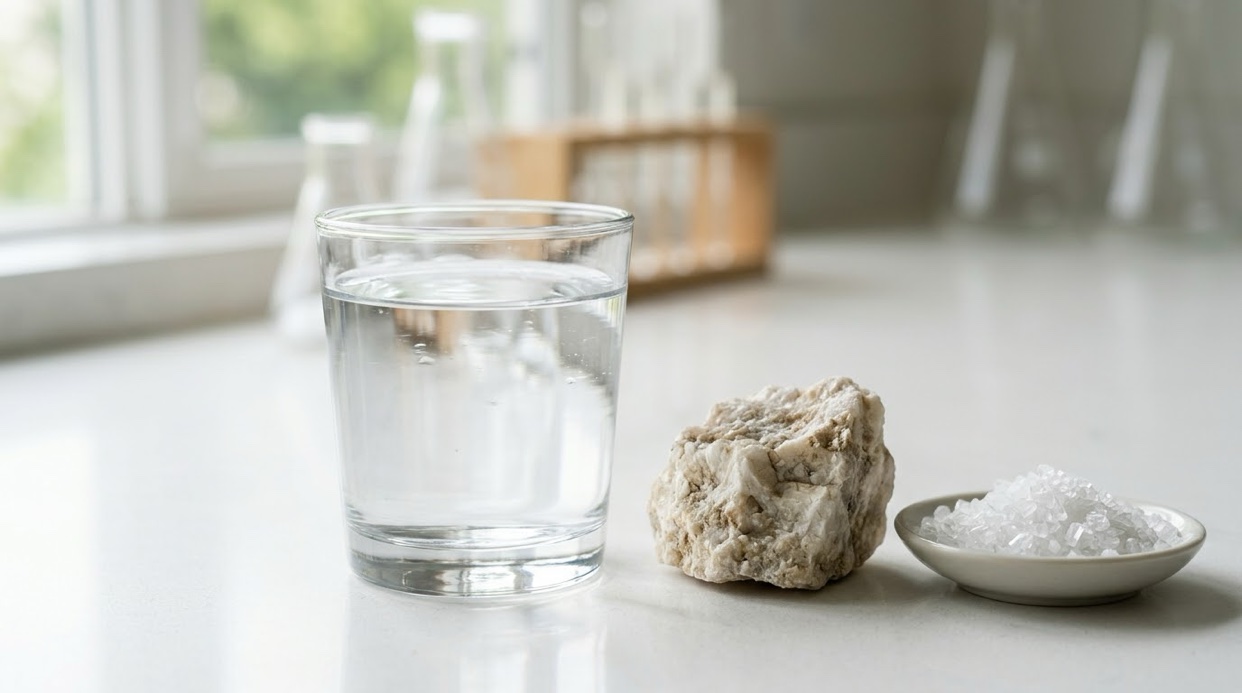
If you take a look at the periodic table, you will spot magnesium sitting right at element number 12. It is a light, silvery-white metal and one of the most abundant elements in the Earth’s crust, found deep within rocks, soil, and sea salt.
In daily life, magnesium is famous for many things—from lightweight racing wheels and fireworks to dietary supplements and Epsom salts. But in the world of home water treatment, magnesium is best known as one-half of the dynamic duo responsible for “hard water.”
As someone who spends every day helping homeowners understand what comes out of their taps, I can tell you that magnesium is a classic example of an essential nutrient that can simultaneously be a headache for your home’s plumbing. Here is a clear, honest breakdown of what magnesium is, how it gets into your water, what it does in your body and your home, and how to manage it.
1. What Magnesium Is and Where It Comes From
Magnesium is a naturally occurring mineral and an essential nutrient that human bodies need to run hundreds of biochemical reactions—everything from muscle and nerve function to blood sugar control and bone building.
In nature, magnesium is locked inside rock deposits throughout the Earth’s geology, most notably in dolomite (magnesium calcium carbonate) and magnesium-rich limestone. Because magnesium minerals dissolve readily in natural water, groundwater flowing through subterranean rock formations picks up dissolved magnesium ions (Mg^{2+}) along its journey to local wells and reservoirs.
2. How It Gets Into Drinking Water (The Hard Water Partnership)
Magnesium enters drinking water almost exclusively through natural geological leaching as rainwater and groundwater flow over underground mineral deposits.
When you look at a water test report, you will rarely see magnesium discussed in isolation. Instead, it is paired with its chemical cousin, calcium.
The Hard Water Partnership: In water chemistry, “total hardness” is primarily the sum of dissolved calcium plus magnesium.
Together, these two minerals make up virtually the entire hard-water story. If your groundwater flows through dolomite or limestone geology, you have hard water. Calcium usually accounts for most hardness and magnesium for a smaller share, but the split varies widely with local geology — from a minor fraction to roughly half in magnesium-rich (dolomite) waters. There is no standard fixed proportion.
3. What It Does in the Home: The Hard Water Story
While magnesium in drinking water won’t hurt your body, it can certainly wage a quiet war on your home’s plumbing and appliances:
- Limescale Buildup: When hard water containing magnesium and calcium is heated inside your hot water heater, boiler, or coffee maker, the minerals precipitate out of solution, forming hard, crusty limescale. This scale coats heating elements, reducing energy efficiency and shortening appliance lifespan.
- Soap Resistance: Magnesium reacts directly with soaps and detergents to form an insoluble curd (the classic bathtub ring). Because of this reaction, hard water fights soap, requiring you to use significantly more laundry detergent, shampoo, and dish soap to get a good lather.
- Spotting and Film: As water droplets evaporate off glass shower doors, chrome faucets, and dishes in the dishwasher, magnesium leaves behind stubborn white mineral spots and cloudy films.
4. What It Can Do to a Person’s Health: The Honest Picture
When evaluating magnesium from a health perspective, the news is overwhelmingly positive, with just one practical caveat.
- The Beneficial Nutrient Side: Magnesium is a crucial mineral that many people do not get enough of in their daily diets. Drinking hard water rich in magnesium quietly contributes to your daily magnesium intake, supporting cardiovascular health, bone density, and muscle function. There is zero poisoning or toxicity story here at drinking water levels.
- The Laxative Effect: To be completely frank and plain: consuming water with extremely high concentrations of magnesium—especially when paired with high sulfate levels (forming magnesium sulfate, which is chemically identical to Epsom salt)—can have a mild to moderate laxative effect. People unaccustomed to high-magnesium well water may experience temporary digestive upset or loose stools when visiting an area with exceptionally hard water.
5. The Federal Picture: Unregulated and Beneficial
When looking at a water quality report, homeowners often search for a federal safety limit.
Magnesium currently has NO EPA Maximum Contaminant Level (MCL) and NO Secondary Maximum Contaminant Level (SMCL).
It is completely unregulated at the federal level by the U.S. Environmental Protection Agency. Because magnesium is an essential nutrient with no toxic health risks at tap water levels, the EPA does not enforce health limits or aesthetic secondary guidelines for it in public water supplies.
6. How a Homeowner Can Test Their Water
Testing for magnesium in your water is straightforward, depending on how detailed you want to be:
- At-Home Hardness Test Kits: Because magnesium travels hand-in-hand with calcium, a standard total hardness test kit or test strip (measured in Grains Per Gallon, or GPG) gives you 90% of the information you need for practical home decisions.
- Certified Laboratory Testing: If you want to know the exact breakdown—specifically how many milligrams per liter are calcium versus how many are magnesium—send a water sample to a state-certified drinking water laboratory for an inorganic minerals panel.
7. How to Manage Magnesium in Drinking Water
Managing magnesium comes down to balancing your home’s plumbing needs with your personal taste preferences.
Effective Management Options
- Traditional Water Softeners (Ion Exchange): A whole-house water softener is the classic solution for removing magnesium and calcium. The softener passes hard water through a bed of cation exchange resin that trades dissolved magnesium (Mg^{2+}) and calcium (Ca^{2+}) ions for sodium or potassium ions, protecting your whole home from scale and soap curd.
- Under-Sink Reverse Osmosis (RO): For drinking and cooking water at the kitchen tap, a point-of-use Reverse Osmosis system typically removes 95% to 98% of dissolved minerals, including magnesium, leaving you with pure, low-mineral water.
- Remineralization (Taste Preference): Some homeowners love the crisp, clean taste of low-mineral RO water, while others prefer the natural body of mineralized water. Many under-sink RO systems can be paired with a post-filter remineralization cartridge that adds a small, balanced amount of magnesium and calcium back into the water for flavor. Retaining or re-adding minerals is purely a matter of personal taste preference, not a health requirement.
Pre-Filtration and Micron Ratings
While physical sediment pre-filters do not remove dissolved mineral ions like magnesium, they protect water softeners and RO systems from getting clogged with sand, rust, and dirt particles.
When selecting pre-filters, pay attention to micron ratings:
- Micron Rating: A micron measures pore size. A 5-micron or 1-micron sediment pre-filter is standard practice ahead of a water treatment system.
- Nominal vs. Absolute Rating:
- Nominal Rating: Traps approximately 60% to 85% of particles at that rated micron size under standard flow.
- Absolute Rating: Traps 99.9% or more of particles at the specified micron size under strict lab testing conditions.
Using an absolute-rated pre-filter gives your primary water treatment equipment consistent physical protection over time.
The Bottom Line
Magnesium in drinking water isn’t a pollutant—it is an essential dietary nutrient that partners with calcium to create hard water.
Because there is no federal limit, you only need to manage magnesium if hard water scale, soap curd, or spotty glassware is causing problems in your home. If hard water is giving your plumbing a hard time, a whole-house water softener will eliminate the scale, while an under-sink Reverse Osmosis system will give you complete control over your drinking water’s mineral content.
Leave a Reply