
Phosphorus and Phosphate in Drinking Water: What You Should Know
If you take a look at the periodic table, you will spot phosphorus sitting right at element number 15, directly underneath nitrogen. In its pure, elemental state, phosphorus is a highly reactive, volatile non-metal that glows in the dark and can even catch fire spontaneously in air.
However, when homeowners see “phosphorus” or “phosphate” pop up on a water lab report or in local water discussions, they are often unsure what to make of it. As someone who spends every day helping people make sense of what comes out of their taps, I can tell you that phosphorus is a fascinating element with a unique role in drinking water safety.
Here is a clear, honest breakdown of what phosphorus is, why it is in your water, why treatment plants sometimes add it on purpose, and how to manage it without any sales pitch or scare tactics.
1. The Honest Naming Point: Phosphorus vs. Phosphate
Just as nobody deals with pure silicon metal in drinking water (it exists dissolved as silica), the same honest naming rule applies here:
In water chemistry, nobody is dealing with elemental phosphorus. Instead, it travels dissolved as phosphate (PO_4^{3-}).
When elemental phosphorus interacts with oxygen and hydrogen in nature or industrial processes, it forms phosphate compounds. On drinking water test panels and water utility reports, you will almost always see it listed as Phosphate, Orthophosphate, or Total Phosphorus. Whenever you see those terms, you are looking at dissolved phosphorus compounds in your water.
2. How It Gets Into Drinking Water
Phosphate makes its way into source waters through several distinct natural and human-made avenues:
- Agricultural Runoff: Commercial crop fertilizers are rich in phosphorus because plants rely on it as a primary nutrient. Rainwater washing over farm fields carries excess fertilizer into nearby rivers, lakes, and shallow groundwater basins.
- Wastewater & Septic Systems: Human waste and animal manure contain significant amounts of natural phosphorus. Discharge from municipal sewage treatment plants or leaking private septic systems can elevate phosphate levels in regional waterways.
- Natural Erosion: As water flows through rock formations and mineral deposits containing apatite (phosphate rock), tiny amounts of natural phosphate slowly dissolve into groundwater.
- Legacy Detergents: Historically, household laundry and dishwasher detergents contained high levels of phosphates to soften water and boost cleaning power. Because excess phosphates harmed local waterways, many states and countries restricted or banned phosphate additives in residential detergents decades ago.
3. The Route That Surprises People: Added on Purpose
Here is the twist that surprises most homeowners when reviewing their local city water report: many municipal water utilities intentionally add phosphate to drinking water.
Utilities add food-grade orthophosphate or polyphosphates during the treatment process as a critical tool for corrosion control.
How Orthophosphate Protects Your Home
When orthophosphate flows through utility water mains and home plumbing, it reacts with the metal surfaces inside the pipes to form a microscopic, insoluble protective barrier along the pipe walls.
This protective mineral coating seals off old metal pipes, preventing aggressive, oxygenated water from making direct contact with raw metal. By doing so, it stops lead, copper, and iron from dissolving and leaching out of aging utility service lines and household solder into your drinking glass. If you live in a city with older infrastructure, the phosphate added to your water is actively working to protect your health.
4. What It Can Do to Health and the Environment
When evaluating phosphorus in drinking water, it is vital to separate personal health from environmental impact.
Personal Health: An Essential Nutrient
To put it plainly: there is no drinking-water poisoning story for phosphorus at typical tap water levels.
Phosphorus is an essential nutrient that human bodies require to build strong bones and teeth, synthesize DNA, and generate cellular energy. We consume hundreds of milligrams of phosphorus every single day through common foods like dairy, meat, fish, nuts, and whole grains. The trace amounts of phosphate found in drinking water—even water treated with orthophosphate—are tiny compared to what is on your dinner plate.
The Real Problem: Environmental Algae Blooms
The true phosphorus issue is environmental, not personal.
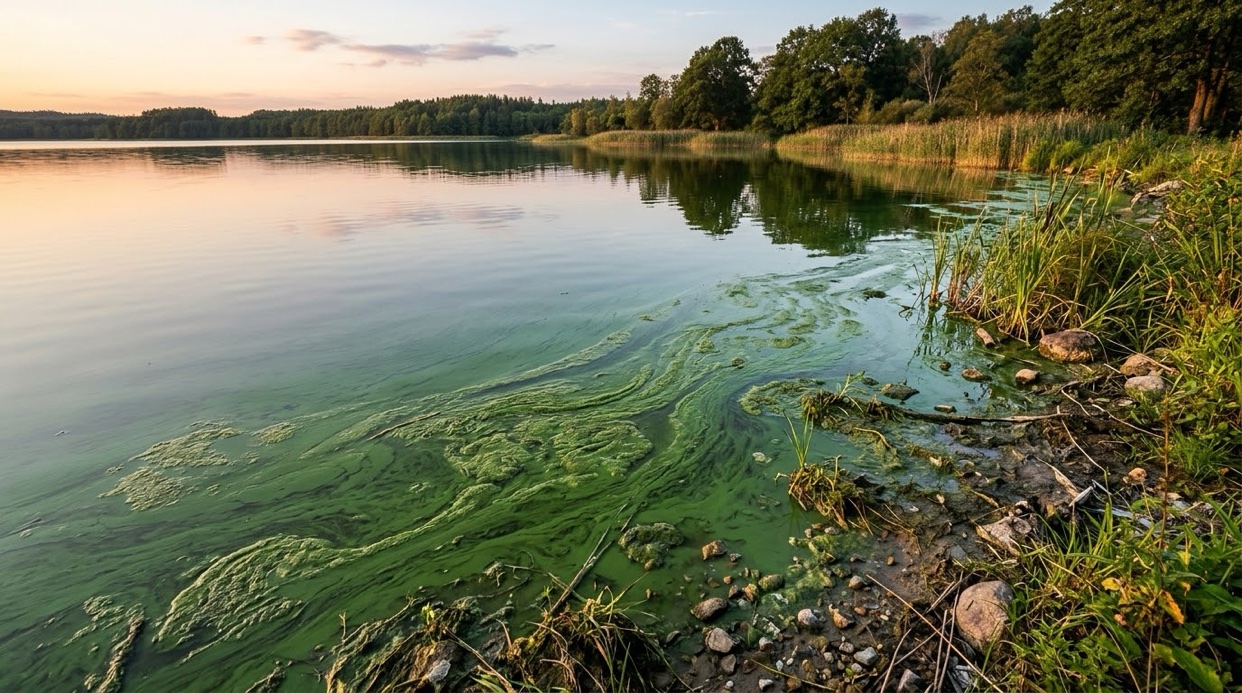
When excessive amounts of phosphate from agricultural runoff or sewage discharge flow into lakes, rivers, and reservoirs, it acts as a massive plant fertilizer in the water. This leads to eutrophication—rapid, overgrown blooms of algae and cyanobacteria (toxic blue-green algae). These algae blooms block sunlight, deplete oxygen levels in the water, kill fish, and create taste and odor problems for drinking water supplies.
5. The Federal Picture: Unregulated in Drinking Water
When reviewing a home water test, homeowners often look for a mandatory federal standard.
Phosphorus has NO EPA Maximum Contaminant Level (MCL) for drinking water.
Because trace phosphate presents no primary health risk when consumed, the U.S. Environmental Protection Agency does not enforce a mandatory health limit for phosphorus or phosphate in drinking water supplies. (The EPA and state environmental agencies do set environmental discharge limits for wastewater entering lakes and rivers to prevent algae blooms, but not as a drinking water health threshold).
6. How a Homeowner Can Test Their Water
You cannot see, taste, or smell typical concentrations of phosphate in tap water.
- Certified Laboratory Testing: A state-certified drinking water laboratory can accurately measure total phosphorus or orthophosphate levels using colorimetric or spectrophotometric testing methods.
- Do You Need to Test? Truthfully, testing for phosphate is rarely a priority for a homeowner. Unless you are an aquarium enthusiast managing delicate fish tanks or a water treatment professional calculating pipe corrosion indexes, chasing a phosphate number on a home test is usually unnecessary.
7. How to Manage Phosphate in the Home
For most homeowners on city water, you do not need to remove phosphate. If your local utility adds orthophosphate to prevent lead and copper leaching, that phosphate is performing a valuable safety service for your plumbing.
However, if you truly want to remove dissolved phosphate at your kitchen tap for specific cooking, brewing, or aquarium needs:
- Reverse Osmosis (RO): An under-sink point-of-use Reverse Osmosis system is the most dependable home method. The semi-permeable RO membrane blocks multivalent ions like dissolved phosphate (PO₄³⁻) especially well — typically removing about 95–98% or more of it.
- Standard Carbon & Softeners: Standard activated carbon filters and traditional water softeners do not reliably remove dissolved phosphate ions.
The Role of Physical Sediment Pre-Filters & Micron Ratings
While physical sediment pre-filters cannot catch dissolved phosphate ions, they play an essential role in protecting under-sink RO membranes from clogging with silt, rust, and dirt.
When evaluating pre-filters, pay attention to micron ratings:
- Micron Rating: A micron measures pore size. A 5-micron or 1-micron sediment pre-filter is standard industry practice ahead of an RO membrane.
- Nominal vs. Absolute Rating:
- Nominal Rating: Traps approximately 60% to 85% of particles at that rated micron size under standard flow.
- Absolute Rating: Traps 99.9% or more of particles at the specified micron size under strict lab testing conditions.
Using an absolute-rated pre-filter ensures consistent physical protection for your primary treatment equipment over time.
The Bottom Line
Phosphorus in drinking water travels as phosphate. It is an essential nutrient for human life, carries no health-based EPA drinking water limit, and presents no personal health hazard at tap water concentrations.
While excess phosphate in rivers and lakes is a real environmental concern for algae blooms, the trace phosphate in your city tap water is often added deliberately by treatment professionals to protect your home from lead and copper pipe corrosion. Unless you have a specialized reason to remove it, you can let it do its job.
Leave a Reply