
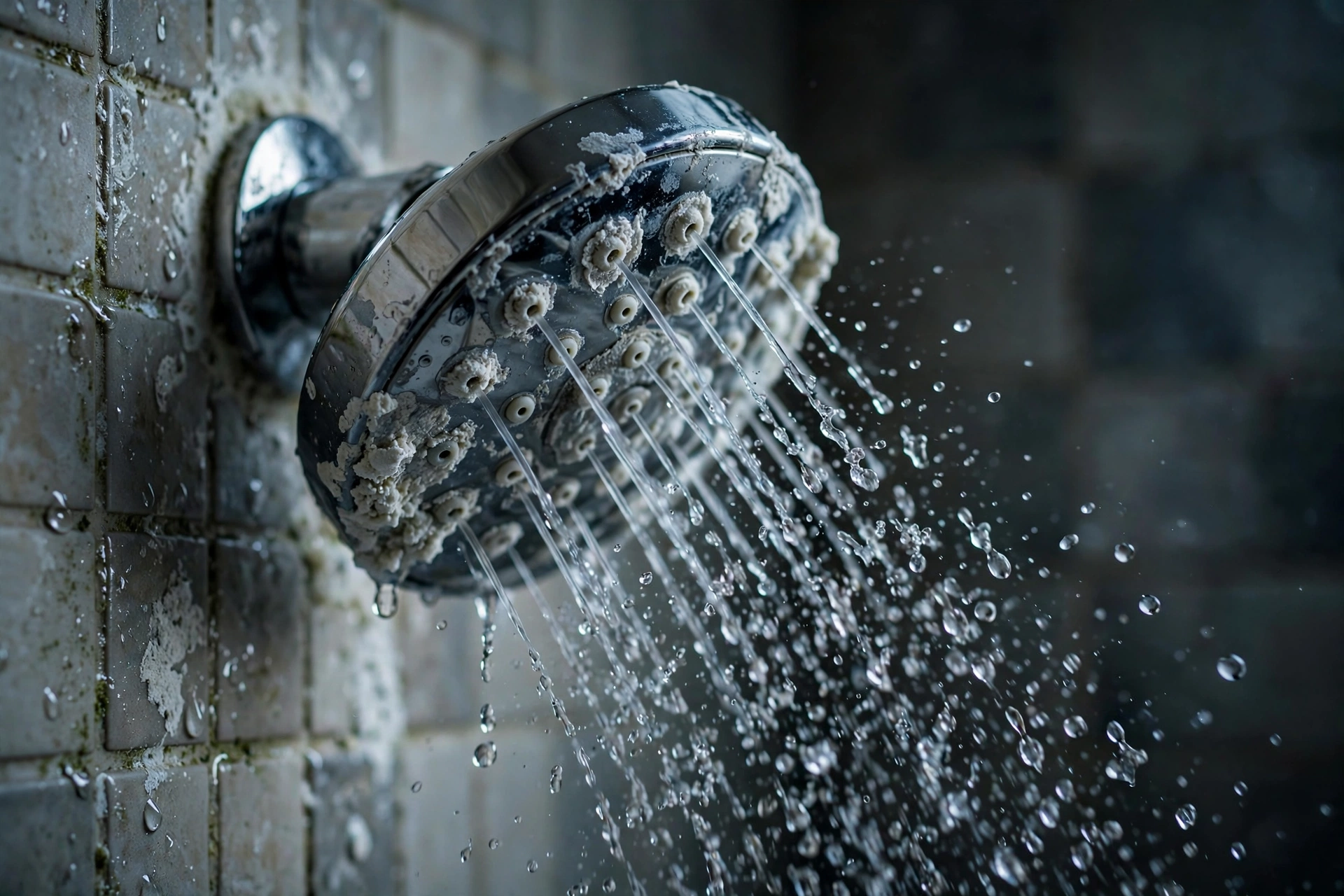
Hard water in the shower is one of the most common complaints I hear: dry skin, dull hair, chalky buildup on the glass. And the market’s answer is a wall of “shower filters” promising soft, silky water. So let’s clear this up once, plainly, because almost nobody selling these will.
A shower filter and a shower softener are not the same thing, and the industry is happy to blur them.
A shower filter — carbon, KDF, vitamin C, whatever’s in the cartridge — can reduce chlorine and improve the smell. It cannot soften water. Softening means removing calcium and magnesium, and the only residential way to do that is ion exchange: resin beads that grab the hardness minerals and get recharged with salt. No salt, no softening. That’s chemistry, not marketing.
What actually softens a shower
Option one: a shower-head softener like the ShowerStick (~$280). A real ion-exchange unit that hangs on the shower arm. It works — briefly. The resin bed is tiny, so you’re regenerating with table salt constantly, and you’re showering through a flimsy handheld. Tedious is the kind word.
Option two: a portable tank softener (On The Go and its clones). The same ion-exchange chemistry in a bigger tank — 8,000 to 16,000 grains — regenerated with table salt in about 30 minutes. A more serious tool, and a cumbersome one: hauling the tank, hooking up hoses, finding somewhere to plumb it inline. No portable on the market carries NSF/ANSI 44 or WQA product certification. “NSF certified media” on the label means the resin is safe — it doesn’t mean anyone verified the softening. And most apartment renters can’t plumb a tank inline anyway, which makes this mostly an RV, marine, and spot-use answer.
How to check any of them yourself
A $15 hardness test kit. Test before, test after. If the number doesn’t drop, the softener isn’t softening — no badge or brand name overrides that.
The bottom line: if it doesn’t use salt, it doesn’t soften. Everything else is a filter wearing a softener’s costume.
Start here: What’s In Your Water? — learn how to read your water report and test your own tap.
Leave a Reply