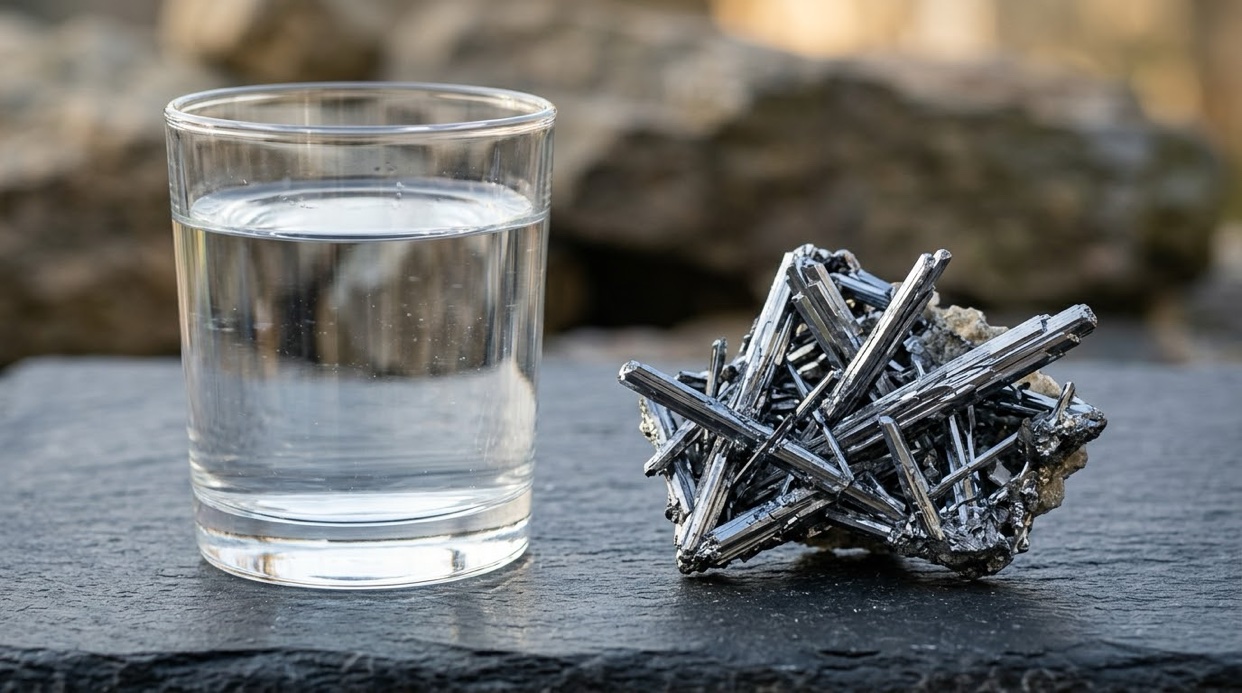
If you take a look at the periodic table, you will spot antimony sitting at element number 51. It is a silvery-white metalloid—an element that shares physical and chemical properties with both metals and non-metals—located right underneath arsenic and phosphorus.
Because it isn’t a household name like lead, copper, or iron, most people have never heard of antimony until it shows up on a water quality report. But as someone who spends every day helping homeowners understand what is coming out of their taps, I know that even the lesser-known elements deserve a clear, transparent evaluation.
Here is a straightforward, honest breakdown of what antimony is, how it ends up in drinking water, what health effects to keep in mind, and how to address it at home without any sales hype or scare tactics.
1. What Antimony Is and Where It Comes From
Antimony is a naturally occurring element found in small amounts throughout the Earth’s crust, usually bound up in mineral ores alongside sulfur, heavy metals, and quartz.
While pure antimony is relatively brittle on its own, it is an absolute workhorse in modern manufacturing when combined with other metals:
- Flame Retardants: Antimony trioxide is widely used as a chemical catalyst and flame retardant in textiles, plastics, rubber, and building materials.
- Lead Alloys: It is mixed with lead to harden alloys used in lead-acid batteries, ammunition, cable sheathing, and solder.
- Electronics & Glass: It plays a role in semiconductor manufacturing, computer hardware, and clarifying specialized glass and ceramics.
2. How It Gets Into Drinking Water
Antimony makes its way into water supplies through a few distinct natural and human pathways:
- Geological Leaching: As groundwater flows through rock formations and mineral deposits containing antimony ores, small amounts naturally dissolve into private wells and aquifers.
- Industrial Wastewater & Refining: Discharge from metal smelting, petroleum refining, chemical manufacturing, or waste incineration can introduce antimony into rivers, lakes, and surface water.
- Plumbing Materials & Solder: In older homes, plumbing fixtures or lead-antimony solders can slowly leach trace amounts into sitting tap water.
- Plastics & Stored Water: Antimony compounds (specifically antimony trioxide) are used as catalysts in making Polyethylene Terephthalate (PET) plastic—the clear plastic used for many disposable water bottles. If bottled water sits in warm environments or direct sunlight for long periods, trace amounts of antimony can leach into the liquid. However, in bottled water that meets storage guidelines, these levels are typically very low and well below safety thresholds, so there is no reason to panic.
3. What It Can Do to a Person’s Health
Understanding the health effects of antimony comes down to exposure levels and duration.
- Short-Term High Exposure: Consuming water with unusually high concentrations of antimony over a brief period can cause acute gastrointestinal distress, including nausea, vomiting, abdominal cramps, and diarrhea.
- Long-Term Chronic Exposure: Drinking water with antimony levels consistently above health standards over many years or decades can affect internal organs. Long-term studies indicate potential damage to the liver, kidneys, and heart, as well as changes in blood cholesterol and glucose levels.
- Cancer Claims: While some antimony compounds (like antimony trioxide) are classified as potential human carcinogens through airborne occupational inhalation, evidence regarding cancer risks from consuming antimony in drinking water remains inconclusive and limited.
As with most trace metals, the primary goal of water treatment is to avoid chronic, low-level intake over a lifetime.
4. The Federal Picture: The EPA Limit
To protect public health from chronic exposure, the U.S. Environmental Protection Agency (EPA) strictly regulates antimony in public water systems under the Safe Drinking Water Act.
The standard: The Maximum Contaminant Level (MCL) for antimony is 0.006 mg/L (which is equal to 6 parts per billion).
Because 6 parts per billion is an exceptionally small threshold—equivalent to six drops of water in a pool carrying tens of thousands of gallons—public utilities test for it using precise laboratory equipment. If you rely on a private well, monitoring antimony is up to you.
5. How a Homeowner Can Test Their Water
You cannot see, taste, or smell antimony at typical drinking water concentrations. Finding out if it is in your tap water requires proper laboratory analysis.
- Skip the DIY Home Test Strips: Simple dip strips sold at home centers are designed for basic parameters like pH, hardness, or free chlorine. They cannot accurately detect trace metals down to parts-per-billion levels like 0.006 mg/L.
- Use a Certified Laboratory: Order a water test from a state-certified drinking water laboratory. Laboratories use high-precision testing methods, such as ICP-MS (Inductively Coupled Plasma Mass Spectrometry), to accurately measure antimony alongside other heavy metals like lead, arsenic, and cadmium.
6. How to Remove Antimony from Drinking Water
If a certified lab report reveals antimony levels near or above 0.006 mg/L, choosing the right treatment method is crucial.
Effective Removal Technologies
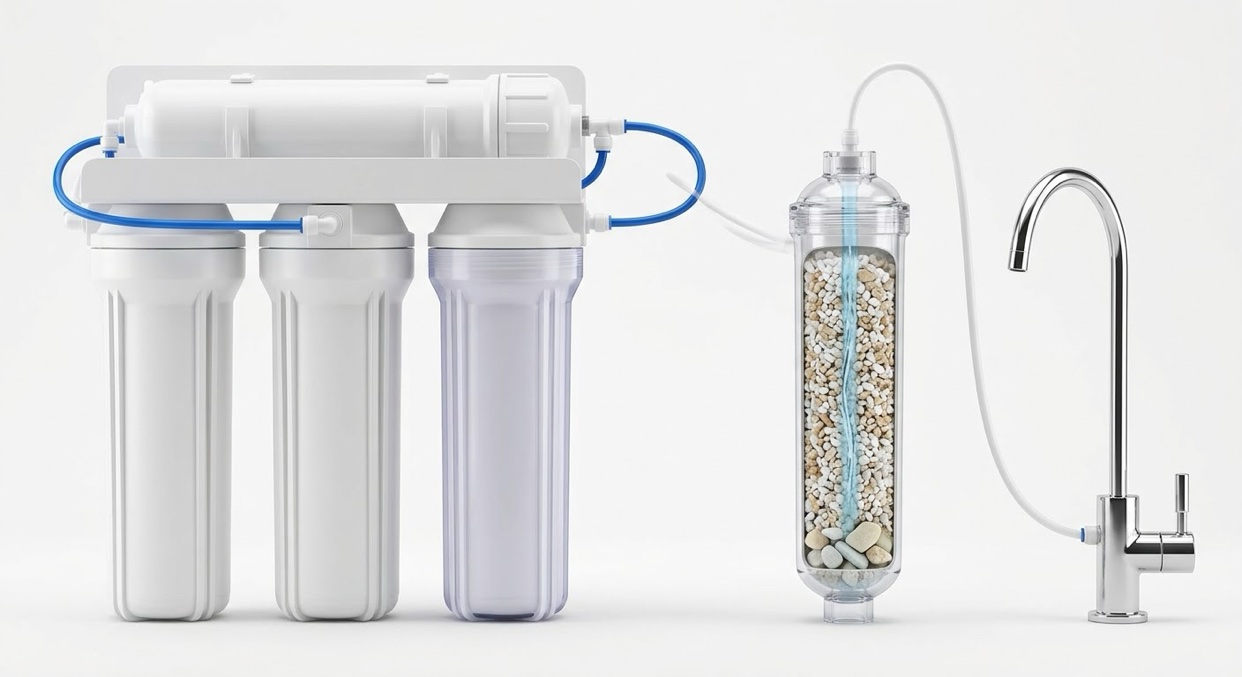
- Reverse Osmosis (RO): A point-of-use under-sink Reverse Osmosis system is the most dependable and practical home method for removing antimony. RO forces water under pressure through a semi-permeable membrane. The microscopic pores block dissolved heavy metal ions, including antimony species, while allowing clean water molecules through.
- Iron-Based Adsorption Media: Specialized media filters containing granular ferric oxide or titanium dioxide can selectively adsorb antimony ions out of solution under proper flow rates and pH levels.
What Does NOT Work Well
- Standard Pitchers & Simple Carbon Blocks: Basic pitcher filters and standard activated carbon blocks are great for removing chlorine and improving taste, but they do not reliably reduce dissolved inorganic metals like antimony.
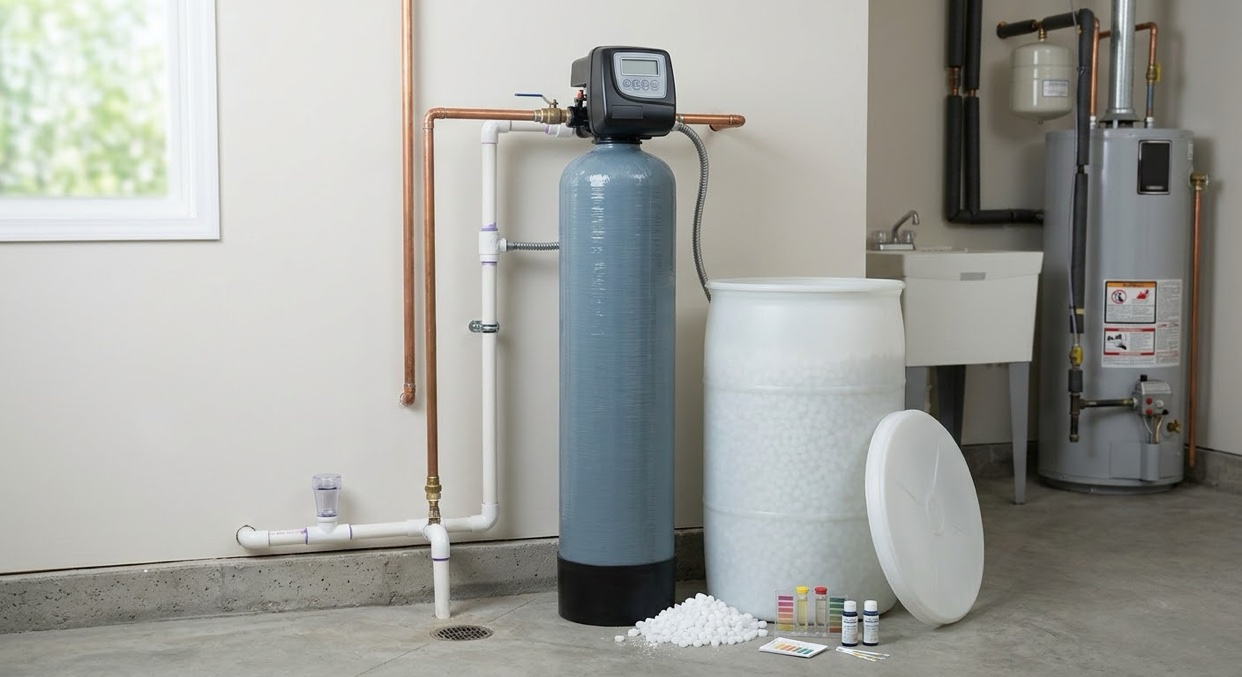
- Standard Water Softeners: Conventional water softeners use cation exchange resins designed for calcium and magnesium. They are not engineered to target dissolved antimony.
Pre-Filtration and Micron Ratings
While physical sediment filters cannot capture dissolved antimony ions, they are essential pre-filters that keep sand, silt, and rust from clogging your under-sink RO membrane or specialty adsorption media.
When selecting pre-filters, pay attention to micron ratings:
- Micron Rating: A micron measures pore size. A 5-micron or 1-micron sediment pre-filter is standard industry practice ahead of an RO membrane.
- Nominal vs. Absolute Rating:
- Nominal Rating: Traps approximately 60% to 85% of particles at that micron size under standard flow.
- Absolute Rating: Traps 99.9% or more of particles at the specified micron size under strict lab test conditions.
Using an absolute-rated pre-filter gives your main treatment equipment consistent physical protection against particle buildup.
The Bottom Line
Antimony in drinking water is relatively rare, but when present—whether from regional rock formations, industrial activity, or legacy plumbing—it should be managed calmly and methodically.
If you rely on a private well or live near industrial zones, get your water tested by a state-certified lab. If antimony levels exceed or approach the 0.006 mg/L (6 parts per billion) federal limit, a well-maintained under-sink Reverse Osmosis system is your most dependable, straightforward solution for pure, safe drinking water at home.