Author: iPhilter

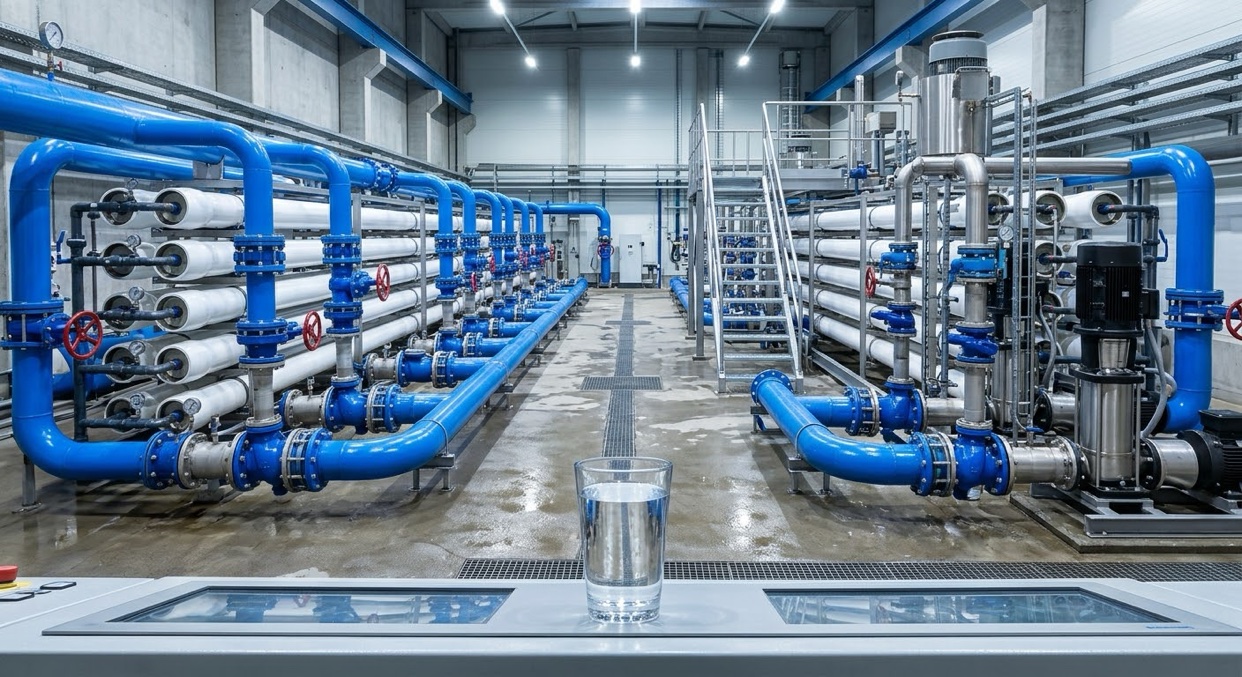
  • Desalination, Explained Honestly

    Desalination, Explained Honestly

    If you and I were standing in your kitchen talking about where drinking water comes from, you’d probably picture mountain reservoirs, deep underground aquifers, or local rivers. But in a lot of places around the world — and increasingly right here at home — water doesn’t come from nature ready to drink. It comes from the ocean.

    People talk about desalination as if it’s some futuristic magic trick that will instantly solve global water shortages. Like most things in water treatment, the reality is a lot more practical, a lot more energy-intensive, and a whole lot less glamorous than science fiction makes it sound.

    Here is my honest, plain-English breakdown of what desalination actually is, how it works, what it costs, and why you will probably never have a desalination unit under your kitchen sink.

    What Desalination Actually Is

    In plain words, desalination is removing dissolved salts and minerals from salt water so it becomes safe and pleasant to drink. Most of the time, we are talking about two main sources:

    • Seawater: open ocean water, with a total dissolved solids (TDS) level around 35,000 parts per million (ppm) — about 35 grams of salt in every liter.
    • Brackish groundwater: underground water that is saltier than fresh water — usually between 1,000 and 10,000 ppm TDS — too salty for regular use without treatment.

    The Two Real Ways It’s Done

    1. Reverse osmosis (the modern standard). This is the dominant method worldwide today. Just like the small RO system you might have under your kitchen sink, industrial seawater reverse osmosis (SWRO) uses high pressure to force water through a semipermeable membrane while leaving the dissolved salt behind. Because it runs on electricity for pumps rather than boiling water, it has become the go-to technology for new plants globally.

    2. Thermal distillation (the older method). Before modern membranes became tough enough to handle ocean pressures, thermal distillation was king. It mimics the natural water cycle: boil seawater into steam, leave the salt behind in the brine, and condense the steam back into pure liquid water. It is much more energy-intensive, but it is still heavily used where cheap fuel or waste heat from power plants is readily available, especially in the Middle East. The two main commercial thermal designs you’ll hear about are multi-stage flash (MSF) and multi-effect distillation (MED).

    What Desalination Removes (and Why We Add Minerals Back)

    Desalination is ruthlessly efficient. A well-designed seawater RO or thermal plant strips out virtually everything in the water: salt, heavy metals, minerals, bacteria, viruses, and most chemicals.

    In fact, it produces water that is too pure.

    Pure water straight out of the plant tastes completely flat and dead because it lacks minerals. Worse, highly purified water is chemically aggressive — water is the world’s natural solvent, and water with almost nothing dissolved in it will pull minerals and metals out of whatever it touches, including copper and iron plumbing.

    That’s why municipal desalination plants always include a remineralization step. They add measured amounts of calcium and magnesium back into the water and adjust the pH, so it tastes right and won’t corrode the city pipes on its way to your tap.

    The Honest Costs: Energy Is the Whole Game

    If you want to understand why we don’t just desalinate the ocean for every city on Earth, you only need to look at one thing: energy.

    Pushing water through a tight membrane against the osmotic pressure of ocean salt takes serious electrical power.

    • Modern seawater RO: thanks to energy recovery devices that capture pressure from the outgoing brine stream, state-of-the-art plants use roughly 2.5 to 4.0 kilowatt-hours (kWh) of electricity per cubic meter of fresh water — about 9 to 15 kWh per 1,000 gallons.
    • Legacy thermal plants: older MSF and MED facilities are significantly hungrier. Count their heat energy in, and they commonly land in the range of 15 to 25 kWh per cubic meter — several times the modern membrane plants.

    Because of those energy demands, desalinated water typically costs significantly more than water pumped from a clean river or aquifer. Energy alone usually accounts for 30% to 50% — or more — of the total cost of producing it.

    The Brine Problem, Honestly

    You can’t make something disappear; you can only move it. That is the reality of the brine problem.

    For roughly every gallon of fresh drinking water an industrial RO plant produces, about a gallon or more of extra-salty concentrate comes out the other side, carrying the plant’s cleaning chemicals with it.

    Dealing with that brine without wrecking the local environment is one of the industry’s biggest engineering challenges. Depending on where the plant sits, disposal methods include:

    • Ocean discharge: returning brine to the sea through diffuser systems designed to mix it rapidly, so it doesn’t sink and smother life on the ocean floor.
    • Deep-well injection: pumping it deep underground into secure geologic formations that hold no drinking water.
    • Evaporation ponds: letting the sun evaporate the water in large inland basins — mostly practical for smaller brackish plants, not giant coastal seawater facilities.

    Where It’s Actually Used

    Globally, desalination supplies around 1% of the world’s drinking water — a small slice overall, but in arid places it is an absolute lifeline.

    • The Middle East: Saudi Arabia and the United Arab Emirates rely on desalination for a massive share of their municipal supply. (Dubai gets over 98% of its potable water this way.)
    • Israel: heavily invested in seawater RO, getting a majority of its domestic tap water from the Mediterranean.
    • Australia: built several massive seawater RO plants around its coastal cities during historic droughts to drought-proof their grids.
    • Islands and ships: cruise ships, Caribbean islands, and offshore rigs run compact desalination units because there are simply no freshwater rivers around.
    • The United States: most American desalination is brackish groundwater, in Florida and parts of Texas. The showpiece is the Carlsbad Desalination Plant in San Diego, California — the largest seawater desalination plant in the United States, producing around 50 million gallons of drinking water a day.

    Why a Homeowner Will Probably Never Own One

    If you’re dealing with hard water or a bad taste, you might wonder if you can buy a mini-desalination unit for your house.

    You don’t need one. If your tap water comes from a municipal supply or a freshwater well, desalination is a massive sledgehammer for a problem you simply don’t have.

    It’s true that a standard home RO system is technically desalinating your tap water when it strips out dissolved minerals and TDS. But true seawater desalination is built for extreme salinity — 35,000 ppm — and operates at municipal and industrial scale.

    The Interesting Homeowner Connection

    Here’s the connection between your under-sink filter and a billion-dollar coastal plant: it is the exact same membrane science, cranked up to an entirely different scale.

    The thin-film composite (TFC) membranes purifying seawater in massive municipal plants work on the same principles as the one in a residential system. The big difference is pressure. A home RO system runs on household pressure — typically 40 to 80 PSI (an RO can run on as little as 30, but 40 and up is where it works well). Seawater RO runs at 800 to 1,000 PSI — heavy-duty pumps, stainless housings, and serious engineering — because that’s what it takes to push fresh water away from ocean-strength salt.

    And at the smallest end of the scale, the technology shrinks back down to something you can hold: hand-cranked marine desalinators exist for sailors and life rafts, turning seawater drinkable a few cups at a time. The genuine emergency units are built to maritime standards and carry US Coast Guard and SOLAS approvals — that’s the real certification to look for in that category, because lives depend on them.

    Bottom Line

    Desalination is an incredible piece of engineering that keeps millions of people alive in the driest corners of the Earth. It is energy-intensive, it creates a salty byproduct that has to be managed carefully, and it costs more than pulling water from a clean river. But when nature doesn’t provide fresh water, turning the ocean into a tap is an amazing tool to have in the kit. Just leave it to the municipal engineers — your kitchen tap has it much easier.

    Technical claims checked against desalination industry and plant references, October 2026.
  • Microfiltration, Explained Honestly

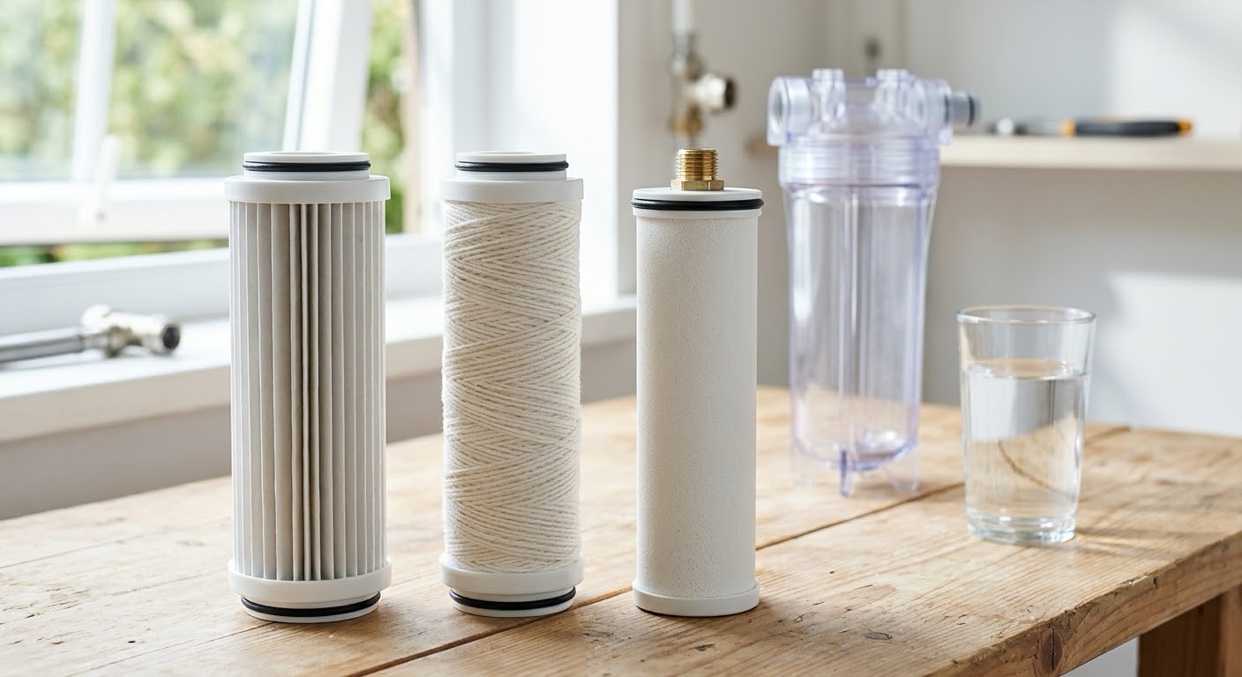
    Microfiltration, Explained Honestly

    If you and I were leaning on your kitchen counter looking at all the different water filters on the market, it would be easy to get lost in the terminology. You hear terms like reverse osmosis, ultrafiltration, nanofiltration, and microfiltration thrown around as if they are all interchangeable.

    They aren’t.

    When homeowners ask me about microfiltration (often shortened to MF), I tell them to think of it as the foundational building block of membrane water treatment — the workhorse designed to handle the physical debris and larger particles in your water.

    Here is my honest, plain-English breakdown of what microfiltration is, what it catches, and what it leaves behind.

    What Microfiltration Actually Is

    In the family of membrane filtration, microfiltration is the coarsest member.

    While reverse osmosis and nanofiltration operate down at the invisible, chemical, and mineral level, microfiltration is a purely physical screen. Its job is to capture the suspended particles — the stuff floating around in the water that makes it look cloudy or dirty — down to things you can barely see with the naked eye.

    There are no chemical reactions, no electricity needed, and no fancy ion-swapping tricks involved. Water is simply pushed through a porous membrane or filter media, and anything larger than the microscopic pores gets trapped on the surface or inside the filter matrix.

    The Pore Size: 0.1 to 10 Microns

    To understand what a microfilter can and cannot do, we have to look at its pore size.

    In the water industry, we measure filter pores in microns (short for micrometers). A micron is one-thousandth of a millimeter. To put that in human terms: a single strand of human hair is roughly 70 microns in diameter. Fine beach sand might be 90 microns, while a grain of flour is around 30 microns.

    A microfiltration pore rating generally sits between 0.1 micron and 10 microns — and where a filter falls on that scale makes a huge difference in what it stops:

    • Coarse microfiltration (5 to 10 microns): mainly a heavy sediment filter, protecting your plumbing and appliances.
    • Fine microfiltration (0.1 to 0.2 micron): approaching the edge of ultrafiltration, capturing extremely fine silt and micro-organisms.

    The Forms It Comes In

    “Microfiltration” on a shelf can mean very different hardware, and the difference matters:

    • Spun and string-wound sediment cartridges — the inexpensive work horses in most whole-house housings. They’re depth filters: the dirt gets caught inside the cartridge body, not just on a surface. Most carry a nominal rating.
    • Pleated cartridges — a folded sheet of filter media with far more surface area, so they hold more dirt and flow better. Available in nominal and, at the fine end, absolute ratings.
    • Ceramic candles — hard ceramic with microscopic pores, scrubbed clean and reused many times; a classic in gravity and countertop systems, often at 0.2–0.5 micron.
    • True membrane modules — hollow-fiber or flat-sheet membranes with a controlled, absolute pore size, used where the rating has to be guaranteed.

    Here’s the rating lesson that runs through this whole site: a nominal rating means the filter catches most particles at that size (often around 85%); an absolute rating means it stops essentially everything at that size. Same number on the box, very different promise.

    What Microfiltration Removes Well

    Because of its pore scale, microfiltration is fantastic at removing suspended solids and larger biological contaminants:

    • Sediment, sand, and silt: on a well that gets cloudy after a heavy rain, or city water from old pipes shedding rust flakes, a microfilter clears that right up.
    • Rust and pipe scale: particles of oxidized iron that cause orange tinting or gritty buildup are stopped cold.
    • Algae and organic debris: suspended plant matter and organic cloudiness are trapped physically.
    • Protozoan cysts: Giardia and Cryptosporidium are relatively large — roughly 4 to 15 microns across — and famously chlorine-resistant. But read the rating before you count on it: the proven cyst barrier is a 1-micron absolute filter, the kind certified for cyst reduction under NSF/ANSI 53 at 99.95%. A nominal 1- or 2-micron cartridge will catch plenty of cysts by size, but it doesn’t carry that guarantee — and cysts are exactly the wrong place to accept “most of them.”

    The Honest Truth About Bacteria and Viruses

    This is where I always like to be completely transparent with homeowners:

    • Bacteria: most common waterborne bacteria range from about 0.2 to 2 microns. Run a tight microfilter rated at 0.1 to 0.2 micron and it will physically catch the vast majority of them. However, microfiltration as a category is generally not rated or certified as a complete biological safety barrier the way ultrafiltration is. Smaller bacteria can work their way through, especially as the filter wears, or if the rating creeps up toward 0.5 or 1 micron.
    • Viruses: human enteric viruses are tiny — typically between 0.02 and 0.08 micron. They pass straight through a microfiltration membrane without even touching the sides.

    If you have untreated, microbiologically unsafe water, never rely on microfiltration alone for safety.

    What Microfiltration Does NOT Remove

    The most important takeaway for any homeowner is this: microfiltration does not remove anything dissolved in the water.

    If a contaminant has dissolved at a molecular level, it passes right through those pores alongside the water molecules. A microfilter will NOT touch:

    • Total dissolved solids (TDS) and salts: sodium, chloride, and general mineral content remain unchanged.
    • Hardness minerals: calcium and magnesium pass through completely — it will not stop limescale in your kettle or shower.
    • Nitrates and fluoride: these microscopic dissolved ions slip right through.
    • Dissolved heavy metals: soluble lead, arsenic, and copper cannot be physically strained out.
    • Chemicals and taste: chlorine, pesticides, VOCs, and petroleum products pass straight through — unless the microfilter is built around an activated carbon core, which is the carbon doing that work, not the screen.

    Where Microfiltration Fits in Your Home

    Because microfiltration catches dirt and suspended particles so well, its primary job is protection and pretreatment:

    • Whole-house sediment filters: placed right where water enters the house to protect your water heater, softener, and valves from grit.
    • Pre-filters for advanced systems: placed upstream of reverse osmosis units and UV lamps. This one matters more than people realize — a UV lamp cannot disinfect cloudy water, because dirt particles create shadow zones where bacteria hide from the light. The microfilter’s clarity is what lets the UV do its job.
    • Food and beverage production: breweries, bottlers, and food plants run MF at scale to polish water and protect equipment.

    The Workhorse Nobody Brags About

    Microfiltration is the cheapest filtration per gallon you’ll ever buy: big flow, tiny pressure drop, no wastewater, no electricity. That’s why it’s everywhere and why nobody makes commercials about it. But it has one non-negotiable: it clogs, and it needs replacing. A neglected, dirt-choked prefilter doesn’t just stop working — it strangles the pressure for every filter, membrane, and fixture behind it. Half the “my system stopped working” calls in this business turn out to be a $10 sediment cartridge somebody forgot for two years.

    Microfiltration vs. Ultrafiltration in One Paragraph

    Same idea, different hole size. Microfiltration is the screen with the bigger openings: it stops the grit, the rust, the algae, and the cysts. Ultrafiltration’s tighter screen — 0.01 to 0.1 micron — stops everything microfiltration stops, plus the bacteria and most of the viruses. If your problem is dirt, MF is the right-sized tool. If your problem is microbes, that’s UF’s department.

    Bottom Line

    Microfiltration is the ultimate physical strainer for your home’s water. It takes cloudy, gritty water and makes it visually crystal-clear while knocking out heavy sediment and — with a true 1-micron absolute filter — the protozoan cysts. Just remember its limits: it filters out the stuff floating in the water, not the chemicals and minerals dissolved in the water. Use it as a solid first line of defense, and pair it with carbon or reverse osmosis if you need to tackle taste, chemicals, or dissolved metals.

    Technical claims checked against membrane industry references and the NSF/ANSI 53 cyst-reduction standard, October 2026.

  • Ultrafiltration, Explained Honestly

    Ultrafiltration, Explained Honestly

    If we’re standing in your kitchen and you’re looking at water treatment options, you’ve probably heard of reverse osmosis. But every now and then, I talk to homeowners who are looking at an ultrafiltration system — often called UF for short.

    People usually ask me: “Steve, is this like reverse osmosis, or is it something else entirely?”

    It is something else. And if you understand what it does and what it doesn’t do, you can save yourself a lot of money and pick the exact right tool for your water. Here is the honest, plain-English breakdown of ultrafiltration.

    What Ultrafiltration Actually Is

    At its core, ultrafiltration is remarkably simple. Think of it as an extremely fine physical screen.

    There are no chemical treatments happening inside a UF system, and there are no electrical-charge tricks like you see in some specialized membranes. It is purely physical sieving. Water is pushed through a microscopic barrier, and anything too big to fit through the holes stays behind on the dirty side.

    If you want a clean, polished physical barrier that stops suspended particles and living bugs without changing the fundamental chemistry of your water, ultrafiltration is that tool.

    The Pore Size: 0.01 to 0.1 Micron and Hollow Fibers

    To understand how UF works, we have to talk about scale. A micron (short for micrometer) is one-thousandth of a millimeter. To put that in perspective, a single strand of human hair is about 70 microns wide.

    An ultrafiltration membrane typically has a pore size ranging from 0.01 to 0.1 microns.

    Inside a UF filter housing, the membrane isn’t just a flat sheet. It is made of thousands of tiny hollow fibers — essentially microscopic straws. The pores are built right into the walls of those fibers. Water flows around or through the fibers, passes through the walls, and comes out the clean side, while the contaminants stay trapped on the dirty side.

    What UF Removes Well

    Because those pores are down in the 0.01 to 0.1 micron range, ultrafiltration is a powerhouse when it comes to physical clarity and biological safety. Here is what it catches:

    • Sediment and turbidity: fine silt, rust flakes, sand, dirt, and cloudiness are removed.
    • Bacteria: bacteria like E. coli and coliforms are massive compared to a UF pore, so they are blocked — published removal figures run above 99.99%.
    • Protozoan cysts: tough single-celled parasites like Giardia and Cryptosporidium — several microns across, and famously chlorine-resistant — are filtered out completely.
    • Most viruses: viruses are much smaller than bacteria, and here is the honest detail: it depends on which end of the UF range your membrane sits at. A tight UF membrane at 0.01 micron catches even the smallest viruses (about 0.02 micron) by size, and tight UF systems are credited with removing over 99.9% of viruses. A looser membrane up near 0.1 micron can let the smallest viruses through. If a known viral problem is your main worry, check the membrane’s actual rating — or pair UF with disinfection.
    • Algae and large organic molecules: suspended organic matter, colloids, and large molecules are stripped right out.

    What UF Does NOT Remove At All

    Now comes the most important honest point in this entire article: ultrafiltration does not change the chemistry of your water.

    Because UF is strictly a physical screen based on size, anything dissolved in the water passes right through as if the membrane wasn’t even there. An ultrafiltration system will NOT remove:

    • Salts and total dissolved solids (TDS): your TDS meter will read exactly the same before and after.
    • Hardness minerals: calcium and magnesium pass right through, so UF will not stop your kettle from scaling up.
    • Nitrates and fluoride: dissolved ions slide right through the membrane.
    • Dissolved heavy metals: lead, copper, or arsenic dissolved in the water won’t be touched. (Metals stuck to particles are another story — UF catches the particles.)
    • Sugars, alcohol, chlorine, and small chemicals: anything soluble and small — including most VOCs — is too small for physical sieving.

    If your water has chemical contamination, high hardness, or excessive dissolved solids, ultrafiltration by itself is the wrong solution.

    How UF Cleans Itself: Dead-End, Cross-Flow, and Backflushing

    UF systems run in one of two basic ways. In a dead-end design, all the water goes through the membrane and the trapped dirt builds up on the surface — simple, and common in home systems. In a cross-flow design, the water sweeps across the membrane surface, carrying much of the dirt away as it goes, which slows the buildup — common in larger and dirtier-water systems.

    Either way, the trapped material has to come off, and that’s what backflushing is: the system periodically reverses the flow, pushing clean water backward through the fibers to blow the buildup off the surface and send it to drain. Bigger systems may add an occasional chemical cleaning on top of that. It’s also why UF doesn’t need a continuous wastewater stream like RO — there’s no reject water flowing while you filter, just a small backflush now and then on systems that have one. Many small under-sink units skip the drain connection entirely and rely on a replaceable module instead.

    UF vs. a Regular Sediment Filter: Absolute vs. Nominal

    A sediment filter and a UF membrane are both physical screens, so what makes UF different? Two things: how fine it is, and how honest its rating is.

    Most cartridge filters carry a nominal rating — a 5-micron nominal filter might catch 85% of particles at 5 microns and let the rest through. A UF membrane’s rating is effectively absolute: the pores are the pores, and nothing larger than the largest pore gets past. That’s the difference between “most of the dirt” and a true barrier against bacteria and cysts — and it’s why you should always ask whether any filter’s micron rating is nominal or absolute.

    Where UF Fits in Real Life

    So, where does ultrafiltration shine?

    It’s fantastic if your water source is already chemically safe but you want ironclad protection against dirt, cysts, and bacteria. It’s used:

    • Whole-house (point of entry): high flow, low pressure drop, and no continuous drain stream make it a natural fit where the water enters the home.
    • Under the sink: compact UF units polish drinking water and strip out microbes while leaving the minerals in.
    • Municipal treatment plants: cities run UF at enormous scale as a physical barrier against cysts and bacteria.
    • As a pre-filter before reverse osmosis: stripping out the suspended dirt and bacteria upstream protects the expensive RO membrane from clogging early.

    UF vs. Nanofiltration and RO in One Paragraph

    Ultrafiltration stops the things floating in your water — particles and microbes — and nothing else. Nanofiltration goes a step deeper and turns away specific dissolved minerals, mostly the double-charged ones like hardness and sulfate, while letting simple salts through. Reverse osmosis goes all the way and removes nearly everything dissolved, salts included. Same membrane family, three different jobs: screen, selective screen, and near-total barrier.

    Bottom Line

    Ultrafiltration is an incredible physical screen. It gives you crystal-clear water, wipes out bacteria and cysts, and leaves your minerals right where they are. It isn’t set-and-forget — the membrane needs its backflush or cleaning cycles and will eventually need replacing — but while it’s working, it’s one of the most reliable barriers in water treatment. Just remember: it filters the stuff floating in the water, not the stuff dissolved in the water. Match the filter to your actual water test, and you’ll never go wrong.

    Technical claims checked against membrane manufacturer and industry references, October 2026.

  • Nanofiltration, Explained Honestly

    Nanofiltration, Explained Honestly

    If you have spent any time looking into home water filtration, you have probably heard of reverse osmosis, and maybe ultrafiltration. But every now and then, a homeowner asks me about a middle-ground technology called nanofiltration (NF).

    When folks bring it up in the kitchen, they are usually trying to solve a specific problem: they want the deep, molecular-level filtration of a membrane, but they don’t necessarily want to strip every single mineral out of their water — or they want a way to deal with hardness without hauling salt bags.

    Here is my plain-English, no-hype breakdown of what nanofiltration actually is, how it works, where it shines, and where it falls short.

    What Nanofiltration Actually Is

    In the water treatment world, membrane filtration sits on a spectrum defined by pore size. On the coarser end, you have microfiltration and ultrafiltration. On the tightest end, you have reverse osmosis (RO).

    Nanofiltration sits right in the middle — it’s frequently nicknamed “loose RO,” and that nickname tells you most of the story.

    It uses a semipermeable membrane and pressure to separate contaminants from water, but it is engineered with a very specific selectivity in mind. Rather than acting as a total barrier to everything dissolved in the water, it is designed to let certain small, simple substances pass through while blocking larger, more complex molecules and specific minerals.

    The Pore Size and How It Works

    To understand nanofiltration, we have to talk about micron ratings. A micron (short for micrometer) is one-thousandth of a millimeter. For context, a single human hair is about 70 microns wide, and a typical bacterial cell is around 1 micron.

    An NF membrane works at a pore scale of about 0.001 microns — 1 nanometer, which is where the “nano” in its name comes from.

    But nanofiltration does not work by size alone. If it relied only on microscopic holes, you wouldn’t get the selective performance NF is famous for. NF membranes are also made with a slight negative electrical charge on their surface, so they separate using two mechanisms at once:

    • Physical sieving: blocking particles and molecules larger than the membrane’s pores.
    • Charge repulsion: electrically pushing back dissolved ions, depending on how strong a charge those ions carry.

    One more thing worth knowing: because the openings are too small to rate the way we rate ordinary filters, NF membranes are usually specified by molecular weight cut-off — roughly 200 to 1,000 daltons. In plain terms, that’s the size of molecule the membrane is built to stop. Most pesticides, drug residues, and natural organic matter are bigger than that line.

    The Key Concept: Selective Ion Removal

    The most critical thing to understand about nanofiltration is that it is selective. It cares about the electrical charge of the minerals dissolved in your water.

    • Divalent ions (two charges): calcium (Ca2+), magnesium (Mg2+), and sulfate (SO4) carry a double charge. The charge on an NF membrane strongly rejects these ions.
    • Monovalent ions (one charge): sodium (Na+) and chloride (Cl-) carry a single charge. Most of them pass through — exactly how much gets through depends on the specific membrane, but the majority of your table salt slips by.

    In plain kitchen English: if a mineral in your water carries a heavy double charge — like the calcium that scales up your kettle — the membrane turns it away. If it carries a light single charge — like simple table salt — it slips through the door.

    One honest exception to keep in mind: nitrate is single-charged too, but NF holds back only part of it, and that varies a lot by membrane. Don’t buy an NF system counting on it for nitrate.

    What Nanofiltration Removes Well

    Because of its pore size and charge repulsion, nanofiltration excels at stripping out specific troublesome contaminants:

    • Water hardness: it typically rejects 85% to 95% of dissolved calcium and magnesium.
    • Sulfates: it removes 90% to 99% of sulfates, thanks to their strong double charge.
    • Color, tannins, and organics: it removes natural organic matter, the tea-colored tannins in well water, and humic acids exceptionally well.
    • Pesticides and pharmaceuticals: most of these molecules are large compared to NF’s cut-off, and many carry charges the membrane repels — so most are blocked.
    • Pathogens: it blocks virtually all bacteria and nearly all viruses, which are far larger than 0.001 microns.

    What Nanofiltration Does NOT Remove Well

    Here is where honesty matters most: nanofiltration is not desalination.

    Because single-charged ions pass through, NF does not remove high levels of sodium or chloride. If you feed brackish water or salty well water into an NF system, the water coming out will still taste salty.

    And because it leaves those monovalent salts behind, nanofiltration barely lowers total dissolved solids (TDS) when the TDS is mostly sodium and chloride. If your goal is to reduce mineral content across the board, or turn brackish water sweet, NF is the wrong tool — that’s reverse osmosis work.

    NF vs. a Salt-Based Water Softener

    Because NF removes calcium and magnesium, people often ask if it can replace a standard ion-exchange water softener.

    The short answer is yes — but with tradeoffs.

    • The advantage: a traditional softener uses salt brine to swap calcium for sodium, which means you’re adding sodium to the water and hauling salt bags. NF removes the hardness physically — no salt, no bags, no sodium added.
    • Where NF falls short: a softener makes no wastewater while it’s in service (it only sends water to drain during its periodic regeneration), and it handles high flow rates easily. An NF system generates a continuous stream of reject water to keep the membrane flushed, usually needs electricity for a booster pump, and can foul quickly if your raw water has unmanaged iron or manganese.

    Operating Pressure and Wastewater

    One of the major engineering benefits of NF compared to RO is efficiency.

    • Operating pressure: because NF lets single-charged salts pass, it doesn’t have to fight the full osmotic pressure that salt creates. NF membranes typically run at significantly lower pressure than a comparable RO system — often 20% to 50% less — which is a big part of why NF earned the “loose RO” name.
    • Wastewater (recovery rate): like RO, NF is a cross-flow process — some water carries the rejected contaminants down the drain. But because it runs at lower pressure and handles minerals differently, NF systems can often run at higher recovery rates, meaning less wastewater per gallon of clean water, than a standard tight RO unit under similar conditions.

    Where Nanofiltration Is Actually Used

    You don’t see NF under every kitchen sink, but it plays massive roles across water treatment:

    • Whole-house hardness and color removal: private wells with heavy tannin staining and moderate hardness, where the homeowner refuses to use salt.
    • Municipal water treatment: cities use large-scale NF to soften water supplies and remove the organic matter that can turn into disinfection byproducts, without completely demineralizing the water.
    • Food, beverage, and dairy processing: concentrating whey protein and juice, and removing lactose, while letting salts pass through.
    • Pretreatment before reverse osmosis: industrial plants use NF to strip out calcium, sulfate, and hardness minerals ahead of an RO unit, preventing the scale that would destroy the tighter RO membranes downstream.

    How NF Compares to RO in One Paragraph

    If you line them up side by side, reverse osmosis is the total-demineralization sledgehammer, while nanofiltration is the targeted scalpel. Reverse osmosis strips out virtually everything — including single-charged sodium, chloride, and the minerals you might actually want to keep — leaving you with near-pure H2O. Nanofiltration selectively strips out heavy hardness, organic color, and large synthetic molecules while letting simple salts pass through, making it the lighter, lower-pressure touch when total salt removal isn’t the job.

    Bottom Line

    Nanofiltration is a brilliant piece of membrane engineering. If you are dealing with organic color, complex contaminants, or hardness — and you want membrane-level filtration without stripping out the single-charged minerals or paying reverse osmosis’s higher pressure demands — NF is worth a serious look. Just remember: if your main issue is sodium, brackish salt, or simple taste, stick with carbon filtration or full reverse osmosis.

    Technical claims checked against membrane manufacturer and industry references, October 2026.

  • How to Store a Spare RO Membrane (and Why Mine Lives in the Refrigerator)

    How to Store a Spare RO Membrane (and Why Mine Lives in the Refrigerator)

    If you own a reverse osmosis (RO) system, keeping a spare membrane on hand is cheap insurance. When your current membrane eventually degrades or clogs, having a fresh replacement ready means you don’t have to wait days for shipping or drink unfiltered tap water in the interim.

    But buying a spare is only half the battle. Store an RO membrane incorrectly and it can be ruined before it ever touches a drop of water in your system. Heat is its biggest enemy.

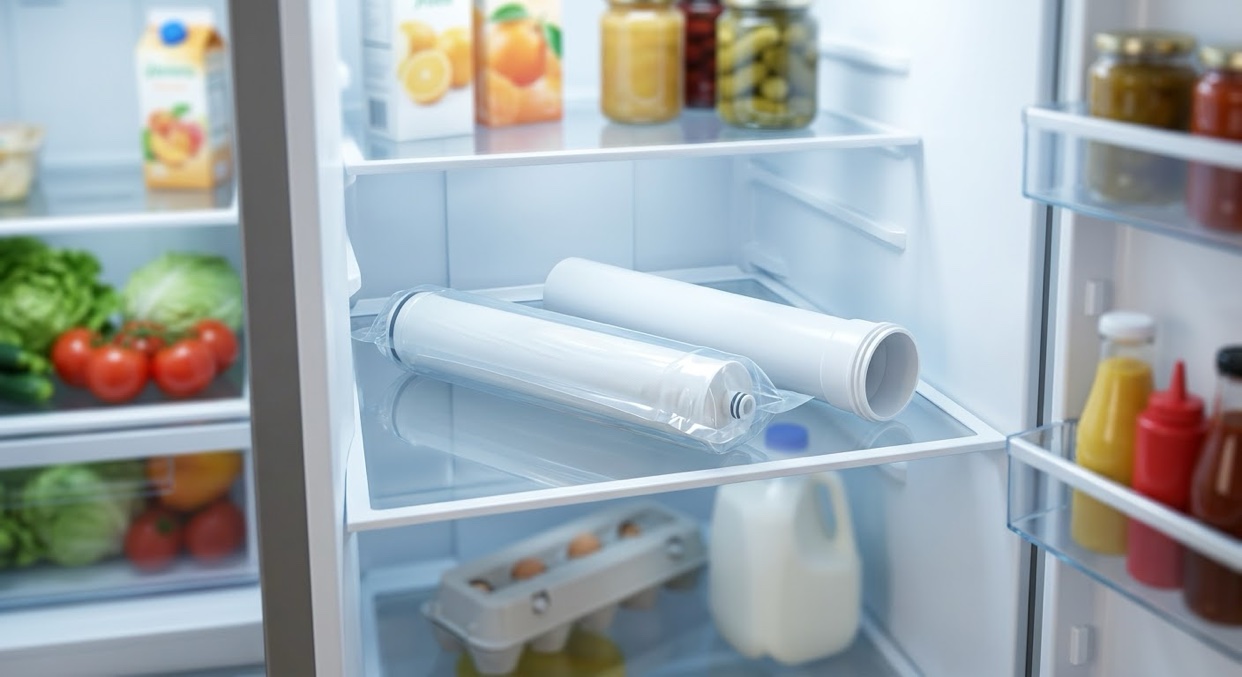
    I keep my own spare membrane sealed up right inside my refrigerator, and readers ask me if that’s actually necessary or just an old wives’ tale. Here’s the straightforward explanation of how membrane storage works, why temperature matters, and how to make sure your spare actually works when you need it.

    The Storage Rules: Cool, Dark, and Sealed

    The gold standard for storing any reverse osmosis membrane comes down to three rules: keep it sealed in its original packaging, keep it dark, and keep it cool.

    The ideal storage temperature for most residential RO membranes is roughly 40°F to 50°F (5°C to 10°C). DuPont FilmTec, the biggest membrane maker in the business, puts the overall storage envelope at about 22°F to 113°F (−4°C to 45°C) — but the cool end of that range is where a membrane lives longest.

    That ideal band is precisely why a home refrigerator is the best place to keep a spare. Your kitchen fridge typically sits around 35°F to 40°F — cool enough to slow microbial growth to a crawl, and nowhere near freezing.

    Two temperature warnings to remember:

    • Don’t let a wet membrane freeze. Freezing is the hard limit for a membrane stored in liquid: ice forming in that liquid can physically damage the delicate membrane layers. (A dry membrane tolerates cold far better — but there’s no reason to test either one. A refrigerator never gets close.)
    • Keep it out of the heat. Tossing a spare membrane on a shelf in a hot garage, attic, or sunny laundry room is the fastest way to ruin it. Heat breaks down the preservative in a wet membrane and accelerates biological growth — the two things that kill spares. More on that below.

    Dry vs. Wet (Preserved) Membranes: The Big Distinction

    How long your spare lasts in storage depends entirely on whether the manufacturer shipped it dry or wet.

    Dry membranes

    Many modern residential membranes — standard DuPont FilmTec elements among them — are dried during manufacturing and sealed in airtight bags.

    • Shelf life: Because there’s no moisture to support bacterial growth, a factory-sealed dry membrane keeps almost indefinitely. FilmTec’s own storage guidance puts it plainly: the storage time of dry elements is unlimited, as long as the bag stays sealed.
    • Storage needs: Keep the seal intact and the heat off it, and a dry membrane is very forgiving.

    Wet (preserved) membranes

    Some membranes are shipped wet — pre-tested and soaked in a preservative solution, typically a 1% sodium bisulfite solution.

    • Shelf life: Finite. Plan on 12 to 18 months in the original packaging as the practical ceiling, and only if it’s stored cool.
    • Storage needs: The preservative is what stops bacteria, algae, and mold from colonizing the damp membrane surface — and it doesn’t last forever. Inspect a wet-stored membrane every three months for biological growth, and refresh the preservative after about six months, or sooner if the liquid turns cloudy. If the preservative’s pH ever drops below 3, it’s done its job and then some — time to re-preserve or replace. This is where the refrigerator earns its keep: cold storage keeps that preservative stable and effective far longer than a warm shelf does.

    Why Heat Kills Spare Membranes

    Heat attacks a stored membrane from two sides:

    First, warm temperatures make the sodium bisulfite preservative in a wet membrane break down and dissipate much faster. Manufacturer storage tables are blunt about it: above about 95°F (35°C), a preserved membrane’s rated storage life collapses to roughly a month.

    Second, once the preservative is gone — or if a dry membrane’s seal is breached in a humid environment — heat acts as an accelerator for biological growth. Mold, fungi, and bacteria thrive in warm, dark spaces. Once biofouling takes root on a membrane surface, it clogs the microscopic pores — about 0.0001 micron on an RO membrane — and permanently ruins the element.

    My Own Spare, Honestly

    My spare is a standard residential membrane, and it has lived in my refrigerator for years, unused — emergency insurance, same as the rest of my gear. Here’s the honest math on a spare that old: if it shipped dry, as most modern residential membranes do, it’s very likely still good, because a sealed dry element doesn’t run on a calendar. If it shipped wet, the preservative’s rated life is long past, and no calendar can tell me whether it’s still fine. The verdict doesn’t come from the date — it comes from the install-day test below. That’s true of my spare, and it’s true of yours.

    The Day You Install an Old Spare: Step-by-Step

    When the day finally comes to unpack your stored membrane and put it to work, follow these steps to make sure it’s safe and performing correctly:

    • Inspect the packaging. Before cutting open the bag, look closely at the liquid inside (if it’s a wet membrane). If the liquid looks cloudy, discolored, or smells foul or moldy, the preservative has failed. Do not install it.
    • Install and flush thoroughly. Once the membrane is in its housing, turn on the water supply and let the system run. Throw away all the water produced during the first hour of operation. That flushes out any remaining preservative or manufacturing wetting agents.
    • Test with a TDS meter. After flushing, check your water with a handheld TDS (total dissolved solids) meter. Measure your raw tap water first, then your RO water. A healthy TFC membrane should reject roughly 96% to 98% of dissolved solids — so if your tap reads 300 and your RO water reads 6 to 12, your stored spare survived just fine.

    Summary

    Tossing a spare RO membrane in an unconditioned garage is a recipe for a ruined filter. Keep your spare sealed in its original bag, store it away from direct sunlight, and if you want it to last as long as possible, give it a little corner on a shelf in your refrigerator. Keep it cool, keep it sealed, keep it from freezing — and it will be ready to perform when your system needs it.

    Storage guidance checked against DuPont FilmTec membrane storage documentation and manufacturer storage references, October 2026.

  • Reverse Osmosis, Explained Honestly: How It Works and What It Actually Removes

    Reverse Osmosis, Explained Honestly: How It Works and What It Actually Removes

    If you have spent any time researching home water treatment, you have almost certainly run into reverse osmosis (RO). It gets recommended for almost everything — lead worries, well water issues, PFAS headlines, or just making coffee taste better.

    Because it gets pitched so aggressively, it is easy to assume RO is either a miracle solution or an expensive scam. The reality is neither. Reverse osmosis is simply a very effective, highly specific filtration technology. It is great at certain jobs, completely unnecessary for others, and comes with a few real-world tradeoffs you ought to know before spending your money. Here is the honest breakdown of how it works, what it does, and what it doesn’t do.

    What Reverse Osmosis Actually Is, in Plain English

    To understand reverse osmosis, it helps to understand regular osmosis first. In nature, if you separate freshwater and saltwater with a semipermeable membrane (a barrier with microscopic holes), freshwater naturally flows toward the saltwater side to dilute it until both sides reach balance.

    Reverse osmosis simply flips that natural process. By applying household water pressure to the concentrated side, we force water backward through the membrane. Pure water molecules get pushed through the tiny pores to the clean side, while dissolved minerals, heavy metals, and contaminants are left behind and flushed down the drain. It is pure mechanical separation using water pressure.

    How a Typical Home RO System Works, Stage by Stage

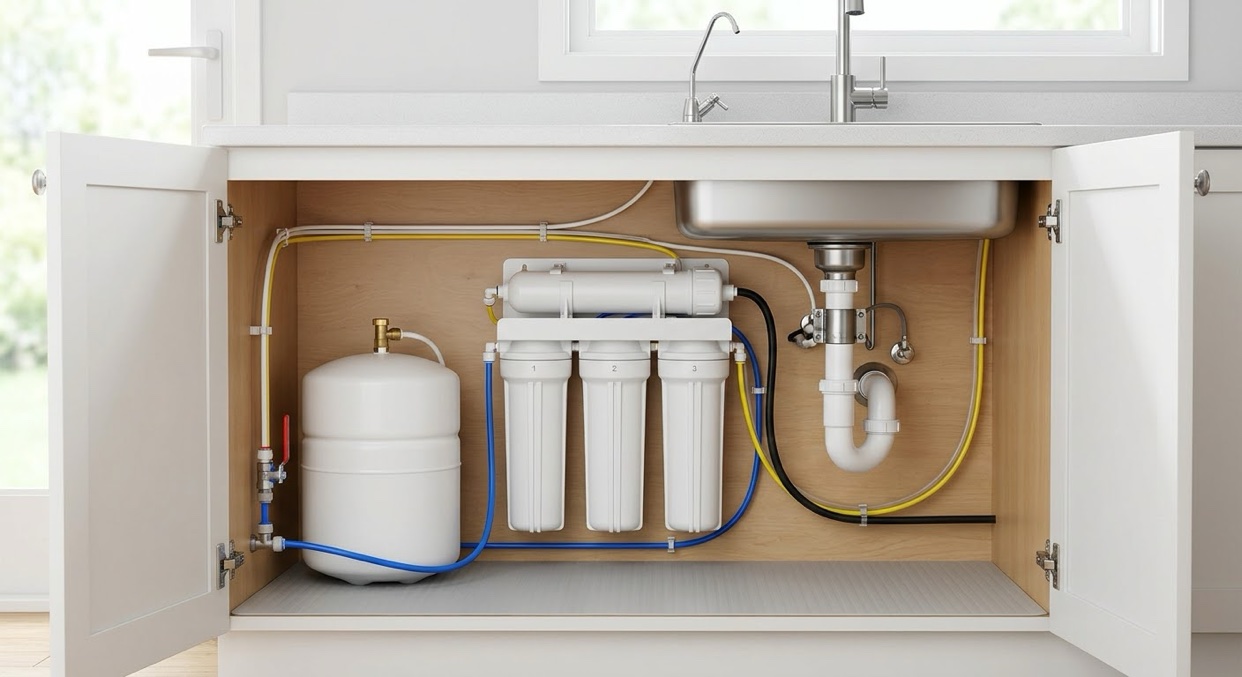
    A standalone RO membrane cannot do the job by itself. If you fed raw tap water straight into a membrane, dissolved chlorine would destroy it in short order, and floating dirt would clog its microscopic pores within weeks. That is why home RO units are multi-stage systems. Here is what each stage actually does:

    • Sediment Prefilter: Captures dirt, rust, silt, and pipe scale. Its job is to keep coarse particles from physically scratching or clogging the downstream filters.
    • Carbon Prefilter: Usually an activated carbon block. Its primary job is to remove chlorine before the water reaches the membrane — critical, because chlorine degrades thin-film composite (TFC) RO membranes. (Chloramine is harder: it needs catalytic carbon or longer contact time.)
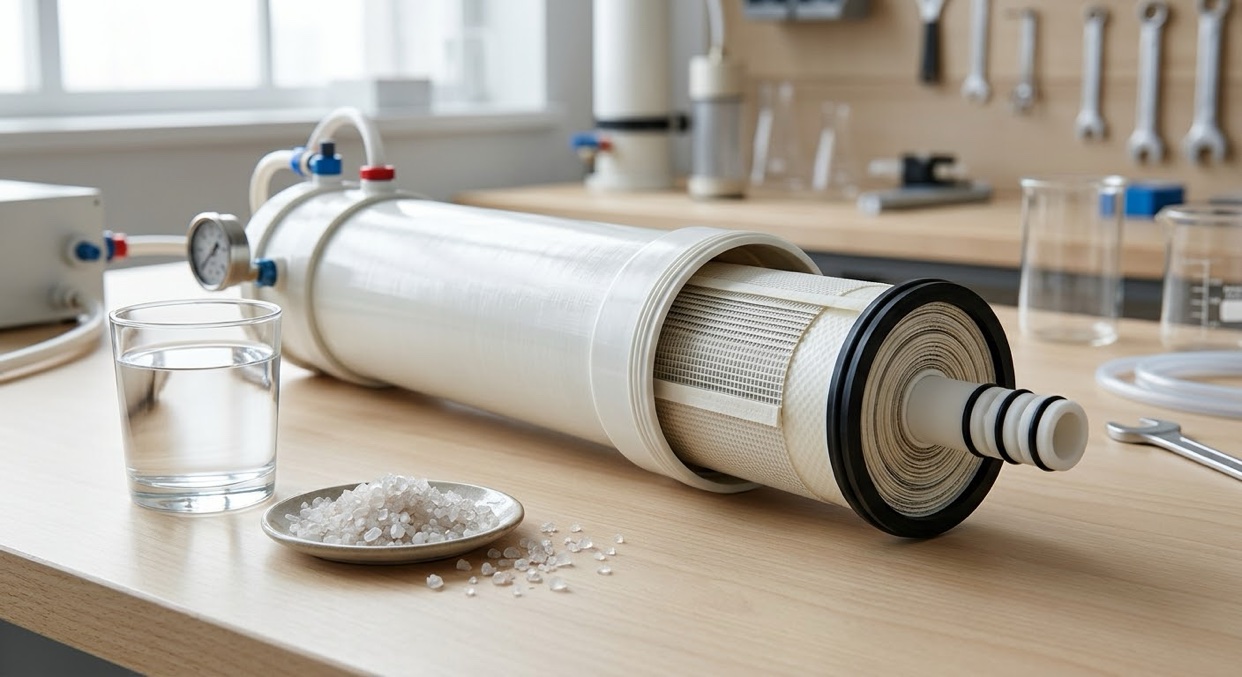
    • The Reverse Osmosis Membrane: The heart of the system. Water is squeezed through the tight membrane, separating clean water from dissolved contaminants.
    • Storage Tank (Standard Systems): Because an RO membrane creates water slowly — drip by drip — the clean water goes into a pressurized bladder tank so you have instant flow when you open the dedicated faucet.
    • Post-Carbon Filter (Polishing Stage): As water leaves the storage tank on its way to your glass, it passes through a final inline carbon filter to scrub out any residual taste or odor picked up from sitting in the rubber bladder.

    The Two Membrane Chemistries: TFC vs. CTA

    If you look under the hood of different RO systems, you will find membranes built from one of two primary chemical compositions. Understanding the difference explains why your system is designed the way it is:

    • TFC (Thin-Film Composite Polyamide): The modern industry standard. TFC membranes deliver exceptional performance — 95% to 99% rejection of dissolved solids. Their weakness is chlorine: free chlorine permanently damages the polyamide layer (tolerance is under 0.1 ppm, and the damage accumulates with exposure). That oxidation damage is why home RO systems strictly require an activated carbon prefilter upstream of the membrane.
    • CTA (Cellulose Triacetate): The older, legacy membrane type, made from a cellulose derivative. Unlike TFC, CTA naturally tolerates continuous free chlorine (roughly 0.5 to 1.0 ppm). But it comes with clear drawbacks: lower salt rejection (roughly 85% to 95%), a narrower operating pH range, a shorter lifespan, and because it is cellulose-based, it is biodegradable — bacteria can attack the membrane itself.

    An honest note: CTA membranes are now a specialized niche choice. Nearly every standard residential reverse osmosis system sold today uses a TFC membrane, relying on the carbon prefilter to protect the delicate polyamide layer from chlorine.

    What RO Removes (and the Pore Scale)

    The RO membrane is one of the tightest liquid filtration barriers known. A typical TFC membrane has a pore rating around 0.0001 microns. To put that in perspective, a standard human hair is about 70 microns wide, and a common bacteria cell is around 1 micron.

    Because the pores are so tiny, RO excels at removing dissolved inorganic solids and heavy metals. Typical rejection rates for a properly operating system under standard household conditions:

    • Lead: 95% to 98%
    • Arsenic: 92% to 96% for arsenic V — but arsenic III is rejected poorly and inconsistently until it is oxidized to arsenic V first, which is why the EPA recommends pre-oxidation for arsenic water
    • Fluoride: 85% to 95%
    • Nitrates / Nitrites: 60% to 95% — the most variable number on this list; it depends heavily on the membrane, your water pressure, and your water’s chemistry
    • Sodium & Chloride: 85% to 98%
    • PFAS / PFOA / PFOS: 90% and up in testing — for a guaranteed claim, look for a system specifically certified to NSF/ANSI 58 for PFAS reduction
    • Total Dissolved Solids (TDS): 90% to 97% overall reduction

    Rejection is not pure size-sieving — the membrane also discriminates by chemical character and charge — but as a rule, most dissolved substances larger than a water molecule are physically rejected.

    What RO Does NOT Do Well

    Despite what sales flyers imply, RO is not a magic wand. Here is where it falls short:

    • It Needs Carbon for Chemicals: The membrane alone is weak against chlorine and many light synthetic organic chemicals and Volatile Organic Compounds (VOCs) — several are only poorly rejected and pass through. That is why the carbon pre- and post-filters are non-negotiable.
    • It Does Not Guarantee Sterilization: While an RO membrane’s pores are smaller than bacteria and viruses, standard under-sink RO units are not certified as biological sterilizers. Microscopic leaks in seals or O-rings mean you should never rely on a standard RO alone for microbiologically unsafe well water without disinfection (like UV light).
    • Dissolved Gases Pass Right Through: Gases like hydrogen sulfide (the rotten-egg smell) and dissolved carbon dioxide pass straight through the membrane.
    • It Strips “Good” Minerals: RO does not discriminate. It removes beneficial minerals like calcium and magnesium right along with lead and arsenic. This leaves the water slightly acidic (often around pH 6.0–6.5) and flat to the taste. Many owners add an inline remineralization cartridge to add calcium back and raise the pH.

    The Wastewater Question, Answered Straight

    Unlike a standard pitcher filter that processes 100% of the water poured into it, an RO membrane continuously flushes itself so contaminants do not cake onto the surface. That cross-flow process creates wastewater (called brine) that goes straight down the drain.

    • Traditional Tank Systems: Standard residential under-sink RO units historically ran at a 3:1 to 4:1 waste ratio — roughly 3 to 4 gallons down the drain for every 1 gallon of purified water produced.
    • Modern Efficient Systems: Permeate pumps and efficient modern designs have brought that down to 2:1 or even 1:1 under good water pressure and temperature. A useful shopping benchmark: EPA WaterSense-labeled point-of-use RO systems must run at 2.3:1 or better.

    While wasting water sounds alarming, perspective helps: an average family using 2 gallons of RO drinking water a day on a 2:1 system sends 4 gallons down the drain — about 120 gallons a month, roughly equivalent to two extra toilet flushes a day.

    Tank vs. Tankless RO Systems

    When shopping, you will choose between traditional tank systems and newer tankless (direct-flow) systems.

    Footprint — Tank: Larger (requires space for a 3–4 gallon tank) | Tankless: Compact (fits neatly under the sink)

    Flow Rate at Faucet — Tank: Strong flow at first from the pressurized tank, fading as the tank drains | Tankless: Steady, continuous flow powered by an internal pump — no tank, no fade

    Stagnation Risk — Tank: Water can sit in the rubber bladder | Tankless: Always fresh, direct-flow water

    Electricity Needed — Tank: No (uses incoming street pressure) | Tankless: Yes (requires an electrical outlet for the internal booster pump)

    Upfront Cost — Tank: $150 – $350 | Tankless: $350 – $700

    Who Needs RO, Who Doesn’t, and Annual Running Costs

    You Probably Need RO If:

    • Your local water quality report shows elevated levels of heavy metals (lead, arsenic), nitrates, or fluoride.
    • You are on private well water tested high in total dissolved solids (TDS) or dissolved salts.
    • You want verified removal of “forever chemicals” (PFAS) at your drinking tap.

    You Probably DON’T Need RO If:

    • You just want to remove chlorine taste and odor — a simple, inexpensive carbon block filter does this fine, without wastewater.
    • Your municipal water report is clean and you already enjoy the taste of your tap water.

    Maintenance & Real-World Running Costs

    An RO system is not a set-it-and-forget-it appliance. Filters must be changed on schedule:

    • Sediment & Carbon Prefilters: Replace every 6 to 12 months (~$30–$60/year).
    • Post-Carbon Polish Filter: Replace every 12 months (~$15–$25/year).
    • RO Membrane: Replace every 2 to 3 years (~$40–$90 per replacement).

    Total ongoing annual cost typically averages between $60 and $120 per year in replacement media, plus a minor bump in your water bill.

    Summary

    Reverse osmosis is one of the most reliable ways to get near-distilled quality drinking water right from your kitchen sink. It strips out heavy metals, nitrates, fluoride, and dissolved solids better than almost any other consumer technology.

    However, it produces wastewater, requires routine filter changes, strips healthy minerals, and relies heavily on its carbon stages to handle chemicals and chlorine. If you match the tool to the actual problem in your water, an RO system is hard to beat.

    Rejection figures are typical ranges drawn from membrane manufacturers’ published rejection charts and EPA treatment guidance, checked October 2026; your results vary with your membrane, pressure, temperature, and water chemistry. Prices are typical US retail ranges at the time of checking.

  • LifeStraw vs Sawyer MINI: Which Portable Water Filter Should You Carry?

    LifeStraw vs Sawyer MINI: Which Portable Water Filter Should You Carry?

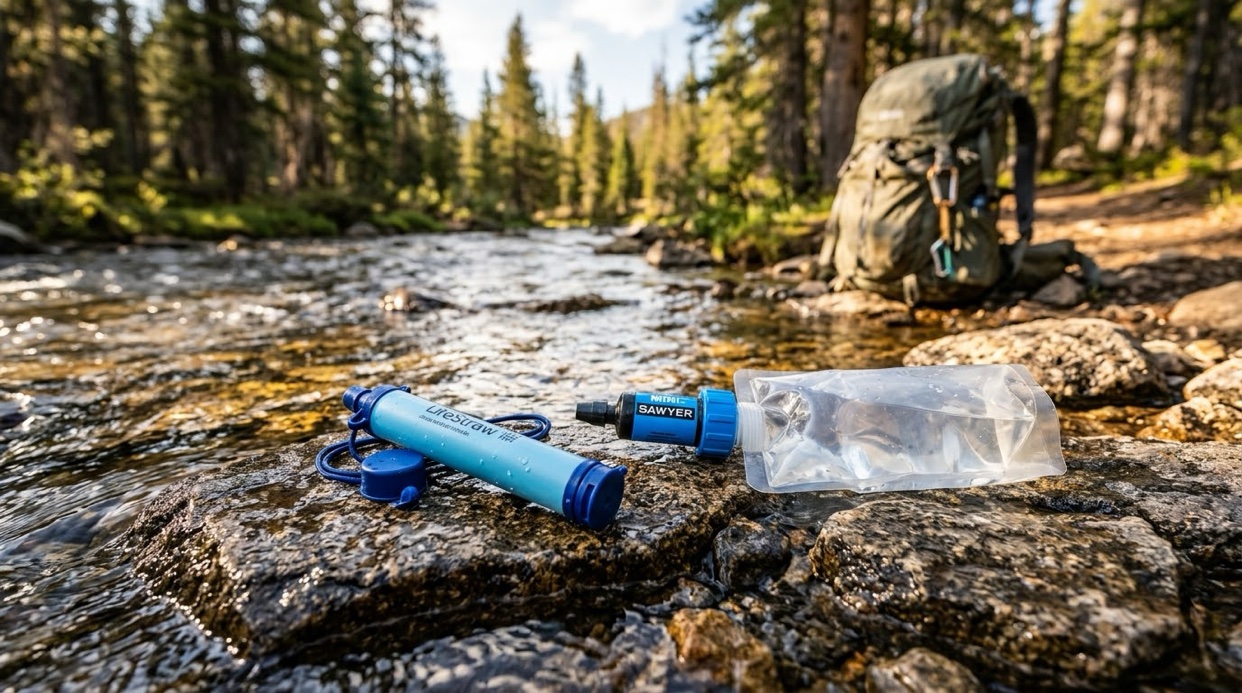
    If you have ever shopped for ultralight water filtration — whether for backpacking, international travel, or an emergency kit — you have run into the LifeStraw Personal and the Sawyer MINI. They are the two most recognizable personal water filters on the market.

    Both use hollow-fiber membrane technology, cost under $30, weigh practically nothing in a pack, and protect against dangerous waterborne pathogens out in the wilderness. Because they look so similar on paper, gear lists constantly pit them against each other. In real-world field use, though, these two filters work quite differently.

    Side-by-Side Specifications

    LifeStraw Personal

    • Filter type: Hollow-fiber membrane microfilter
    • Pore size: 0.2 micron
    • Rated lifespan: 1,000 gallons (4,000 liters)
    • Weight: 1.6 oz (46 g)
    • How you drink: Direct straw — straight from the source or a container
    • Backflushable: No syringe backflush — you blow air back through it after use
    • List price: $17.95

    Sawyer MINI

    • Filter type: Hollow-fiber membrane microfilter, absolute-rated
    • Pore size: 0.1 micron absolute (no pore larger than 0.1 micron)
    • Rated lifespan: Up to 100,000 gallons
    • Weight: 2 oz (the filter unit alone is 1.4 oz)
    • How you drink: Included squeeze pouch, standard 28mm bottles, inline on a hydration pack, or the included straw
    • Backflushable: Yes — cleaning plunger (syringe) included
    • List price: $28.99 (often sold for less)

    What Both Filters Remove

    Both filters work the same basic way: hollow-fiber membranes act like microscopic sieves. Water passes through; anything larger than the pore openings gets trapped.

    • Bacteria: LifeStraw removes 99.999999% of waterborne bacteria; the Sawyer MINI removes 99.99999%. Both cover the dangerous ones — E. coli, Salmonella, and Vibrio cholerae (cholera).
    • Protozoa and parasites: LifeStraw removes 99.999% of parasites; the Sawyer MINI removes 99.9999% of protozoa — including Giardia and Cryptosporidium.
    • Microplastics, sediment, and cloudiness: Both physically block them. LifeStraw rates microplastic reduction at 99.999%; Sawyer claims 100% of microplastics. Either way, cloudy water comes out clear.

    LifeStraw also notes the Personal meets US EPA and NSF P231 drinking water standards for the removal of bacteria and parasites.

    What NEITHER Filter Removes

    Let’s be completely blunt: neither of these is a full-spectrum purifier or a home treatment system. They are physical microfilters built for backcountry and emergency water, where microbes are the primary risk. Neither one will remove:

    • Viruses. Norovirus, Hepatitis A, and Rotavirus run roughly 0.02 to 0.08 microns across — smaller than either filter’s pores. They pass straight through.
    • Chemicals and pesticides. Agricultural runoff, industrial chemicals, and chlorine pass through a hollow-fiber membrane untouched. There is no activated carbon stage in either base model.
    • Heavy metals. Dissolved lead, arsenic, and mercury need chemical reduction, ion exchange, or reverse osmosis. A microfilter will not reduce them.
    • PFAS. The “forever chemicals” cannot be screened out by physical microfiltration alone.
    • Bad taste and odor. No carbon core means stagnant, marshy water still tastes like stagnant, marshy water.

    The step up is reverse osmosis — and it doesn’t have to mean a plumbed-in system. Manual hand-pump RO units exist for off-grid and emergency use (I keep one in my own kit). One honest caveat: unlike home RO systems, none of the hand-pump models is NSF/ANSI 58 certified — you are trusting the membrane, not a certification.

    If you need to treat tap water at home, or water near agricultural or industrial runoff, you need a dedicated home system or a true purifier. These little filters are for pathogens on the trail.

    Real-World Differences That Actually Matter

    Versatility and threading

    This is the biggest practical difference. The LifeStraw Personal is a pure drinking straw: you kneel at the stream, or stick it in a cup or wide-mouth bottle, and suck. The classic model has no threads, so you can’t screw it onto a bottle or squeeze filtered water into a cook pot for a group. (Worth knowing: LifeStraw’s newer Peak Series straw fixes exactly this — its removable bottom cap threads onto standard bottles and gravity hoses. Same membrane and ratings, a little more money, 2.3 oz.) The Sawyer MINI has standard 28mm threads — it screws onto disposable water bottles, attaches to its included squeeze pouch, runs inline on a hydration bladder, or works with its included straw.

    Flow rate and clogging

    LifeStraw’s slightly larger 0.2-micron pores make for an easier pull when drinking straight from a source, though flow fades as silt builds up. The MINI’s tight 0.1-micron absolute pores are the safer barrier, but its small surface area makes it slow — filter silty water and it clogs fast and needs cleaning in the field. Even dealers will tell you the MINI filters slower and needs more frequent backflushing than its bigger brother, the Sawyer Squeeze.

    Cleaning and maintenance

    LifeStraw maintenance is blowing air back through the straw after use to clear water and sediment — LifeStraw itself calls this backwashing, but there’s no syringe and no deep flush. Once silt permanently clogs the membrane, the filter is done. The Sawyer MINI ships with a cleaning plunger: push clean water backward through it and you flush out the trapped sediment. Sawyer says a proper backwash restores up to 98.5% of the filter’s flow rate — which is how the MINI can carry that huge lifespan rating.

    Realistic lifespan

    LifeStraw is rated for 1,000 gallons (4,000 liters) — for one person, that’s years of emergency and weekend use, and it has an unlimited shelf life sitting in a kit. The MINI is rated up to 100,000 gallons. You’ll never filter 100,000 gallons in a lifetime, but because it can be backflushed and restored, it will outlast the LifeStraw under heavy field use.

    Who Should Buy Which One?

    Buy the LifeStraw Personal if:

    • You’re building emergency kits — it’s grab-and-go, foolproof, and has no loose accessories or syringe to keep track of.
    • You want absolute simplicity: no threads to match, no pouches to roll. Stick it in water and drink.
    • Budget comes first: at $17.95, it’s one of the most accessible emergency filters on earth.

    Buy the Sawyer MINI if:

    • You’re a backpacker or hiker — fill a bottle or the pouch, screw the MINI on, drink on the go or squeeze clean water into a cook pot.
    • You want one filter that works four ways: straw, squeeze, inline on a bladder, or gravity-fed.
    • You want long-term durability: backflushing gives it a far longer working life.

    What I’d Buy: The Honest Verdict

    Full disclosure first: I own LifeStraws myself — two different models, and they live in my go bag. For an emergency kit I’d buy them again — nothing to assemble, nothing to lose, ready in ten years if they have to be.

    But if I had to pick just one for a hiking pack, I’d pick the Sawyer MINI. Being forced to put your face down at a dirty water source every time you drink is a real limitation on the trail. The MINI screws onto a standard bottle or its own pouch, so you fill up and walk. Add the syringe backflushing and the 100,000-gallon rating, and it wins on versatility and maintainability every time.

    One step-up worth knowing: if your trails run silty or muddy, look at the standard Sawyer Squeeze — same idea, larger surface area, faster flow. Between the two little ones, though, the MINI is the trail pick and the LifeStraw is the emergency-kit pick. Honestly, at these prices, owning both — one in the pack, one in the kit — is a perfectly reasonable answer. It’s the direction my own kit is heading: the LifeStraws aren’t leaving my go bag, and I’d add the Sawyer alongside them.

    Specs and removal rates are from the manufacturers’ own product pages (LifeStraw.com and Sawyer), checked October 2026. Prices are US list prices at the time of checking and change often — confirm before you buy.

  • Microplastics in Drinking Water: What They Are and How to Filter Them

    Microplastics in Drinking Water: What They Are and How to Filter Them

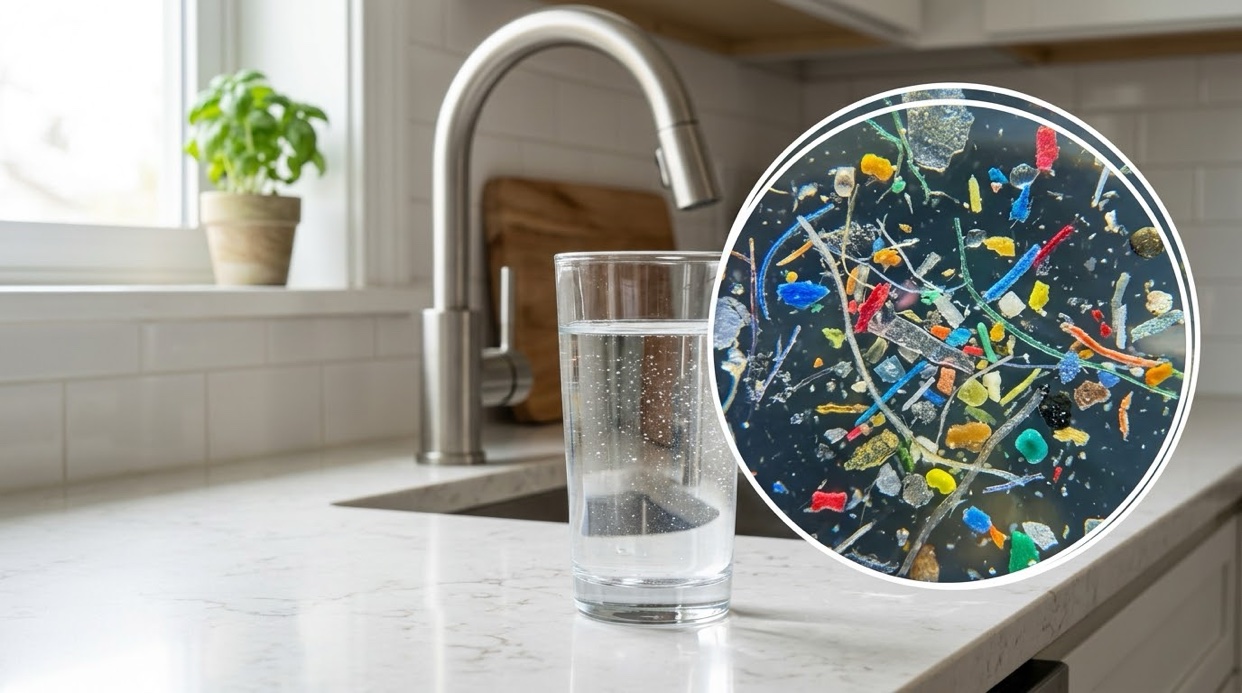
    Microplastics have transitioned from a niche topic in marine biology to a primary concern for homeowners evaluating their tap water quality. As testing techniques grow more sensitive, scientists are detecting microscopic plastic particles in tap water, bottled water, rivers, and even inside the human body.

    While headlines can sound alarming, the scientific understanding of human health risks is still evolving. This article provides a clear, factual breakdown of what microplastics are, where they originate, what research shows about their presence in drinking water, and how water filtration systems perform against them.

    1. What Are Microplastics and Nanoplastics?

    Plastic does not readily biodegrade; instead, environmental exposure to sunlight, wind, and wave action breaks it down into progressively smaller fragments. Plastic contaminants in water are generally classified into two primary size categories:

    • Microplastics: synthetic solid plastic particles ranging from 1 micrometer (µm) up to 5 millimeters (mm) in size (about the size of a pencil eraser).
    • Nanoplastics: plastic particles smaller than 1 micrometer (under 1,000 nanometers). Because of their sub-micron scale, nanoplastics are invisible under standard optical microscopes and require advanced chemical imaging technology to detect.

    Primary Sources of Contamination

    Microplastics enter the water supply through several everyday human activities and industrial processes:

    • Synthetic Clothing Fibers: Washing synthetic garments (such as polyester, nylon, or acrylic fleece) sheds thousands of microfibers per laundry load. Wastewater treatment facilities capture many, but not all, of these fibers before effluent is discharged into waterways.
    • Tire Wear and Road Runoff: Friction between vehicle tires (made of synthetic rubber compounds) and road surfaces generates tiny rubber-plastic particles. Rain washes this debris into storm drains and local surface waters.
    • Degraded Plastic Waste: Single-use plastic packaging, bags, and bottles left in landfills or rivers slowly break down into fragments and microfibers over time.
    • Cosmetics Microbeads: Historically added as exfoliants in facial scrubs and toothpaste, polyethylene microbeads washed down household drains. Although federal law banned intentionally added microbeads in wash-off cosmetics via the Microbead-Free Waters Act of 2015, older residues persist in environmental sediments.

    2. What Studies Have Found in Drinking Water

    As scientific instrumentation has advanced, researchers have shifted from studying ocean waters to testing tap and bottled water directly.

    • Tap Water Contamination (Kosuth et al., 2018): In a global study published in PLOS ONE, researchers tested 159 tap water samples from around the world. The study found that 81% of tap water samples contained anthropogenic particles — nearly all of them fibers — with an average concentration of 5.45 particles per liter.
    • Bottled Water Microplastics (Mason et al., 2018): A groundbreaking study by researchers at the State University of New York at Fredonia analyzed 259 individual bottles of water across 11 global brands (published in Frontiers in Chemistry). The team detected plastic particles in 93% of the tested bottles, averaging 325 particles per liter (including particles down to 6.5 µm). Polypropylene, the polymer frequently used to manufacture bottle caps, accounted for 54% of the identified particles, suggesting the packaging process itself contributes contamination.
    • Bottled Water Nanoplastics (Qian et al., 2024): Utilizing single-particle Stimulated Raman Scattering (SRS) microscopy, researchers from Columbia and Rutgers Universities published a landmark study in PNAS. They found that bottled water contained an average of ~240,000 plastic particles per liter — roughly 90% of which were nanoplastics under 1 micrometer in size, which earlier analytical methods were unable to count. (That headline count has since drawn a published critique over laboratory blank methods, which the authors have answered; the exact number is debated, but the finding that bottled water carries far more plastic particles than tap water is not.)

    3. Potential Health Effects: What Science Knows (and Doesn’t Know)

    Understanding how microplastics affect human health requires distinguishing between detection and toxicity. Scientists have confirmed where particles go, but long-term health consequences remain an active field of study.

    Where Particles Have Been Detected in the Body

    Peer-reviewed studies have detected microplastics and nanoplastics in human blood, lung tissue, placenta tissue, and stool samples. Recent autopsy studies have also detected particles in cardiovascular tissue and human brain tissue samples.

    The Current Scientific Consensus

    • Biological Absorption: Larger microplastics (above roughly 150 micrometers) are generally not absorbed by the human gastrointestinal tract and pass through the body. However, smaller particles — particularly sub-micron nanoplastics — possess the theoretical capability to cross biological membranes, such as the gut lining or blood-brain barrier.
    • Toxicity Concerns: Researchers are actively investigating two main areas of concern: cellular toxicity caused by physical particle irritation, and chemical exposure from plastic additives (such as phthalates or bisphenols) leaching into tissues.
    • Current Status: In its public health evaluations, the World Health Organization (WHO) concluded that while routine monitoring is sensible, the current scientific evidence does not show a clear, quantified health risk from consuming microplastics at current levels in drinking water. Health institutions emphasize that more standardized research is required before firm conclusions can be drawn.

    4. Regulatory Status: EPA Standards and Regulations

    To evaluate your drinking water accurately, it is essential to understand federal and state regulatory frameworks.

    Is there an EPA Maximum Contaminant Level (MCL) for microplastics?
    No. There is currently no enforceable EPA drinking water standard or Maximum Contaminant Level (MCL) for microplastics or nanoplastics under the Safe Drinking Water Act. Public water utilities are not legally required to test for or report microplastic concentrations.

    Regulatory Outlook:
    The EPA has included microplastics on its draft Contaminant Candidate List 6 (CCL 6), published in April 2026. The CCL is a watchlist of unregulated contaminants known or anticipated to occur in public water systems. Inclusion on this list prioritizes federal research into standardized testing methodologies, occurrence, and toxicology, which represents the initial administrative step toward potential future regulation. Microplastics are often discussed alongside PFAS — the “forever chemicals” — as the two emerging contaminant stories in drinking water; you can read our full breakdown in PFAS in Drinking Water.

    5. Particle Sizes vs. Filter Micron Ratings

    Selecting the right water filter requires comparing particle dimensions against filter pore sizes. Particle dimensions are measured in micrometers (µm), commonly called “microns” (1 micron = 0.001 millimeters).

    Size Reference Scale

    • Human Hair Diameter: ~70 µm
    • Fine Beach Sand: ~100 µm
    • Microplastics: 1 µm to 5,000 µm (5 mm)
    • Nanoplastics: under 1 µm (under 1,000 nanometers)

    Absolute vs. Nominal Micron Ratings

    When shopping for water treatment filters, understanding the difference between rating types is critical:

    • Nominal Micron Rating: Per the Water Quality Association (WQA), a nominal rating means the filter traps about 85% of particles at the specified size. A 1-micron nominal filter still lets roughly 15% of 1-micron particles pass through.
    • Absolute Micron Rating: Represents a verified physical barrier where the filter rejects 99.9% or more of particles at or above that specified micron size under laboratory test conditions.

    6. What Removes Microplastics: Filter Types and Pore Sizes

    Water treatment technologies vary in their ability to capture microplastics based on physical pore size and filtration mechanics.

    Sediment Filters

    Typical Pore Size / Rating: 1 µm to 50 µm

    Microplastic Removal Capability: Moderate to High (traps larger fragments and synthetic fibers)

    Nanoplastic Removal Capability: None (nanoplastics pass straight through)

    Carbon Block Filters

    Typical Pore Size / Rating: 0.5 µm to 10 µm

    Microplastic Removal Capability: High (captures most microplastics ≥ 0.5 µm via physical straining and adsorption)

    Nanoplastic Removal Capability: Low to None (sub-micron particles bypass carbon pores)

    Reverse Osmosis (RO)

    Typical Pore Size / Rating: ~0.0001 µm

    Microplastic Removal Capability: Very High (~99%+ physical rejection)

    Nanoplastic Removal Capability: High (rejects sub-micron particles down to ionic levels)

    Important Note on Certifications

    There is no standalone standard written only for microplastics — but that does not mean no certification exists. Microplastics Reduction is a certified claim under NSF/ANSI 401, the standard for emerging compounds, and real products carry it today, certified by NSF and by IAPMO R&T. When you shop, that claim — “Microplastics Reduction” under NSF/ANSI 401 — is the one to look for, and you can confirm any product’s listing in the certifier’s own directory before you buy.

    The size-based claim still matters too: Particulate Reduction, Class I, under NSF/ANSI 42 covers particles of 0.5 to 1 µm (at least 85% reduction) — rust-and-sediment territory originally, but the same physical size range as larger microplastics. Be wary of any brand advertising a special “microplastic certified” logo outside these standards; check the claim against the NSF/ANSI 401 listing instead.

    7. Regional Findings: Microplastics in New Jersey Waterways

    Local research in New Jersey highlights how microplastics move through state water infrastructure and natural surface waters.

    • NJ DEP Wastewater and Surface Water Analysis (2026): A May 2026 study published by the New Jersey Department of Environmental Protection (NJ DEP) Division of Science and Research, with Rutgers University researchers, evaluated microplastic concentrations across four municipal Wastewater Treatment Plants (WWTPs) and receiving water bodies.
    • Findings: The study identified particles ranging in size from 140 µm to 5,000 µm in wastewater. Influent entering the plants averaged 33 microplastic particles per liter, and the plants removed 84–93% of microplastics by the end of treatment, with treated effluent averaging about 1.4 particles per liter. Nearby surface waters averaged between 1.0 (upstream) and 1.5 (downstream) microplastic particles per liter, showing that treated discharge and stormwater runoff continually introduce synthetic polymers into New Jersey’s rivers and watershed systems; the most common polymers identified in the wastewater itself were polypropylene (35%) and polyester (23%).

    Summary and Practical Takeaways

    1. Tap water contains significantly fewer microplastic particles than bottled water. Bottled water packaging sheds substantial quantities of micro- and nanoplastics into the liquid.
    2. Reverse Osmosis (RO) and sub-micron Carbon Block filters (0.5 µm absolute) are the most effective home filtration methods for capturing microscopic plastic debris.
    3. A microplastics certification does exist — look for a Microplastics Reduction claim under NSF/ANSI 401, verified in the certifier’s directory, or a certified Class I particulate reduction (0.5–1 µm) under NSF/ANSI 42, or an RO system, for the strongest documented performance.
  • How Your City Water Gets Treated: From the Reservoir to Your Faucet

    How Your City Water Gets Treated: From the Reservoir to Your Faucet

    Every time you turn on your tap, clean, clear water flows out ready to use. But before that water reaches your kitchen sink or bathroom faucet, it goes through a fascinating journey. Understanding how municipal water treatment works helps us appreciate the careful science and engineering that keeps our communities healthy every single day.

    Where Tap Water Begins Its Journey

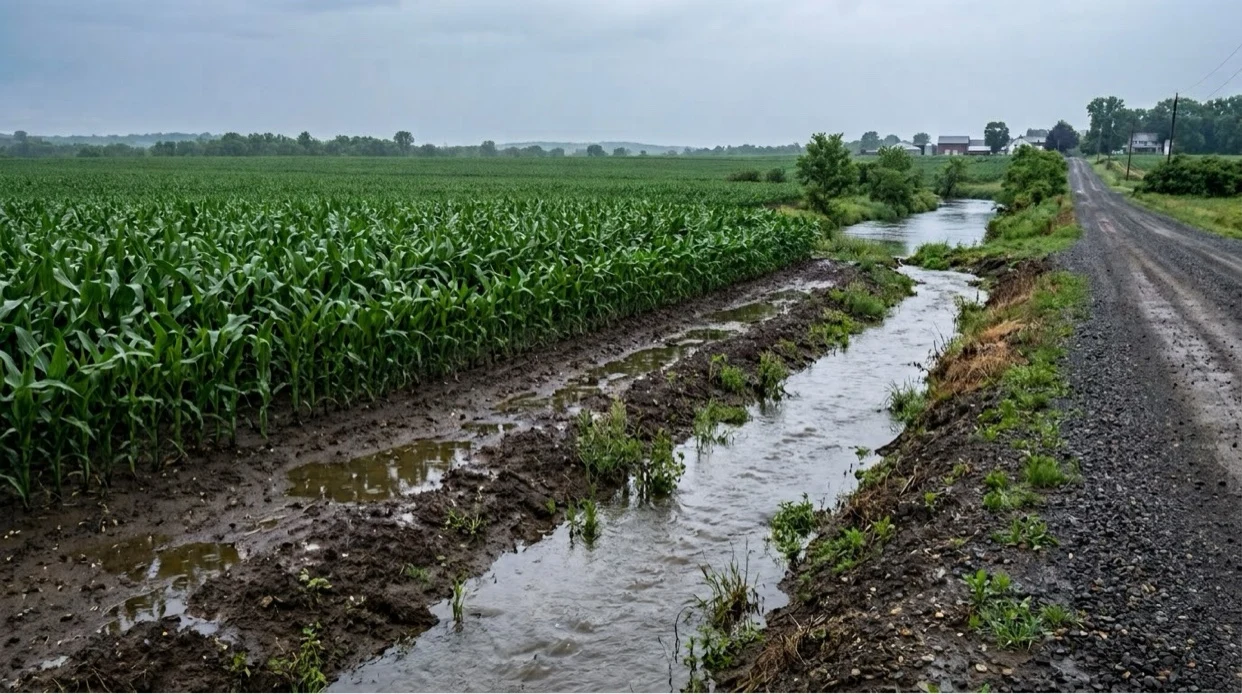
    Before water enters a treatment plant, it comes from a natural source in your region. Most cities and towns draw their supply from surface water sources—like rivers, lakes, streams, and open reservoirs—or from deep underground aquifers filled with groundwater.

    Surface water is exposed to the elements, which means it naturally picks up soil, leaves, plant matter, and organisms as it flows across the land. Groundwater, on the other hand, is rain or melted snow that has soaked deep into the earth, getting naturally filtered by layers of sand, soil, and rock over time.

    Regardless of where your water starts, public water systems collect it and route it directly into a local treatment facility. There, a multi-step purification process ensures that every drop meeting your glass is safe, clean, and refreshing.

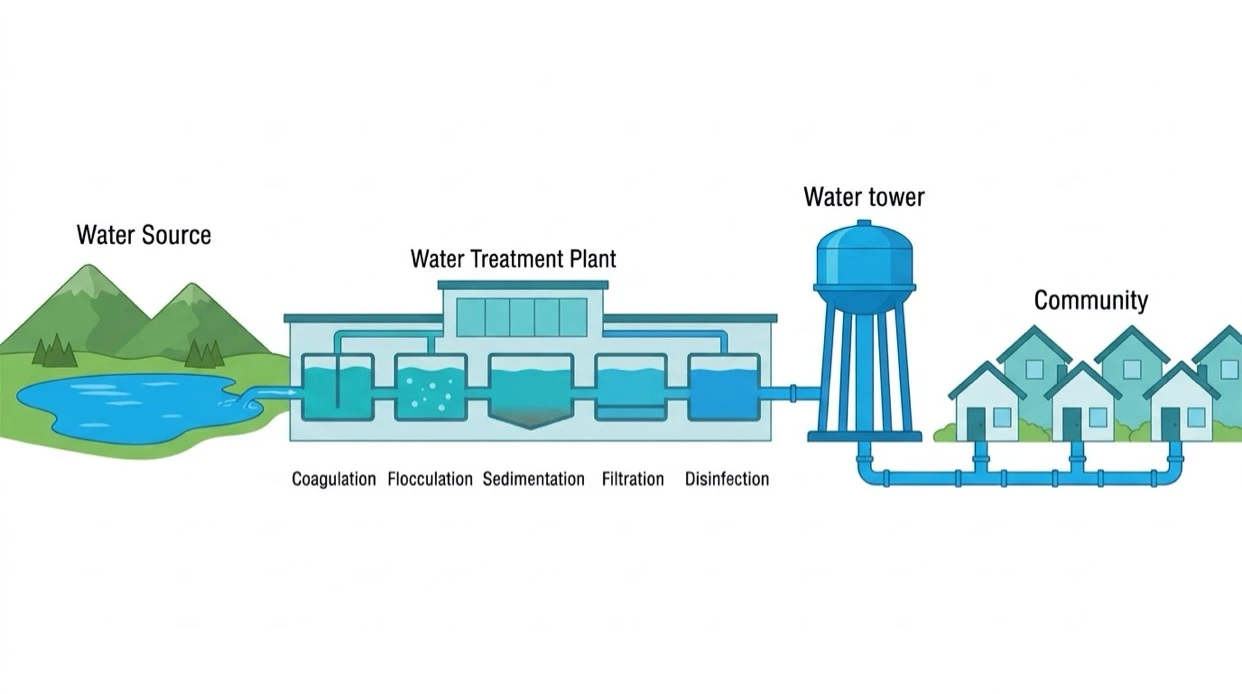
    The 5 Steps of Municipal Water Treatment

    While individual water plants may adapt their process based on their specific water source, standard surface water treatment typically relies on five core steps.

    1. Coagulation

    The treatment process begins by bringing the raw water into large basins and adding special, safe chemicals called coagulants. Raw source water often looks slightly cloudy or turbid because it contains tiny particles of floating dirt, silt, organic matter, and clay.

    Because these microscopic particles carry a negative electrical charge, they naturally repel one another, staying suspended in the water like tiny magnets pushing apart. Coagulants have a positive charge. When mixed rapidly into the water, they neutralize the negative charges on the dirt particles, allowing them to stop pushing each other away.

    2. Flocculation

    Once the electrical charges are neutralized, the water moves gently into a flocculation basin. Here, large mechanical paddles slowly mix the water.

    During this slow mixing, the tiny dirt particles begin to stick together, forming larger, heavier clumps called “floc.” You can think of this step like rolling a snowball through wet snow: as the small particles bump into one another, they combine to form bigger, visible bundles that are much easier to remove from the water.

    3. Sedimentation

    After flocculation, the water flows into a calm, still basin for sedimentation. During this quiet phase, gravity does most of the heavy lifting.

    Because the newly formed floc clumps are now much heavier than individual dirt particles, they slowly sink to the bottom of the settling tank. The settled solids form a layer of sludge at the bottom, which is routinely removed. Meanwhile, the clear water at the top gently overflows into channels to move on to the next stage.

    4. Filtration

    Even after sedimentation, small floating particles and impurities remain in the water. To clear these out, the water flows through physical filters composed of layers of carefully selected materials, typically sand, gravel, and crushed anthracite coal or activated carbon.

    Filter pore size determines what gets trapped during this stage. The gravel layer sits at the bottom to support the filter structure while allowing water to pass through freely. The upper sand and coal beds feature smaller microscopic gaps between grains. As water trickles down, these small pore sizes trap fine particles of silt, algae, debris, and larger microscopic organisms.

    When carbon beds are used, they do more than just strain out solids—their porous surface also adsorbs dissolved compounds that cause unpleasant tastes or odors. However, while sand, gravel, and carbon catch suspended solids and larger particles, extremely small substances—such as dissolved minerals, salts, and microscopic viruses or bacteria—are small enough to pass right through these physical gaps. That is why a final disinfection step is essential.

    5. Disinfection

    After the water is thoroughly filtered and visually crystal clear, it undergoes disinfection to eliminate any remaining microscopic germs, bacteria, viruses, or parasites that could cause illness.

    Water treatment facilities commonly use chlorine or chloramines (a combination of chlorine and ammonia) for disinfection. A key advantage of using chlorine or chloramine is that a tiny, carefully measured amount stays dissolved in the water as a “disinfectant residual.” This residual protects the water from recontamination as it travels through miles of underground distribution mains to reach your home.

    Some facilities also use primary disinfection methods like ultraviolet (UV) light or ozone gas at the plant. UV light deactivates germs using light energy, while ozone oxidizes microorganisms quickly. Both methods are exceptionally effective at neutralizing pathogens at the treatment plant. However, because UV light and ozone leave no lasting disinfectant residual in the water once it leaves the facility, water plants using them typically add a small amount of chlorine or chloramine afterward to protect the water during its journey through the pipe network.

    Why Treatment Differs by Community

    Not every community treats its water using the exact same sequence or intensity. The specific treatment plan depends almost entirely on the quality and nature of the original water source.

    Surface water from rivers and lakes is open to rainfall, runoff, wildlife, and sunlight. As a result, it generally carries higher amounts of organic matter, mud, and microbes, making the full five-step process—including coagulation, flocculation, and sedimentation—necessary.

    Groundwater from deep underground wells, by contrast, has already filtered through thick natural layers of earth and rock over many years or decades. Because it is naturally sheltered from surface runoff and dirt, groundwater is typically very clear and free of suspended solids. Communities relying on high-quality groundwater may skip the settling stages altogether, requiring only minimal filtration and basic disinfection before sending it to the tap.

    Where the City’s Job Ends and Yours Begins

    Municipal water suppliers work continuously to ensure that water leaving the treatment plant meets strict public health standards. However, once that clean water leaves the facility, it must travel through an extensive underground network of main lines, service pipes, and household plumbing before reaching your glass.

    Along this journey, several natural changes can occur:

    • Aging Utility Mains and Service Lines: Older municipal infrastructure or home plumbing can introduce iron, rust, or sediment into the water over time. In older communities, water lines connecting the main pipe under the street to a building may contain lead or older soldered copper connections.
    • Fading Disinfectant: As water travels long distances through miles of pipes or sits in home plumbing over weekends, the protective disinfectant residual gradually degrades and fades over time.
    • Household Plumbing Conditions: The pipes, valves, water heaters, and fixtures inside your own home can influence your water’s final taste, temperature, and mineral content.

    For these reasons, many homeowners choose to test their home’s tap water to understand its exact profile. Understanding your home’s unique plumbing context allows you to make informed decisions about whether a point-of-use home filter—such as a pitcher, faucet attachment, or under-sink system—is right for your family. By combining the rigorous efforts of municipal water treatment with smart care inside the home, you can enjoy high-quality water at every tap.

    Sources: CDC Drinking Water Portal (cdc.gov/drinking-water) and EPA Ground Water and Drinking Water (epa.gov).

  • Glyphosate in Drinking Water: The Weed Killer Finally Gets a Test

    Glyphosate in Drinking Water: The Weed Killer Finally Gets a Test

    Hi, I’m Steve. If you’ve spent any time reading around iPhilter, you know my goal as an independent New Jersey water guide is pretty simple: I’m here to give you straightforward, plain-English facts about what’s in your water, without any sales pitches or fearmongering. Water quality can feel like a complicated topic, but when you break down the science and standards into clear terms, it becomes much easier to understand what’s happening at your tap and what options you have as a homeowner.

    For years, if you walked down the filter aisle at a hardware store or scrolled through water purifiers online, you might have seen a box claiming the system “reduces glyphosate.” Until recently, that claim had a big catch: there was no official, standardized, independent testing method behind it. A manufacturer could make the claim, but as a consumer, you had no reliable way to verify whether that filter actually did the job under rigorous laboratory conditions.

    On October 14, 2026, that finally changed.

    For the first time, an independent standard exists to test and certify water filtration products specifically for glyphosate reduction. Let’s take a look at what glyphosate is, how it ends up in water supplies, what the science and regulations say, and what this new test standard means for your home.

    What Is Glyphosate and Where Does It Come From?

    Glyphosate is best known as the active ingredient in Roundup, and it is currently the most widely used herbicide in the world.

    Because it is so effective at controlling weeds and unwanted vegetation, its use is widespread across both agricultural and everyday consumer settings:

    • Agriculture: Farmers apply glyphosate extensively on agricultural fields to keep crops clear of competing weeds.
    • Residential Lawns and Gardens: Homeowners use it around garden beds, driveways, sidewalks, and patio cracks.
    • Landscaping and Infrastructure: Landscapers, municipal crews, and groundskeepers use it along fence lines, park paths, roadsides, and railway corridors.

    Because it is applied so broadly across both rural farmlands and suburban neighborhoods, glyphosate is present in many environments where rainwater falls.

    How Glyphosate Gets Into Drinking Water

    Unlike some industrial contaminants that enter water systems through underground leaks or factory pipes, glyphosate primarily makes its way into drinking water through surface runoff.

    Here is how that process typically works:

    • Application: Glyphosate is sprayed onto target plants, soil, or paved surfaces across farms, residential lawns, roadsides, and railways.
    • Rain Events: When rainfall occurs, stormwater washes over these treated surfaces, picking up unabsorbed herbicide residues.
    • Transport to Waterways: This runoff flows into storm drains, drainage ditches, streams, and rivers, eventually reaching reservoirs, lakes, and rivers that serve as source water for public water utilities.
    • Soil Infiltration: In some local conditions, surface water carrying these residues can also percolate into shallow groundwater aquifers.

    Because runoff is the primary route, levels in raw water sources can fluctuate depending on season, rainfall timing, and local spraying schedules.

    The Health Picture: Understanding the Ongoing Debate

    When learning about any weed killer or chemical in drinking water, it is completely natural to wonder about health effects. In the case of glyphosate, international health and regulatory agencies have reached different conclusions based on their evaluations of the scientific literature.

    It is important to look at both perspectives calmly and honestly, without panic or dismissal:

    • The World Health Organization (WHO): The International Agency for Research on Cancer (IARC), which is the specialized cancer agency of the WHO, evaluated the scientific data and classified glyphosate as “probably carcinogenic to humans.”
    • The U.S. Environmental Protection Agency (EPA): The U.S. EPA has maintained a different position, concluding that glyphosate is not likely to be carcinogenic to humans at normal expected exposure levels.

    Because scientific evaluations, long-term health studies, and legal discussions are ongoing, public health experts continue to monitor and debate the research. As independent educators, our goal at iPhilter is not to take a side in this agency debate, but to present the facts transparently so you understand where the scientific landscape stands today.

    Federal Rules and the Old Testing Problem

    To understand why the new testing standard matters, it helps to understand how glyphosate has been regulated up until now.

    The Federal Limit

    In the United States, the federal drinking-water limit—known as the Maximum Contaminant Level (MCL)—for glyphosate is set by the EPA at 0.7 mg/L (milligrams per liter). Public water suppliers are required to monitor their supplies and ensure treated drinking water meets or stays below this regulatory threshold.

    The Filter Claim Loophole

    While public water utilities manage supply-side compliance, many homeowners look to point-of-use or point-of-entry water filters for an extra layer of peace of mind.

    However, until recently, if a filter manufacturer printed “reduces glyphosate” on their packaging, there was no standardized, independent protocol to evaluate that claim. A filter might have been tested under in-house company conditions, but there was no universal benchmark that allowed consumers to verify if the claim held up under standardized, rigorous third-party testing.

    The New Standard: What NSF Protocol P549 Changes

    That testing gap was officially closed on October 14, 2026, when NSF introduced Protocol P549.

    NSF Protocol P549 is the very first standard in the world designed specifically to validate glyphosate reduction claims for water filtration products. It establishes a clear, independent protocol for testing products in a laboratory setting.

    Here are the key details of how Protocol P549 works:

    • A Stricter Performance Benchmark: Under P549, a filtration system cannot just reduce some glyphosate—it must demonstrate that it reliably reduces glyphosate in the water down to 0.28 mg/L or lower to pass. This 0.28 mg/L benchmark is significantly stricter and more health-protective than the federal drinking-water limit of 0.7 mg/L.
    • Alignment with Established Standards: Protocol P549 was created to align directly with existing, widely trusted filtration standards: NSF/ANSI 53, the standard governing filtration systems designed to reduce specific health-related contaminants (such as heavy metals or VOCs), and NSF/ANSI 58, the standard governing point-of-use reverse osmosis (RO) systems.
    • Independent Verification: NSF provides independent certification under P549. This means when a manufacturer claims their product is “certified to NSF P549,” consumers can independently look up and verify that certification in public databases.

    Treatment Methods and What Readers Should Look For

    If you are evaluating filtration technologies for your home, Protocol P549 recognizes two primary treatment methods for reducing glyphosate:

    • Activated Carbon (Adsorption): Filtration systems using specialized activated carbon block or media filters capture glyphosate molecules as water passes through, binding them to the carbon surface.
    • Reverse Osmosis (Membrane Separation): Point-of-use reverse osmosis systems force water through a semi-permeable membrane that physically blocks dissolved compounds like glyphosate from passing into your drinking water.

    What This Means for You as a Consumer

    If glyphosate reduction is something you want in your home water treatment setup, you no longer have to rely on unverified marketing language.

    When shopping for a system, look for clear, certified claims. Check the product documentation or official listings to ensure the filter is explicitly certified to NSF P549. That certification mark confirms that the system has been independently tested and proven to bring glyphosate levels down below the strict 0.28 mg/L standard.

    Summary & Next Steps

    Having clear standards makes managing home water quality straightforward. Here is a quick summary of where things stand with glyphosate:

    • What it is: The world’s most widely used herbicide, found in agricultural, residential, and municipal weed control products.
    • How it enters water: Rain runoff washes herbicide residues from crops, lawns, roadsides, and railways into surface streams, rivers, and reservoirs.
    • The Health Landscape: International health bodies disagree—IARC classifies it as a probable carcinogen, while the EPA maintains it is not likely carcinogenic at normal exposure levels.
    • The Federal Rule: The federal drinking-water limit (MCL) is 0.7 mg/L.
    • The New Standard: On October 14, 2026, NSF launched Protocol P549—the world’s first independent standard for glyphosate reduction in water filters, requiring systems to reduce glyphosate to 0.28 mg/L or lower.
    • Effective Technologies: Adsorption through activated carbon and reverse osmosis are the recognized treatment methods under the protocol.

    If you ever have questions about reading a water quality report, checking product certifications, or finding the right filter setup for your home, feel free to explore our other guides here on iPhilter. We are always here to help you navigate your water quality with plain facts and neighborly advice.

    check the pH, then filter.